
The Ridge Historical Society
Teachers and Schools of the Ridge
By Carol Flynn
Last week was Teacher Appreciation Week, May 5 -9, which inspired the exploration of the role teachers and schools have played in the development of the Ridge communities.
This post got delayed for a few days because of the excitement surrounding new Pope Leo XIV, Robert Francis Provost, who not only is American, but came from the south Chicagoland area.
His election ties in well with this theme because he is from an education background. His father was a teacher and Fr. Provost himself taught math part-time at Mendel High School and was a substitute teacher of physics at St. Rita High School.
As the head of the Midwest Provincial of the Augustinians, he oversaw schools run by the Order of St. Augustine (OSA) in the U.S. He was then named Prior General of the entire Augustinian Order and was responsible for schools throughout the world.
Teachers and schools have been a major part of Ridge history since the earliest days of settlement.
One of the first permanent settlers on the Ridge was William Barnard, a graduate of Amherst University in Massachusetts.
Deciding to seek new opportunities in the West, in 1846 he made it as far as Chicago, where he had a chance encounter with Thomas Morgan, the wealthy Englishman who bought over 3,000 acres of land on top of and surrounding the Blue Island Ridge. Morgan talked Barnard into taking a job as tutor for Morgan’s children. Barnard moved to the Ridge, and other family members soon followed, including his sister, Alice Lucretia Barnard.
Alice was educated in Massachusetts and later she attended Mount Holyoke Seminary. She began her teaching career at age 17 in Chicago in a one-room schoolhouse. She eventually became one of the first women principals of a Chicago public school.
Alice received considerable newspaper coverage in her lifetime – she was a celebrity in Chicago. She was described by the Chicago Tribune as “one of the best known teachers in Chicago.”
In 1890, the Washington Heights School was severely damaged by fire. It was closed for a few years while it was rebuilt, and in 1892 the school reopened, now named for Alice L. Barnard. The school is at 10354 S. Charles St.
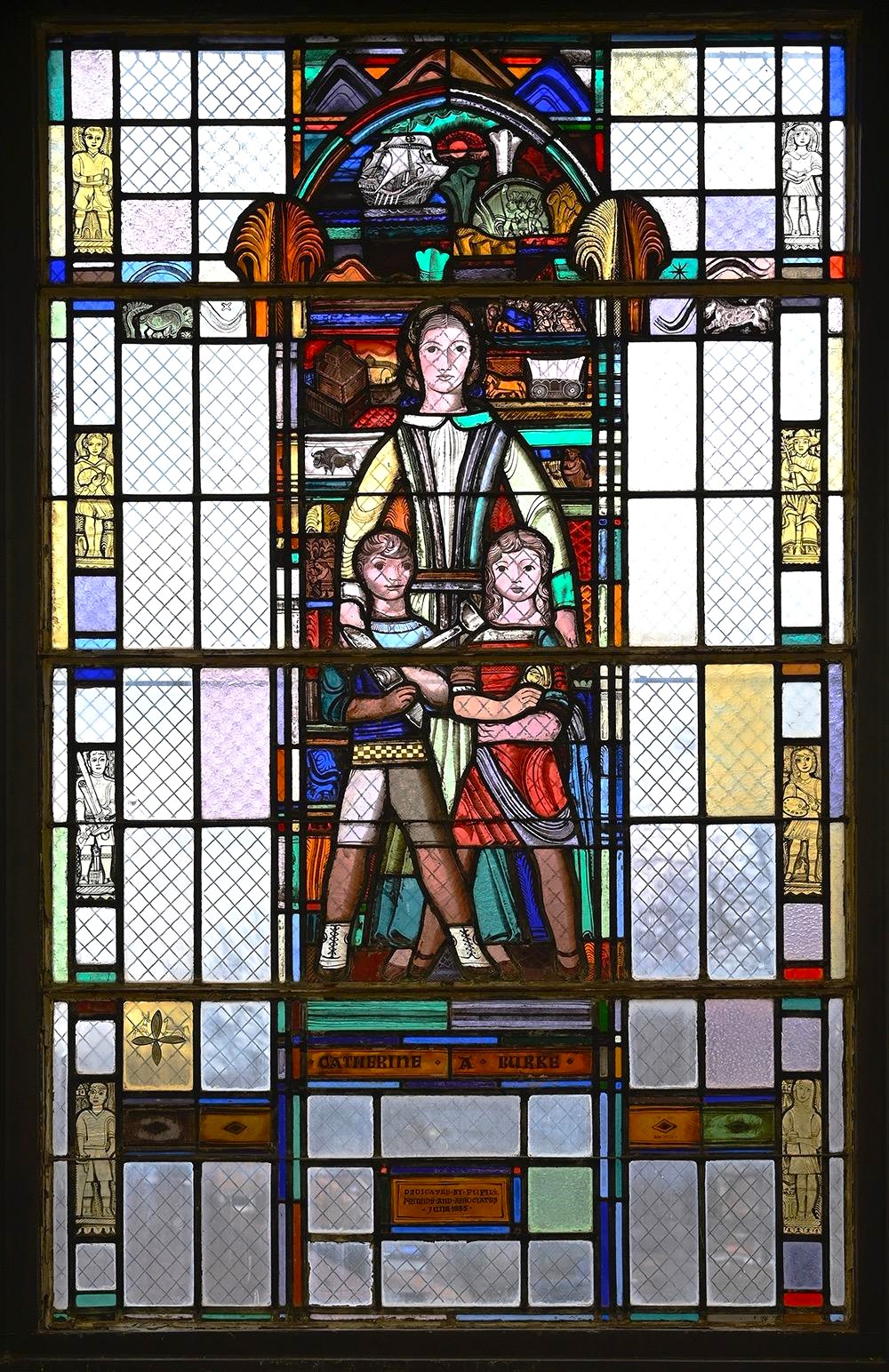
The Ridge also had Elizabeth Sutherland, and the school named for her is at 100th and Leavitt Streets. “Bessie” was born as Elizabeth Bingle Huntington in Blue Island in 1851. Her father, Samuel D. Huntington, farmed and raised livestock, was involved in the railroads, and was Constable and Sheriff. Her mother, Maria Robinson Huntington, was likely the first schoolteacher on the Ridge.
In 1883, Bessie was named Principal of the Washington Heights School. She was the first woman to be named principal of a Cook County school. As reported above, after a fire, the school was renamed the Alice L. Barnard School.
Bessie Huntington married David Sutherland on her 43rd birthday. Back then, women teachers were not allowed to marry and keep their jobs. Alice Barnard never married.
Kate Starr Kellogg was another legendary teacher in Chicago who has a school at 92nd and S. Leavitt Streets named for her. She was born in New York, and when the family moved to the Chicago area, they established their family farm on the land at 95th Street and Hamilton Ave. where Little Company of Mary Hospital is now located.
Kate was named a Chicago district superintendent in 1909. She introduced parent-teacher associations, and supported teachers’ unions.
Two other Kellogg daughters were also teachers. Harriet taught with the Chicago Public Schools. Alice Kellogg Tyler became a well-known artist who taught at the School of the Art Institute of Chicago.
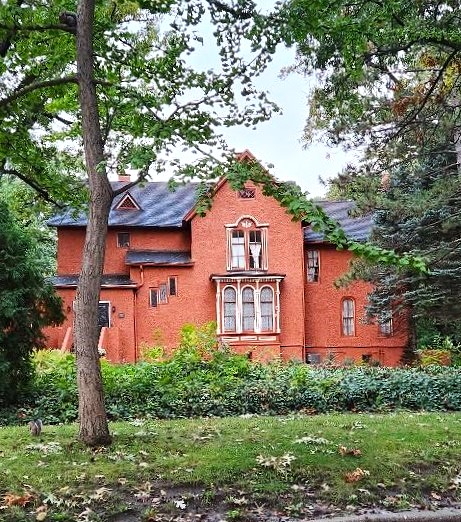
It has long been folklore that Robert Givins built his castle at 103rd St. and Longwood Drive for an elusive fiancée from Ireland who haunts the place. In reality, when he built the castle, his wife was Emma Steen, a Chicago public school teacher of Norwegian descent. Through the Chicago Woman’s Club, she championed domestic science education programs, the forerunner of Home Economics.
Morgan Park was founded as an education enclave. The Mount Vernon Military Academy, which became today’s Morgan Park Academy, was founded in 1874.
The Female College was founded in 1874 on top of the Ridge near 114th Street and Lothair Avenue. The Thayer family, Gilbert and daughter Julia, were the well-respected educators who ran that college. For a few years, the College operated out of the Givins Castle, but it was eventually absorbed into the University of Chicago.
The Baptist Union Theological Seminary was founded in 1865 along with the “Old” University of Chicago. George W. Northrup was President and Professor of Systematic Theology.
In 1877, Northrup and the Baptist Seminary were enticed to move to Morgan Park, near today’s 111th Street and Western Avenue.
Some very prominent educators related to the Baptist Seminary lived in Morgan Park. In addition to Northrup, there were William Rainey Harper, an acclaimed scholar, and Thomas Wakefield Goodspeed, a founder of the Morgan Park Baptist Church.
When the old University of Chicago closed in 1886, it was envisioned a new University of Chicago would replace it, built around the Baptist Seminary, in Morgan Park, but the decision was ultimately made to establish the new university in Hyde Park. Harper became the first president of the new university.
One of the major issues in Morgan Park’s decision to annex to the City of Chicago revolved around the community getting its own high school – Morgan Park High School. It wasn’t until the community residents were assured that the high school they were raising funds to build would not be impeded in any way by the city that the Village of Morgan Park finally voted to annex to the city.
Teachers living in Beverly were major leaders of the kindergarten and playground movements in the late 1800s.
This included all five of the Hofer sisters – Mari, Bertha, Amalie, Andrea, and Elizabeth.
Mari excelled in music education for children in a variety of professional locations. Bertha started the first kindergarten in Chicago and later became the president of Columbia College Chicago. Amalie and Andrea started the Kindergarten Literature Co. Amalie was principal of Bertha’s school and a founder of the Playground Association of America. Andrea and Elizabeth started the Froebellian School for Young Women to train kindergarten teachers in North Beverly, and in the summers, they ran the school as the Longwood Summer School.
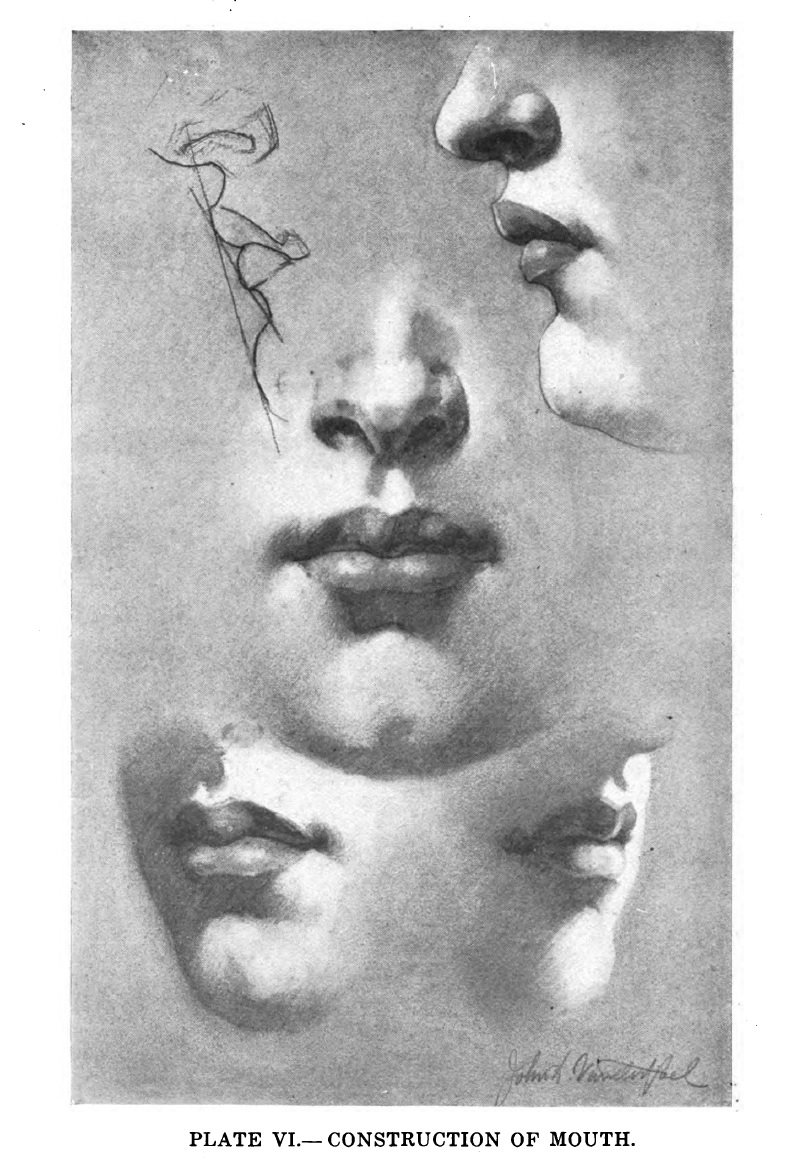
Elizabeth’s husband George Lawrence Schreiber was an artist/teacher, just one of many well-known artist/teachers who lived on the Ridge, including John H. Vanderpoel, the first head of the School of the Art Institute of Chicago, and his sister, Matilda, who also taught there.
Other art teachers included Louise Barwick and Ida Casson Heffron, and more recently, Jack Simmerling.
Trade schools, or “industrial arts schools,” were also addressed by people like Madame Alla Ripley, a fashion designer and influencer who lived here. She advocated for teaching the making of fine items by hand and lectured on creative dressmaking. She worked toward the development of an industrial arts school in Chicago. Classes were started at the School of the Art Institute of Chicago in the late 1920s.
The Howe family had two famous educators. Edward was a science teacher, author of books on science education, and principal of the U. of Illinois Preparatory School in Champaign-Urbana.
Annie Lyon Howe established the Glory Kindergarten in Kobe, Japan, which became the model for kindergartens throughout that country. She lived there for 40 years.
The Loring School for Girls was a private school that flourished in Beverly at 107th St. and Longwood Drive. Started in 1876 by Stella Dyer Loring, daughter of Charles Volney Dyer, physician in the 1830s for Fort Dearborn and an ardent abolitionist, it moved to Beverly in 1935. It closed its doors in 1962.
Mount Greenwood is home to two prestigious education institutions.
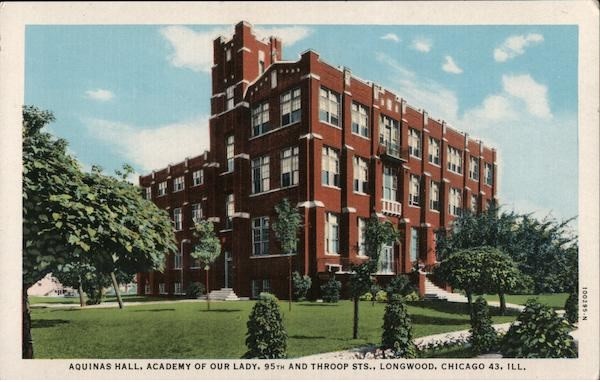
St. Xavier University was founded as a “female academy” by the Sisters of Mercy in 1846 in downtown Chicago. Young women of all religions attended the school, including Bertha Honore who became the famous Mrs. Potter Palmer.
After its buildings burned down in the Great Chicago Fire of 1871, the school moved out to the Ridge that was quickly developing as a prime suburban spot.
Mt. Greenwood also boasts the Chicago High School for Agriculture Sciences, which opened in 1985. The establishment of this school was highly controversial and opposed by many of the people in the community, but today it is one of the highest ranking schools in the city.
This is just a beginning discussion of teachers and education institutions on the Ridge or connected to the community that were part of the development of the area.
There are many more stories to tell and no doubt the readers of this post have many interesting comments to add.