
The Ridge Historical Society
St. Joseph Statues
By Carol Flynn
A homeowner in North Beverly recently told the story that when they first bought their home about 20 years ago, he was digging in the garden and came across what he first thought was a piece of bone but turned out to be a statue, buried upside down.
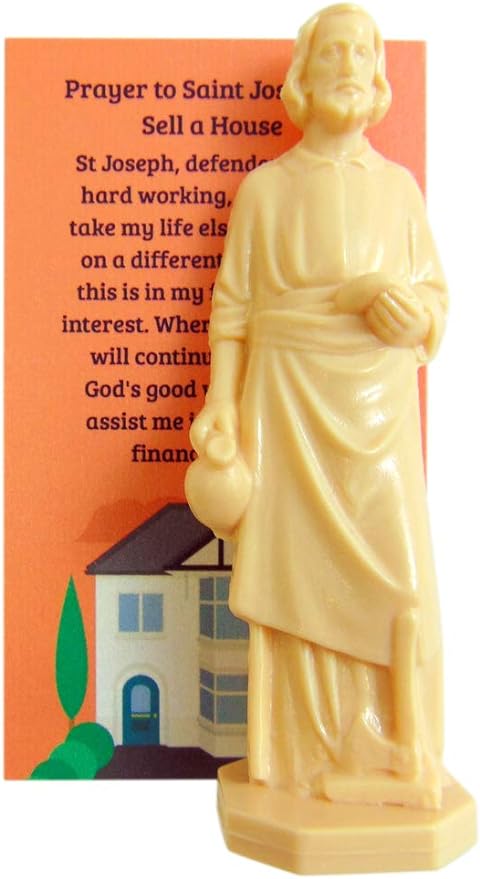
He was a little startled by the discovery, but many people reading this probably recognized at once that this was a statue of St. Joseph. It’s common practice for homeowners to bury a statue of St. Joseph to aid them in selling their houses.
Where this custom started is not known with any certainty, but sometimes it is attributed to St. Teresa of Avila, a nun who lived in the 1500s. St. Teresa has having difficulty finding land for a new convent, so she and the other nuns buried medals of St Joseph to ask for his help. Soon, the perfect spot became available to them.
St. Joseph, of course, was the humble carpenter who took on the role of marrying Mary, the mother of Jesus, and becoming stepfather to Jesus, creating the Holy Family. He protected and provided for them and found new homes for them when needed.
He is the patron saint of families, fathers, workers, carpenters, emigrants, travelers, and house hunters.
Starting in the 1990s, it became a trend to bury a St. Joseph statue when trying to sell a house. There are no set rules for where and how to bury the statue. Front yard, back yard. By the road, by the for-sale sign, near a flower bed, three feet from the back of the house. Facing outward in the direction you want to move, facing the house, upside down, lying down face up. Wrapped in cloth or plastic or not.
Shoppers used to be able to go into religious goods shops and find an entire section with St. Joseph statues for sale. Most of those shops are gone, but the statues are readily available on Amazon now and go for around $7 for a basic while plastic statue.
Real estate agents used to buy the statues in bulk and give them to their clients to bury.
There are many testimonials from people who claim they were having a difficult time selling their house, then they planted a St. Joseph statue, and the house sold immediately.
This practice started with Catholics and spread to everyone. For the record, though, the Catholic Church does not condone this “superstition.” It’s advised that people pray to St. Joseph to ask for his help, and if a statue is to be involved, it should be kept in a place of honor in the house as a reminder to do this.
If a homeowner decides to bury a statue of St Joseph as a house-selling strategy, it is advised the statue be removed once the house is sold. Otherwise, the house will be resold and resold….
The homeowners who found the statue in North Beverly tossed it away, and they have lived there now for about 20 years.
But this does make one wonder … how many statues of St. Joseph are buried on the Ridge?