
The Ridge Historical Society
Labor Day on the Ridge 100 Years Ago
By Carol Flynn
One hundred years ago, Labor Day occurred on Monday, September 1st.
It was a lovely day – in the mid-70s, partly cloudy, gentle shifting winds: a perfect day to wrap up the summer.
Throughout the Chicagoland area, the holiday was celebrated with activities. The mosquitos were particularly bad that year, especially in the forest preserves, but that did not stop thousands of people from going to the preserves for picnics and sporting events.
The Beverly Preserve at 87th Street and Western Avenue was one of the most popular of the forest preserves because it was the only one accessible by public transportation. Streetcars brought people as far as 87th Street and Ashland Ave., and they walked the rest of the way; or the Rock Island Railroad dropped them off at the 91st Street station, right outside of the forest preserve.
Around 1900, for about a decade, Morgan Park held large “Morgan Park Day” festivals on Labor Day.
In 1923 and 1924, a different kind of program went on, a “chautauqua.”
“Chautauqua” was an adult education and social movement of the late 1800s to the mid-1920s. The movement started in 1874 with an adult summer school for Sunday School teachers at an outside campsite on Chautauqua Lake in New York. That program started with Bible studies, but the idea spread to other schools and sites that started offering programs in many different topics.
Schools, and then communities and private organizers started offering chautauquas, as the programs became known, to the general public. The programs were usually a multi-day event, and featured a variety of speeches and educational talks, along with musical acts, dancers, art events, and other entertainment.
In Beverly/Morgan Park, the chautauqua that was offered from August 23 to September 3, 1924, was produced by the concert management firm of Stroup and Phillips, and was held on Hoyne Avenue from 110th to 111th Streets.
Roy Phillips, who lived in Morgan Park and had been the editor of the Weekly Review and Blue Island Sun Standard newspapers, had gone into the business with Harry Stroup in March of 1923. They represented a wide range of musical artists.
We don’t know the programs, speakers, or performers that Phillips presented that year, but one strong possibility was a performer introduced as the Indian princess “Watahwaso, a daughter of the Penobscot tribe of Indians,” that he featured at other programs.
Watahwaso appeared in costume and related “interesting Indian legends and sang beautiful songs of her own and other tribes.”
Another performer that Phillips promoted that year who likely performed in Morgan Park was James Goddard, a bass baritone of the Chicago Opera Company. He was described as “a great big he-man, strong as Hercules and handsome as Adonis,” with “a wonderful voice of great purity and strength.”
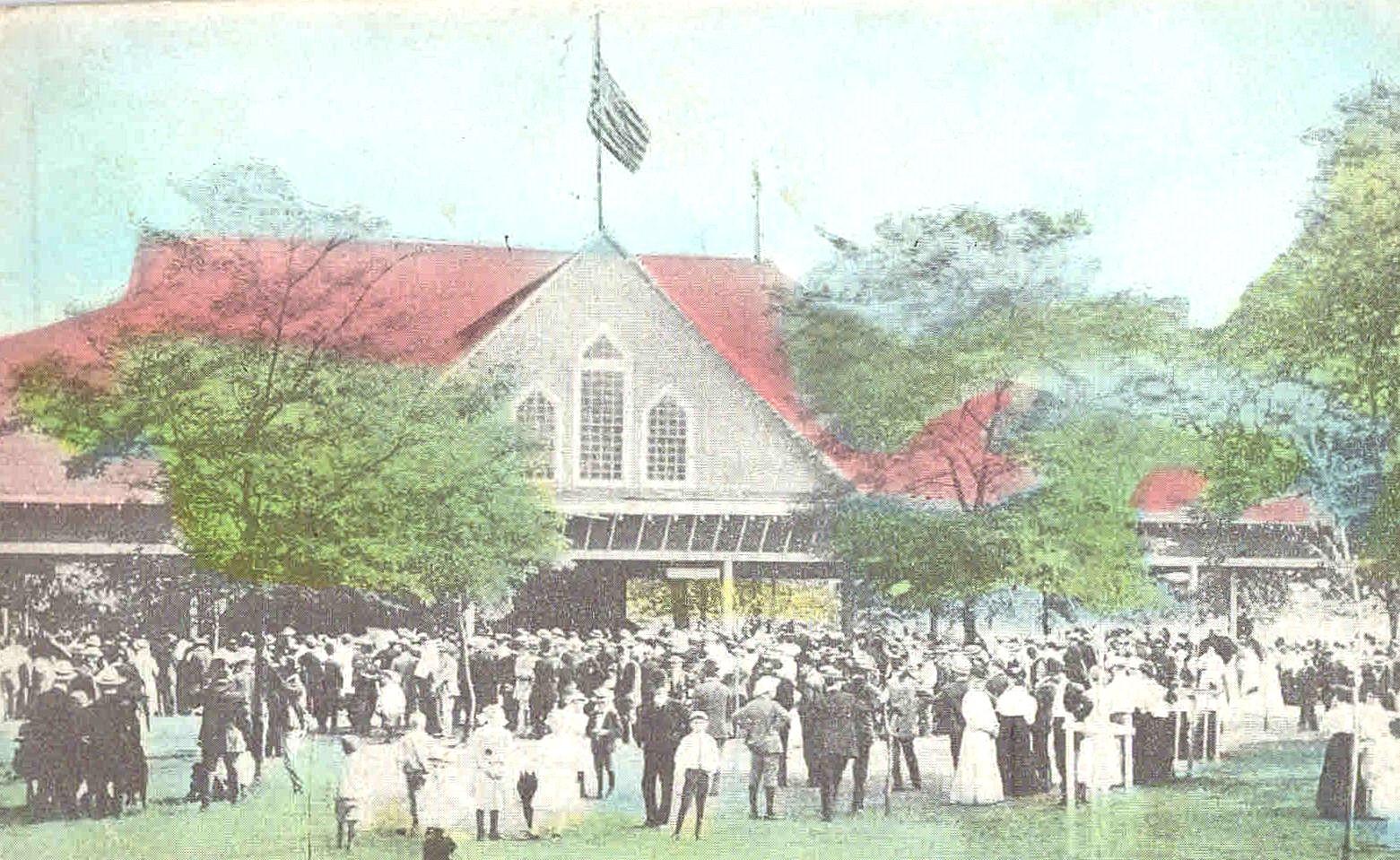
Chautauquas were very popular throughout the U.S. This image is from one held in Ohio.