
The Ridge Historical Society
Lost or Found Series – The Northrup House
By Carol Flynn
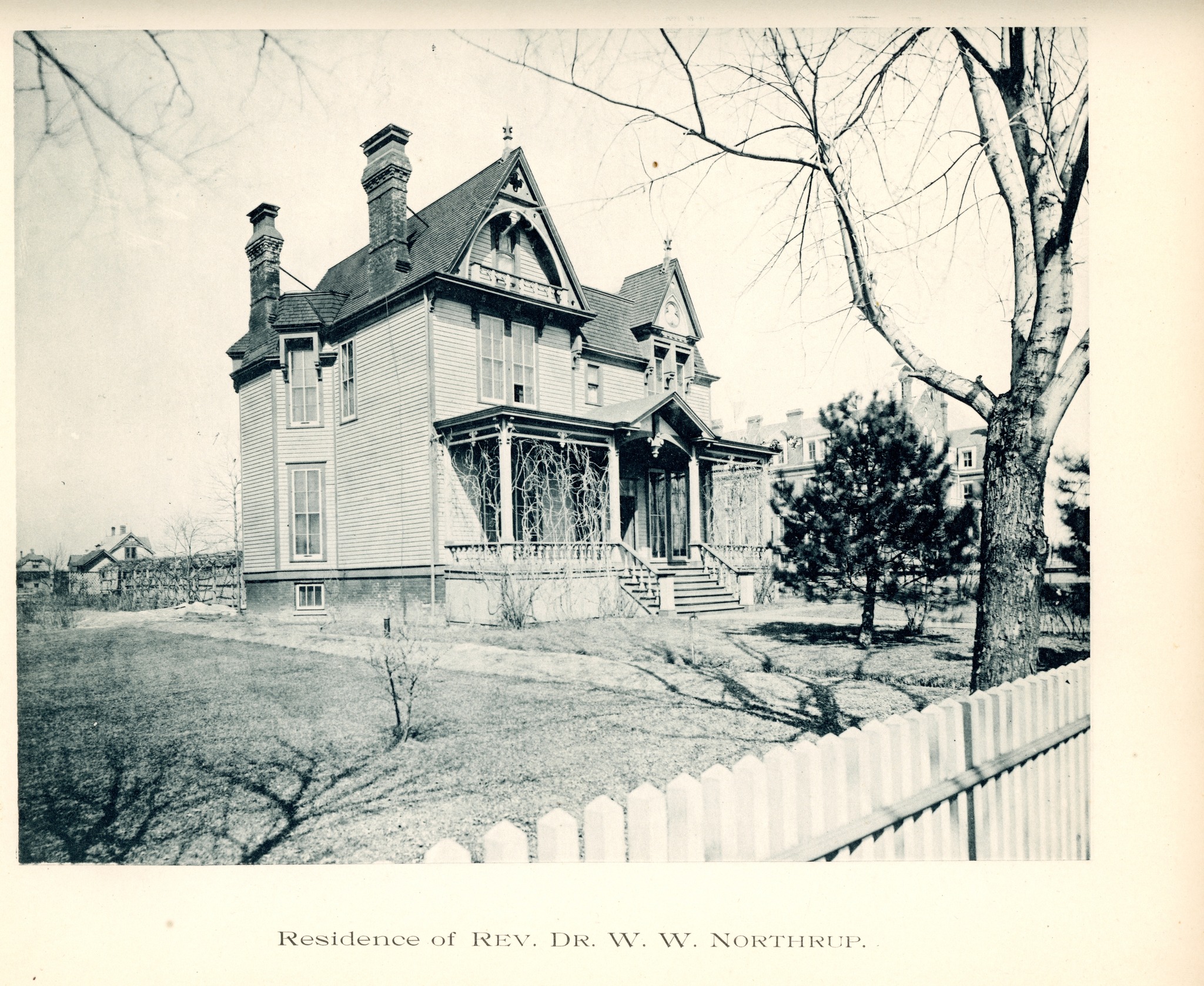
The final post to wrap up the Lost or Found Series is on the Rev. Dr. George William Northrup House.
This house is “lost,” that is, it was demolished sometime in the past. It was located at 2242 Morgan Avenue, the name of 111th Street before Morgan Park was annexed to the City of Chicago in 1914. Today the location is a vacant lot between 2154 and 2204 West 111th Street.
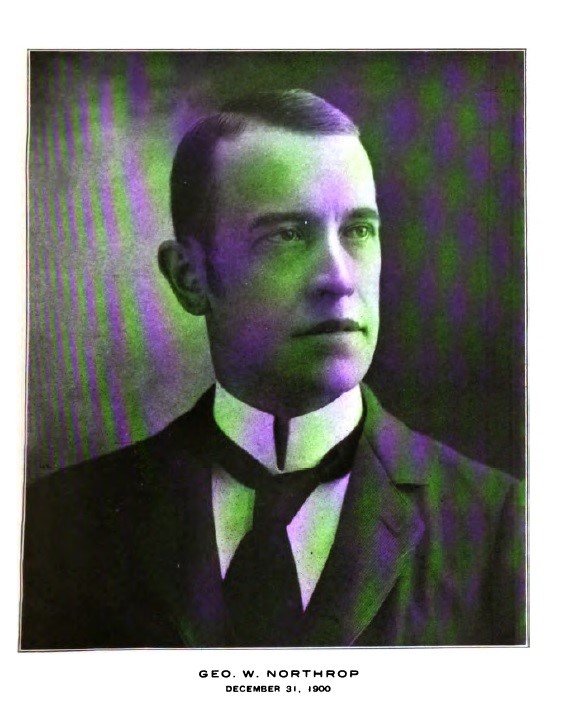
Northrup is one of the most prominent people in Chicago history to have lived on the Ridge. He was the President of the Baptist Union Theological Seminary, as well as a professor there. He was part of the story of how the “new” University of Chicago was established with an original connection to Morgan Park.
The Baptist church came to Chicago with the earliest settlers. In 1863, a group of Baptist leaders created the Baptist Theological Union, and the Illinois legislature granted the Union a charter to found an institution for theological instruction.
The Baptist Union Theological Seminary was founded in 1865 along with the “Old” University of Chicago, that is, the first attempt to form an institution of higher learning in the city, started by Illinois Senator Stephen Douglas.
The formal work of the Seminary began with the appointment of George W. Northrup as President and Professor of Systematic Theology.
Northrup was born in New York in 1826. He was self-taught, and without formal education, he entered college as a sophomore, and graduated with top honors. He then received a degree from Rochester Theological Seminary and was hired there as a professor.
His reputation spread as an educator and orator, and he was invited to Chicago to take charge of the new Seminary.
Originally classes were taught in buildings near Douglas’ Oakenwald estate at 35th Street and Cottage Grove. The Seminary grew under his leadership and earned a reputation for excellence.
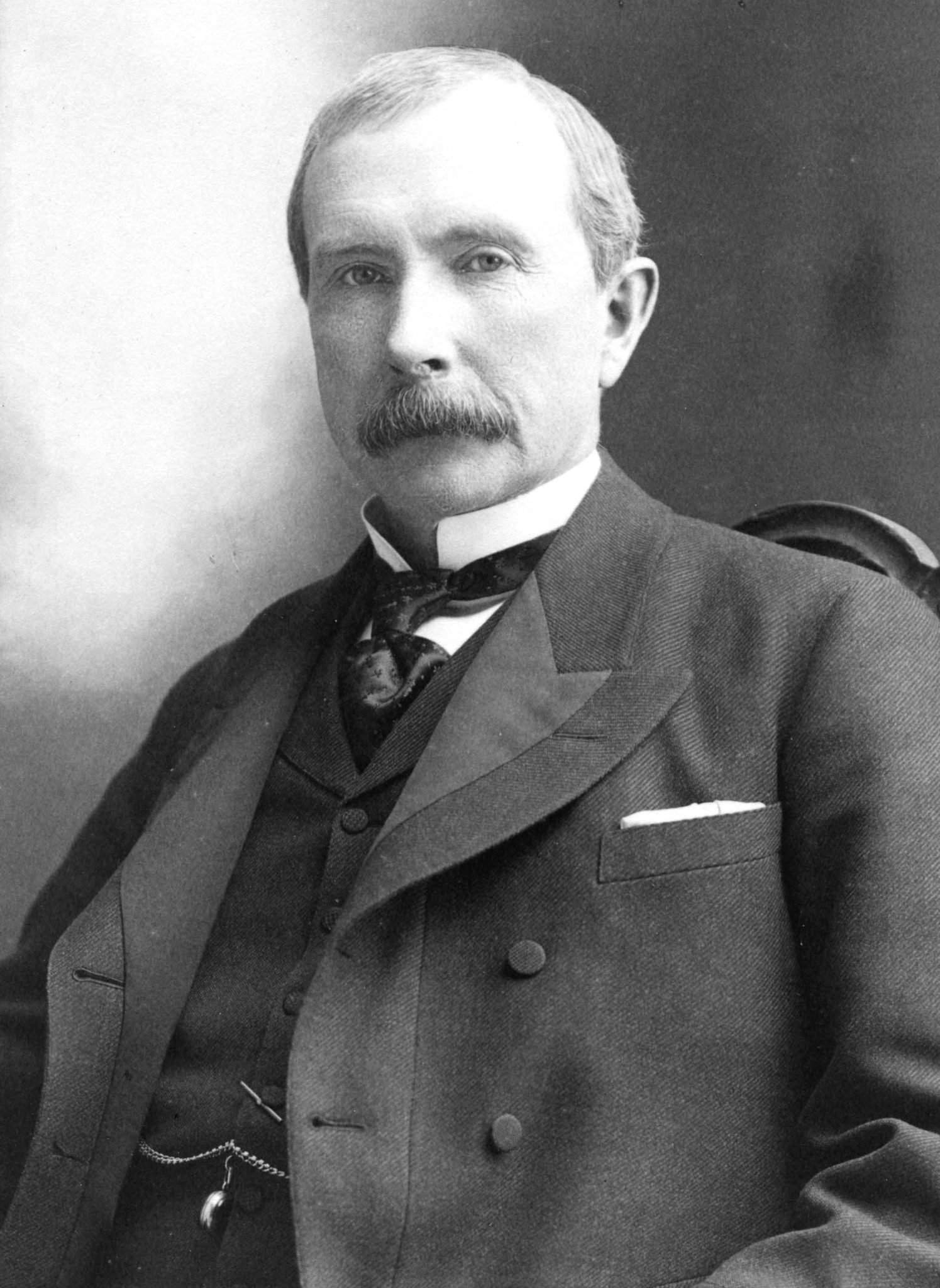
Northrup was personally involved in fund raising for the Seminary, and through this, he met and developed a relationship with John D. Rockefeller, business icon and philanthropist.
In the mid-1870s, the Seminary, and the Old University of Chicago, started having financial issues, and there was talk of having to close.
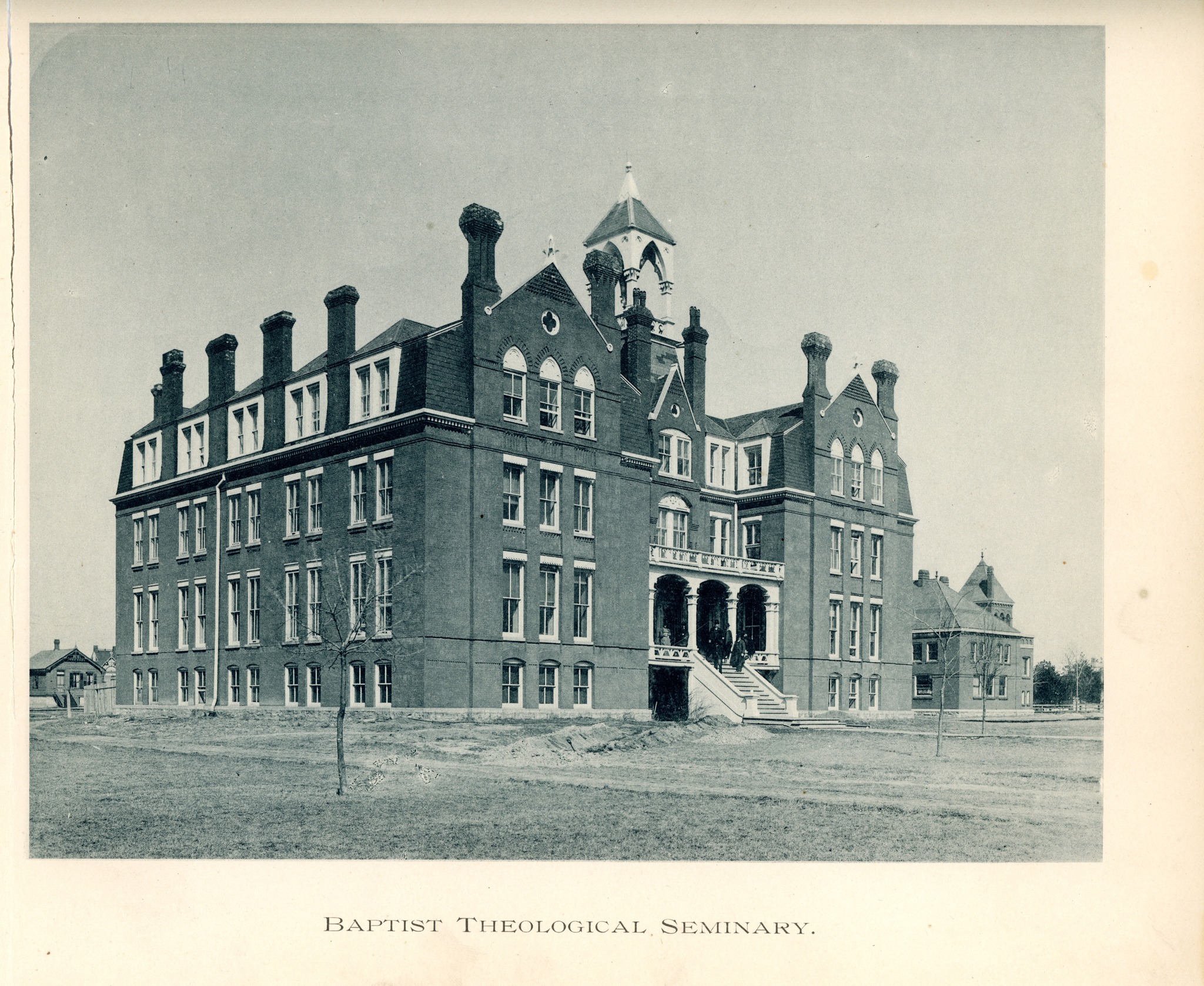
In 1877, a generous offer of free land (five acres) from the Blue Island Land & Building Co. (BILBCo.) led to the Seminary selling its buildings and land, relocating to Morgan Park, and building new facilities there.
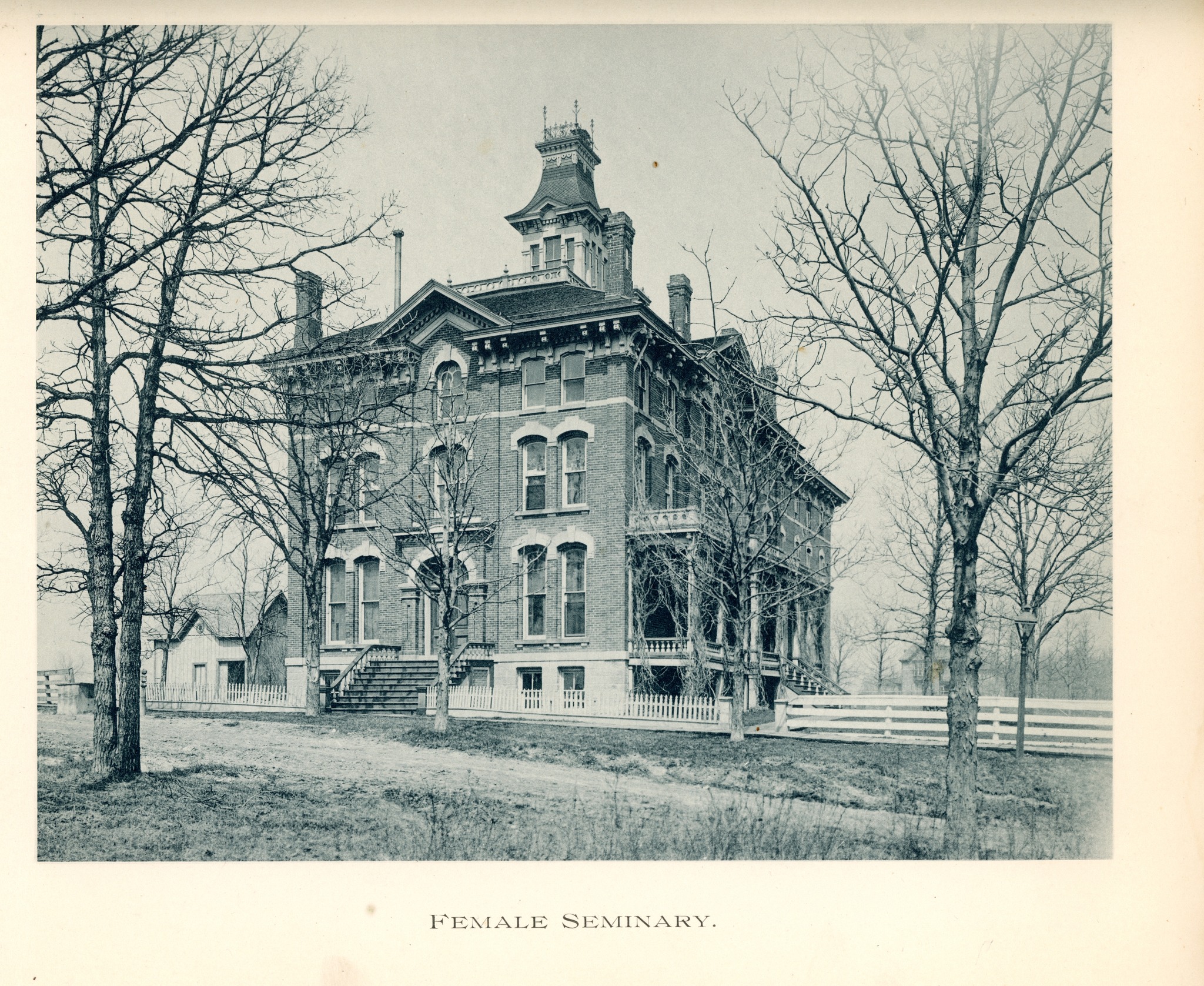
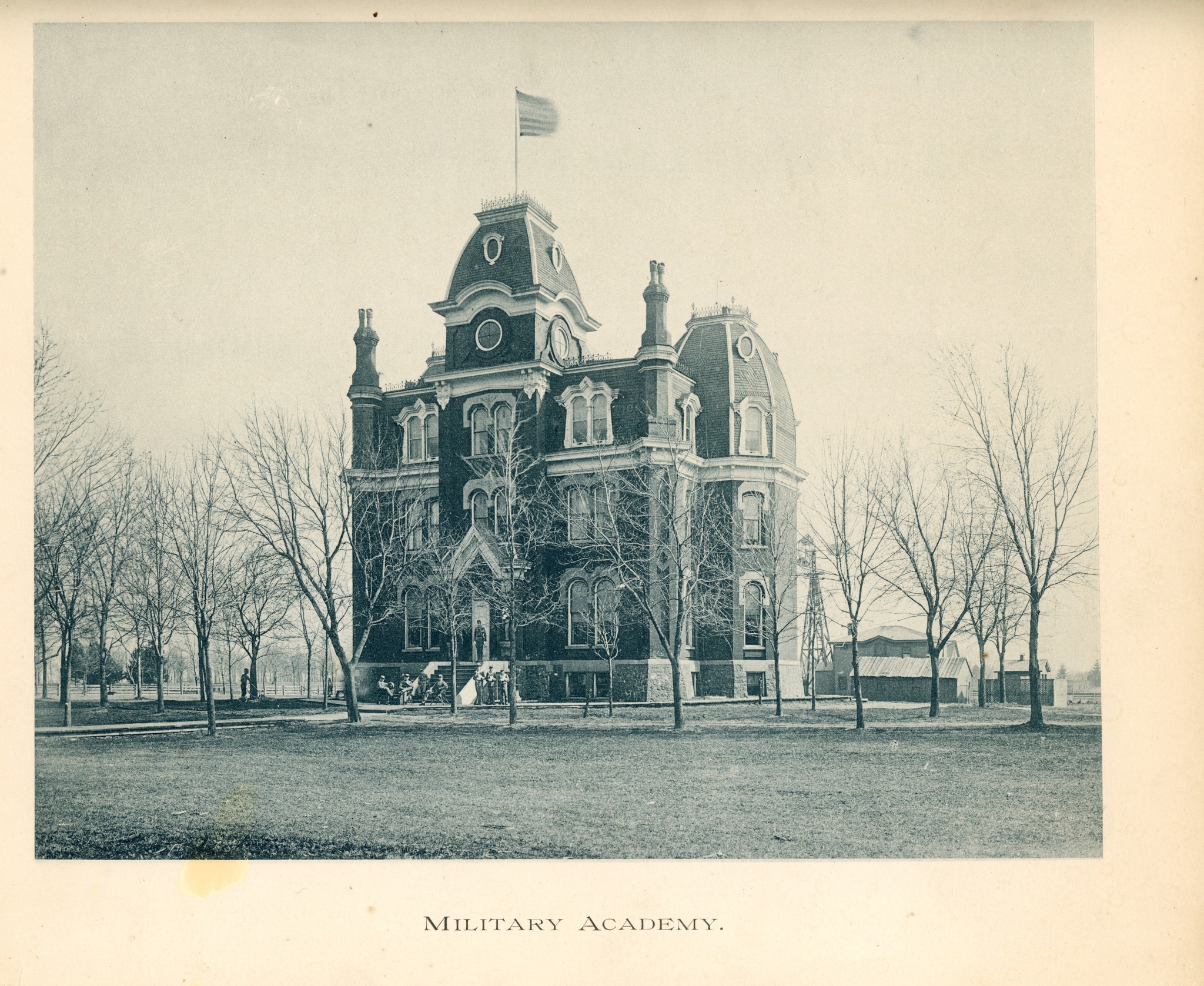
This was quite a coup for the BILBCo., and helped fulfill the plan to establish Morgan Park as a prestigious religious, education, and temperance community. It was anticipated that additional educational facilities would follow, creating a new University of Chicago. Morgan Park Academy, started as the Mount Vernon Military Academy, and the Chicago Female College, were already established in Morgan Park.
The Seminary built an imposing three-story office and classroom building, now long gone, on the north side of 111th Street, just east of Western Avenue. Funding partially came from Rockefeller to do this, as well as from the BILBCo.
The Seminary brought to Morgan Park a considerable number of administrators, professors, clergymen, students, and members of the Baptist church. This led to a building boom for new houses.
Northrup moved to Morgan Park to continue to head the Seminary. Other important names were William Rainey Harper, a Baptist clergyman of Irish and Scottish ancestry who was an expert in Semitic languages and a professor of Hebrew at the Seminary.
There was also Thomas Wakefield Goodspeed from New York, who studied at the Old University of Chicago, was a founder of the Morgan Park Baptist Church, and was the financial officer for the Seminary.
The Old University of Chicago closed in 1886. Immediately talk about founding a new university was started. Public sentiment was in favor of building the school near the location of the original one, partly to honor the legacy of Senator Douglas, but also because people did not want the school in a suburb away from city accessibility.
Northrup, Goodspeed, Harper, and other leaders of the Seminary approached Rockefeller about establishing a new University of Chicago. The proposal was that the main university would be in Hyde Park, with some auxiliary components in Morgan Park.
Rockefeller agreed to the funding, but he was not interested in the Morgan Park part of the plan. His donations, which totaled over $1.5 million, included the stipulation that the Baptist Seminary become the Divinity School of the new university, and move back to Hyde Park. The Board for the new university readily accepted this plan.
In 1892, the Baptist Theological Seminary became the Divinity School of the new University of Chicago, and relocated from Morgan Park. Harper was named the president of the new university, and Goodspeed was a member of the Board of Trustees serving as secretary, registrar, and historian
Northrup, now approaching his 70s and having health issues, declined a leadership role, preferring to devote his time to teaching.
Northrup died in 1900. His personal library, consisting of 1,500 valuable books, was gifted to the university. His body lay in state at the university, and the famous sculptor from the Art Institute of Chicago, Lorado Taft, produced a marble bust of Northrup. He was buried in Oak Woods Cemetery.
Northrup outlived his two wives, Mary and Naomi, and had four adult children, three sons and a daughter. The daughter, Alice Northrup Simpson, lived her life in Morgan Park. She was employed as a teacher before marrying the Rev. Benjamin J. Simpson, and becoming the mother of five children. Simpson died in 1894 at the age of 39, leaving Alice a widow with five children. Alice died in 1916.
Other institutions used the Morgan Park Seminary buildings for a while, but shortly after 1900, the main building was demolished.
The female college continued for a number of years, but eventually closed as more education opportunities became available for women. The original building, on the Ridge on Lothair Avenue, was demolished in 1911.
The military academy was a preparatory school for the university for a few years, but the university decided to close it, and the school became the independent Morgan Park Military Academy.