
The Ridge Historical Society
Lost or Found Series – More information on Hough, McMeen, and Northrup
By Carol Flynn
In the last post, three houses in Morgan Park that were photographed in 1889 were identified. Two were lost, that is, demolished, and the third was found, still standing but obscured from view by a modern commercial building constructed in front of it.
The three houses were all located on 111th Street, which was called Morgan Avenue back then.
Morgan Avenue, on top of the hill from Western Avenue to Longwood Drive, was primarily residential. Many nice houses were built along the street for the earliest residents of this suburban village, which had been founded in 1874 by the Blue Island Land and Building Company.
The top of the hill was also the location for prestigious education institutions. On the north side of the street was the Baptist Union Theological Seminary, which moved to Hyde Park as part of the University of Chicago. The Mount Vernon Military Academy, which evolved into today’s Morgan Park Academy, was, and still is, on the south side of 111th Street.
East of Longwood Drive, at 111th Street and Hale Avenue, was the Morgan Park stop on the Chicago, Rock Island, and Pacific Railroad commuter line. The men who started the Blue Island Land and Building Co. and Morgan Park were also the owners of the Rock Island Railroad (now part of Metra).
They were savvy businessmen. First, they bought land on the Ridge from the old Morgan estate. Then they built their railroad through the area, connecting the Ridge with downtown Chicago. Then they sold off the land north of 107th Street in plots for homes for a higher price and developed the land south of 107th Street into the village of Morgan Park.
They made substantial amounts of money doing this and became very wealthy men. This was a common practice throughout the expanding U.S. The railroad men were quite often also the major land developers.
Commercial development in Morgan Park first began around the train stops. A large park would be established in front of the train stop on 111th Street. This park would be called Depot Park but today is known as Bohn Park. Depot Park would became Morgan Park’s “village green” for festivals and the location of the village Christmas tree.
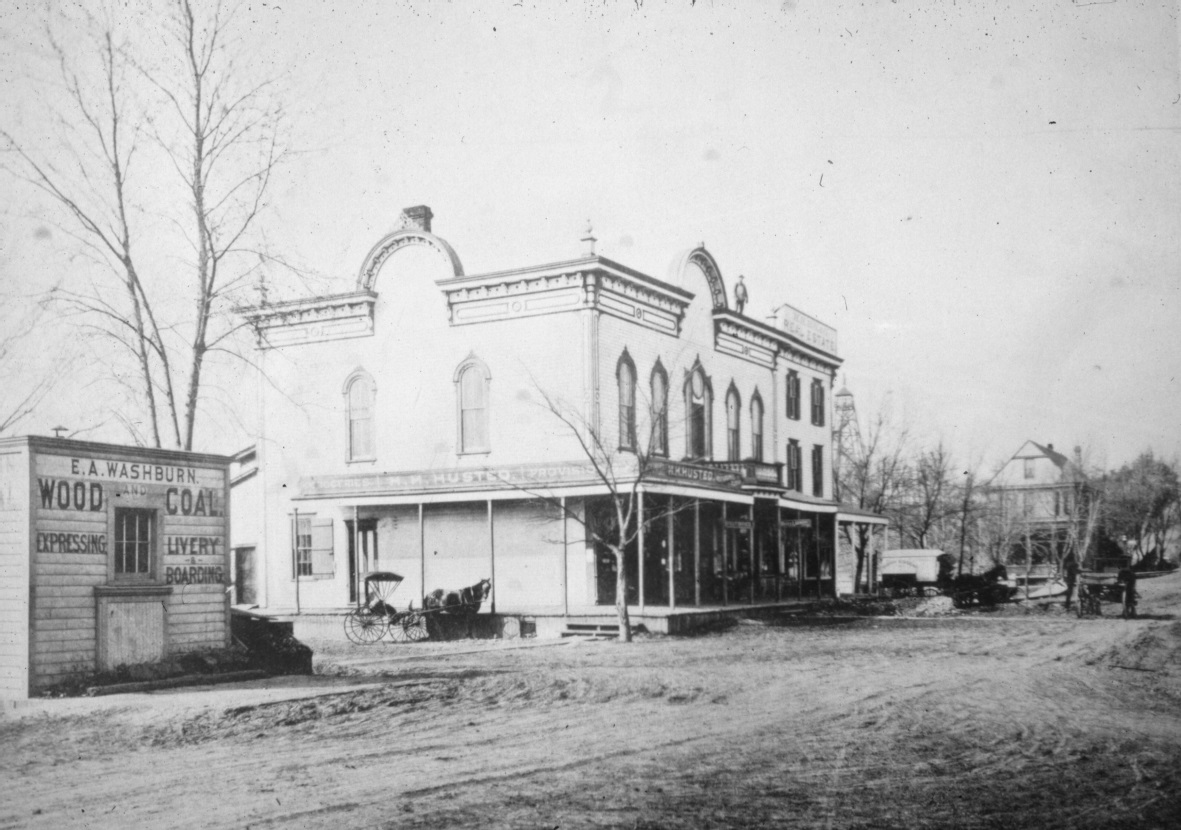
Washburn Hall, which included commercial space on the first floor and a large room on the second floor for meetings and special events, was also on this section of Morgan Avenue.
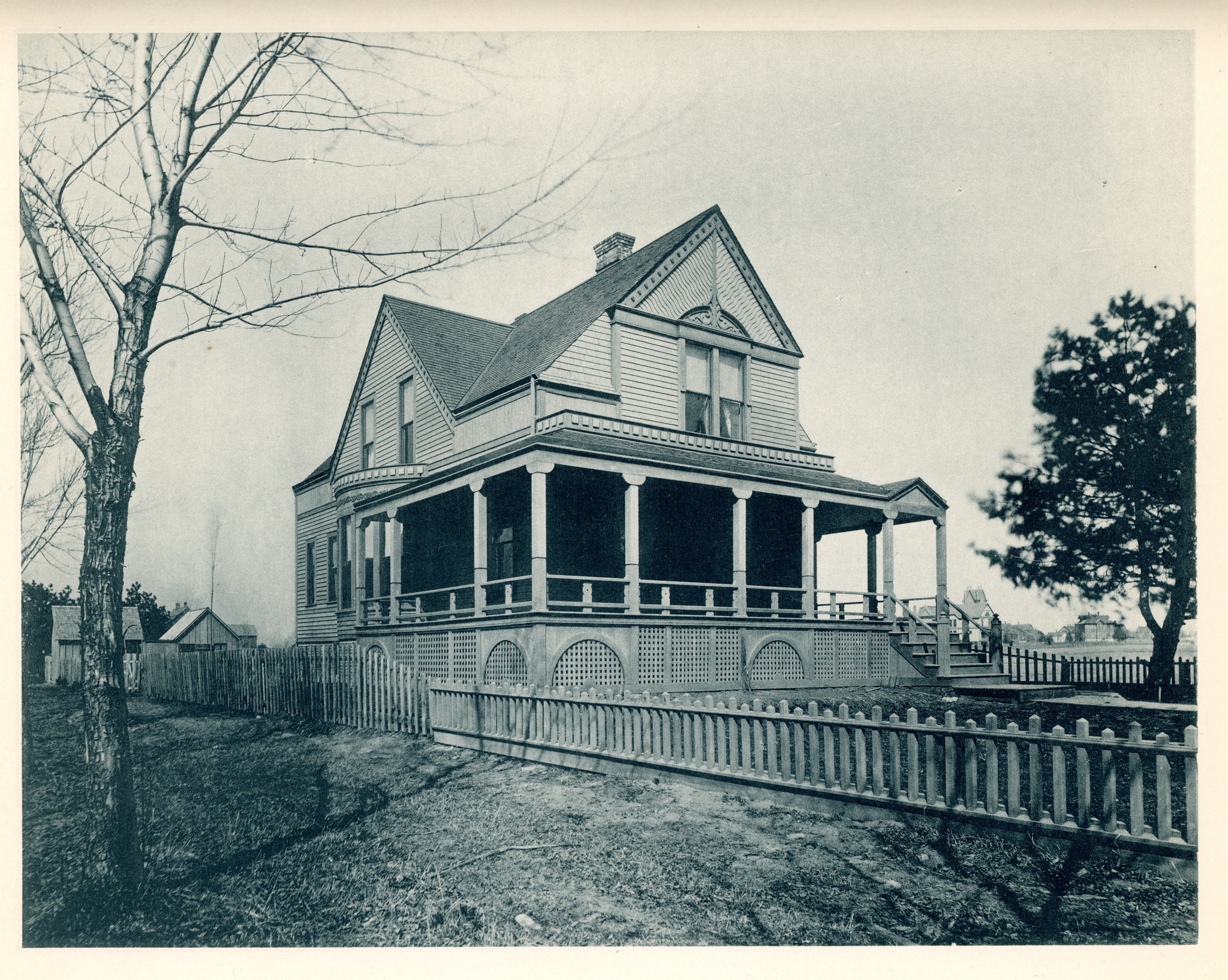
The first of the three houses in last week’s post, at the northeast corner of 111th Street and Western Avenue, was the residence of Henry (Harry) Oswald Hough and his wife, Claudia Hakes Hough.
Western Avenue then was still very rural even though it was a major north/south thoroughfare through the area.
H.O. Hough, as he was usually referred to in the newspapers, was a bookkeeper for a stockyards company. He was educated at the University of Chicago. There’s not that much information available about his job, but there is some information about his social life in Morgan Park.
Before he even got to Morgan Park, in the 1870s, Harry’s name popped up in the society pages as being one of the available single men at parties. One example was a party put on by the South Side Independent Club at a private residence in the Prairie Avenue district in 1875.
Claudia came from Connecticut and was 19 years old when she married Harry in 1884; he was 26.
Tragedy struck their young family when their two-year old son, Rupert, died in 1887. They had a second child, Waldern, who lived to adulthood but his mother, Claudia, outlived that son also.
Harry and Claudia lived in Morgan Park by 1888, and were part of the active social scene there. They “rubbed elbows” with some of the famous names from local history, including the Blackwelders, Silvas, Igleharts, Wiswells, Givins, Ayers, and Myricks.
They were early members of the Owl Club of Morgan Park, which, according to the Chicago Tribune, was “composed of the elite of the town, which is sufficient guarantee regarding the character of its recipients. It is a pleasure to belong to such an organization as the Owl Club.”
[The Owl Club of Chicago started as a press club, but expanded to include everyone from artists to businessmen. As more “men about town” became members, the press started to consider the club as less distinguished and the elitism as “pretentious.” The press members left the club and formed a new club, the Chicago Press Club. David Herriott, the editor and publisher of the Morgan Park Post, served as a president of the Chicago Press Club.]
Claudia was an accomplished musician, and Harry liked getting on the stage, also. The couple was involved in local performances, and they entertained at their house regularly.
A few examples include Harry leading the “german” at a reception of the Owl Club in 1888, and Claudia managing a performance of “Liebling’s amateurs” at the Hough home in 1889. The german was a very popular group dance that was more like a party game. The Liebling Amateurs were students and followers of Emil Liebling, a German pianist and composer who lived in Chicago.
Other performances that both Harry and Claudia appeared in with the Owl Club drama group included “Little Brown Jug” and “Among the Breakers,” both at Washburn Hall, sometimes referred to as the Morgan Park Hall.
They also participated in Owl Club costume parties at the Hall, popular events in the late Victorian era. These included a calico party, where the women all dressed in calico, and games were played, such as the men each receiving an envelope with a piece of calico in it, and having to find the women whose dress matched the piece of cloth.
Another costume party put on by the Owl Club was a “phantom” party, or a “sheet-and-pillow-case” party, where the attendees dressed as ghosts with costumes made from, yes, sheets and pillow cases.
It was also reported in the Tribune that the Hough House in Morgan Park was burglarized in July 1889, and “a spring overcoat and a lot of silverware” were stolen.
Alas, Henry’s and Claudia’s marriage did not last. They divorced, and she eventually moved to California, and he moved to Florida.
The Hough House was demolished some time ago, and recently a new dollar store opened on that corner, replacing the CVS pharmacy that had been there.
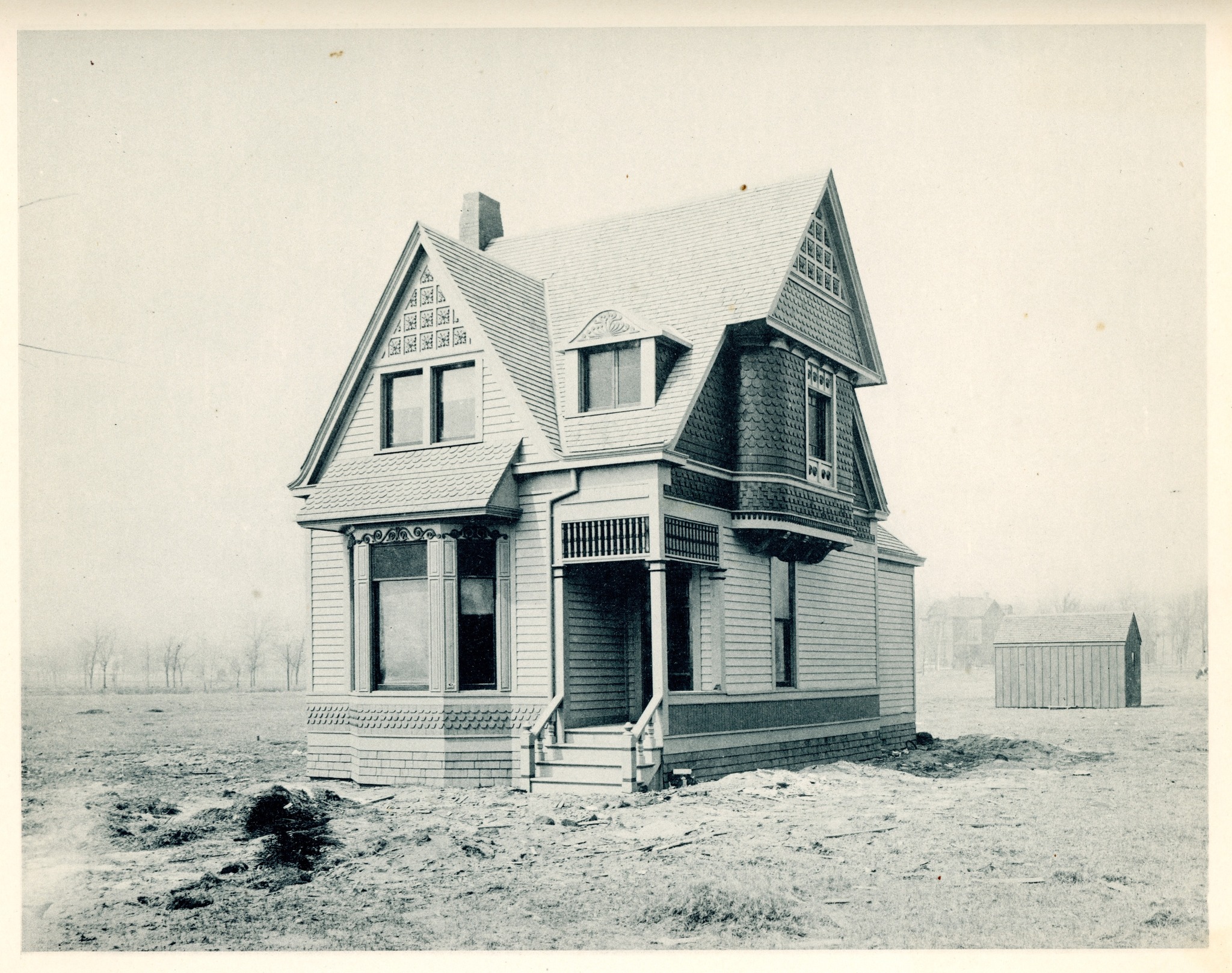
The second house in this post is identified as the Joseph E. McMeen House at 2330 W. 111th Street. The house still stands, but it is obscured by a modern commercial storefront built in front of it on 111th Street.
McMeen was an interior decorator and painter, and one source listed him in the furniture business. He had an office in the city.
It doesn’t appear that McMeen laid down long-lasting roots in Morgan Park. The newspapers reported that his house at 109th and Hermosa (then Fairfield), which had only been built six months before, was destroyed by a fire in 1889. The family was sleeping and had a narrow escape.
That is also the year he is listed as living in the house on 111th Street that still stands, so it seems likely he moved into that house after the other was destroyed. The picture of the house shows it was just completed; there wasn’t even a walkway to the front door yet.
McMeen was also in the newspaper when he was injured by a cable car. He was awarded $1,000 from the Chicago City Railway Company.
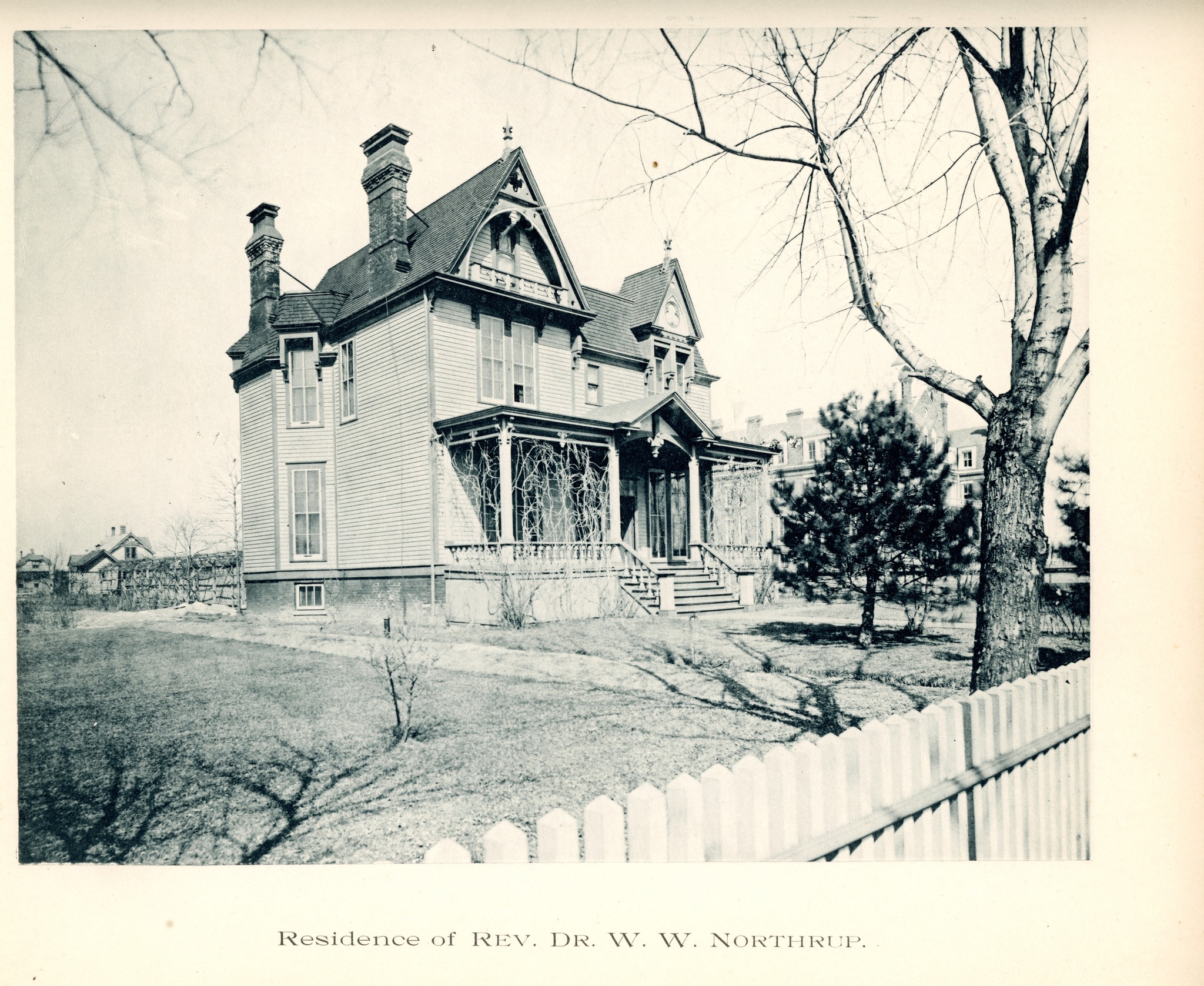
The third house was the residence of Rev. Dr. George William Northrup. The address was 2242 Morgan Avenue, but the house has been demolished and today the space is a vacant lot.
Northrup was the most prominent of the three residents. He was the President of the Baptist Union Theological Seminary, as well as a professor there.
Northrup is part of the story of how the University of Chicago was almost established in Morgan Park, and that will be covered in the next post