
The Ridge Historical Society
Louise Barwick – Part 4
By Carol Flynn
The Ridge Historical Society’s (RHS) current exhibit, “Louise Barwick’s Lost Ridge,” may be viewed on Sundays and Tuesdays from 1:00 p.m. to 4:00 p.m. or by appointment. RHS is located at 10621 S. Seeley Avenue in Chicago. The exhibit is free. RHS may be contacted at 773/881-1675 or ridgehistory@hotmail.com.
Louise Barwick (1871 – 1957) was a long-time resident and art teacher in the Ridge community. Her watercolor paintings of local scenes from around 1900, which form the basis of the current exhibit, offer a visual history of the environment of that time.
Louise Barwick’s ancestors were among the very earliest settlers in Chicago. The first few posts of this series looked at the Barwick, Cleaver, and Brookes families. Louise’s mother was Louisa (Lou) Cleaver (1842-1925), the third child of Charles and Mary Brookes Cleaver. Lou graduated from the Dearborn Academy, one of the first schools for girls established in Chicago. In 1868, Lou married John Barwick (1838-1902), who had come to Chicago around 1865.
Louise Isabel Barwick was born on May 1, 1871, the second of seven children, to John and Louisa Barwick.
On the 1880 census, the Barwick family was listed as living at 920 Bowen Ave., in Cleaverville, the “company town” built by Charles Cleaver, Louise’s maternal grandfather, for the employees of his meat packing facility and soap making and rendering works at 35th Street and Cottage Grove. The Barwick family lived next door to the family of a Cleaver brother-in-law. Barwick’s occupation was given as bookkeeper.
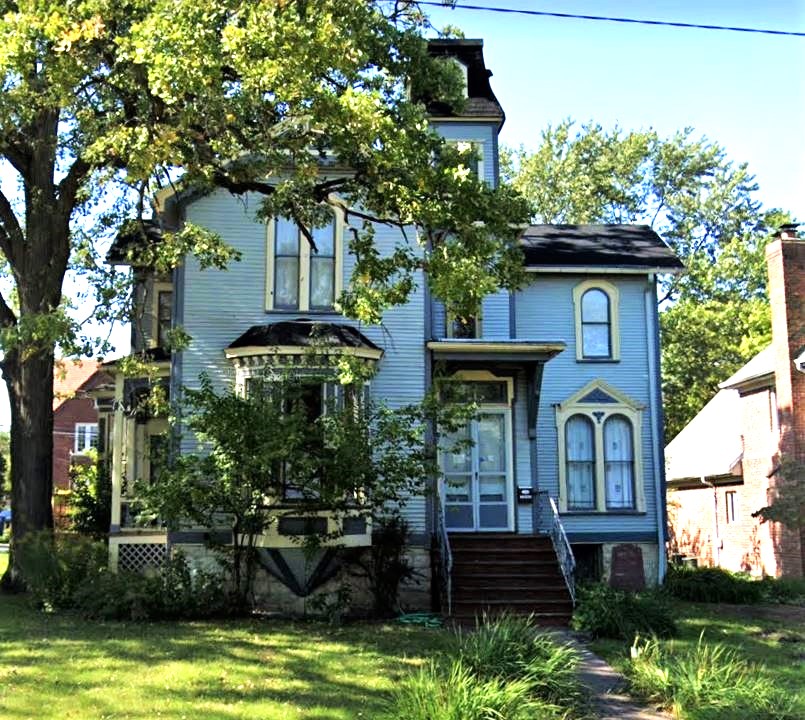
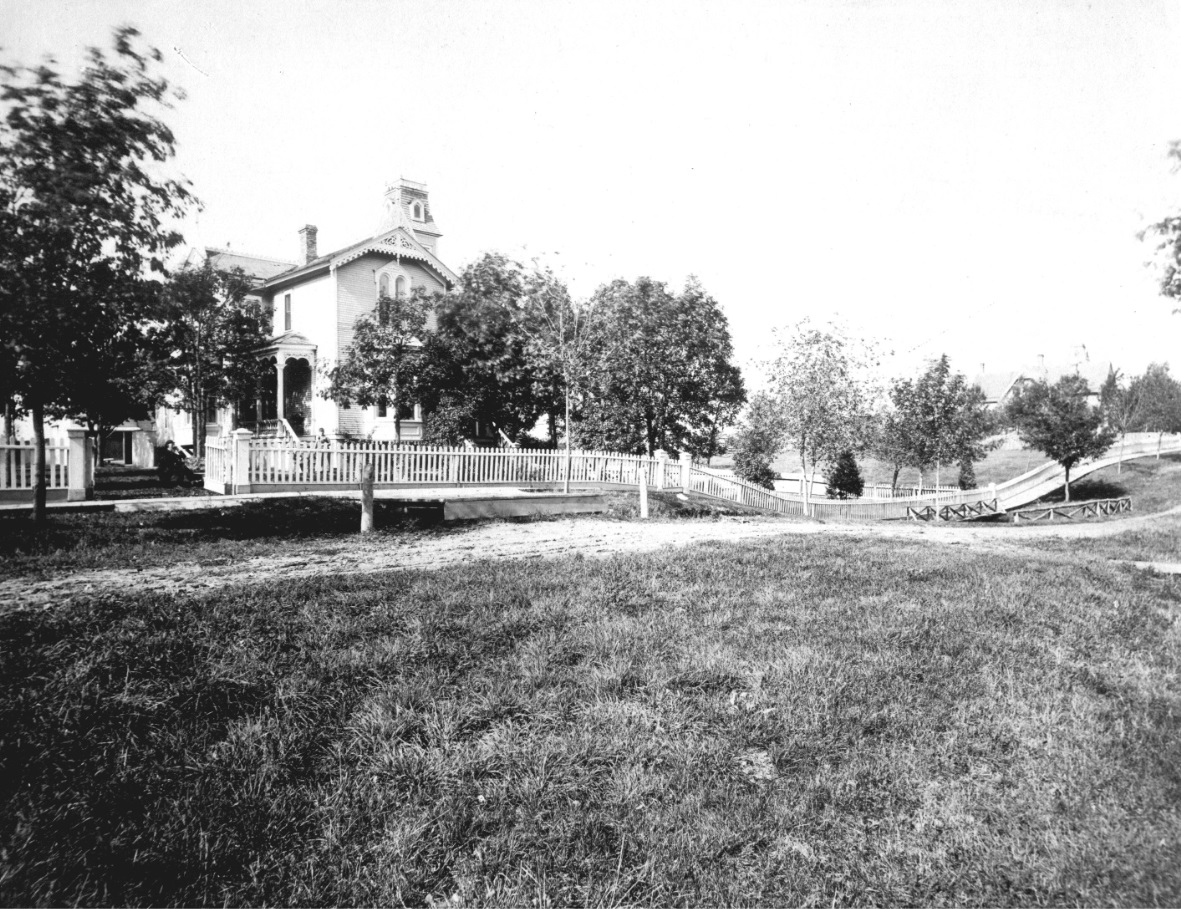
The Barwick family moved around a bit. The 1892 voters’ list recorded them at Belmont Ave. near Tracy, which would be around 103rd Street and Seeley. By 1900, Barwick had joined his father-in-law in real estate, and the Barwick family resided in the house at 10330 S. Seeley Ave. That house was built for George Chambers in 1874, and is still standing today, one of the most historic in Beverly.
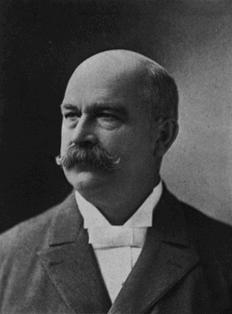
Louise graduated in 1891 from the Cook County Normal School, a training institution for teachers. This was significant as the school was run by Col. Francis Wayland Parker, one of the giants in the history of American education.
Parker (1837 – 1902) was from New Hampshire, worked as a teacher, and rose to Colonel in the Union Army during the U.S. Civil War.
After the war, in Germany, Parker studied progressive education theories and techniques of people like Rousseau, Frobel, Pestalozzi, and Herbart, educators we have written about before for their profound influence on the educators who called the Ridge home, such as the Hofer sisters.
Parker came to embody the Progressive Era’s initiatives and reforms to change the focus of education for children to be based on learning by doing as opposed to lectures and rote memorization.
After returning to the U.S., after serving as the superintendent of the Boston Public Schools, Parker came to Chicago in 1883 to become the principal of the Cook County Normal School, where he constantly experimented with developing and expanding curriculum. Reading, spelling, and writing became “communications.” Art, music, and physical education were added to the curriculum. The study of nature was added to the science curriculum.
Parker started a private experimental school, the Chicago Institute, that merged with the U. of Chicago Laboratory Schools in 1901.
Louise Barwick was educated as a teacher under Col. Parker’s guidance, and she became a teacher at the Normal School herself. Although she was a talented painter, her real excellence showed in her geographic map-making skills, both drawn and modelled in clay and other materials.
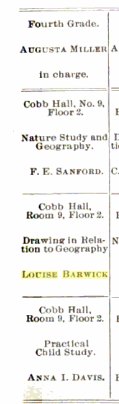
During the 1890s, Louise taught classes at the Normal School as part of the Geography program. Some of the topics were “Drawing Geographical Types,” and “Relief Maps in Chalk.”
For a time, the geography art classes were under the direction of Ida Cassa Heffron, who lived in Beverly at 10638 S. Prospect Ave. Heffron’s father was Rev. Daniel Salisbury Heffron, who helped found Bethany Union Church and was pastor there for 11 years.
In the next post, we will look at the phenomenal work Louise completed for display at the 1893 World’s Fair in Chicago, the Columbian Exposition. This was a huge relief map of Illinois that illustrated the topographical features of the land.