
The Ridge Historical Society
Native American Heritage Month: Land Acknowledgement Statement
By Carol Flynn
November is Native American Heritage Month. The theme for this year is “Celebrating Tribal Sovereignty and Identity.”
This continent was populated by Indigenous Peoples for 20,000 years before the European settlers came. There was, and still is, no single Native American culture, language, or lifestyle; there were many different groups here when the Europeans arrived. Ninety percent of those people died from diseases such as smallpox, measles, influenza, and cholera introduced by the Europeans, to which Native Americans had no natural immunities.
Native Americans should not just be considered as part of the past – they are very much part of the present and future of this country.
In recent years, governments, universities, cultural organizations, churches, and other institutions have begun recognizing the Native American heritage of the land through Land Acknowledgement Statements (LAS). These are formal declarations put out in writing that note the organization is located on land that was once the ancestral grounds of Native Americans.
These statements first started being used in Canada in 2015. They are often read aloud at the beginning of an event. In Canada, they are regularly included at events ranging from parliament sessions to ballet performances to National Hockey League games.
Chicago-area groups, including the Field Museum of Natural History and the Forest Preserves of Cook County, have issued Land Acknowledgement Statements.
In 2021, the RHS Facebook page ran a series on the history of Native Americans on the Ridge as support for a suggested LAS for groups on the Blue Island Ridge. That LAS has been adopted by several organizations in the community.
The suggested LAS is:
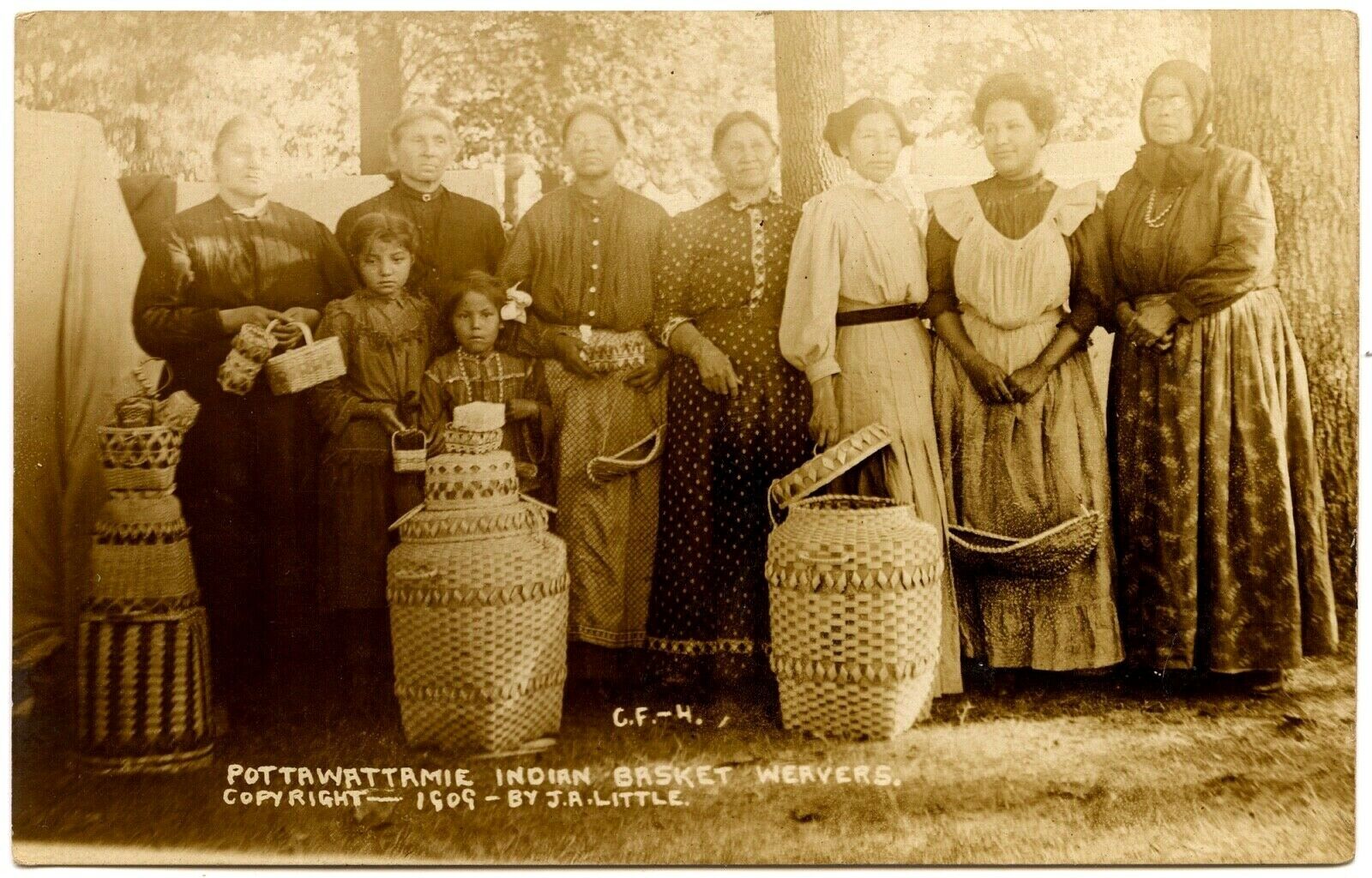
“We acknowledge that we are located on the ancestral homelands of the Potawatomi tribe, a member of the Council of Three Fires with the Ojibwe and Odawa Peoples.
“Other tribes that lived in the Blue Island area include the Miami and the Illinois Confederation. Many additional tribes including the Fox, Sauk, Winnebago, Menominee, Meskwaki, and Kickapoo lived nearby and accessed the area for trading and portage routes.”
The rationale for this statement is that the Potawatomi were the dominant Native Americans living around the Blue Island area in 1833 at the time of the signing of the Treaty of Chicago. The Council of Three Fires, a confederation of the Ojibwe, Odawa, and Potawatomi tribes, ceded the land to the U.S. Government at that time, and most of the Native Americans left the area.
The Miami tribe also had a presence here, concurrent with the Potawatomi, and before that, until the late 1700s, tribes from the Illinois Confederation lived in the area until driven out by the Miami and Potawatomi.
Many other tribes lived nearby. This land is located on the Vincennes Trace and Calumet and Stony Creek waterways, and the land and water routes were used for trading, transportation, and seasonal migration. These tribes included the Fox, Sauk, Winnebago, Menominee, Meskwaki, and Kickapoo.
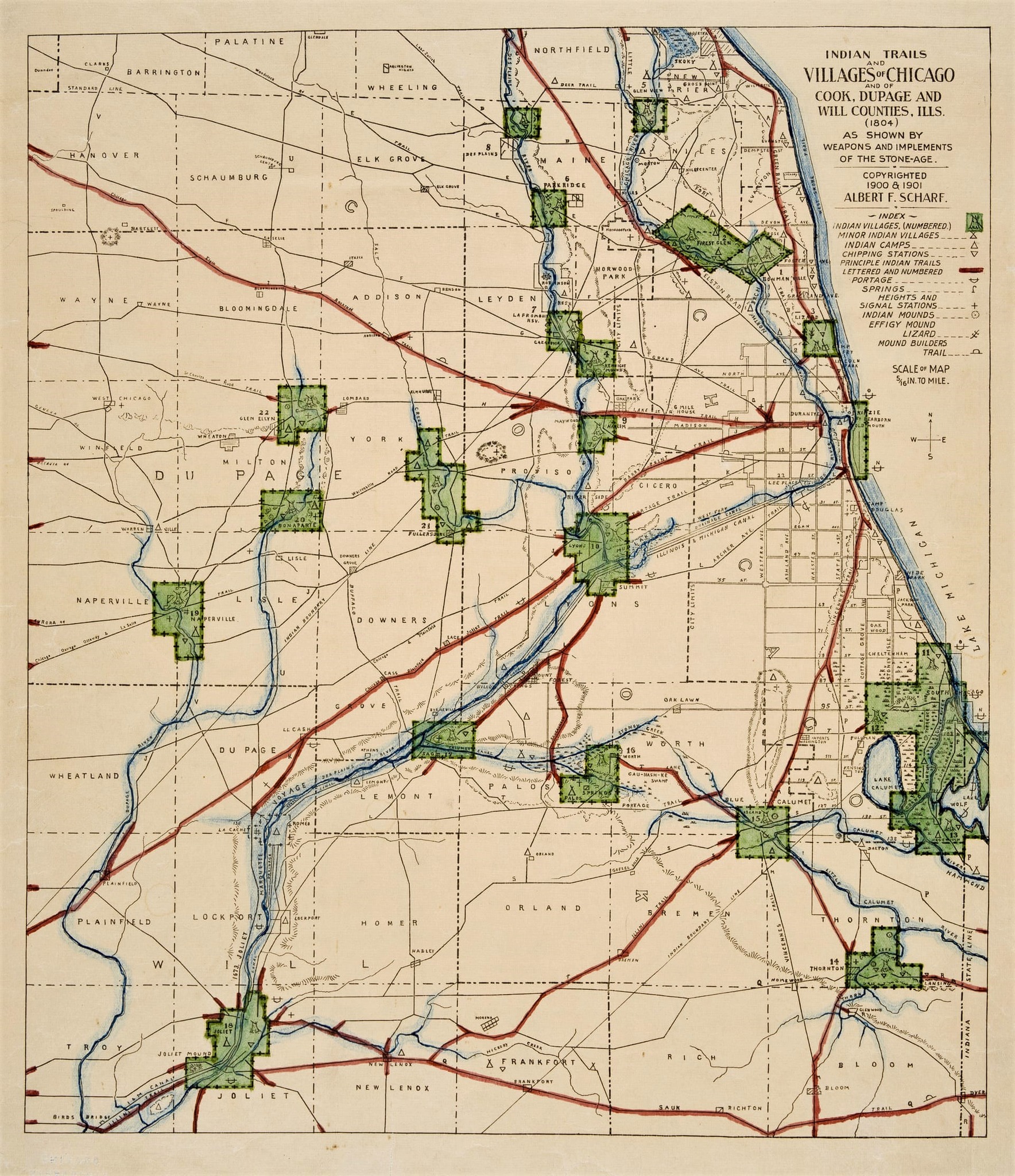
The Native American presence in the area included a major village and burial mounds in Blue Island, a signal station at the northern tip of the Ridge in today's Dan Ryan Woods, and two trails that ran across the Ridge. These were the Vincennes Trail that originally ran through North Beverly around 92nd Street, and a trail that ran along today's 103rd Street.
All of this has been lost now, but can be remembered by acknowledging its historical presence.