The Ridge Historical Society
The Early Days of Morgan Park – Part 4: Other BILBCo Leaders, Railroads
By Carol Flynn
The last post looked in detail at Frederick H. Winston, one of the founders of the Blue Island Land and Building Co. (BILBCo), the group of investors that developed Morgan Park.
The intent of the post was to give an idea of the type of speculators who bought up and resold land all around Chicago, and all around the country, in the mid- to late-1800s. They made fortunes from their investments.
Many, if not most, of these men were connected to the railroads. They at least owned stock in the railroad companies and some actively ran railroads.
The history of railroads and the history of development of the land are intertwined, throughout the country and for the Blue Island Ridge communities.
By the 1830s, the adaptation of steam engines for powering trains started to revolutionize transportation. Up to then, moving people and goods was accomplished by boats on waterways and wagons and coaches pulled by horses or oxen on land. Now, a machine fueled by burning coal could make travel much more efficient, accessible, convenient, and comfortable.
To encourage building railroads and expanding to the west, the U.S. and state governments gave away millions of acres of land to the railroad companies that could be sold off at enormous profits once the land was accessible by train for development.
By 1850, 9,000 miles of railroad tracks had been laid. The east and west coasts were finally being connected in a much more efficient way and Chicago became the major hub between the two points.
The southern tip of the Blue Island was the first local area to be developed because it was on the system of waterways that included the Little Calumet River and Stony Creek, and then the first I&M feeder canal was built in 1848.
The city of Blue Island traces its founding to the 1830s as a “river town” as industry built up around there. Access to Chicago, twelve miles to the northeast, however, was still overland using the ancient Vincennes Trail. During rainy seasons and winter the road was almost impassable.
The first railroad tracks were laid in Chicago in 1848. After that, railroad companies quickly built lines of tracks that connected Chicago to other cities in all directions.
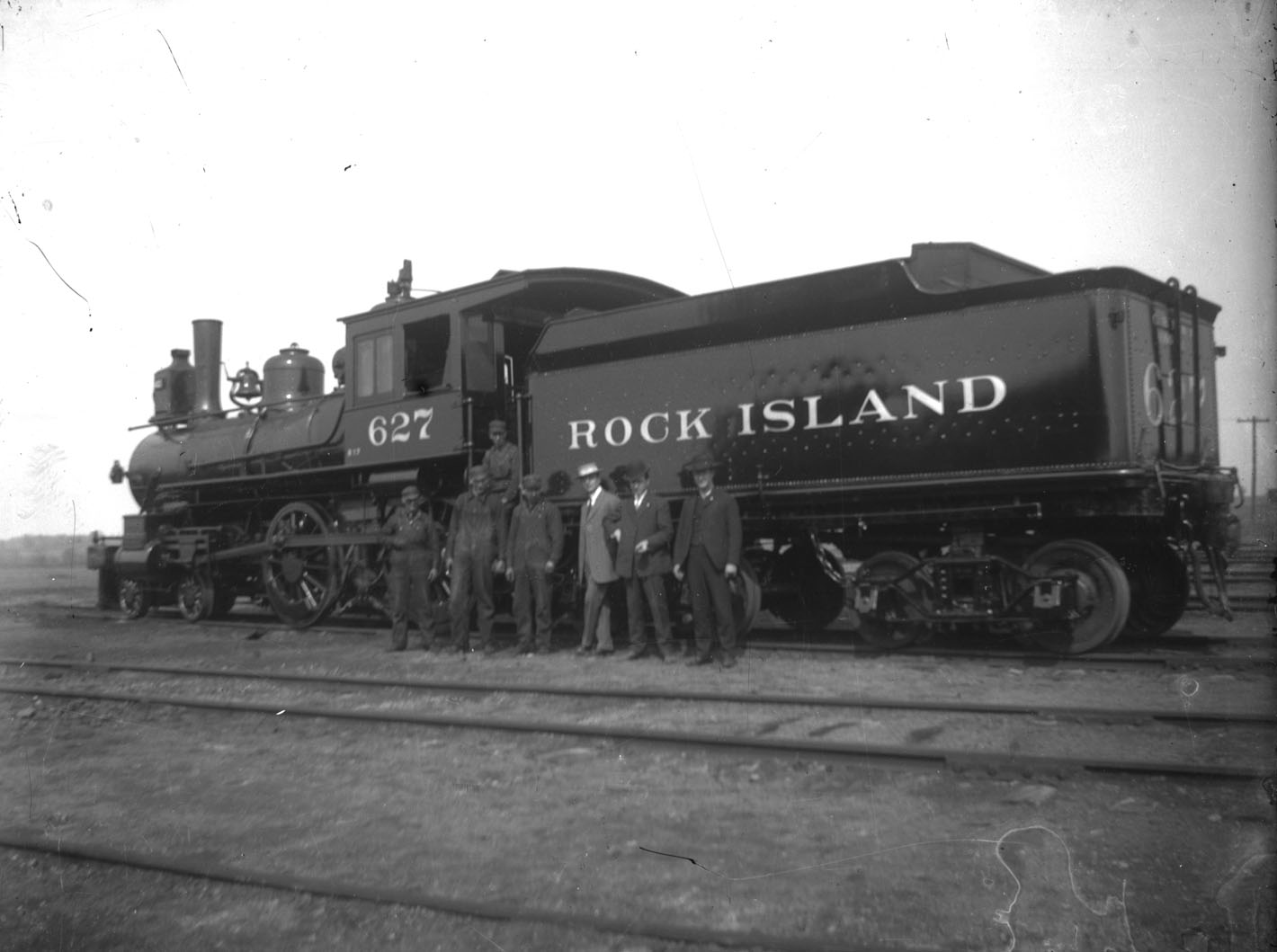
In 1852, the Chicago, Rock Island & Pacific Railroad (CRI&P) laid tracks between Chicago and Joliet. The tracks ran to the east of the land that would become Beverly and Morgan Park, angling southwest along Vincennes Road, and passing through the city of Blue Island.
Blue Island changed from a river town to a rail town as other railroad companies came through the area. The railroad yards at Blue Island are still very busy today.
In 1869, the CRI&P started laying tracks for a line to come off the main line and run west along 99th Street to the growing area of Washington Heights, then turn south along Walden Parkway and meet up again with the main line in Blue Island. This was referred to as the “dummy line.” The line was completed in 1870.
In 1889, the “dummy line” was reconfigured to extend service to north Beverly. The line now left the main line at 89th Street and ran west to a passage just east of Longwood Drive, turning south to Blue Island. This is the route the Metra Rock Island line uses today.
Some of the major investors who owned and ran the Blue Island Land and Building Co. were also the men who owned and ran the Chicago, Rock Island & Pacific Railroad Co. They took ownership of the Morgan estate land in 1869, then expanded their railroad line to the area.
This increased the value of the land, and they then resold lots of it to developers for a substantial profit. They kept the land south of 107th Street and created their own development they called Morgan Park.
It is usually stated that the coming of the railroad to the Blue Island led to its development. This was no happy coincidence; it was well thought out and planned by the shrewd businessmen of the day.
As was covered in the previous post, Frederick H. Winston was the president of the BILBCo and the chief lawyer for the CRI&P.
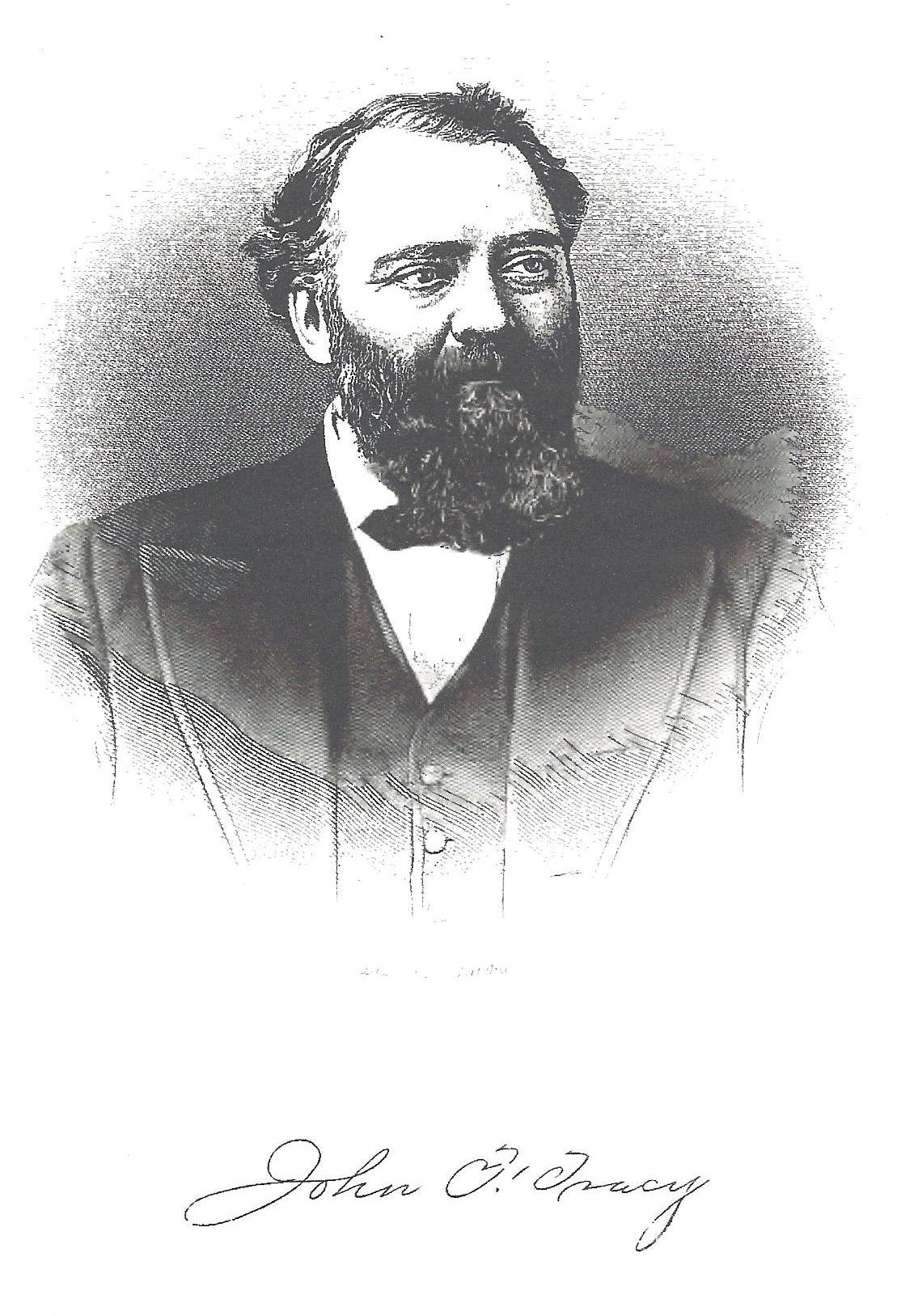
Another BILBCo investor was John F. Tracy, the President of the CRI&P.
John F Tracy was born in Erie, Pennsylvania, in 1827. His father was a contractor who built canals and railroads, and Tracy followed in his footsteps.
After working on the building of the Erie and Northeast Railroad, he became the Superintendent and ran the railroad. He went against the wishes of the community to successfully expand the line in 1854, after which he left Erie and moved to Chicago to become the Assistant Superintendent of the Chicago and Rock Island Railroad.
He became a major stockholder in several railroad companies, as more and more companies were starting, merging, and expanding.
However, the expansion of the railroads was not without controversy. As the railroads made millionaires out of people like Winston and Tracy, they caused the financial downfall of those connected with older means of transportation, like the river boat companies.
A major issue that the CRI&P, and Tracy as Superintendent, became involved in was the building of railroad bridges over the Mississippi River. The boat companies claimed that this obstructed river traffic, leading to accidents and damage to both boats and bridges. The bridge builders and railroads claimed much of the damage was sabotage.
One case involving the river boat Effie Afton crashing into the first bridge built on the river in 1856, connecting Rock Island with Davenport, went all the way to the U.S. Supreme Court, which found in favor of the bridge company in 1863. A young lawyer named Abraham Lincoln was part of the legal team representing the railroad and bridge interests.
Another case in 1859, in which Tracy was called to testify, involved alleged plans to bomb a bridge at St. Louis.
Ultimately, the interests of the new technology, the railroads, won out. The Chicago Tribune stated in 1878 that "Mr. Tracy was the man who fought it through to a triumphant success."
Tracy rose in the CRI&P to become President in 1866. He also secured control of the Chicago and Northwestern Railroad and became president of that company. He had over 3,500 miles of railroads under his control.
Tracy was known for the expansion of his railroads, and always running financially sound companies. One biographical sketch stated: “He was one of the master spirits among the progressive railroad men of our country, and was largely instrumental in pushing forward the great iron thoroughfares which now carry across this vast continent the commerce between the Atlantic and the Pacific.”
Although his influence in the “commercial world” was descried as “immense,” he was personally described as “a quiet, unassuming man, who neither sought nor cared for notoriety.”
Tracy never married. In his private life, he was described as “one of the least ostentatious and most kind-hearted of men.”
He never lived on the Ridge. In fact, he spent most of his time in New York and Erie, and not that much time in Chicago. He suffered from Bright's disease, a past name for nephritis, which led to chronic renal disease. Due to declining health, he retired and returned to Erie, where he died in 1878 at the age of 51. It was reported that “his large wealth was bestowed generously in public and private charity.”
In the next posts we’ll look at a few more of the BILBCo investors, especially those who had a more direct connection to the Ridge.