
Ridge Historical Society
Cinco de Mayo
By Carol Flynn
Today the Ridge Historical Society looks at the history of the Mexican community on the Ridge – and those train whistles that can be heard day and night from trains going into and out of our neighbor to the south, the City of Blue Island, with whom we share the Blue Island Ridge.
Cinco de Mayo, or May 5th, is an annual celebration of Mexican American culture. The origin of the day commemorates the Mexican army’s victory over the French at a battle in 1862. The success of the smaller Mexican army was a morale booster for the Mexicans, even though eventually Mexico City fell to the invaders.
With time, the day took on more significance in the U.S. than in Mexico to showcase the traditions and pride of Mexican immigrants. Cinco de Mayo should not be confused with Mexico’s Independence Day, September 16, which is more important in Mexico.
Historically, the Mexican community was not that prevalent in the early days of Beverly/Morgan Park, although it is well represented now. However, Mexicans played a vital role in the development of the City of Blue Island. Today, Blue Island’s population is about 50% Hispanic.
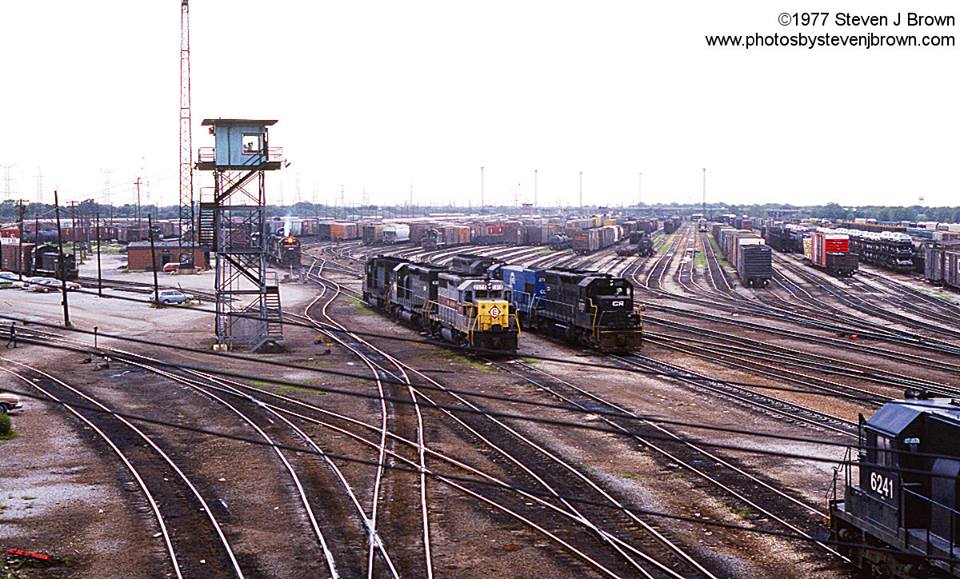
Blue Island first developed as a “river city” located on the Calumet River and Stony Creek, and of course the building of the Cal-Sag Channel was very important for commerce. With the coming of the railroads in the mid-1800s, Blue Island became a “railroad hub.”
Many ethnic groups worked on the U. S. railroads – the Chinese, European immigrants, African Americans. But it has long gone unrecognized that over 50% of the tracks in many areas of the country were laid by Mexican workers.
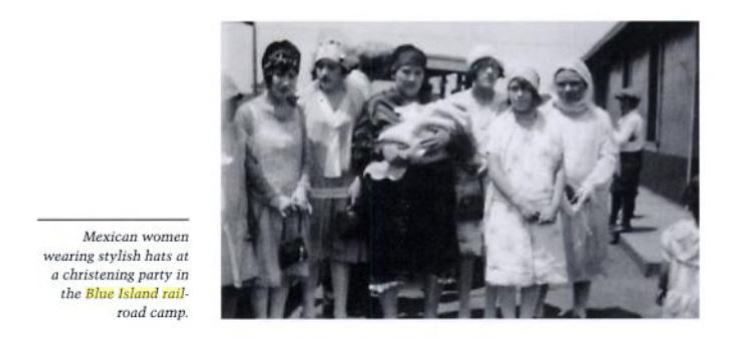
In the early 1900s, the railroad companies sent recruiters into Mexico to entice the people to come to the States to work for the railroads. The recruiters promised nice housing and a high standard of living. The reality for the families that came, however, was very different. They lived in boxcars on the railroad yards, with wooden bunks and no windows, in dangerous conditions, with no running water and no fuel for heat.
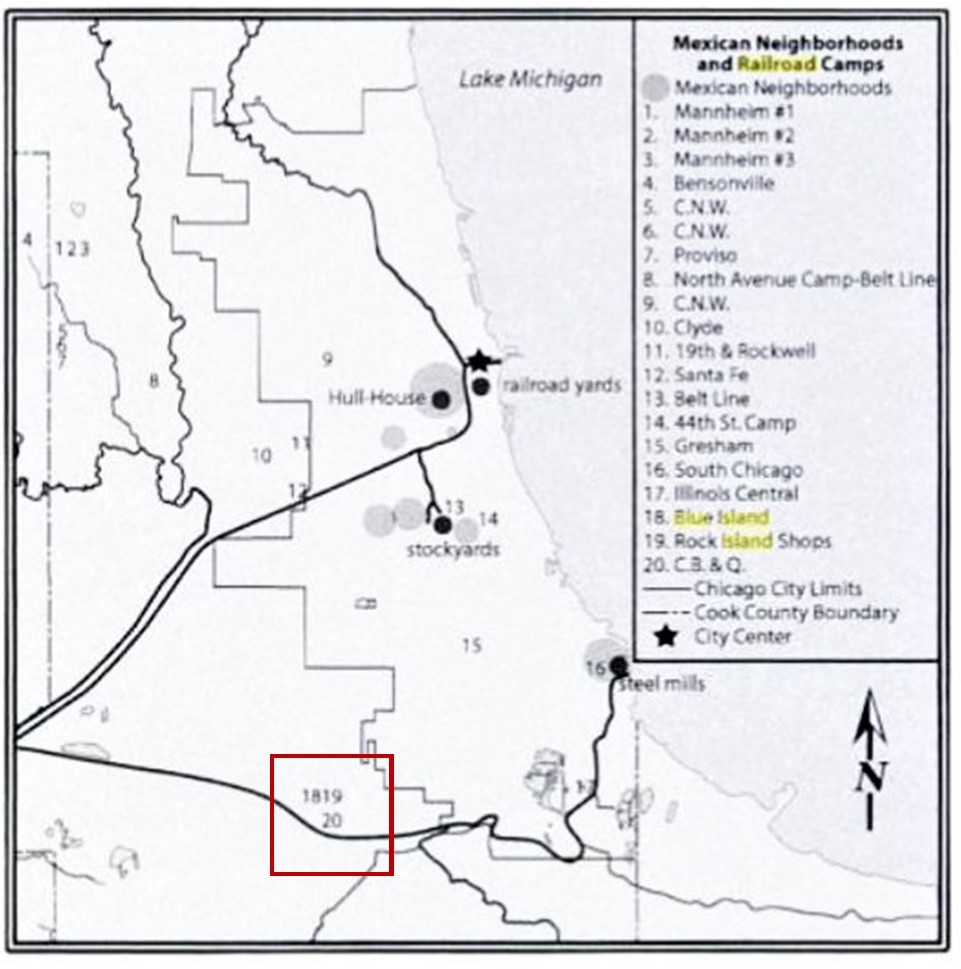
The first “railroad camp” in the Chicago area was established in Blue Island in 1917 to house the “traqueros,” or track and maintenance workers, who came here, often with their young families. This was set up around 123rd Street and Winchester Ave. The camp developed the reputation as one of the worst in the country.
With time, as with most immigrant groups, the Mexican workers moved into other jobs and established their own businesses and communities. It is a tribute to this hard-working group of people that they overcame not only the destitute conditions forced upon them but also extreme prejudice to flourish in the country that invited them to move here and became dependent upon them for both the railroad and agriculture industries.
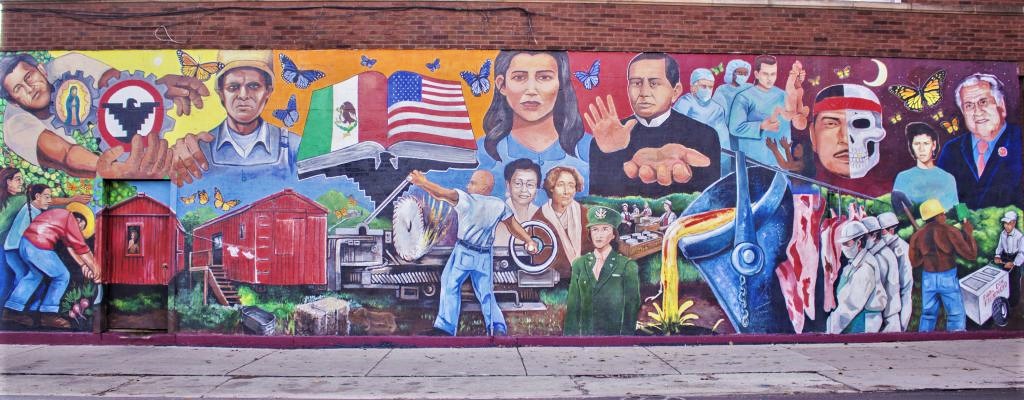
In 1974, the Blue Island city council banned the painting of a mural at 13337 Old Western Ave. that depicted the history of Mexican laborers. The city claimed it was against zoning laws for advertising signs. The U.S. District Court found in favor of the mural painters, stating it portrayed “an idea,” not an advertisement. The mural was completed.
With time, the mural faded, but it was repainted in 2016 as a community project, a vibrant reminder of the history of the Mexican community on the Ridge.
Updated from an original 2020 post.