
The Ridge Historical Society
National Library Week
By Carol Flynn
April 23 to 29 is National Library Week, and this year’s theme is “There’s More to the Story.” The theme refers to all of the benefits that libraires offer in addition to books, including programming that brings communities together, lending items like museum passes and musical instruments, helping people enhance their literacy skills, and now, offering technology services.
That theme can be expanded to include that there is always more to the historical stories posted on this Facebook page, also. Here’s some of the stories behind the libraries on the Ridge.
According to “The First Hundred Years – A Story of Blue Island 1835-1935” by John H. Volp, books and magazines were not plentiful in the early days of settlement on the Ridge, the 1840s-50s. Available reading material consisted of the books each family brought along when they settled here, and occasional copies of Chicago newspapers that found their way to the Blue Island.
One scholarly gentleman in the Village of Blue Island, Thomas McClintock, had a large collection of better books on history and travel locations. Known for his philanthropic ways, he readily agreed to permit the loan of his books to the villagers when requested to do so by a village committee.
A system was worked out to allow people to borrow books for a certain number of days at a slight fee, creating Blue Island’s first circulating library. There were about one hundred books available.
In 1854, a new school was built, and a fine library was established, with 800 volumes on history, science, travel, and fiction. The principal, Professor Rodney Welch, saw to it that there was no “trash” in the collection. The collection was available to the villagers.
According to the Blue Island Historical Society, in the 1870s, a formal library was opened in a storefront on Western Avenue.
In 1890, the Current Topics Club, a forerunner of the Blue Island Woman’s Club, raised money to expand the library, and the Blue Island Library Association was chartered. The library had hired a librarian and moved to a larger location, and the collection had grown to 1,600 books, when a fire destroyed the central business district, including the library, in 1896.
All that was left were the 84 books out on loan at the time. Within a week, the library had reopened in a private home, and Blue Islanders contributed books, equipment, and funding to reestablish the library.
In 1897, the voters of Blue Island approved the establishment of a free public library, with a public assessment. The ground floor of the Village Hall was remodeled for use as the library. The large, comfortable reading room became a popular place.
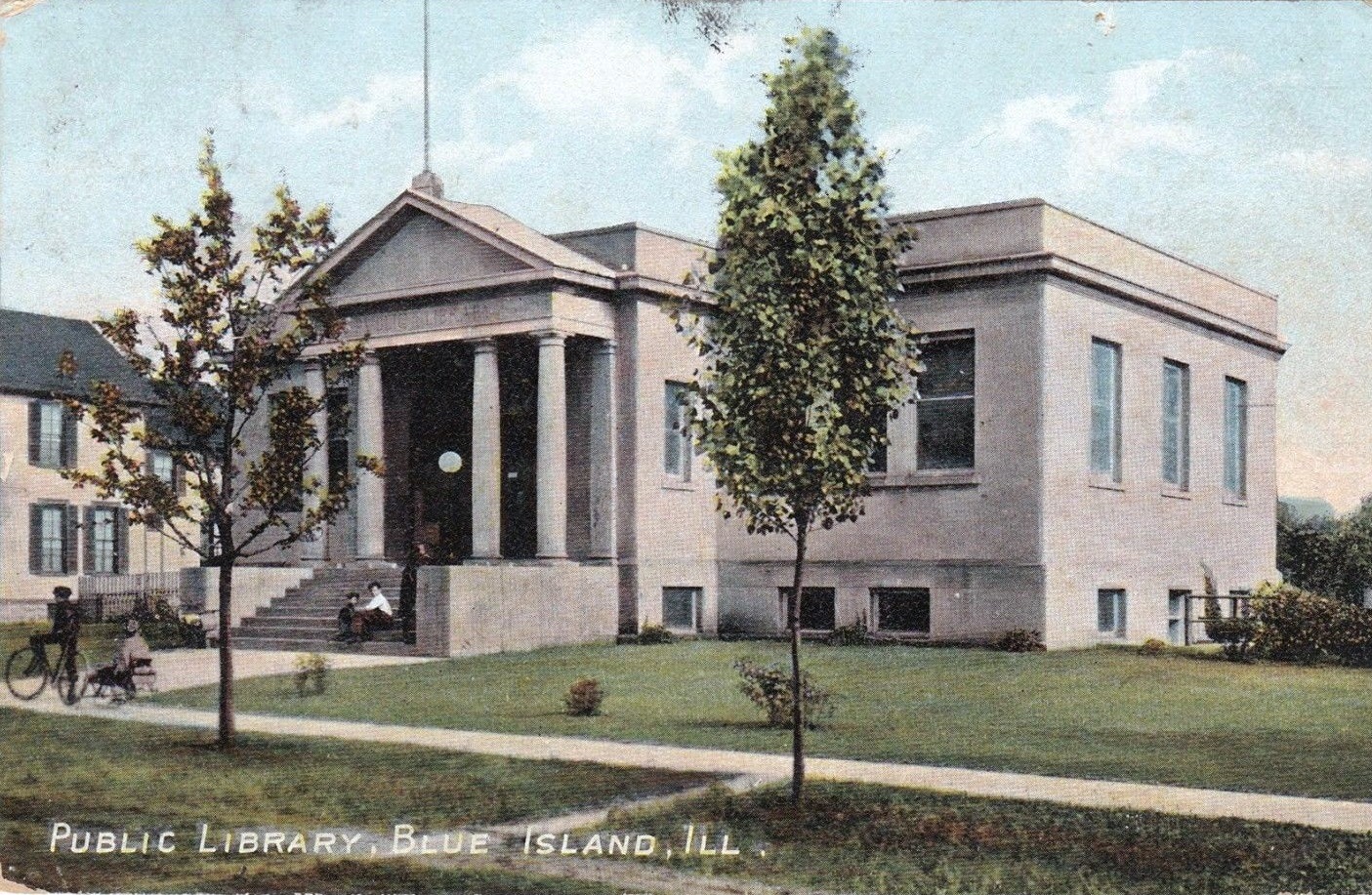
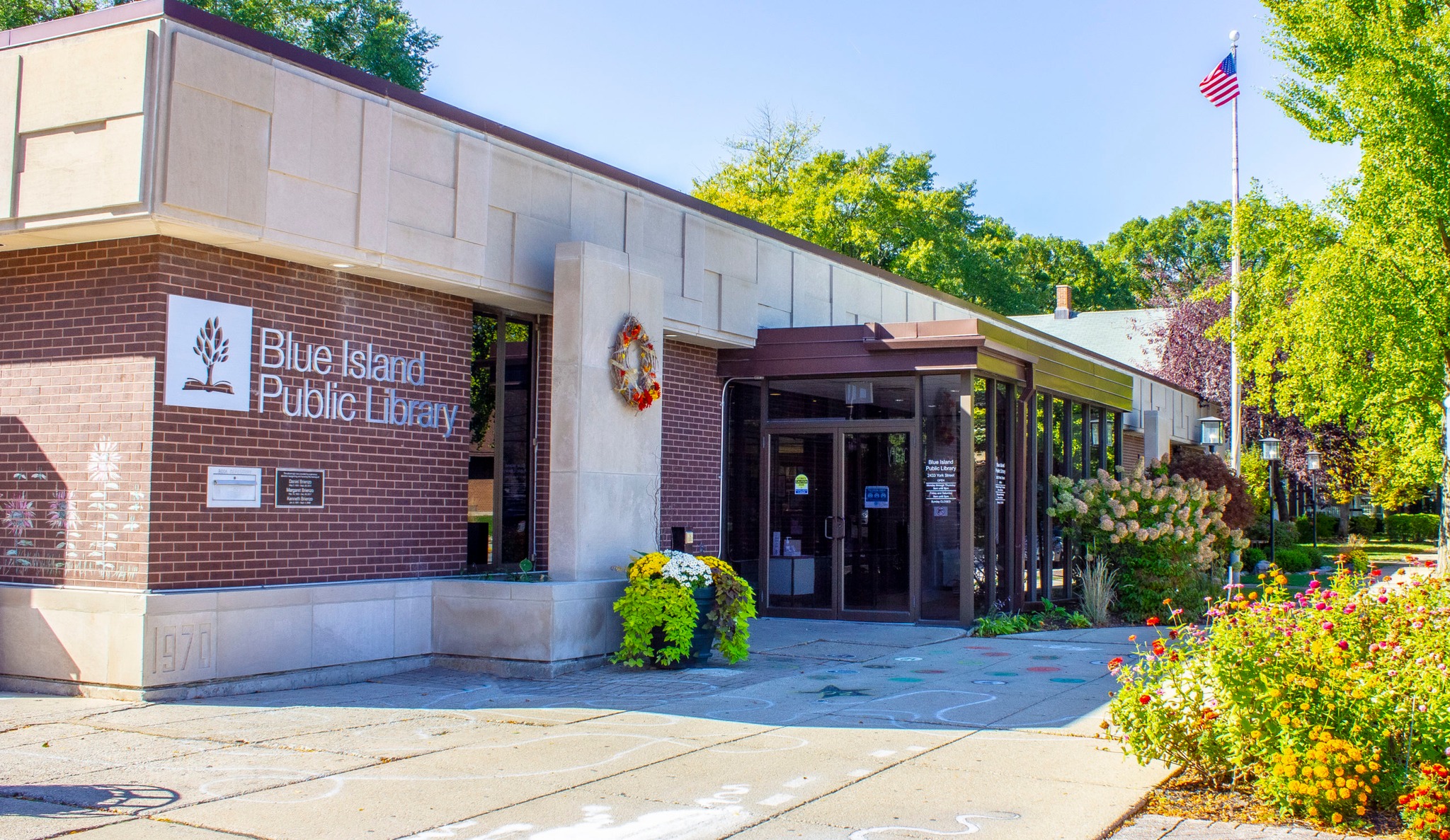
In 1902, the city purchased the property on the south side of York Street from J. P. Young for the site of a new public library. That is the site the Blue Island Public Library sits on today.
Andrew Carnegie, the wealthy industrialist and philanthropist, was financing the building of public libraries in municipalities that committed land and funding for this purpose. Blue Island accepted his offer to build a grand library of stone with marble accents and oak paneled walls on the York Street site. This building was referred to as the “Carnegie” by Blue Islanders.
This original “classical” library building was replaced by the current “modern” one in 1969.
Next post: The Walker Library is founded in Morgan Park.