
The Ridge Historical Society
March: Women’s History Month – Part 3 on the Hofer Sisters
By Carol Flynn
The five daughters of the Hofer family that lived in Beverly were leaders in the kindergarten movement in the U.S.
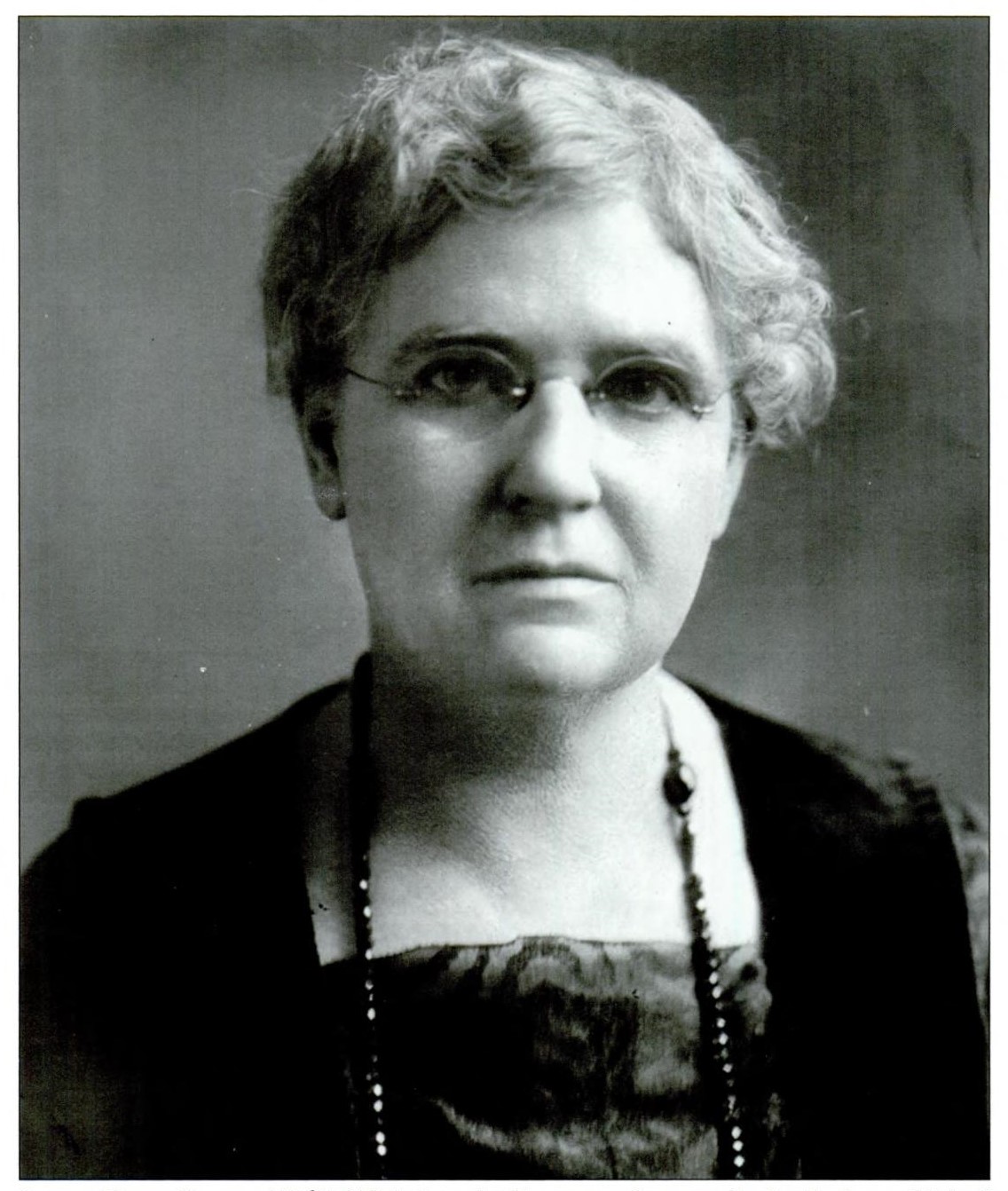
Oldest daughter Mari, profiled in the last post, was an expert in music education for children. This post will look at the second daughter, Bertha, whose career focused on education, administration, and social settlement services, especially for mothers and children.
Bertha Hofer Hegner (1862-1937), like her siblings, was born in Iowa, where her parents settled after immigrating from Baden, on the German-Swiss border.
In the 1880s, several of the Hofer daughters moved to Chicago. Bertha enrolled in a training school for kindergarten teachers run by Elizabeth Harrison, a well-respected educator, as part of the Loring School, a private day and boarding school for girls in the Kenwood area.
[As an aside, the Loring School moved to Beverly and operated in the England J. Barker House at 107th and Longwood Drive from 1935 to its closure in 1962.]
Bertha graduated from that program in 1890, the same year her parents sold the newspaper they were running in Iowa and moved to Chicago, to 1833 West 96th Street, in Beverly, about where the entrance to Ridge Park now exists.
Bertha taught in Lake Forest for a few years, then in 1894, she completed graduate studies in Berlin, Germany, at the Pestalozzi-Fröbel-Haus. The kindergarten movement had started with Swiss educator Johan Pestalozzi in the late 1700s, and was furthered in the 1800s by Friedrich Froebel in Prussia/Germany. Froebel’s niece ran the program in Berlin. Bertha later did further graduate study at the University of Chicago and Columbia University in New York.
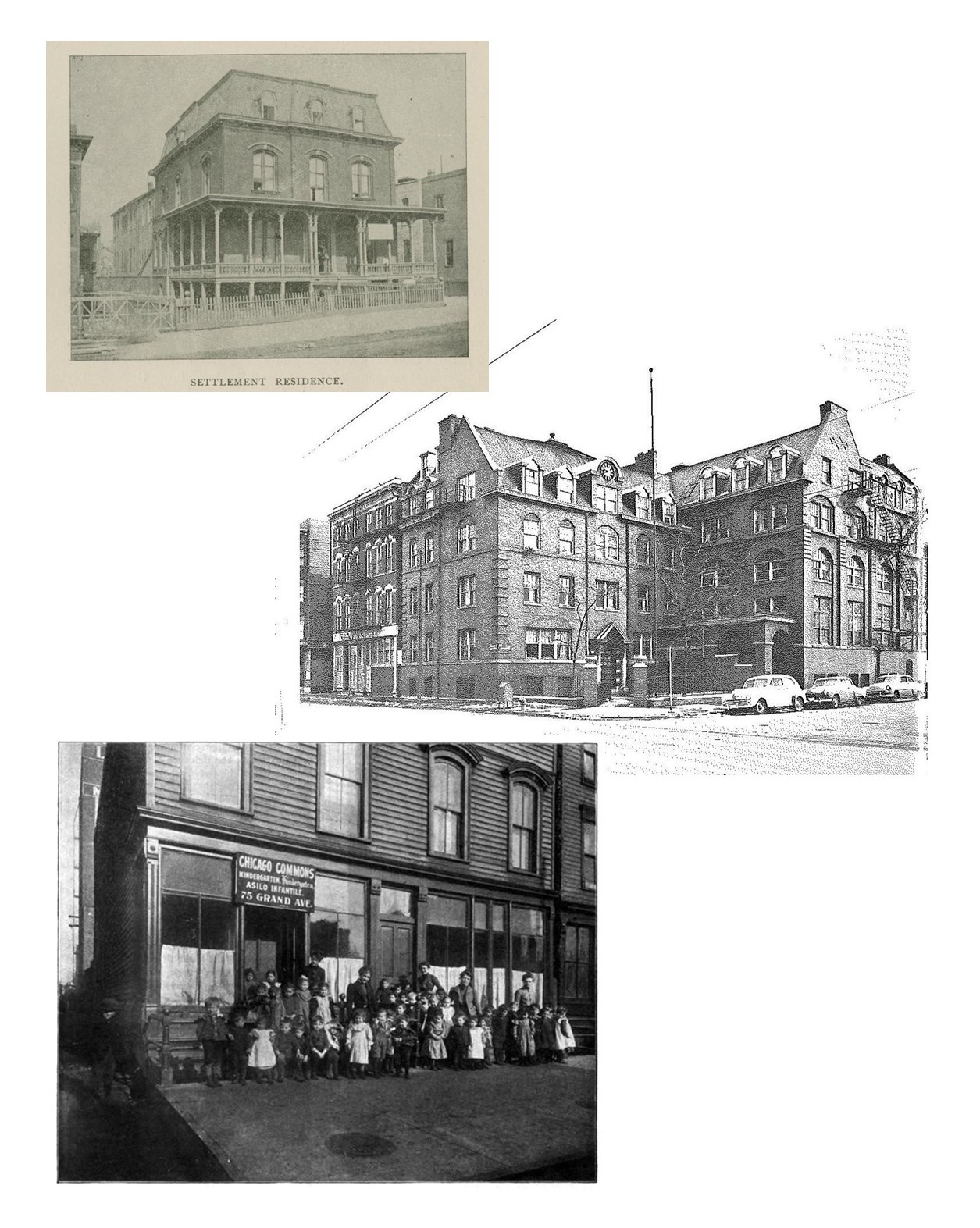
Chicago saw its first kindergarten in 1873, followed by a training course for teachers a few years later. In 1895, Bertha started the first kindergarten and teacher training program at the Chicago Commons Social Settlement.
Social settlements, started during the Progressive Era of reform, were centers for neighborhood social services usually located in crowded, low-income city areas, primarily populated by recent immigrants. The centers were called settlement houses because social workers, educators, ministers, and health care workers lived on site, or “settled” there, to be close to the people they were assisting.
In addition to providing food, clothing, medical care, and other basic needs, the settlements offered schooling to help people develop skills and knowledge for better jobs and advancement, and to improve their lives in general. Many of the settlements were affiliated with churches.
Hull House, started by social worker Jane Addams, was the most famous U.S. social settlement, but there were others in Chicago that were just as well-regarded.
The Chicago Commons Social Settlement was founded in 1894 by Graham Taylor on the near northwest side of the city.
Taylor was a professor at the Chicago Theological Seminary who specialized in training social workers at the University of Chicago. He was joined in his efforts by Herman F. Hegner from Wisconsin and Iowa, who had graduated from the Milwaukee Normal School for training teachers in 1890, and from the Chicago Theological Seminary in 1894, and was ordained a minister in 1895. Taylor and Hegner were the head residents at the Commons.
Bertha was also a resident at the settlement, and in June of 1896, she and Herman Hegner married.
By this point, the Hofer sisters were developing reputations for their various expertises, and Bertha was described as “one of the Hofer sisters, a graduate of the Pestalozzi School in Berlin, whose kindergarten work is widely known through her lectures and her writings.” The Hofer sisters were appearing on stage now with people like Jane Addams and Elizabeth Harrison.
Bertha’s kindergarten became an important part of the Commons’ operations, the foundation for other education programs, like an industrial training school, and services for mothers, children, and families, like a mother’s club and childcare classes. The neighborhood residents strongly supported the kindergarten.
In 1896, Bertha started the Pestalozzi-Froebel Teachers College through the Commons to train kindergarten teachers. In the summers, they offered special teacher institutes. Usually, teachers preferred to attend summer programs in resort areas, not inner cities, but they flocked to Bertha’s program, described at the time as “a boon to would-be successful kindergartners.”
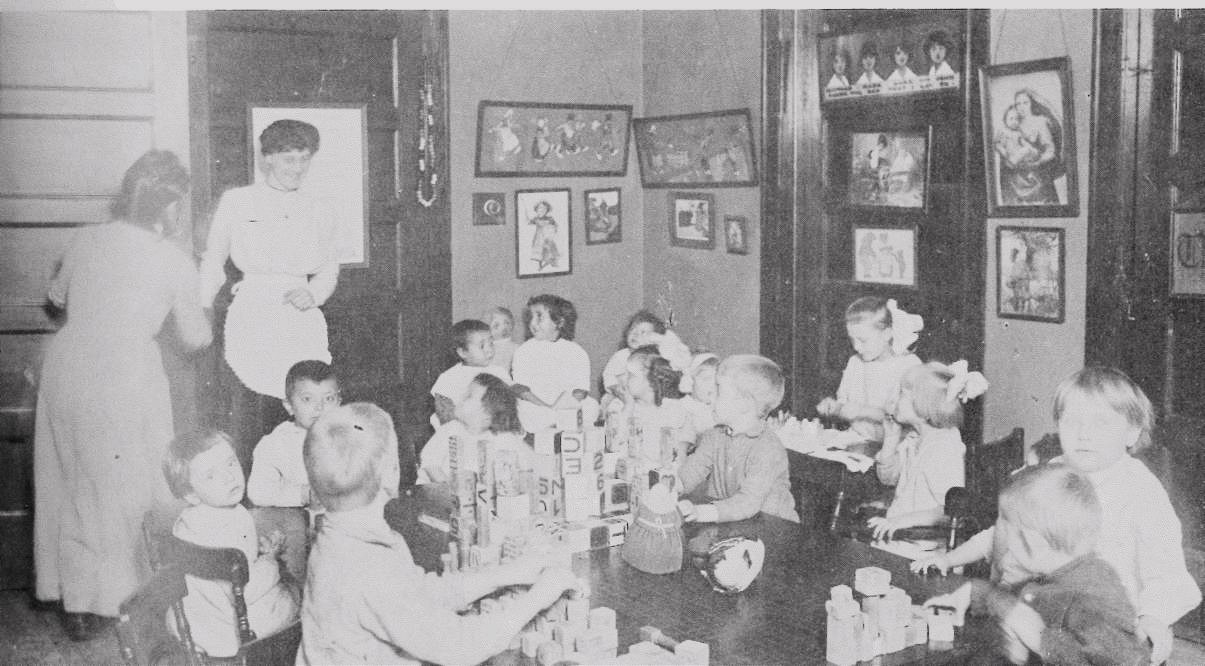
Progressive theory called for educating people to become useful and contributing members of society in general, as well as learning trades for employment. Supportive of working mothers, Bertha introduced “home activities” in her kindergarten to train children to help with basic home chores. This did not replace the teachings of Pestalozzi and Froebel, but, in Bertha’s words, added activities based on their “ideals” to create “a natural bridge between the home and the school.”
Some of the activities the kindergarten children engaged in included washing and putting away items they used including small-scale utensils and dishes; dusting the classroom furniture like the piano; emptying the waste basket; caring for the fish, birds, and plants; and washing the dolls and their clothes. Older children in the settlement’s other education programs helped in the settlement kitchen and dining room, and with the residents’ quarters and general housekeeping. The little ones assisted the older children.
They did these chores accompanied by songs, stories, and pictures. At holiday times, they did special projects like jack-o-lanterns and popcorn garland. In spring, they helped with the outside gardens and milking the cows.
The children loved these projects, and so did the parents. Mothers reported their children willingly helped at home as a result of these activities at school. The children helped throughout the neighborhood, for example, by cleaning up litter.
Training teachers on how to incorporate these home activities into school activities became part of the training program of Bertha’s college.
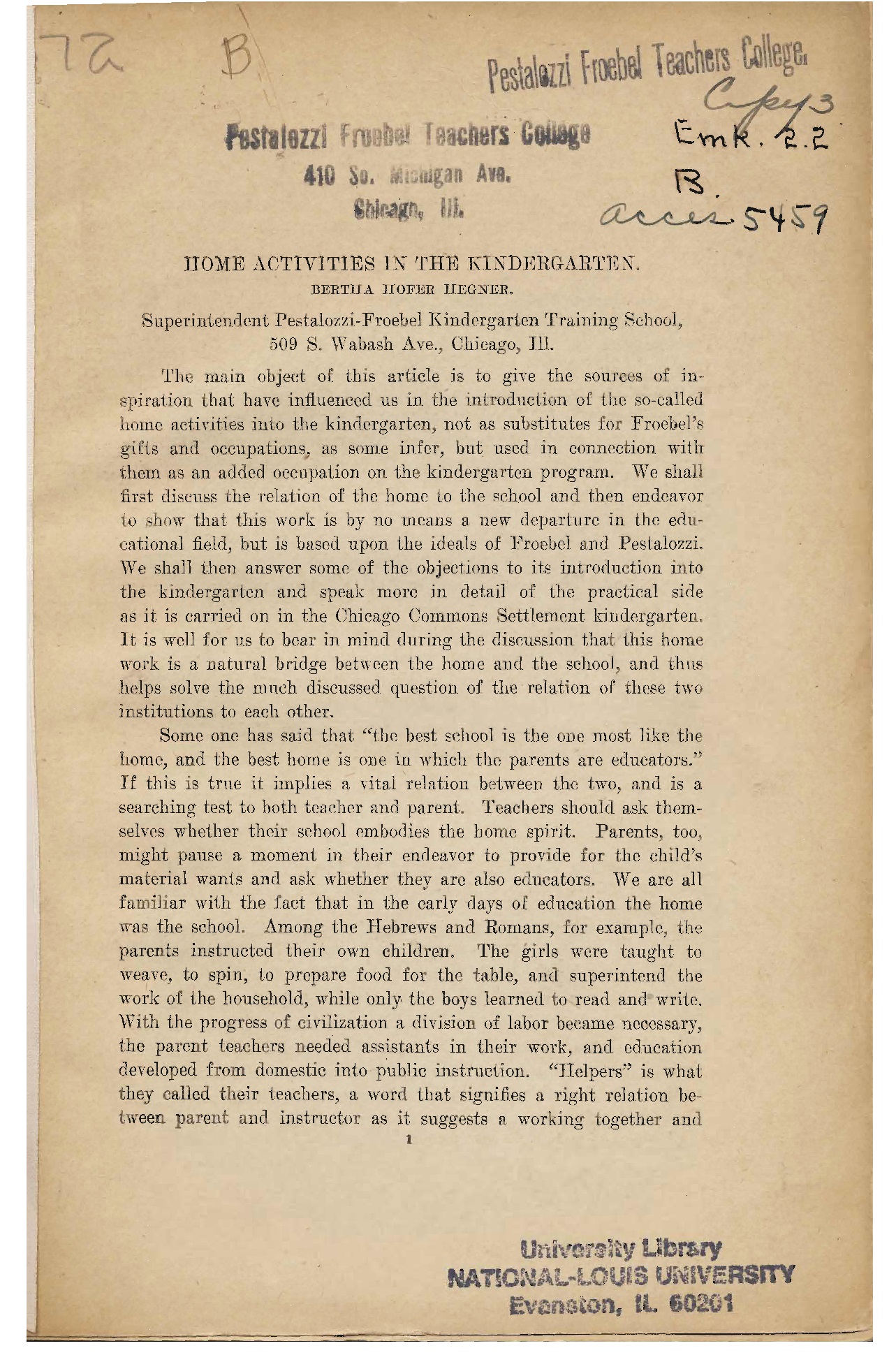
In 1904, Bertha published a scholarly article titled “Home Activities in the Kindergarten” in Kindergarten Magazine, which was reprinted numerous times. The U.S. Department of Education reproduced the article and distributed thousands of copies.
Bertha and Herman moved from the Commons to raise their family, two daughters and a son, and for Herman to take ministries at several churches in the city. They did some traveling to Europe and the Holy Land.
In 1904, Bertha resigned as head of the kindergarten to concentrate on the training school. Her sister Amalie joined her at the school for several years as principal, and her sister Mari was on the faculty for Music and Games. Herman and Graham Taylor were also on the faculty.
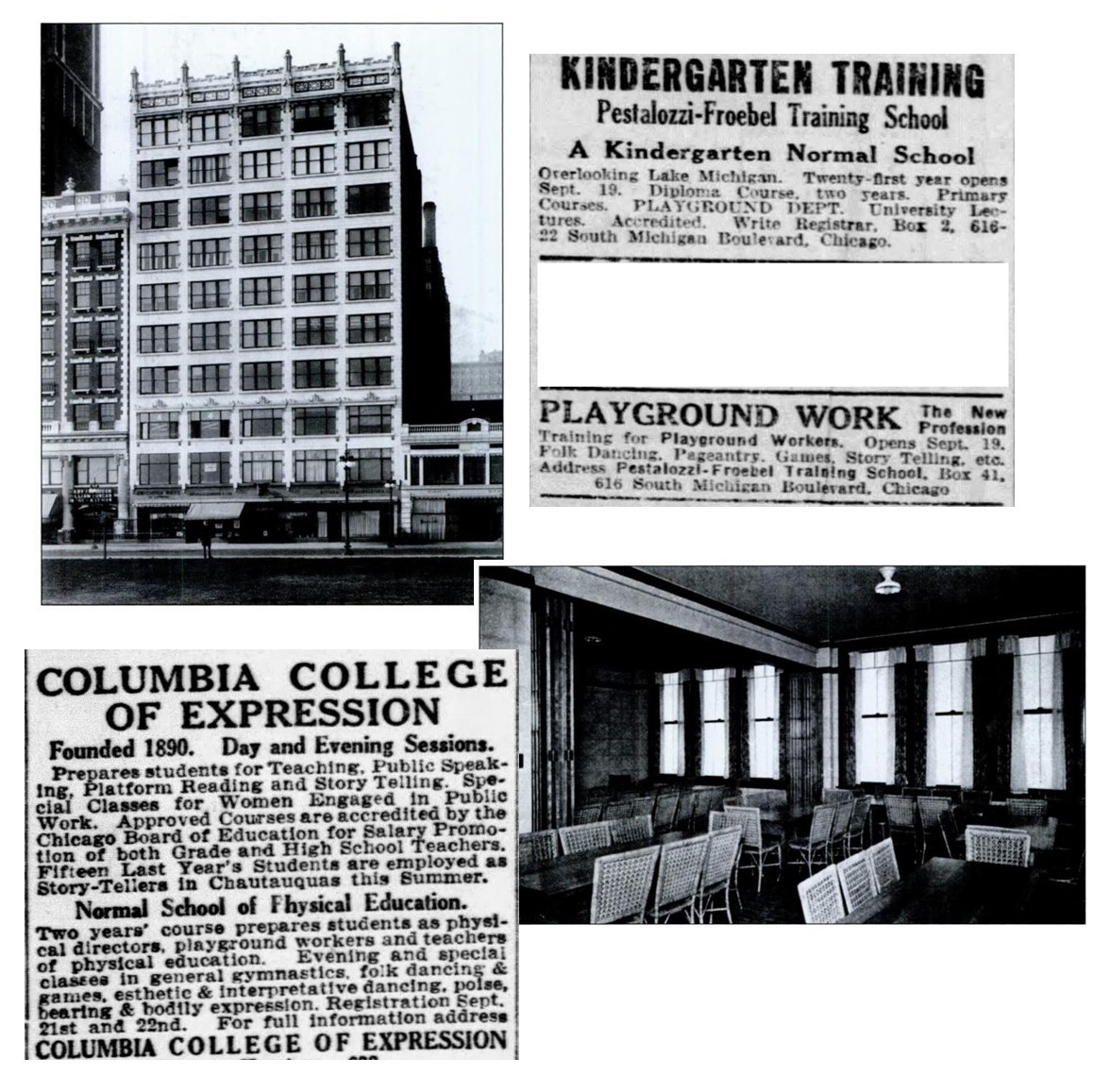
In 1913, Bertha moved the school, now free-standing from the Commons, to a new location, at 618 S. Michigan Ave. Herman became the full-time business manager for the school.
In 1927, the Columbia College of Expression, which offered programs in dramatics, public speaking, and physical education, ran into financial difficulties, and was purchased by the Hofer-Hegner school, and moved to the same building. Bertha ran both schools until she retired in 1936, and her son took over. Bertha introduced a program in 1934 to train people for radio work, something new at the time.
Bertha died in 1937. She left a legacy of education programs that lasts today. Both her kindergarten training school and the dramatic arts school were incorporated into other schools that still exist.
The third daughter, Amalie Hofer Jerome, was a pioneer in the playground movement and will be profiled next.