
The Ridge Historical Society
March: Women’s History Month – Part 2 on the Hofer Sisters
By Carol Flynn
A few weeks ago, posts on the Hofer sisters started. The Hofer sisters are stellar examples of the intelligent, accomplished women who lived on the Ridge whose stories need to be shared. The five Hofer sisters were leaders in the kindergarten, social settlement, and playground movements in the U.S.
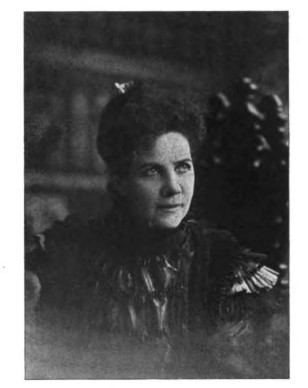
Oldest daughter Mari Ruef Hofer (1858 – 1929) was the musician in the family. She was a pioneer in music education for children, and in incorporating singing, dancing, pageantry, and games into regular classroom and playtime for children.
Young children learn by observing, experimenting, and doing, not by being lectured to and forced to memorize a bunch of facts. While this seems like an obvious concept today, it was a novel thought in the 1800s. It was people like Mari Hofer and her sisters who revolutionized the way child education was viewed, leading to the kindergarten and early childhood programs of today.
Mari graduated from the Mount Carroll Seminary, Illinois, in 1887, and did graduate work at the University of Chicago in 1897-99.
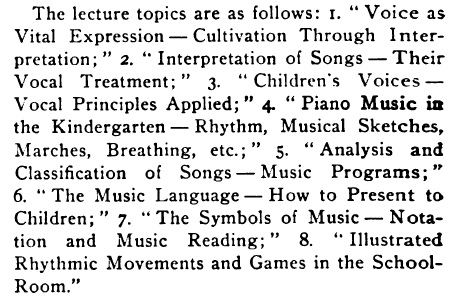
Mari taught school children herself, in Chicago and other locations, and she taught teachers how to educate young children, as a faculty member at several universities and a frequent guest lecturer. Her credentials are just way too long to include in a Facebook post.
She never married or had children of her own, but her understanding of children was profound. She advised that teachers had to recognize and nurture both the child sitting at the desk learning the “three R’s” and the unknown “other child,” the “inner child,” the “child of imagination and feeling, the creative, originative child.” This could prove to be the more difficult task.
Mari was an expert on the development of speech in children, and the interconnection of speech and song. She advocated that the mind, speech, and song should be cultivated together in young children, using simple songs with words and concepts children could grasp.
As she said, “Words and thoughts associated with melody remain graven in the mind when more important data vanish away.” Anyone with a song stuck in his or her head recognizes the truth of this – and it’s why the abc’s are taught as a song.
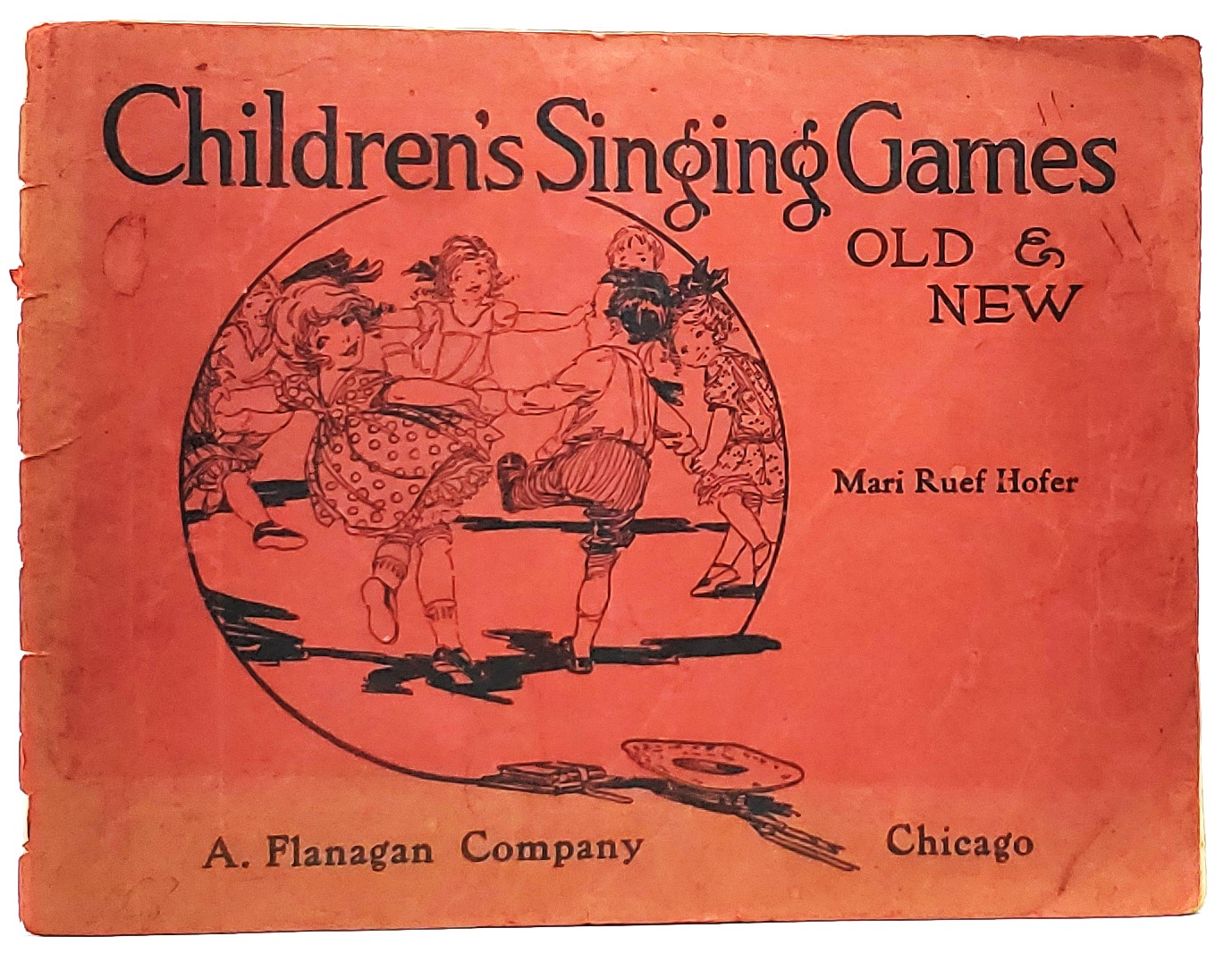
Mari’s expertise was in folk music, and she authored at least twelve publications. Some of the titles include Children’s Singing Games, Popular Folk Games and Dances, Music for the Child World, Camp Recreations, and Educational Playbook Series for Junior and Senior High Schools.
She arranged and managed plays and games for festivals, playgrounds, and settlement houses, including at the World’s Fair in Chicago in 1893.
Perhaps her work can best be illustrated through case studies of some of her events while she was on the faculty at the University of Tennessee in Knoxville.
The National Guild of Play held its annual meeting there in 1907, and Mari was president of the Guild and in charge of the program. It started with a big outdoor playtime festival for the children, parents, and teachers of Knoxville, with events ranging from kindergarten games to athletics (leap frog, racing, baseball) for the older boys. Singing, dancing, and ring games arranged by Mari were included. Male faculty members volunteered to teach the children how to play marbles and other games.
The next morning included a series of professional speakers on playgrounds and their organization, plays and games for schools and school yards, and playtime festivals. One of the speakers was her sister Amelie Hofer, a founder of the Playground Association of America.
For years, the University held a “Summer School of the South” program for teachers, well attended by people from all over the country, and Mari was on the faculty. In 1908, a summer festival was arranged, with Mari as the chairman.
Today, when we think of summer festivals, we think of beer tents and outside concerts. Back then, summer festivals meant physical activity – games and athletics for all ages.
And there were plenty of activities. The afternoon started with events for children, like Robin Hood and his Merry Men, with costumes, archery contests and bouts, and Maid Marion and a maypole dance, all arranged by Mari.
Just some of the other events included pony races, Olympic sports, tug-o-war, potato and sack races, ring toss, horseshoes, and plenty of costumes, plays, songs, and dances.
Evening events included pantomime and other social games, guild activities like wool weaving and shoe making, and folk activities and performances featuring the cultures of Sweden, Denmark, the Netherlands, Germany, Switzerland, Norway, Russia, France, Scotland, Poland, and of course, the U.S.
The coordination of this event had to have been amazing, attesting to Mari’s organizational skills as well as her educator and musical talents.
Settlement houses were organizations set up to provide services to help alleviate poverty. They were usually found in large buildings in urban areas heavily populated with recent immigrants.
The most famous settlement house was Hull House in Chicago started by Jane Addams.
All of the Hofer sisters were involved in settlement houses, and they will be covered in more detail in the next posts. Mari ran the music programs for children in several settlement houses. She managed the children’s chorus, made up of 150 youngsters, at the University of Chicago Settlement, founded in 1894. The chorus was considered very well trained, and the concerts they gave were heavily patronized. She was also known to “sympathetically help” the children at the settlement houses in other ways.
When the friends and neighbors of the Hofer family in Beverly managed to find Mari at home, they loved her involvement in community endeavors. For example, at Christmastime, 1915, Mari arranged a “Community Concert of Christmas Carols” at Ridge Park. She was also busy that year staging Nativity plays at St. Paul’s Evangelical Sunday School and the Fellowship House, another Chicago settlement house.
It wasn’t unusual for her sisters to build an entire party around Mari’s talents, back in the days before there were even radios. As an example, in 1911, her youngest sister Elsa and Elsa’s artist husband George Schreiber invited forty friends over for an evening of folk songs conducted by Mari, who was visiting Elsa and George on the west coast.
“Music,” an illustrated magazine on the art, science, and technique of music, or, as the magazine described itself, “music as musicians understand it,” wrote of Mari that “few personalities are more interesting than that of Miss Mari Hofer.”
Mari had her own philosophy on life: “A thoroughly good time is not incompatible with learning something worthwhile.”
Today, parents and grandparents who attend the performances of their beloved little ones in kindergarten holiday shows can thank Mari Hofer for the experience.
Our next post will look at the second daughter, Bertha Hofer.