
The Ridge Historical Society
March – Irish American Heritage Month and Women’s History Month – Post 2
By Carol Flynn
For March, we’ll be alternating stories between Irish American heritage and women’s history on the Ridge.
Beverly is known today as one of the most Irish Catholic neighborhoods in Chicago. According to the U.S. Census Bureau, in West Beverly (west of Western Avenue), almost 55% of residents report Irish ancestry, the highest concentration in the city. Mount Greenwood and West Morgan Park are each about 45% Irish, and Beverly about 25%. Chicago, as a whole, is about 7.5% Irish.
Many people, including new home buyers in Beverly, think this has always been the case. It’s not surprising they would think this, given the media’s penchant for using terms like “Beverly’s deep Irish roots” to describe the community, implying this goes way back in history.
In reality, the large Irish presence in Beverly is a much more recent phenomenon, not solidifying until about 1980, well more than a century after the area was first settled.
Beverly was originally settled mainly by English and other European Protestants as a “bedroom community” for wealthy businessmen attracted to the Ridge by its scenic beauty. They built country estates here and invested in property for development, while most of their business and social lives were centered in downtown Chicago.
Morgan Park was planned as an education, temperance, and religious community, with the Baptist Theological Seminary founded here. Mount Greenwood was primarily farmland, with ministers who preached hard work and temperance.
There was always an Irish presence on the Blue Island Ridge, however small, even in the earliest days, although it would be impossible to say who was the first person of Irish descent to ever step foot here.
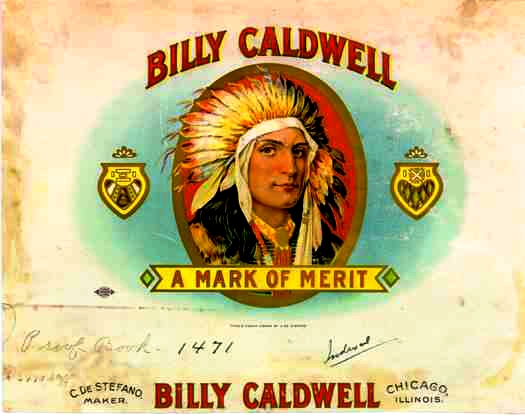
One early person was Billy Caldwell, also known as Chief Sauganash and the “Irish Indian.” Caldwell (1782-1841), the son of a Scots Irish officer in the British Army and a Mohawk mother, was raised Catholic from the age of seven on by his white stepmother. He came to Chicago in 1820 from Canada as a fur trader.
Billy Caldwell became an important figure in Chicago history, and there are historical references to his visits to the Blue Island area.
Fluent in French, English, and Native American languages like the Algonquin language used by the Potawatomi people most prevalent in the Chicago area, Caldwell became a leader among both the Potawatomi people and the white settlers.
Caldwell was known to guide survey and expedition teams through the area. During one visit, he was part of a team that lost everything when their wagon capsized in Stony Creek at the southern edge of the Ridge, so they stopped at a dwelling along the Vincennes Road where they were given food and spent a cold night outside by a fire.
Caldwell was credited with the idea of building the Cal-Sag Channel to be a feeder into the Illinois and Michigan Canal.
Before he led the Potawatomi out of Chicago in 1836, after the Treaty of Chicago, it was reported the “old Irish Chief” rode his pony through the prairies near the Ridge.
The Sauganash area on Chicago’s north side, the Billy Caldwell golf course, and Caldwell Woods in the Cook County Forest Preserves all get their names from this man.
More on Beverly becoming “Irish” will be in upcoming posts.
This idealized image of Billy Caldwell was used for a cigar brand many decades after his death.