
The Ridge Historical Society
Halloween on the Ridge – Part 1
By Carol Flynn
A 19th Ward friend recently posted pictures of people in hand-made, grotesque Halloween costumes, the kind they wore in the early 1900s. This led to questions about how Halloween was celebrated back then, and I promised to share some history on the topic.
I rarely write in the first-person narrative style, but this story started with a personal discovery. Seven years ago, I was researching for a historical topic to write about for Halloween. As I looked through the Morgan Park Post newspapers from the early 1900s, I found the usual entries about school groups having parties and the like, but nothing was catching my fancy.
Then I found this announcement in the November 6, 1915, Post: “Mr. and Mrs. Thos. Cummings entertained at a Hallowe’en party last Saturday evening at their home on Homewood Ave.“
My “A-ha!” moment had arrived. Thomas and Johanna Cummings were my great grandparents. They lived on Homewood Avenue just north of the 111th Street train station, but their house was demolished in the 1960s for one of the “modern” apartments now there.
So great-grandpa and great-grandma had a Halloween party more than one hundred years ago. That got me to wondering – what would Halloween have been like back then? Who was invited? (Surely my grandparents were there, they had lived in a cottage on 108th Street and Longwood Drive, although my mother wouldn’t be born for a few more years.) What did they serve for refreshments? What was the entertainment?
I started looking into this, and wrote an article for the Beverly Area Planning Association’s Villager newspaper, so some of this appeared in print before.
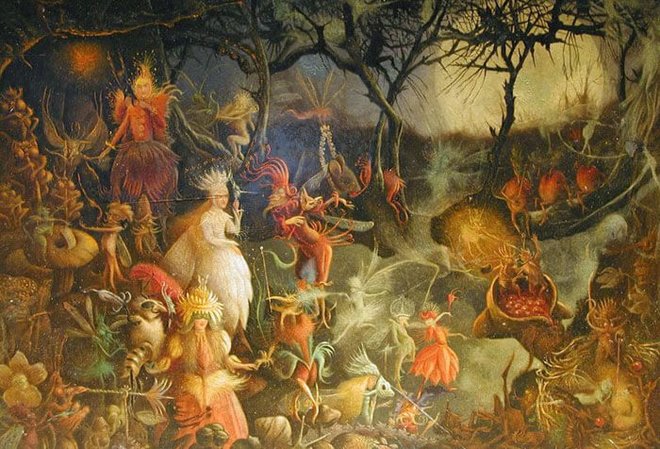
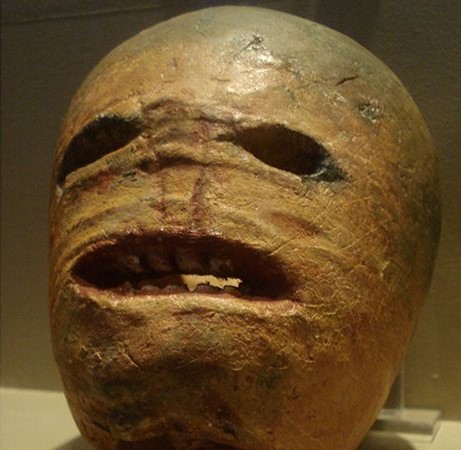
Halloween was an Irish invention, going back thousands of years, to pagan harvest festivals in Ireland and other Celtic lands. Believing that supernatural beings and ghosts could more easily cross over into the physical world at this time of year, people dressed like demons to escape notice by real demons, and left gifts of food for the fairies in the hope the fairies would not play tricks on them. They placed gourds and turnips carved with grotesque faces, and lit from inside with candles, on windowsills to scare away harmful spirits.
These pagan practices became intertwined with the concepts of Christianity when the Feast of All Souls and the Feast of All Saints were established. The millions of Irish immigrating to the U.S. in the 1800s, including my ancestors, brought a mixture of the old and the new ideas with them.
The British Protestants who were the predominate population of the U.S., and the Ridge up to the 1950s or so, did not celebrate Halloween. In fact, in Victorian England, the time of year for ghost stories was Christmastime, hence the most famous fictional ghost story of all time, A Christmas Carol by Charles Dickens, first published in 1843.
The U.S. citizenry adopted the customs brought over by their new Irish American neighbors, and as usual, adapted them in unique “American” ways.
Halloween lost most of its superstitious and religious overtones in the U.S. by the beginning of the 20th century. By 1915, parties were the most common way to celebrate, and usually included decorations, costumes, games, and refreshments.
Next post: U.S. Halloween customs by 1915.