The Ridge Historical Society
Jean Hetherington – Part 1
By Carol Flynn
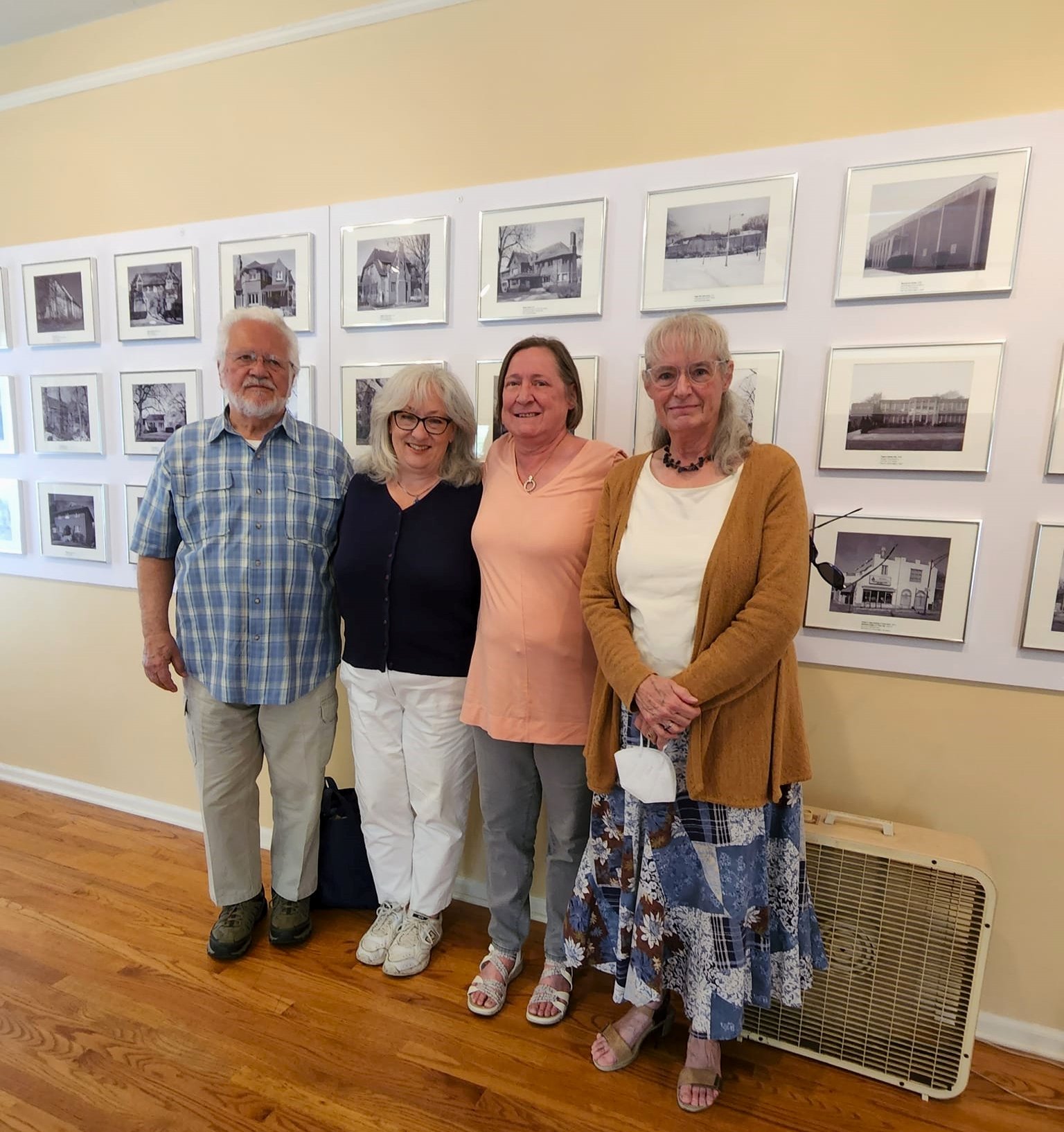
The Ridge Historical Society (RHS) premiered a new exhibit on the Hetherington family of architects at the Beverly House Walk last Sunday. This post begins a series of stories that augment the exhibit.
John Todd Hetherington (1858 – 1936) and his family moved to Beverly around 1901. He, his son Murray Douglas Hetherington, and his grandson John Murray Hetherington are credited with designing upwards of a hundred buildings in the Ridge communities, including the Graver-Driscoll House that is owned by RHS. Upcoming posts will cover the stories of these men.
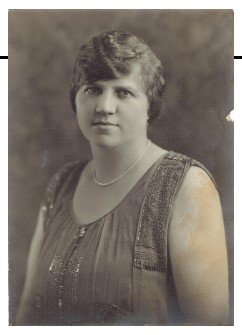
Today, however, the story will start with the Hetherington whose contributions largely go unnoticed – Jean Hetherington, John Todd and Jane Hetherington’s youngest child and only daughter who lived to adulthood.
Jean was born in 1895, which made her about six years old when the family moved to the Ridge, and about eleven when the family built their home at 9326 South Winchester Avenue in 1906. Jean spent her life in Beverly.
In 1917, Jean graduated with first honors from the three-year School of Normal Instruction of the Art Institute of Chicago. A “normal” program trained teachers – the word “normal” came from the “norms” or standards established for subjects to be taught in school. The Normal program at the Art Institute included courses in the history and philosophy of art, the masterpieces, drawing, composition and design, color, and manual training, which included modeling in clay and other materials.
Teaching was a traditional career route encouraged for women. Jean’s older brother Murray had graduated from the Chicago School of Architecture, a joint program of the Art Institute and the Armour Institute, in 1914, but there were few women pursuing architecture as a career option back then. For the Art Institute’s summer program in 1916, for example, forty-six women and three men attended the Normal program, while fifteen men and one woman attended the Architecture program.
There were only two licensed woman architects in Chicago at the time. One was Marion Mahony Griffin, the first employee to be hired by Frank Lloyd Wright. She married Walter Burley Griffin, the architect who designed the houses in Beverly’s Walter Burley Griffin Place District, a Chicago landmark site on 104th Place. It is well known that Wright took credit for much of Marion’s work. The Griffins left Chicago in 1914 for Australia.
That left Elisabeth A. Martini as the only woman architect. She shared the story that to keep her job as an architect, she also had to take on tasks such as helping the boss’s wife clean out their pantry.
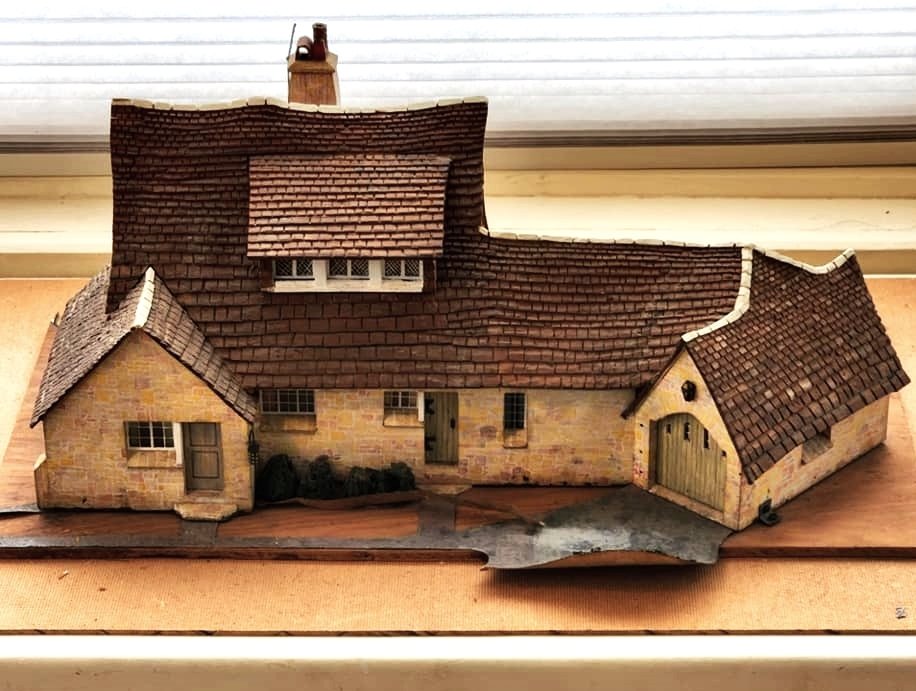
Jean Hetherington became known for the architecture models she created, and this will be explored further in the next post.
On the day of the Beverly House Walk, RHS was fortunate to have members of the Hetherington family as visitors. They loaned to RHS for that day one of Jean’s models that was a family heirloom. The model is of a charming cottage-style house, but the family does not know what house this model might depict.
Arrangements may be made to view the exhibit by contacting RHS at 773/881-1675, or ridgehistory@hotmail.com.
Next post: Jean Hetherington’s career and life.