
The Ridge Historical Society
Native Americans and the Blue Island Ridge – Part 10: Spirituality of the Calumet Region Native Americans
By Carol Flynn
This is a very brief introduction to the religions and spiritual beliefs of Native American groups, considered from the perspective of the relationship to the land, for developing Land Acknowledgement Statements. Readers are encouraged to explore the topic in much further depth.
According to John Low, Ph.D., J.D., professor at Ohio State University, an enrolled citizen of the Pokagon Band of Potawatomi Indians, in a presentation titled “Pokegnek Bodewadmik – The Pokagon Band of Potawatomi Indians – Keepers of the Fire,” “Our ancestors believed in a Creator, Kishaminado. Much of our spirituality has been passed down to us generation by generation and remains private and personal.”
Kishaminado, also known as Kitchesmanetoa to other tribes, was the maker of all things. Potawatomi individuals interacted with Kishaminado through manitous, or personal spirits, which could take a variety of shapes, usually animals. A personal manitou was revealed through dreams.
There were also manitous that resided in natural objects, such as the sun, stars, trees, and rocks, that helped everyone. The Native Americans of the Calumet also had special manitous for war situations, usually birds such as falcons, crows, ducks, swallows, and martins. Not all manitous were helpful, however, and some were greatly feared. Deep water had a manitou that could cause turbulence and drowning. Manitous served as an incredibly important means for relating the spiritual and physical worlds.
Another academic author who wrote about Native American spirituality was Jack D. Forbes, Ph.D. (1934 – 2011), who established one of the first Native American Studies programs (at University of California Davis). He was of Powhatan-Renape and Lenape descent, both historic Algonquian-speaking tribes like the Potawatomi.
Wrote Forbes in a 2001 paper called “Indigenous Americans: Spirituality and Ecos”: “Perhaps the most important aspect … is the conception of creation as a living process, resulting in a living universe in which kinship exists between all things…. An overriding characteristic of Native North American religion is that of gratitude, a feeling of overwhelming love and thankfulness for the gifts of the Creator and the earth/universe.”
According to Forbes, Native Americans take a very broad view of “environment.”
“Our ecos, from the indigenous point of view, extends out to the very boundaries of the great totality of existence, the Wemi Tali,” wrote Forbes.
Forbes wrote about the “sacredness of Mother Earth” and the “rights of the earth not to be mutilated.”
“Native people, according to Standing Bear [a Lakota chief and writer in the 1930s], were often baffled by the European tendency to refer to nature as crude, primitive, wild, rude, untamed, and savage. ‘For the Lakota, mountains, lakes, rivers, springs, valleys, and woods were all finished beauty,’” wrote Forbes.
Introduced to Christianity, Native Americans incorporated elements into their own beliefs, which happened throughout history with most groups, including Europeans. Native Americans linked the Christian God to the sun manitou. Life could not exist without the sun.
The Potawatomi became connected to the Catholic church due to the Jesuit missionaries who visited the area beginning in the 1600s. The Christian god was akin to the Great Creator. Some historians believe the adoption of the Christian faith was a way to help preserve their own culture and religious beliefs by melding the two.
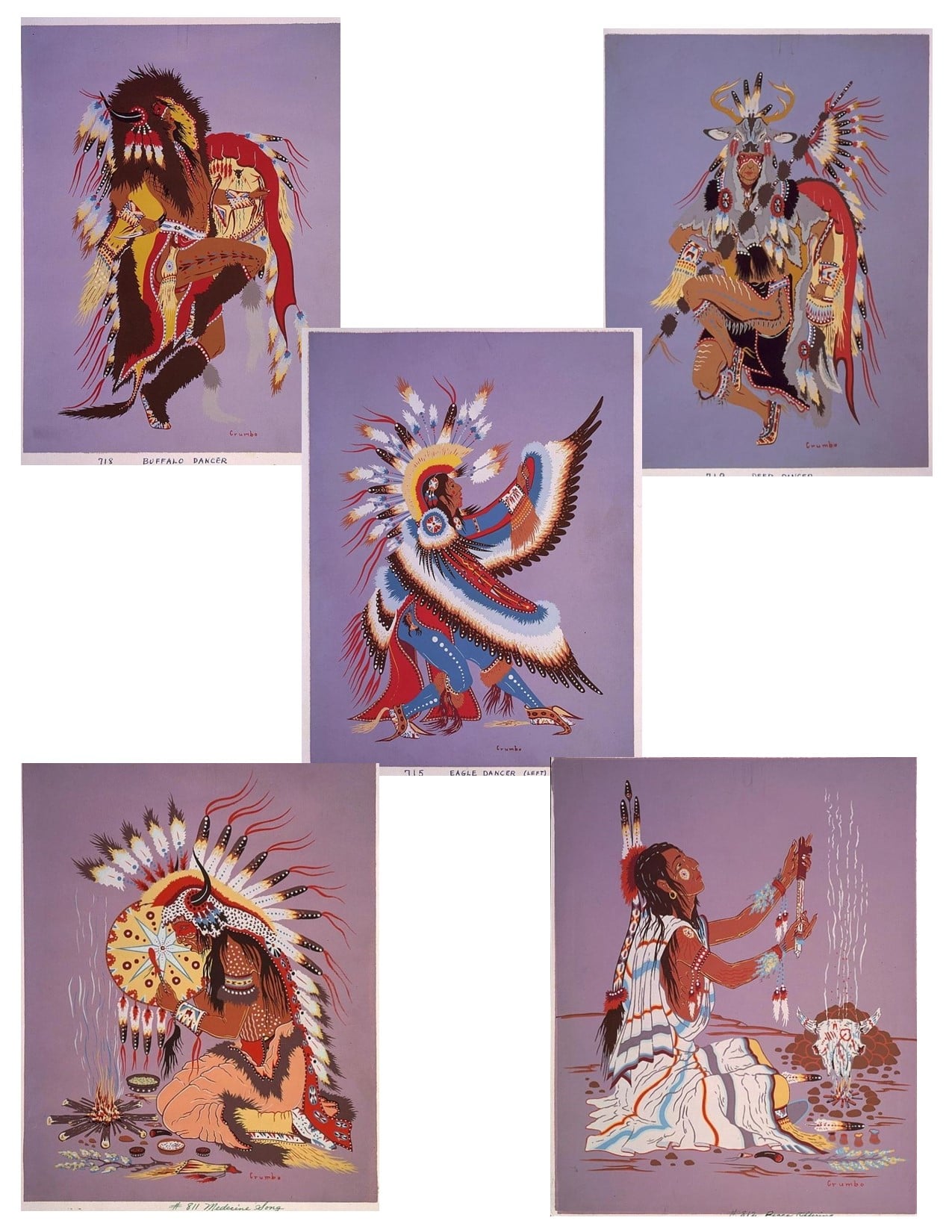
Today, wrote Low, “The Potawatomi retain the legacy of understanding the power of Medicine Bundles and Medicine Bags, Vision Quests, and Naming Ceremonies. Also understood are the importance of songs and dance, feasts, as well as the use of sacred medicines provided by the Creator, such as tobacco, sage, cedar, and sweetgrass.
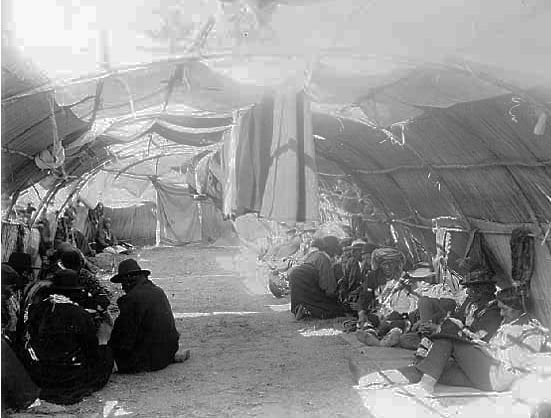
“Our ancestors used the ceremonies of the longhouse and the sweatlodge to honor the Creator and all that surrounded them and also as a way to purify the mind and body. Those traditions continue today. Prayers have always had an important role in Potawatomi spiritual life. Some Potawatomi participated in a spiritual path called the Midewiwin which combines the knowledge of natural healing with a code of conduct for proper living. That tradition continues as well. Many Potawatomi retain the belief of their ancestors that death is followed by a four-day journey along the Milky Way to the place where the Spirits dwell.”
Midewiwins are religious societies within the group that have specific teachings and practices. “Mide” means “spirit doings” or “spiritual mystery.” They are often referred to as “medicine lodges” but they concentrate on the spiritual causes in connection to natural healing. The priests who ran the Midewiwins were the highest rank in the religious hierarchy.
In summary, the Potawatomi who lived in the Blue Island Ridge area believed in a Great Creator and connected to this entity in a personal and private way. They believed that they were part of the entire universe, and did not exist separate from the earth. The earth was sacred, to be respected and preserved. Their religious ceremonies revolved around gratitude and humility for the gifts given them from the Creator, and learning and following a path of proper behavior and thought to honor all things. The Potawatomi became connected to the Catholic church due to the Jesuits who visited the area and preached Christianity starting in the 1600s.
Next topic: Gender roles