The Ridge Historical Society
Native Americans and the Blue Island Ridge – Part 4: Fort Dearborn; Treaties
By Carol Flynn
The first recordings of European explorers, missionaries and traders coming through the Chicago territory date to the 1670s. At the time, the Miami Confederacy, which included the Mascouten, Illini, and Kickapoo tribes as well as the Miami, were predominant in the area. The name “Chicago” was adopted for the region at this time from the French take of the Miami-Illinois word for the wild garlic that grew in the area.
Chicago’s location as a canoe portage connecting the Great Lakes with the Mississippi River made it strategically important. Conflicts between Native American tribes led to the Iroquois and Meskwaki (Fox) driving out the Miami from the Chicago area by the end of the 1720s. The Pottawatomi assumed control of the area.
Conflicts over control of the lands around the Great Lakes, called the Northwest Territory and including much of what today is Ohio, Indiana, Illinois, Michigan, Wisconsin, and the northeastern part of Minnesota, went on for over a century. The French, the English, the newly established United States, and Native American tribes organized as the Western Confederacy all vied for control. The Western Confederacy included the Three Fires Confederacy of the Ojibwa, Odawa, and Potawatomi, and other tribes.
In 1794, the Battle of Fallen Timbers in what is now Ohio was the final battle in the Northwest Indian War, which was a struggle between tribes affiliated with the Western Confederacy and their British allies, aligned against the new United States. The U.S. won a tenuous hold of the land in the Northwest Territory, and two treaties were signed.
The Treaty of Greenville defined boundaries for Native American lands and for United States land. The important part of this treaty as it pertains to the Ridge is that the treaty allocated strategic tracts of land within the Indian Country for establishing U.S. Army posts, the most important of which was “six square miles” that was the future site of Fort Dearborn. The second treaty, the Jay Treaty, negotiated the withdrawal of British Army units from the territory.
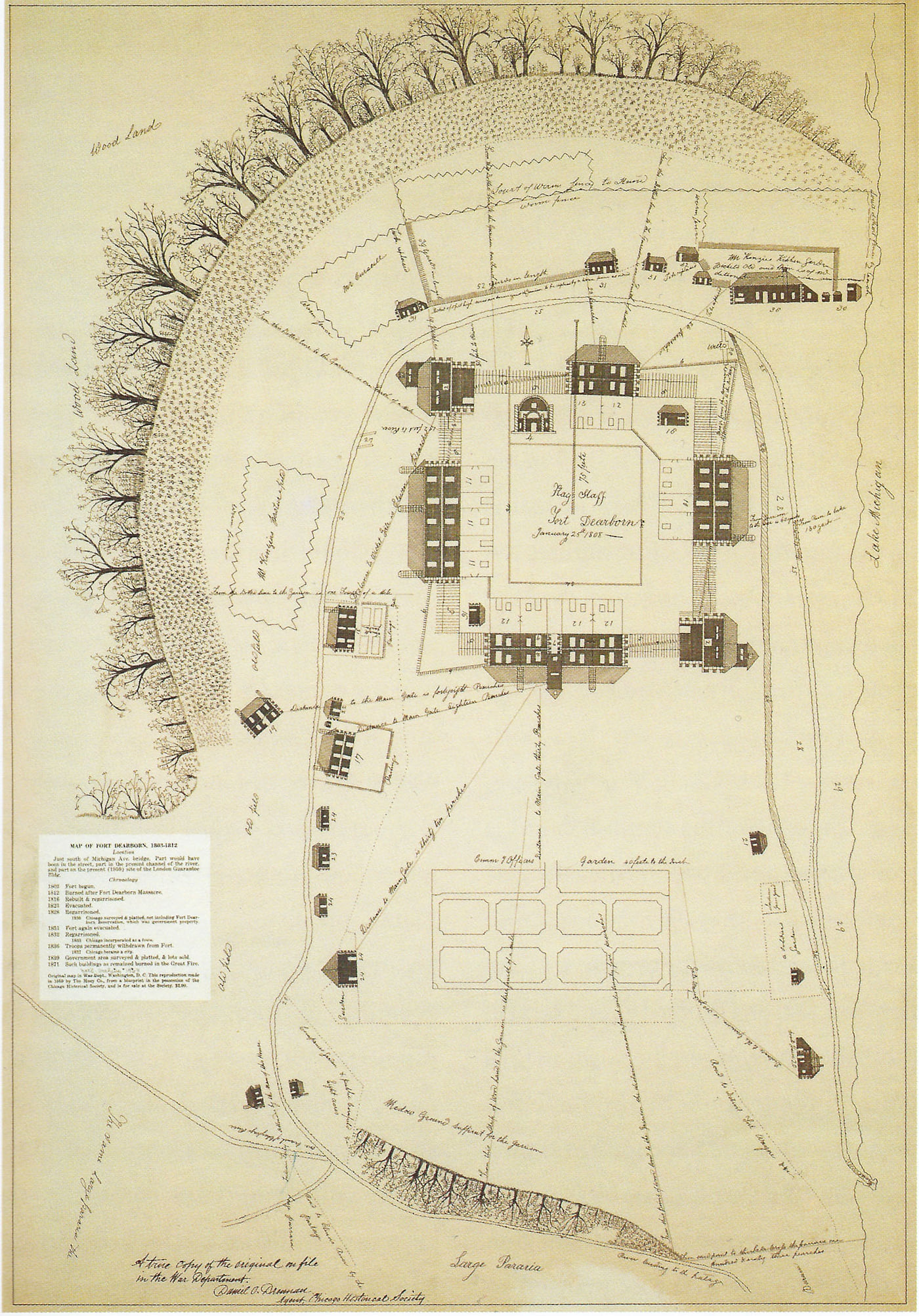
Fort Dearborn was constructed by U.S. troops under the command of Captain John Whistler in 1803. The fort was named for Henry Dearborn, the Secretary of War. It was located where the Chicago River joins Lake Michigan at what today is Wacker and Michigan Avenues.
Note that the Ridge community has a grammar school named for John Whistler at 115th and May Streets that was dedicated in 1959. A profile of John Whistler will be posted as part of the RHS series about the people for whom schools on the Ridge are named.
Fur trader John Kinzie came to Chicago in 1804, purchasing the property of the original settler in Chicago, Jean Baptiste Point du Sable. Kinzie became the civilian leader of the small settlement that grew around the fort. Whistler and Kinzie got into a dispute over Kinzie selling alcohol to the Native Americans.
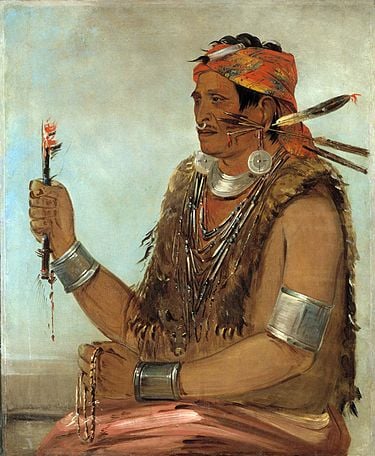
Tensions in the Illinois Territory remained high. The U.S. settlers continued to expand westward, claiming land for farmland, mineral deposits, and the fur trade. Native Americans led by Tenskwatawa, a Shawnee prophet, and his brother Tecumseh wanted to block U.S. expansion into their lands. The U.S. was not adhering to the treaties it had signed with the Native Americans. Britain saw this as an opportunity to reclaim the land and provided guns to the Native Americans. Attacks on U.S. settlers by the Native Americans increased tensions between Britain and the U.S.
Next post: The War of 1812 and the Battle of Fort Dearborn.