The Ridge Historical Society
Native Americans and the Blue Island Ridge – Part 2: Native Americans and the United States
By Carol Flynn
The United States of America is built upon land that was a vast network of homelands to many different groups of Indigenous Peoples before the European explorers “discovered” this “New World” – new to them, that is. Although the origin and timing of the arrival of the first humans on this landmass continue to be studied and debated, the Native American presence dates back at least 15,000 years.
Native Americans are referred to by several different terms – American Indians, First Americans, Indigenous Americans. In a 1995 U.S. Census Bureau survey, a plurality of this group said they prefer American Indian. The term “Indian” is often used in their organizations, such as the American Indian Center of Chicago, located on the north side of the city. These RHS posts will use the terms interchangeably.
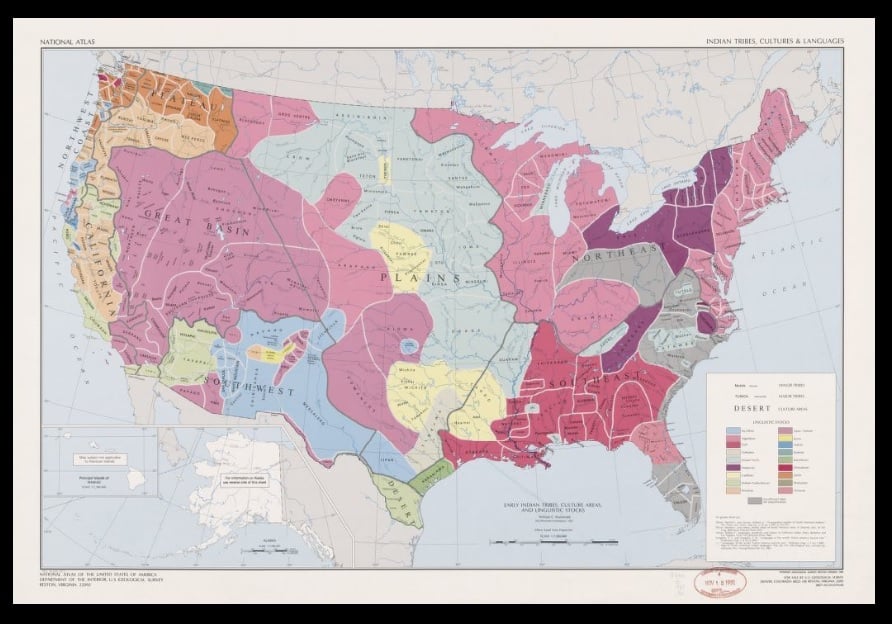
There is no single Native American culture, language, or lifestyle – there were many different groups here when the Europeans arrived. Today, the U.S. government recognizes 574 tribes living in the forty-eight contiguous states and Alaska. “Native Hawaiian and Other Pacific Islander” is a separate group. About half of the people who make up the 574 tribes are associated with reservations.
The 574 number is not historically determined or permanently fixed. Groups may petition to be acknowledged as an official tribe. Right now, eleven groups are going through the petitioning process. Closest to Chicago is the Grand River Bands of Ottawa Indians in Michigan.
Researching American Indian history presents certain challenges. For most Native American groups, the traditional means of transmitting and understanding history has been through the oral tradition. Stories and history were and are verbally passed down from generation to generation. The emphasis is on identity, relationships, and interactions, including with the spirit world. History was not recorded as a chronological sequence of dates and events.
Much of the history of Native Americans that is available has been amassed primarily by researchers and academicians of European descent, and filtered through their viewpoints. They present and interpret what they consider important about Native American history, not what Native Americans consider important about their own history. The Native American viewpoint is every bit as important as the viewpoint of the people who came later.
In developing these posts, RHS is looking for resources that cover history from the Native Americans’ perspective. This is a learning experience for all of us.
The arrival of the European explorers, missionaries, traders, and settlers obviously had a profound effect upon the Native Americans, forever altering their ways of life, cultures, and the relationships between tribes.
Most Native Americans died from diseases introduced by the Europeans, to which they had no natural immunities. Smallpox, measles, influenza, cholera, etc., resulted in the deaths of 90% of Native Americans.
Native Americans inevitably became involved in conflicts and wars, primarily over land. A major reason conflicts with the European settlers arose was because the settlers were clearing land for farms, destroying the lands the Native Americans depended upon for hunting and gathering food. Settlers also destroyed Indian burial sites and other locations sacred to the local Native Americans.
The European settlers often used religion as their justification for the subjugation of native peoples – it was ordained by God that they should dominate the natives, convert them to Christianity, take their land, and force them to assimilate – or perish. More on this will be covered in future posts.
Native Americans became involved in wars between European countries fought on Native American lands. Some major conflicts included the French and Indian War, 1763; the American Revolution, 1776; the War of 1812; and the Black Hawk War, 1832. After this last war, Native Americans left the Chicago area.
With each encounter, no matter what side they were on, the Native Americans were negatively impacted. They were left out of peace negotiations and driven from more and more of their ancestral lands. The winning side often retaliated against the Native Americans who sided with the enemy.
The Second Continental Congress of 1775, before the American Revolution and the establishment of the U.S., created a Committee on Indian Affairs, headed by Benjamin Franklin. The role was to establish treaties with tribes so the tribes would be neutral in the independence movement.
The U.S. Constitution includes as Article I, Section 8, a description of Congress's role with Indian affairs: "To regulate commerce with foreign nations, and among the several States, and with the Indian tribes."
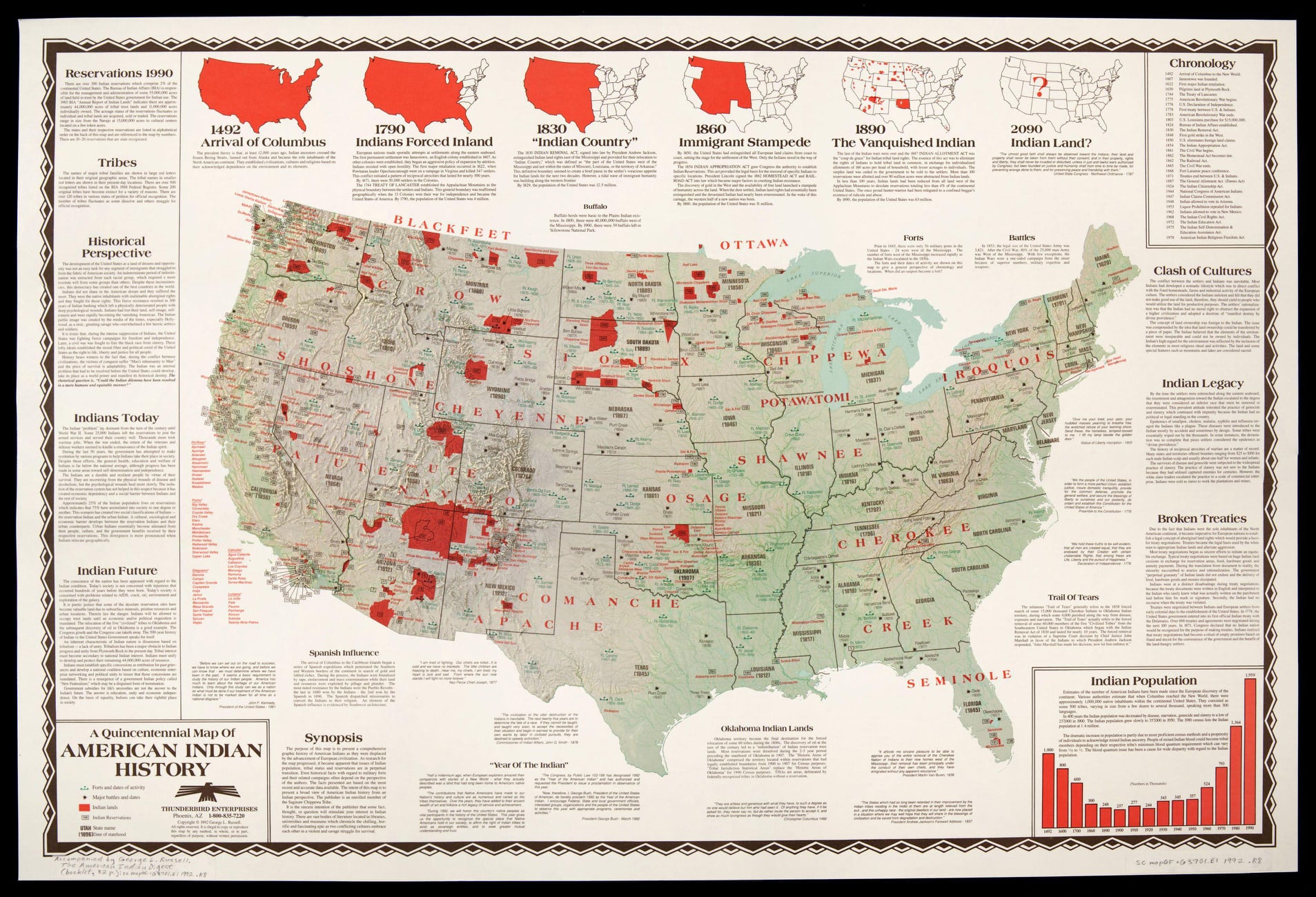
In 1789, Indian Affairs was moved to the newly formed U.S. War Department. The Bureau of Indian Affairs (BIA), a Federal agency, was established in 1824, under President James Monroe. The BIA became part of the Department of the Interior (DOI) when DOI was formed in 1849. During these earliest years, efforts were concentrated on overseeing the fur trade with the Indians, and removing them from their ancestral lands by treaty or force in order to aid settlement, and relocating them to land usually further west.
Next Post: Native Americans and the Chicago Area