


Ridge Historical Society
Teacher Appreciation Week – May 3-9, 2021 – Part 4
School Series – Profile 11: Kate Starr Kellogg
By Carol Flynn
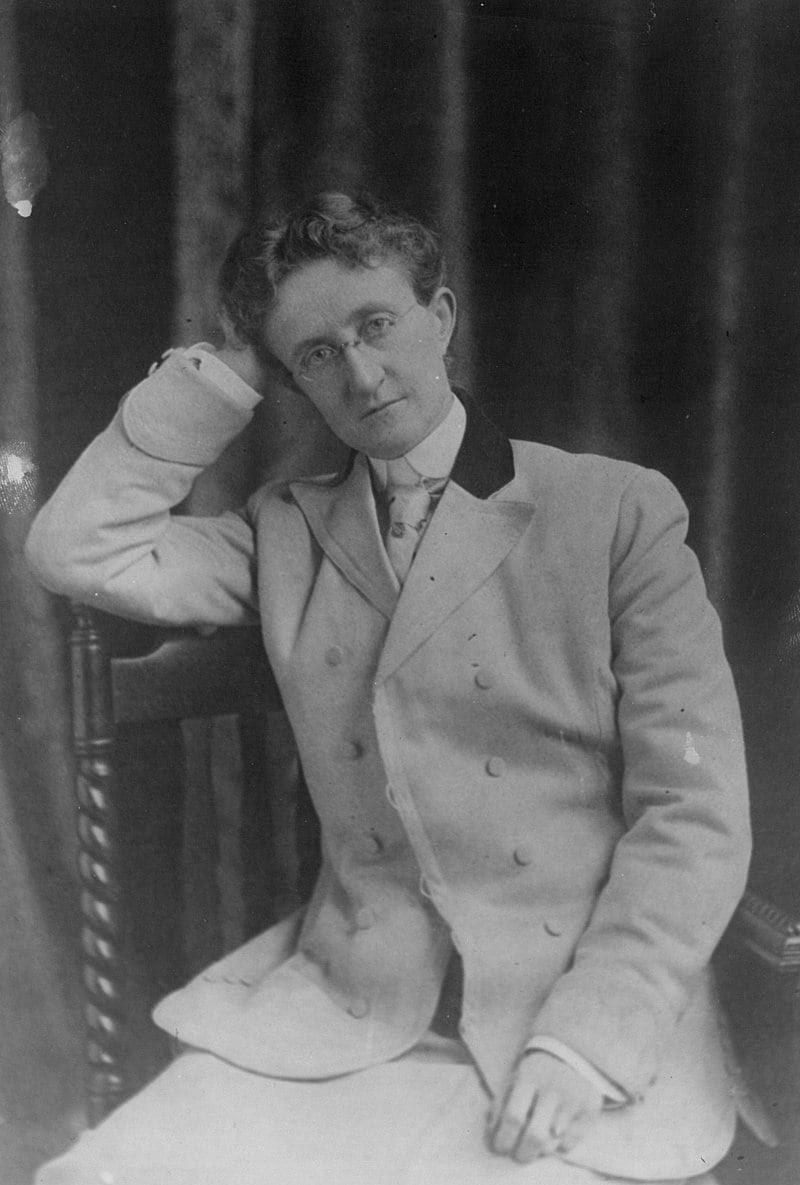
Kate Starr Kellogg (1854-1925) was an influential educator who lived on the Ridge. We’ve briefly profiled her family and education career in the three previous posts.
Kate’s contributions to the education field went beyond just teaching issues. She also left a lasting impression on political and social issues concerning Chicago’s education system.
First, she supported employing married women as teachers. The Chicago Board of Education policy was that a female teacher who got married automatically lost her job, but married male teachers not only stayed employed, they were preferred. Kate strongly believed that school, home, and society were all inter-connected and reinforced each other. Not only did she believe married women could still have a teaching career, she supported parents having a stronger role in the education process and believed that what children learned in school should be relevant to their homes and social lives. She supported the establishment of parent-teacher associations.
Kate also supported the right of teachers to come together to achieve common goals such as protecting the integrity and standards of the profession and dealing with employment issues – in other words, to unionize. She was an active member of the National Education Association, founded in 1857, and now the largest union in the U.S., representing education professionals and students.
As a founding member of the Chicago Teachers Federation which formed in 1897, Kate personally tackled local issues, including going after corporations that were delinquent in paying their taxes that supported the public schools. The Federation publicly “outed” not only these companies, but their prominent stockholders, some of whom were businessmen claiming praise as “reformers” and philanthropists.
Kate also was a leader in advocating for the formation of a Chicago teachers’ pension system, and sat on the board of trustees for the fund once it was established. She helped wrest away control of the fund from the Board of Education and put it in the hands of the teachers themselves.
In 1909, Ella Flagg Young was named the first woman superintendent of Chicago public schools, the first woman in the U.S. to reach this level in the education field. As expected, her critics and enemies were numerous.
For 3 years, Flagg was unanimously re-elected to her position by the Chicago Board of Education. Then in 1913, without warning, school board directors who were against Young managed to gather enough votes to remove her from the superintendent position. They accused her of mismanagement of funds and making the school system inefficient. They called into question her integrity and competence. Realizing she did not have the support to continue, Young resigned.
Young’s supporters were outraged by the Board’s decision and treatment of Young. Her support was largely concentrated in the powerful women’s clubs of the day but also reached much farther than that – former students, including many men, and parents of current students supported Young. Their call for Young’s reinstatement was supported by Mayor Carter Harrison, Jr., Jane Addams of Hull House, and many other leaders. The teachers of the city strongly supported Young and “hinted” they would strike if she were not reinstated.
A committee was established to write a resolution to have Flagg reinstated. Kate was one of the eight committee members. On Christmas Eve, 1913, the Board of Education voted Young back in as superintendent.
Kate, not surprisingly, was a suffragist, supporting women’s right to vote. It was particularly jarring to teachers, overwhelmingly a female occupation, when it was announced they would be charged an income tax on their earnings, without any representation in any governmental decision-making processes.
Mary Kellogg, Kate’s older sister, and Kate were both members of the Chicago Peace Society. This group was the local branch of the American Peace Society, founded in 1828, to promote good will between nations and the use of arbitration and other peaceful means to settle disputes and avoid armed conflict. There were many prominent members in this association, including past and current mayors and governors of Illinois, judges, clergy and religious leaders, notable women organizers, and professional women such as Jane Addams and Ella Flagg Young.
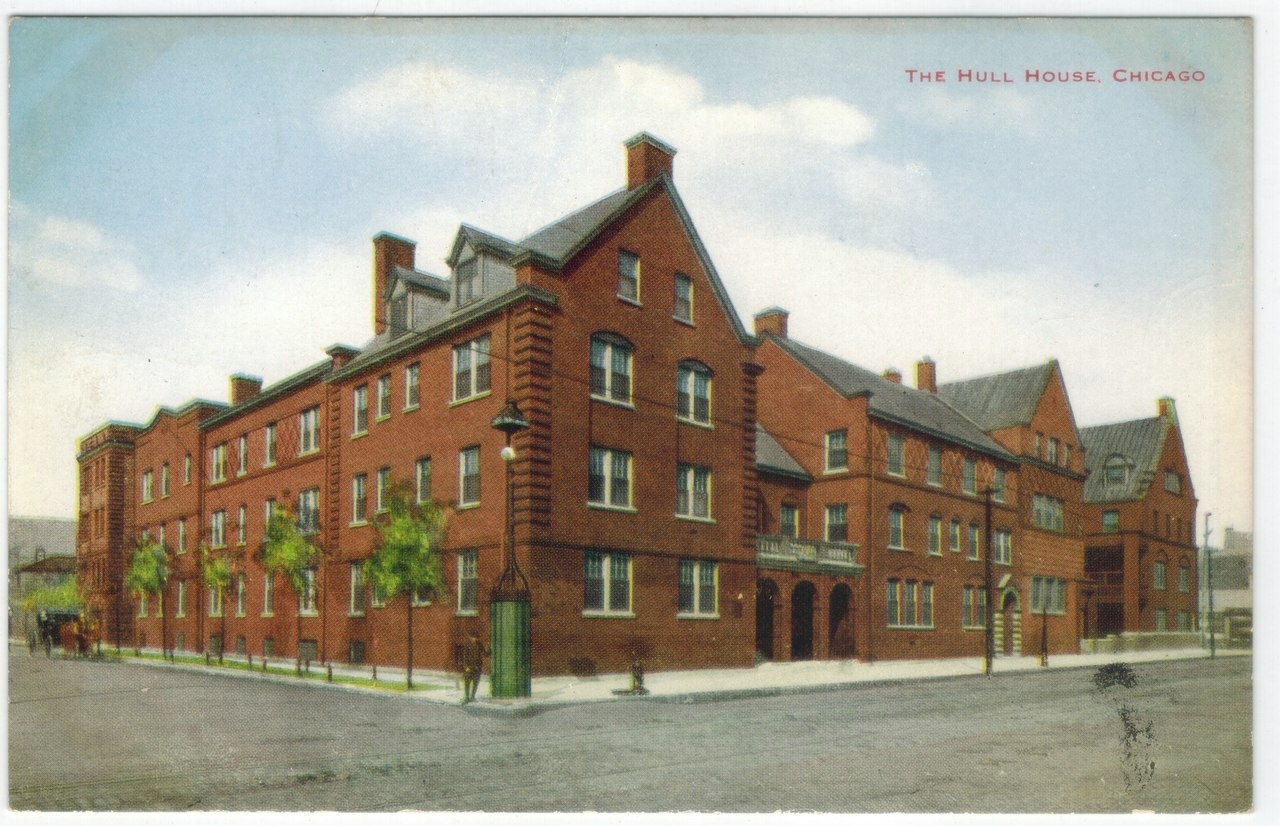
Kate and her sisters had personal as well as professional relationships with leaders such as Addams and Flagg. That friendships would develop between like-minded women is expected. Several Kellogg sisters were involved in Hull House activities, and in an earlier post, we showed the portrait that Alice Kellogg painted of Addams.
They were all involved in various women’s clubs, and the state federation of women’s clubs, as well as professional and reform groups. Other women from the Ridge were also involved, including Gertrude Blackwelder. Kate was a speaker at meetings during Blackwelder’s term as president of the Chicago Woman’s Club, so they obviously knew and respected each other.
Kate had a personal relationship with Dr. Cornelia De Bey, a homeopathic physician from the medical school Kate’s father taught at, and the attending physician for her chronically ill sister, Alice. De Bey, a well-known reformer, suffragist, labor advocate, and pacifist, had been named to the Chicago Board of Education, along with Jane Addams. De Bey worked with Addams’ Hull House community.
De Bey shared living arrangements with Kate at 6565 S. Yale Avenue. “The Yale Apartments” or “The Yale” was designed by architect John T. Long in 1892 and offered luxury apartments to visitors for the 1893 World’s Fair. Today “The Yale” is a Chicago landmark. (Incidentally, John T. Long also designed the 111th Street Metra train station in Morgan Park, and perhaps the 115th Street station that burned down a few years ago, both Chicago landmarks.)
Next post – Kate Starr Kellogg – some personal interests.