
Ridge Historical Society
Teacher Appreciation Week – May 3-9, 2021 – Part 2
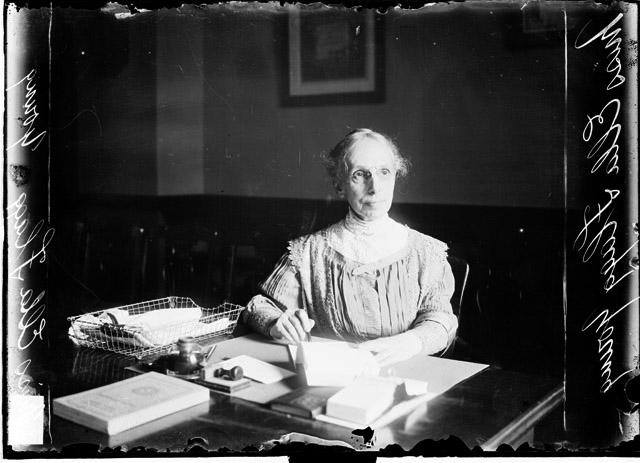
School Series – Profile 11: Kate Starr Kellogg
By Carol Flynn
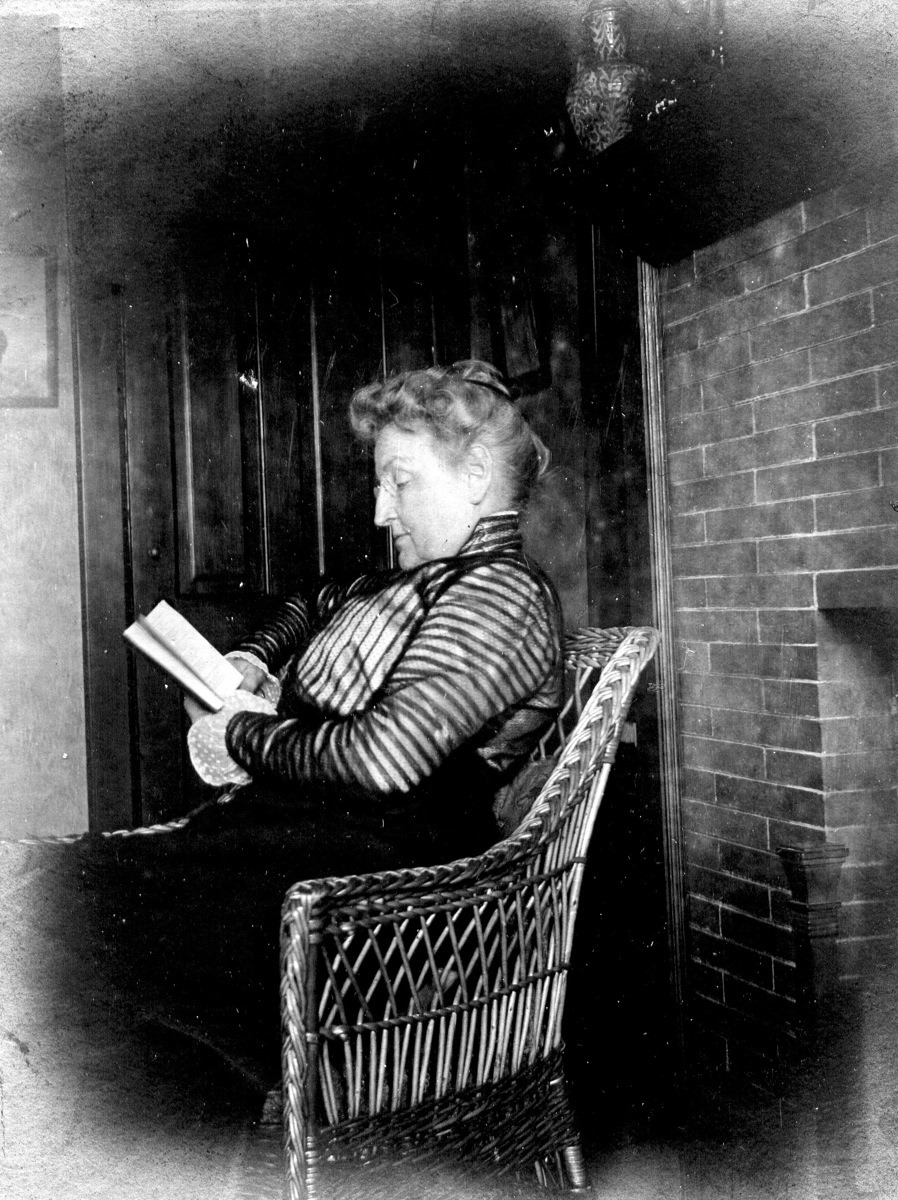
Kate Starr Kellogg came to Chicago as a young child. She grew up in a “progressive” household thanks to her father, Dr. John Leonard Kellogg, a leading holistic physician of the day.
The Progressive Era, from the late 1800s to World War I, saw a middle-class movement to combat political corruption and the abuses of corporate monopolies. It was a non-partisan effort; Republican President Teddy Roosevelt and Democrat President Woodrow Wilson were both progressives. Non-political reformers like Chicago social worker Jane Addams tackled such issues as the needs of the European immigrants flooding into the country, many of whom did not speak English or have jobs or money. The era was characterized by widespread reform in all areas of life, from politics to business/labor to medicine to religion.
Education was affected down to its core. Up to that time, a good education was still mainly the privilege of the wealthy who could afford private schools. “Public” education was inconsistent, and usually ended for most students after a few years of grammar school, and then they went to work. Progressives advocated for ending abusive child labor practices and establishing more and better public schools.
There was also a philosophical shift in teaching, turning away from rote memorization of facts to learning through experimentation and doing, and incorporating everyday skills into school programs. Developing critical thinking and problem-solving skills, and social responsibility, were important. Chicago was a leader in progressive education practices because of people like John Dewey, a professor at the University of Chicago. Dewey, a philosopher and psychologist as well as an education reformer, was one of the foremost scholars of the early 1900s. He started the Laboratory Schools at the U of C.
When Kate died in 1925 at the age of 71, one obituary stated: “Miss Kellogg was a distinctly Chicago product, born in Chicago, educated in Chicago, and long associated with Chicago schools.”
She was actually born in New York, but the other two points are true.
Kate was educated at a combination of public and private schools. It was mentioned that she did coursework at the Chicago Academy, which was founded in 1867 by renowned botanist and educator Professor Henry Homes Babcock. He was associated with and served as president of the Chicago Academy of Sciences.
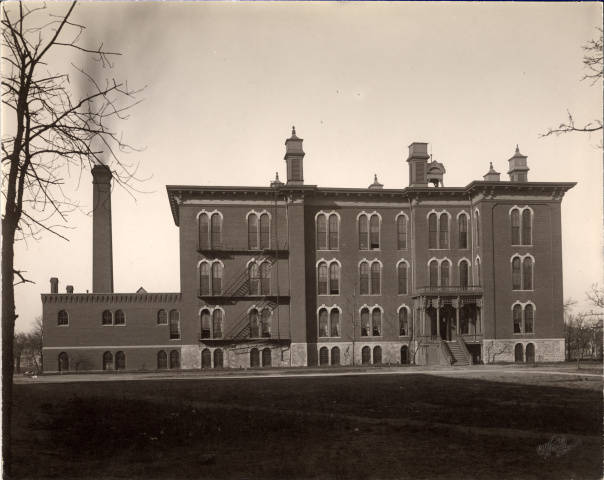
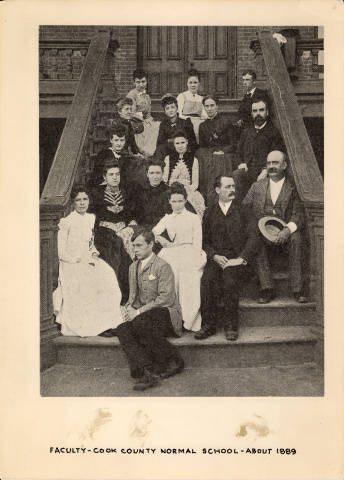
For college, Kate attended the Cook County Normal School, which was started in Blue Island, to become a teacher. They called such schools ”normal” schools because they taught the “norms” or standards for what was required of a teacher. The Normal School was founded in 1867, and in 1883, it came under the direction of Col. Francis W. Parker, another prominent innovator in progressive education. The Cook County Normal School became today’s Chicago State University.
After graduation in 1873 from the Normal School, Kate worked there briefly then became principal assistant at the Springer School in Hyde Park. She made $75 per month.
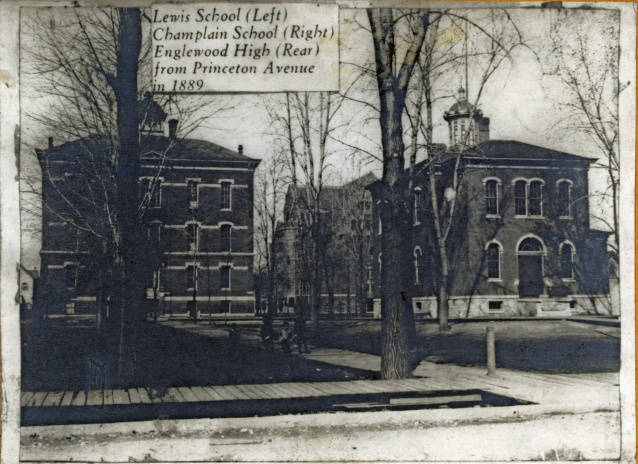
Kate was named principal of the Lewis and Champlain Schools in 1884, next door to each other at 62nd Street and Princeton Avenue in Englewood. Her annual salary was $1,800. She held this position for twenty-two years.
During that time, she worked with Orville Bright, another well-known progressive educator who became superintendent of the district that included Lewis-Champlain, and later superintendent of the Cook County schools. Bright strongly advocated for continuing education, “life-long learning,” for teachers. Mrs. Bright was a founder of the Illinois Parent Teacher Association.
In 1906, Kate became principal of the Parker Practice School, which was the section of the Normal School that planned and oversaw “student teaching” and other practicum experiences. Col. Parker had died a few years before.
In 1909, she was named superintendent of District 6 for Chicago Public Schools. Her salary was $5000 annually. She was under the direction of Chicago school superintendent Ella Flagg Young, who had studied under John Dewey at the U of C and had received a Ph.D. Young was the first woman named superintendent of a large city school system and also the first woman president of the National Education Association. It goes without saying she advocated progressive education theories and practices.
Kate retired from that position in 1916 due to failing eyesight. She moved back to the family farm in Evergreen Park permanently at that time.
Next post: Some stories from Kate’s years in education.