
The Ridge Historical Society
Earth Day 2021
By Carol Flynn
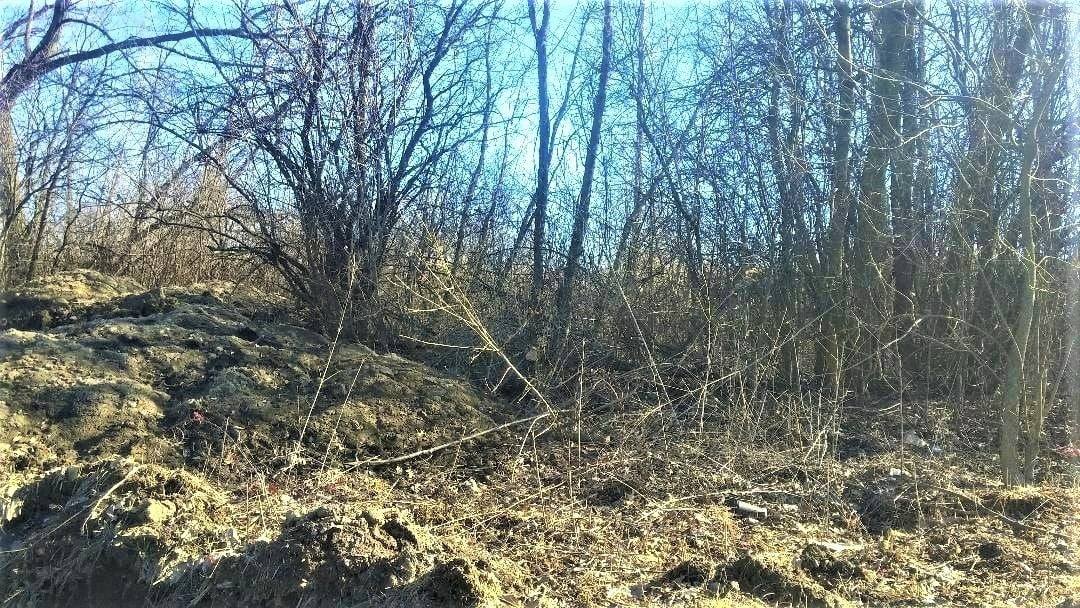
Edited: I did not mention Dan Ryan Woods in my original post! Of course, the forest preserve connects us to Earth Day and the "Wild Ridge." That is an obvious example. The upper woods are an example of "Open Woodlands," an ecosystem that was prevalent in the area. Water drained from the top of the Ridge to the east into the lower woodlands where the water pooled into wet areas before being absorbed into the ground. Descriptions of the "island" itself reported that the sides were heavily wooded and much of the top of the table of land was prairie.
Following is information about the other ecosystems of which there are still remnants in the Ridge area.
Thursday, April 22, is Earth Day. It is a global event established in 1970 to support environmental protection. The theme this year is Restore Our Earth.
This is a good opportunity to once again share a favorite history topic – the “Wild Ridge.” This is a look back at the natural environment of the Ridge before it was “developed” by European settlers. There are a few remnants of the land left from the days when it was the ancestral homelands of Native Americans.
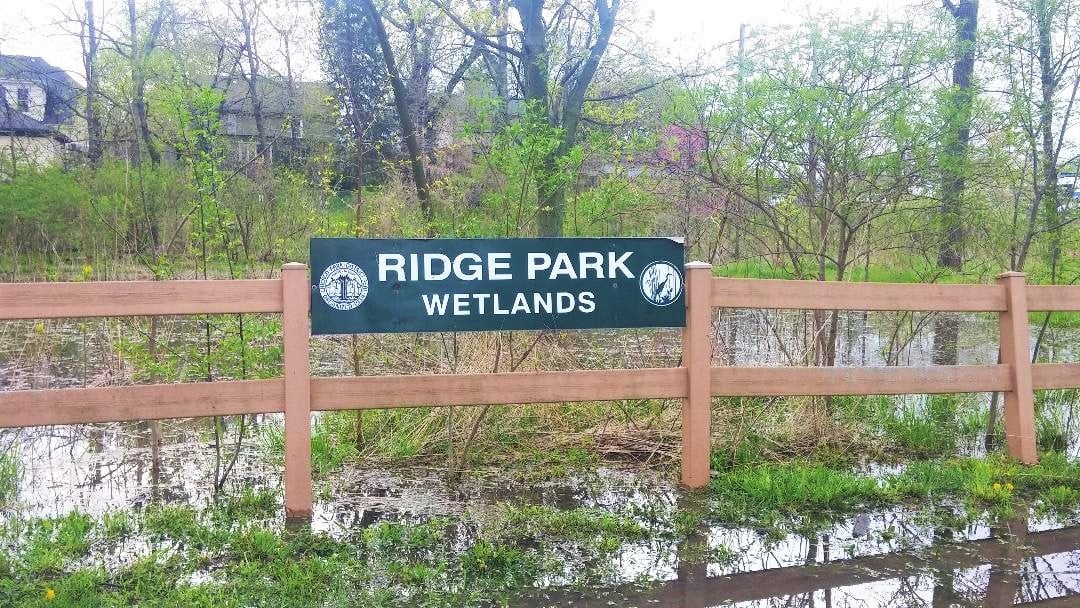
The Ridge Wetlands is a teeny-tiny remnant of the marshes and sloughs that predominated in the land between the Ridge area and Lake Michigan. This land provided abundant nourishment and other life necessities for wildlife and Indigenous Peoples – wild rice, berry brambles, and other food plants; stop-overs and breeding grounds for migratory waterfowl; ecosystem for fur-bearing animals like beaver and muskrats.
Note that this is why so many lawns and basements to the east of the Ridge flood – they are built on natural wetlands and there is no place for the water to go. The water is supposed to be there – houses are not!
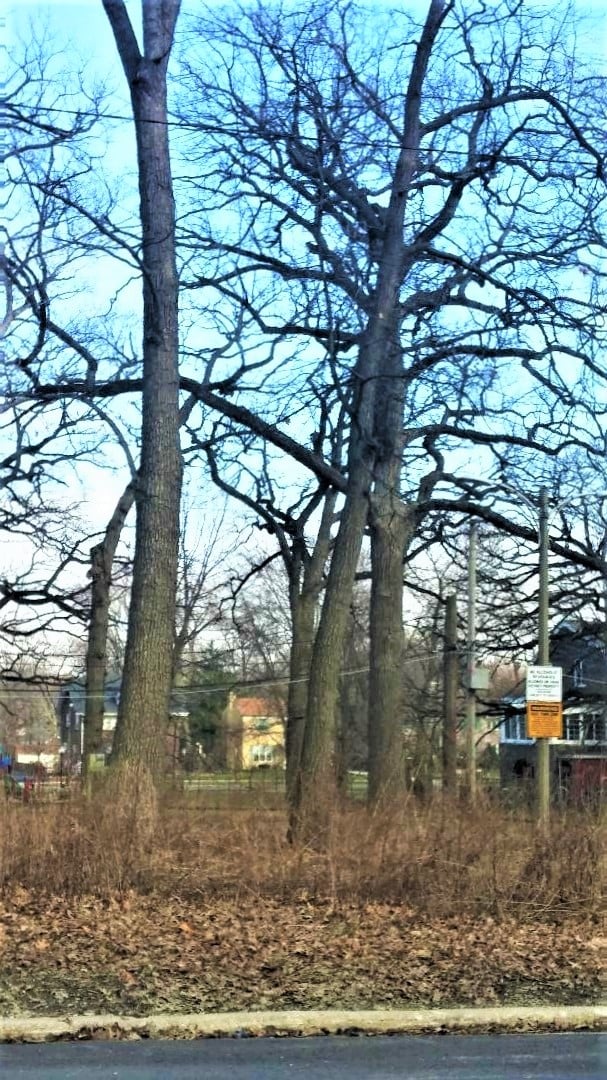
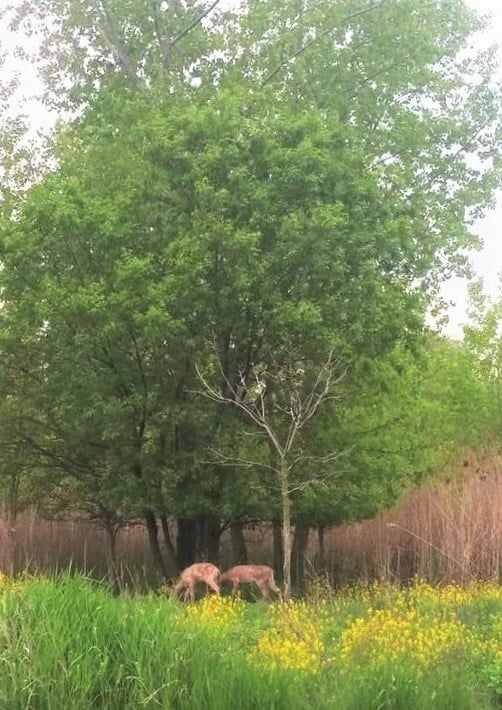
The Oak Savannah remnant at Hurley Park. The drier areas had numerous groves of timber, predominated by oak. Also included were fruit trees like apples and plums, nut trees like walnuts and hickories, and birch trees good for making canoes. Numerous species of birds and small mammals made their homes in the trees. Deer and bears and lynx found refuge there.
Note that many of the heritage oak trees in the Ridge areas are reaching the end of their lifespans, about 200 years. They have not been replaced. Within the next 50 years, a lot of these trees will die, and the tree canopy will be gone.
Vast stretches of prairie land were the migration path for buffalo, as well as the home for countless species of birds and small mammals, and wild food plants, including the wild onion or garlic that gave Chicago its name.
Any substantial prairie land is gone from this area. Some prairie remnants can be seen in local cemeteries.
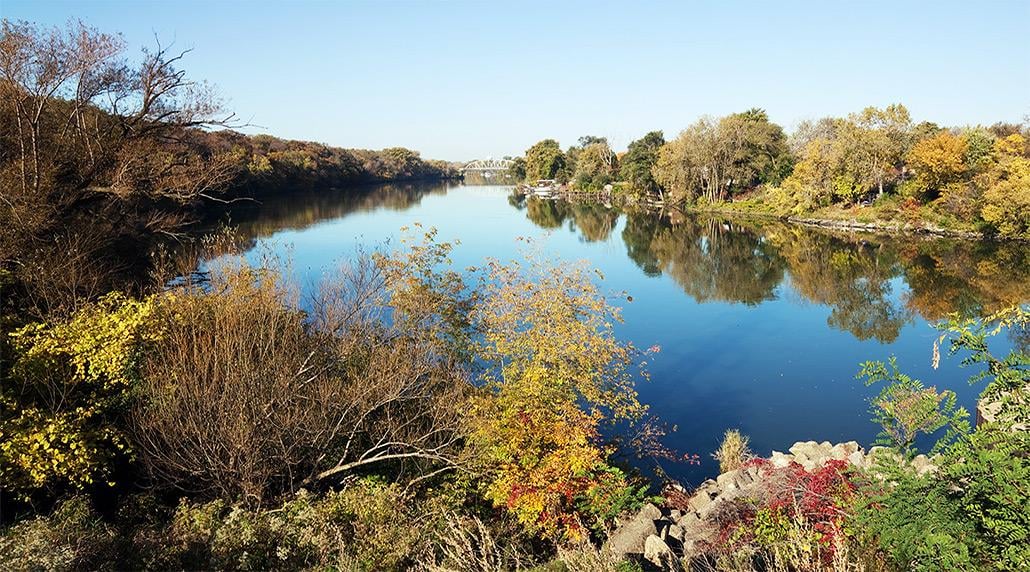
The waterways, the Calumet River system and Stony Creek at the southern edge of the Ridge, teemed with fish – trout, pike, bass, perch, etc.
Stony Creek was absorbed into the Cal-Sag Channel. The Illinois Department of Public Health puts severe restrictions on eating fish caught from the Calumet system due to contamination.
The sand dunes which formed on the western side of the Blue Island, which can still be seen today in the cemeteries along that ancient shoreline, also had their own ecosystem of plants, birds, and other animals. Wolves built their dens there, in the well-drained soil.