The Ridge Historical Society
March 2021 – Oscar Wilde’s Visit to Chicago – Part 3
By Carol Flynn
Oscar Wilde visited the United States in 1882 to lecture on aestheticism. He was 27 years old. He had not yet published any of the plays or fiction for which he would become famous as a writer. He was, however, already famous for this wit, sarcasm, opinions, and conversation skills. He was famous for his flamboyant dress, “decadent” lifestyle, and love of “beauty” as the guiding principle of life.
He had agreed to the trip to the U.S. which was arranged as a promotion for the new Gilbert and Sullivan play, “Patience,” a parody of aestheticism. However, the play was soon eclipsed by Wilde himself. The trip was scheduled for four months, but was extended to almost a year because it was so commercially successful.
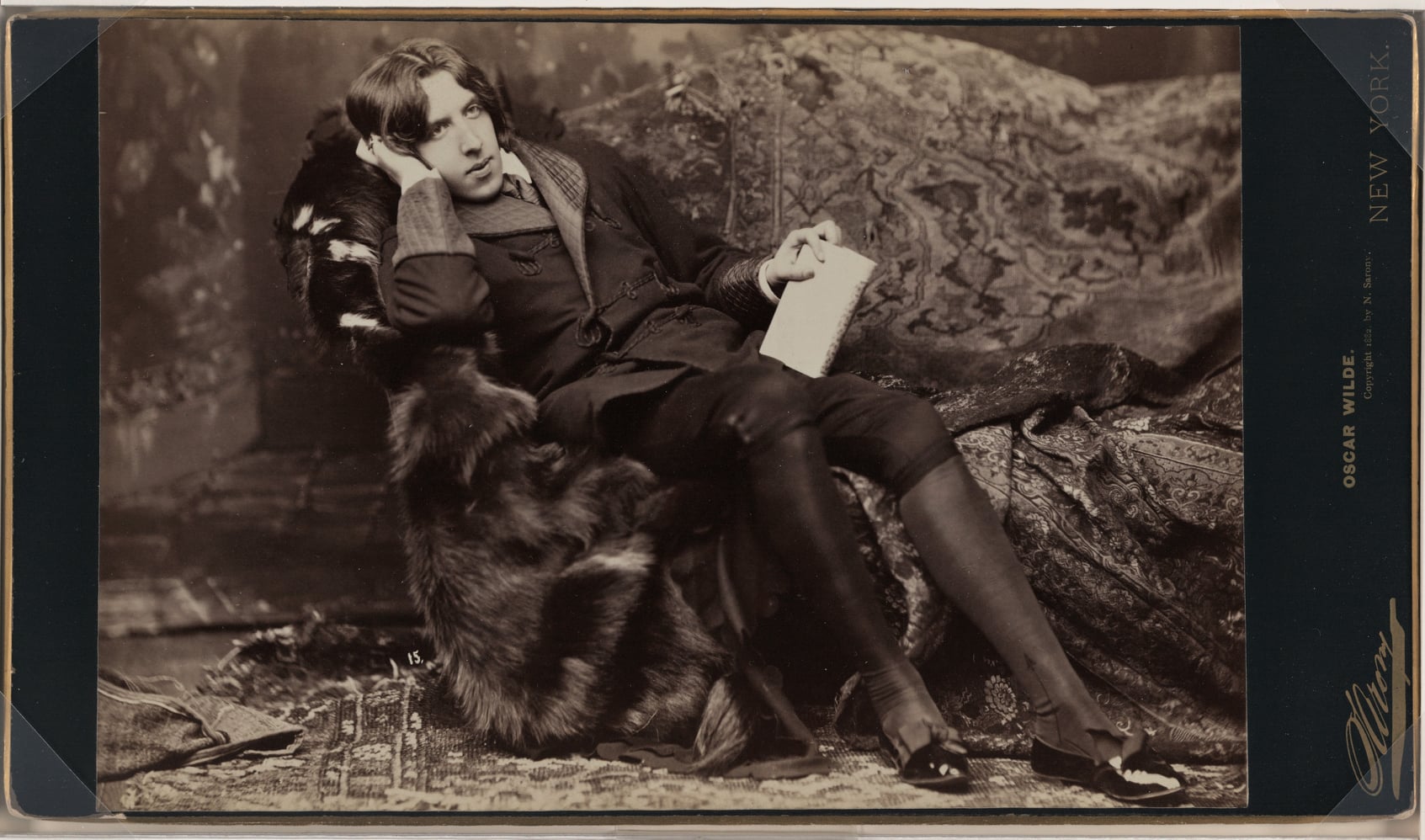
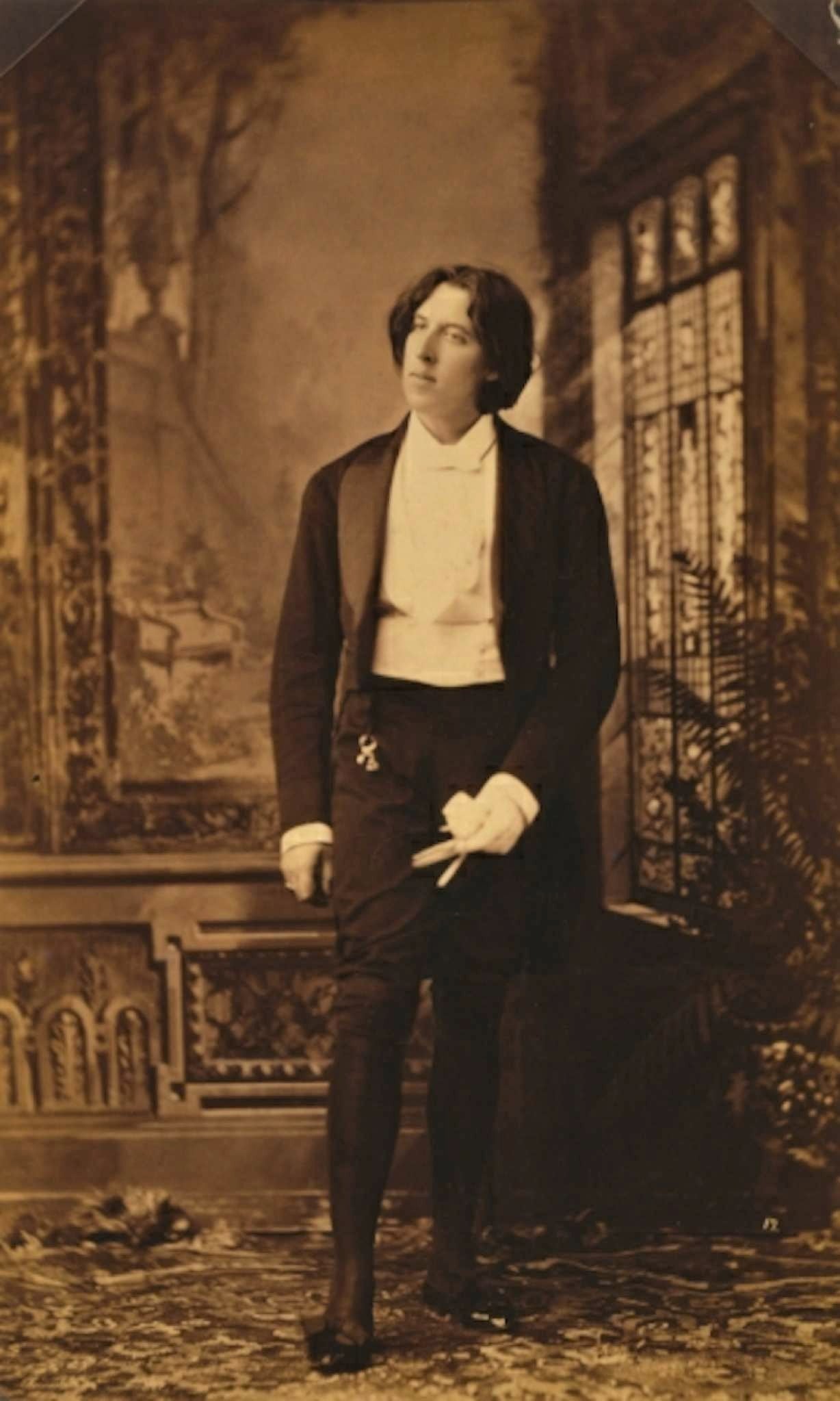
Wilde arrived in New York City on January 3, 1882. Within days, he posed in full aesthetic look for photographs taken by Napoleon Sarony, the leading portrait photographer of the day. These photographs define Oscar Wilde to this day.
After working his way through New York, Boston, Washington, D.C., and Philadelphia, and smaller cities like New Haven, Albany, and Buffalo, he arrived in Chicago on February 12.
The American press loved to hate Wilde. They reported his every move, outfit, and comment, while at the same time declaring him irrelevant. The newspapers in Chicago were no different. The articles in the Chicago papers offered detailed scenes of Wilde’s visit, almost like the plays he would later author.
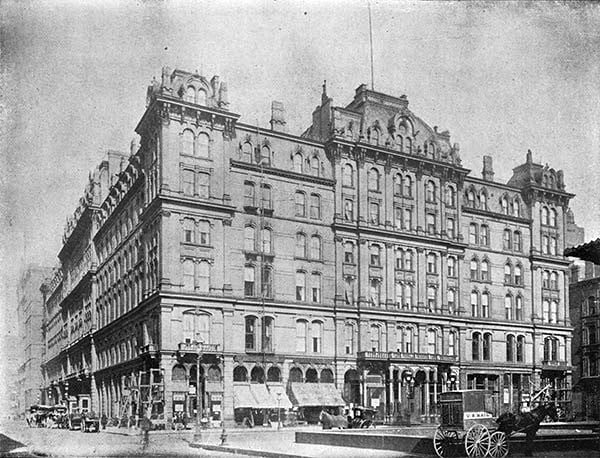
Chicagoans had their first glimpse of Wilde when a reporter from the Inter Ocean newspaper interviewed him at the Grand Pacific, the luxury hotel he was staying at, now long gone.
Wilde’s room was decorated with rare old books and an antique desk with inlaid pearl done in Japanese style, a popular aesthetic trend. The “skins of wild beasts,” identified in another newspaper as buffalo, and a gold silk fringed shawl were draped on the sofa, which had been pulled up to an angle with the bright coal fire blazing in the grate.
Wilde reclined on the sofa, smoking Turkish cigarettes. He wore a quilted black silk smoking jacket with scarlet collar and lapels, with matching black “pantaloons” with scarlet piping down the side. The outfit was completed with matching scarlet necktie, handkerchief, and stockings.
He greeted the reporter with “languid grace.” The first question put to him was what he thought of Chicago.
“That is a difficult question to answer,” replied Wilde. “I don’t pretend to have seen the city yet, I have been here too short a time; but from what I have seen I like it much better than New York. It is wonderful to think how you have built such a large city in so short a time, especially after such a great calamity as your great fire. But of course it is a little sad to think of all the millions of money spent on buildings and so little architecture. But that will come in time, no doubt.”
When asked if he had seen any art yet in Chicago, Wilde replied he had seen the work of a sculptor named John Donoghue. He praised the work as “of the highest artistic quality, more beautiful than the work of any sculptor I have seen yet.” He said Chicago should be proud of this young artist.
Wilde showed the reporter a plaque with a medallion of a young girl that Donoghue created to illustrate one of Wilde’s poems from the book “Poems” he had published in London the year before. He gave gifts of the book out frequently.
[A few weeks later, the newspaper reported that Wilde offered to advance Donoghue the funds to have one of the artist’s works cast in bronze and exhibited in London. He also ordered more of the medallions to give as gifts.]
He was asked how he liked the American people, and he responded the people on the East coast were very cosmopolitan; he expected to find “real American life” in the West. He said he found the audiences in the large cities to be “intelligent, courteous, and sympathetic.” There had been a few instances of disturbances in smaller, “provincial towns,” but “the good sense and good feeling of the majority entirely stopped” the disturbances.
Wilde was asked about the results of the tour financially, at which he showed “surprise” at the “outrageous question.” He was even asked outright how much he was making per night, but he did answer the questions. He was making $1000 per night in the big cities, less in the smaller cities.
He said that he was surprised by many comments of the newspapers. “They think it a strange and awful thing that I should want to make a few dollars by lecturing. Why, money making is necessary for art. Money builds cities and makes them beautiful. Money buys art and furnishes it an incentive. Is it strange that I should want to make money?”
That concluded his first published interview in Chicago.
During this first visit, Wilde was the guest of honor at luncheons, dinners, and receptions where he interacted with prominent Chicagoans like Marshall Field. He “talked very pleasantly on the subjects of dress, dancing, etc.” He was pronounced “perfectly charming” by the ladies.
When asked how he liked Chicago’s top social circles, Wilde replied, “I like your society people very much. They have all apologized to me for their newspapers. Your newspapers are comic without being amusing. English papers are founded on facts, while American papers are founded on imagination.”
Wilde might have charmed Chicago’s social circles, but he had less success with its cab drivers.
Wilde was the guest of honor at a society reception on Michigan Avenue, and a cab had been hired to then transport him to the Prairie Avenue district to be the guest at another house, that of architect John Wellborn Root, the partner of Daniel Burnham. Root was the creative genius of the team, and his designs using steel support beams would later pave the way for modern skyscrapers.
It was a dark and chilly night, and the driver, Frank Trudell, the foreman of Beardsley’s livery stables, could not find the address. The cab bounced around the muddy, unpaved streets, much to Wilde’s annoyance.
“I say, you ought to know where this is,” said Wilde, sticking his head out the cab’s window.
“Yes, I ought to know a good many things,” retorted Trudell.
Finally, Trudell pulled to the curb and told Wilde he had to get out of the cab and hold the horses while he, the driver, looked for the house. Wilde balked at the suggestion. What did the driver take him for? He was no hostler.
Trudell said he was not going to drive up and down the street all night. Either Wilde held the horses, or they headed back to downtown.
“Oh come, I say now, you wouldn’t do that,” said Wilde.
“Oh yes I will,” replied the cab driver.
Wilde “stepped out into the bleak night in knee breeches and dress coat” and fine shoes with silver buckles, and held the horses.
The house was located, and Wilde, still irritated, told Trudell to wait to take him back to his hotel. After waiting an hour and a half in the cold with restless horses, Trudell knocked on the door and sent a message to Wilde. If he wanted a ride back downtown, he had to leave then because Trudell would wait no longer.
Wilde came out and they left.
Next post: Oscar Wilde’s Memorable Lecture in Chicago.