
The history posts from the Ridge Historical Society have been totally lost in recent days because of the continuing turmoil in the country, and understandably so. Still, I feel the need to complete this story that I started. Then I will take a rest from any more posts until the new RHS website is up and running, which will be by February 1. Future stories will be found on the website, not on social media. I will post links to the website stories on Facebook.
Upcoming series will include: The history of the 19th Ward; stories related to the history of integration and race relationships in Ridge communities; case studies on pandemic relief efforts (history in the making); artists on the Ridge; a continuation of the series on people for whom schools on the Ridge are named; the "cult" that called Beverly "home;" more on Dan Ryan Woods; more on Beverly Gardens and Prohibition stories; and many more stories.
Thank you for your support – continue to watch the RHS page for what's next!
Excitement on the Ridge in 1921 – Part 5
By Carol Flynn
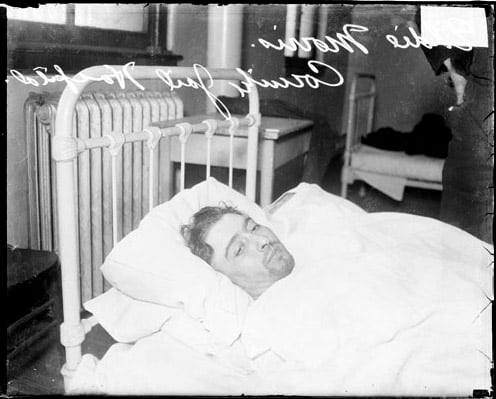
Eddie Morris was arrested for the murder of police officer John Mullen on January 8, 1921. The newspapers and his lawyers reported Morris was “fighting for his life” from the bullet wounds inflicted by police but the prison doctor said he would recover.
The State Attorney’s office promised a trial would begin within 30 days. If Morris was too weak to come to court, the trial would take place at his bedside.
Witnesses were brought to his hospital room to identify him as the shooter. The grand jury brought an indictment against him on January 11.
Morris’s mother, wife, and a sister visited him the next day. His mother tearfully insisted Eddie “did not have the heart to kill anyone” and that someone was trying to shift the blame to him.
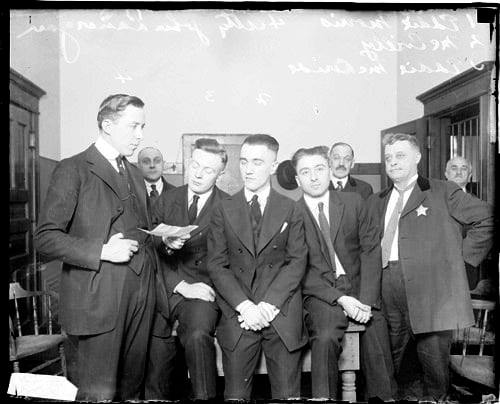
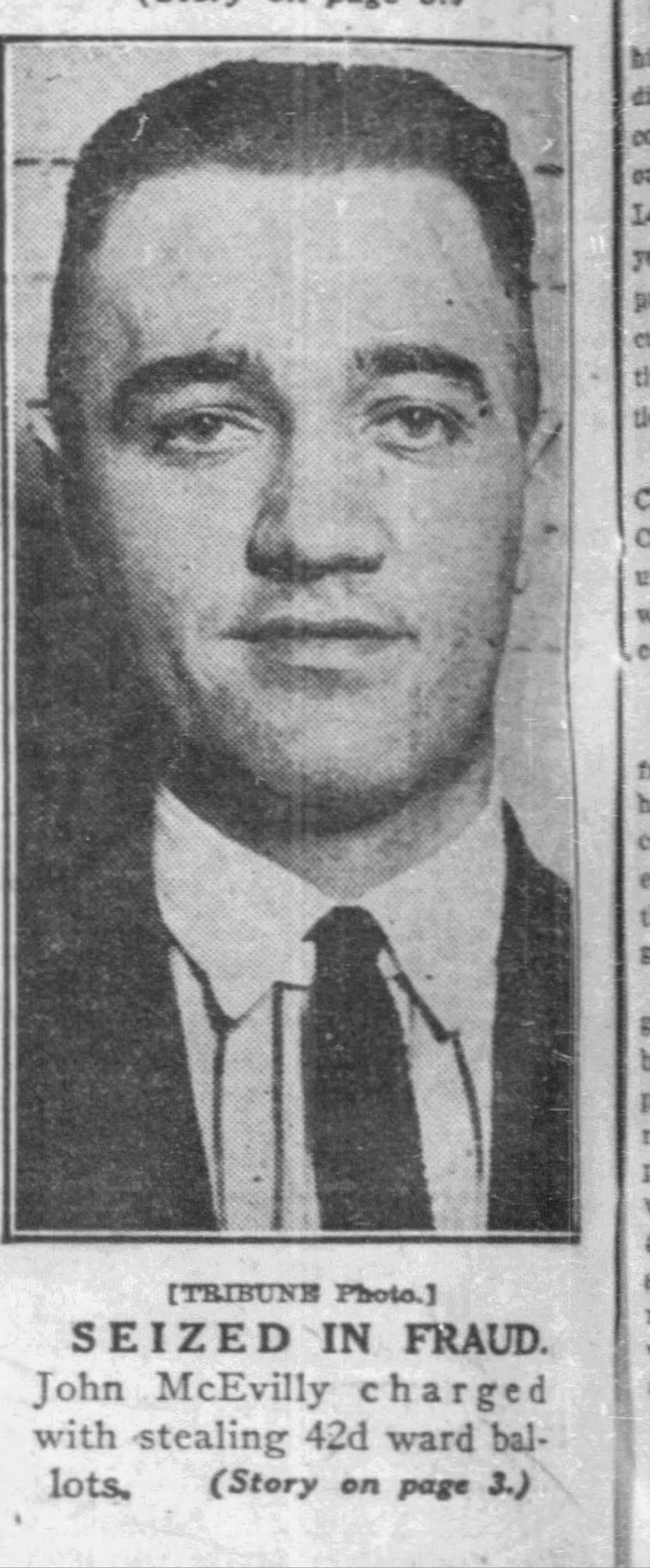
Morris was carried into court in a chair for his arraignment on January 20. John McEvilly was also charged. Both pleaded not guilty.
During all this time, the third man, Eddie McBride, was still a fugitive. He was finally arrested on February 4th at a rooming house on the near west side. After being “grilled” for twelve hours, he confessed that Morris had done the shooting and he had driven the get-away car. His story agreed with that of the other witnesses.
The trial of all three men, Morris, McEvilly, and McBride, began on March 16, 1921, and witness after witness described the shooting.
In summary: The three men, all armed, intended to rob the restaurant. They drank with three 15-16 year old girls for about 45 minutes. McEvilly and Morris stayed inside the restaurant, while McBride and two of the girls went outside to the car. Morris had an altercation with the coat check woman and pulled a gun. The employee alerted the owner. The owner called the police. Officer Mullen was just half a block away and came immediately to the restaurant, apparently fetched by a restaurant employee.
By now, bystanders inside and outside of the restaurant were starting to take notice of the commotion, which increased the number of witnesses who observed what happened next. When Mullen entered the restaurant, Morris came up behind him and stuck a gun in his back, telling him to raise his hands. Morris was reaching for Mullen’s gun when a bystander shouted a warning to Mullen. Mullen began to turn, and Morris shot him at point-blank range. The coroner said the bullet actually entered Mullen from the front, not the back.
Morris then ran out the door, where McBride and the girls were waiting in the car. Morris said he had just shot a “dick,” a long-time slang term for a detective or police officer, and they had to get away fast. They threatened to kill the girls if they talked. They drove away.
McEvilly was discovered hiding in the men’s room, where he tried to stash his gun, but he was taken into custody, along with the third teen-aged girl.
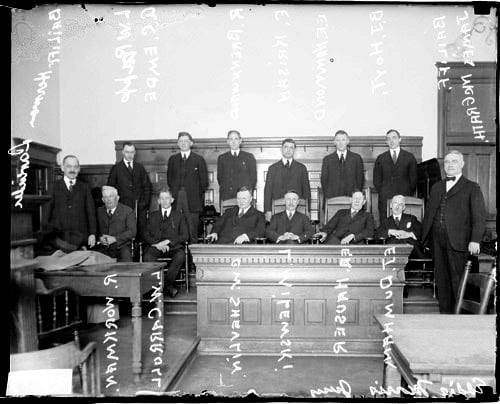
The prosecution called for the death penalty for Morris, and the case went to the jury at 10:00 p.m. on March 26.
On March 27, Morris was found guilty of the crime and sentenced to life in prison. McBride and McEvilly were acquitted of the charges against them.
Law enforcement officials were not happy with the sentence that Morris received, or the verdicts for McBride and McEvilly. Chief of Police Charles C. Fitzmorris said in a Tribune article that Morris’ sentence was another “sad fact of nobody cares.” Morris could be released from prison one day to again walk the streets of Chicago and defy the law. McBride and McEvilly were free now to continue their careers of crime.
The same was the sentiment of State’s Attorney Robert E. Crowe, who had stated there was no other sentence possible for this murder but the death penalty. Crowe would go on to fame for prosecuting the infamous Leopold and Loeb murder case in 1924. In that situation, lawyer Clarence Darrow saved the two killers of Bobby Franks from the death penalty. He tried to use the defense of insanity, but the judge let them off because of their youth.
Aftermath
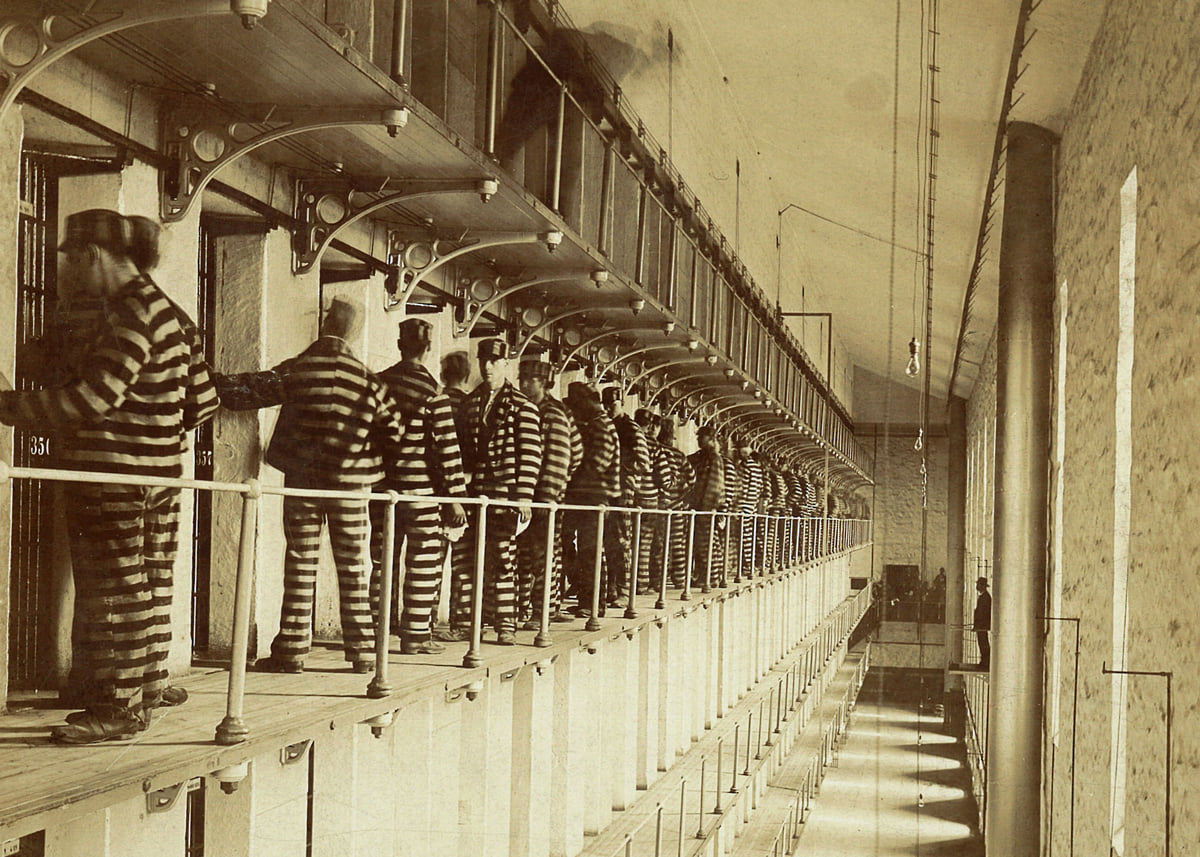
Eddie Morris spent the rest of his life in prison in Joliet. His name still came up in the news. He tried to escape from prison by leaving a stuffed dummy in his cell while he hid in a sewer catch basin. He was found after two days and placed in solitary confinement. The 1940 U.S. Census lists him as an inmate in Joliet, and he had to register with the draft in 1943 for World War II, which he did in Joliet. He died in 1951 at the age of 59, presumably while still in prison. He was buried in Missouri, where his mother was.
Eddie McBride was identified as “Clarence Kelly” who had escaped from San Quentin prison in California early in 1920 while serving time for a San Francisco robbery. He said he would never go back to prison, he would not survive there. While being returned to San Quentin in May 1921, he escaped by jumping out a train car window. In 1923, a mutilated corpse was found near Geneva, Illinois, with its hands and other identifying marks cut off and face burned. One law officer, involved in the Mullen murder case, was sure that was McBride. The theory was that this was retaliation for having turned against Morris. However, physical evidence did not support this being McBride. The body was buried without identification. No other mention of McBride or Kelly is found after that time.
John McEvilly was still showing up in Chicago newspaper stories in 1949 at the age of 52. He was stabbed in the side and taken to the hospital but refused to identify his assailant. When the police investigated, his wife Shirley admitted she was the one who “accidentally” stabbed him. McEvilly was described as the “erstwhile hoodlum and political henchman” of Titus Haffa, an ex-alderman. McEvilly was frequently questioned by the police about jewelry robberies, and was accused of stealing ballot boxes and threatening the candidate running against Haffa in 1928, but he could not be positively identified.