The Major Issue in Chicago One Hundred Years Ago
By Carol Flynn
One might assume that during the middle of the week between Christmas and the New Year in 1920, people had their thoughts on holiday and winter activities. Out-of-town guests had to be entertained. People tended to stay for longer visits back then because travel was less convenient; people traveled by train and horse and buggy, as autos were just becoming mainstream, and of course, there were no airplanes yet. Children were home on school vacation, and there were no video games and smartphones to keep them occupied.
There were frozen ponds for ice skating; there were plays and holiday musicals at the theaters downtown; there were tea parties and card parties with friends. For most men, work outside the home needed attention; for most women, work inside the home needed attention.
But this was Chicago, and politics were also always in play. The major issue in Chicago one hundred years ago was the restructure of the ward system of city government. And Washington Heights, Beverly Hills, and Morgan Park had a great stake in the issue. Mount Greenwood was not yet part of the City of Chicago; that would not happen for another seven years.
The ward system went back to the very beginning of Chicago as a city. The division of Chicago into legislative units called wards was established with the very first city charter in 1837. The city has never known any other form of government.
There were originally six wards, with two aldermen from each ward. The mayor and aldermen made up the “common council.” The council was empowered to handle all aspects of city management, ranging from the lofty control of city finances and property on down to “preventing the rolling of hoops … or any other amusement having a tendency to annoy persons … or to frighten horses.”
As the city’s population grew and more areas were annexed, the number of wards increased. When Washington Heights, which included Beverly Hills, was annexed in 1890, it became part of the 31st Ward. When Morgan Park was annexed in 1914, it became part of the 32nd Ward. Most of Washington Heights then also became part of the 32nd Ward.
In 1920, there were a total of 35 wards, each with two aldermen. The population distribution among the wards was way off-kilter. The largest ward, based on the 1910 U.S. Census, had 150,244 people, and the smallest ward had 35,294.
It was proposed that the city be remapped into fifty wards of about equal population size, and there be
one alderman per ward.
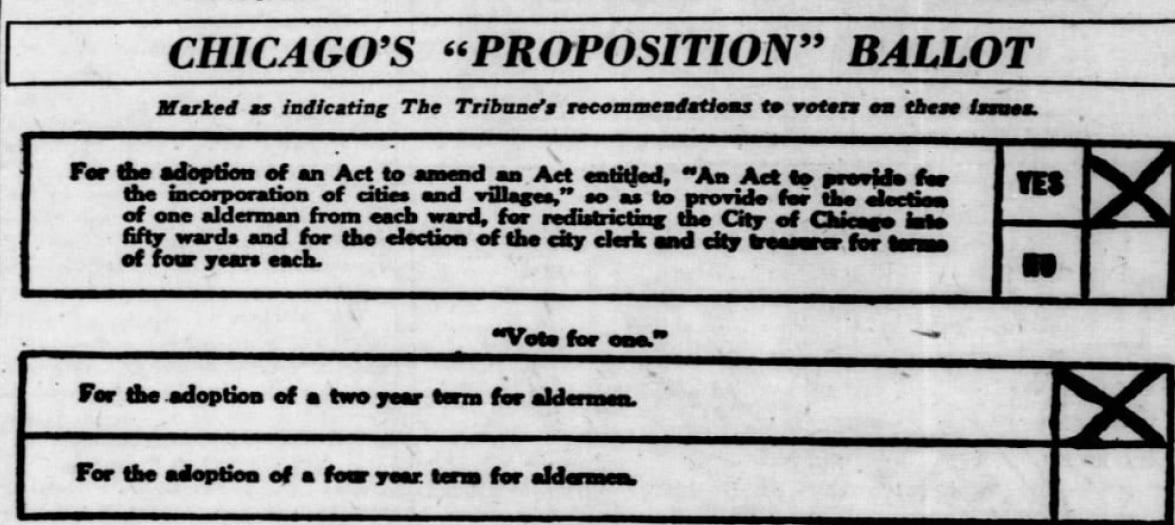
In November of 1920, the voters of Chicago endorsed the plan to create 50 wards with one alderman each, who would serve two-year terms. It then went to the city council to have the new map drawn.
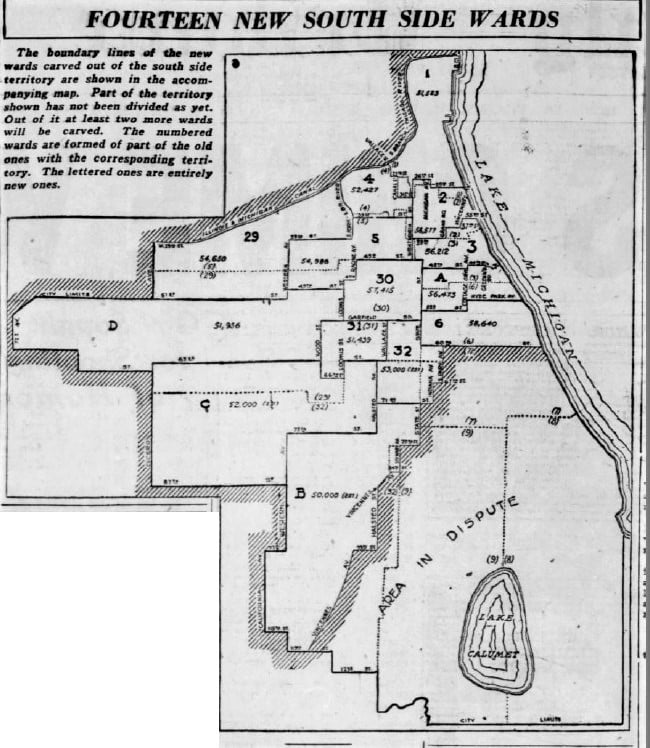
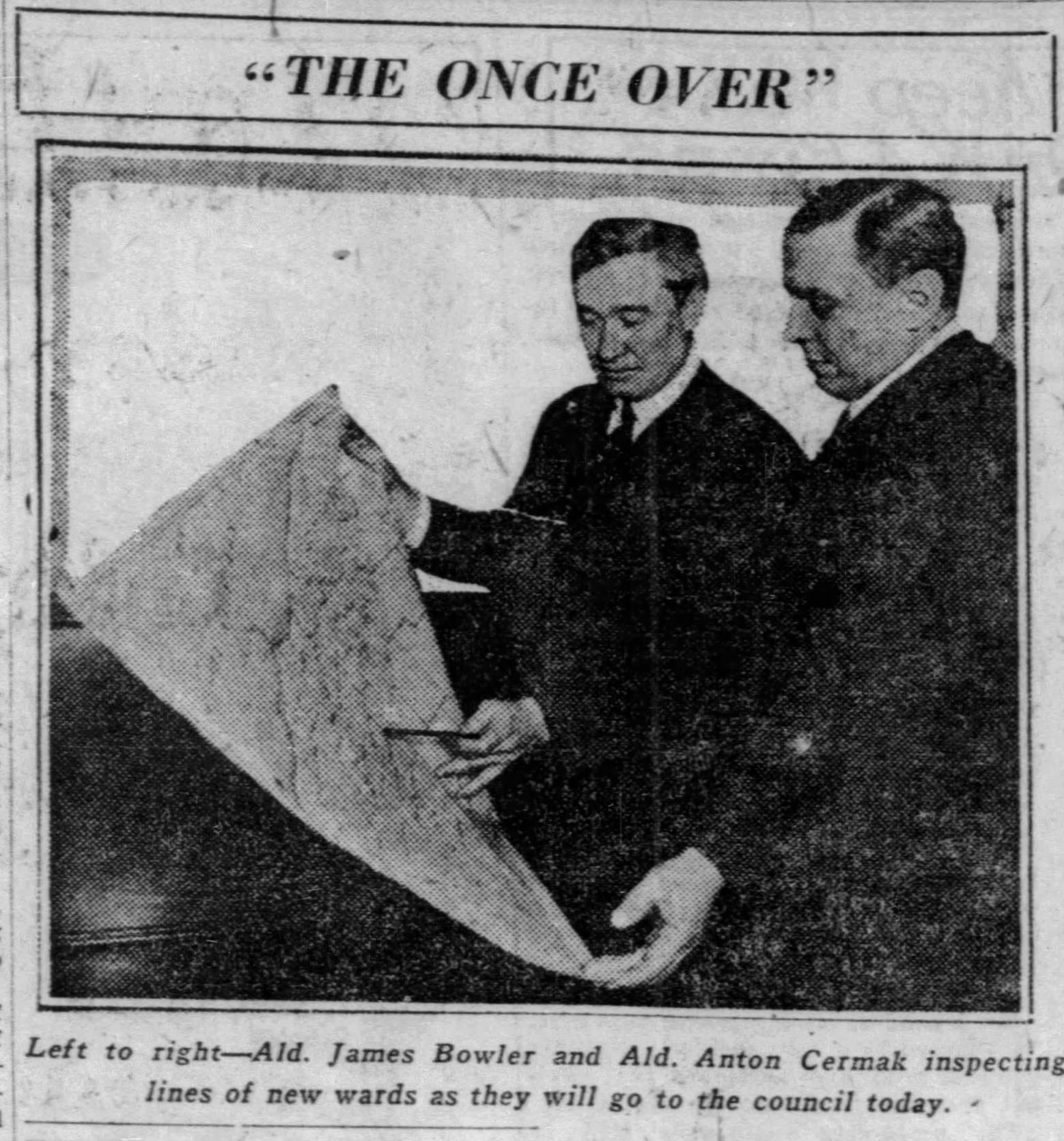
The aldermen had been working on a new map for years. It can just be imagined what went on behind the scenes as the council decided on the new ward boundaries. Finally, they announced a new map was ready to be voted on by the city council on December 29. It was expected to be approved.
The restructuring of the city wards was going to cause a numbering change – intentionally. Most of Beverly and Morgan Park would become part of a newly designated 19th Ward. There was already an existing 19th Ward, centered around Halsted Street and Polk Street, today’s Little Italy and U of IL-Chicago campus. The “old” 19th Ward was notorious for fatal political feuds and bootleg activity. The people of Beverly were none too happy to have that number assigned to them. It was rumored that some aldermen did this on purpose to thumb their noses at the elite homeowners of Beverly. The old 19th ward would be broken up, with sections going to four different wards.
Next post: The December 29, 2020 Vote on Ward Remapping