
The history of Dan Ryan Woods – Part 18: Crime, law and order in Dan Ryan Woods
By Carol Flynn
Reading about crime and violence can be unsettling, but for any history to be accurate, the good, the bad and the ugly must be included. This post deals with the uglier aspects of the history of Dan Ryan Woods.
The seclusion and isolation of the Forest Preserves of Cook County (FPPC) made them an ideal place for clandestine and illegal activities, and Dan Ryan Woods (DRW) was no exception.
There were occasional reports of crimes and other undesirable happenings in the early years of the FPPC. Robberies in remote areas were reported; the victims were often couples parking late at night. Visitors were sometimes bothered by “tramps.” Murderers hid their victims in the preserves. Despondent people committed suicide in the loneliness of the woods. Bizarre accidents happened – a decaying tree suddenly split and fell on picnickers, killing several.
One early crime reported in DRW was a robbery and car theft in the early morning hours of the 4th of July in 1931. In 1946, a man who shot his ex-girlfriend's father fled to the preserve after the crime; there he wandered for several hours and disposed of the gun, which the police later found after searching the woods.
Crime in DRW started being mentioned more frequently in the newspapers beginning in the 1950s. Robberies and car thefts continued, and there were arrests for gambling.
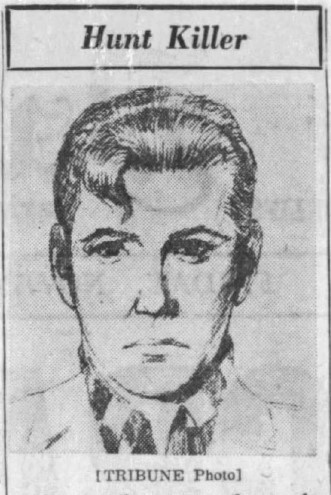
In 1957, a murder was committed just outside of DRW and the killer escaped through the preserve to board a bus at 87th Street and Longwood Drive. The police issued a sketch of the suspect and conducted a door-to-door manhunt in the area. The murderer was found to be a man who lived and worked locally.
In 1959, north side gangs of white youths planned to “rumble” with guns in DRW but called it off due to rain. The members of one gang instead went to Riverview amusement park where they terrorized visitors with a loaded shotgun.
An earlier post in this series mentioned that rangers were among the first employees to be hired by the FPCC. According to a 1993 Chicago Tribune article, this ranger force was plagued by ineffectiveness due to unqualified staff hired through patronage; and due to understaffing, poor training, and poor pay. The article said the rangers acted like the preserves were “Jellystone Park,” when, by the late 1970s, the preserves had actually become “drugstores with cars lining up in the parking lots while their occupants bought PCP and heroin.”
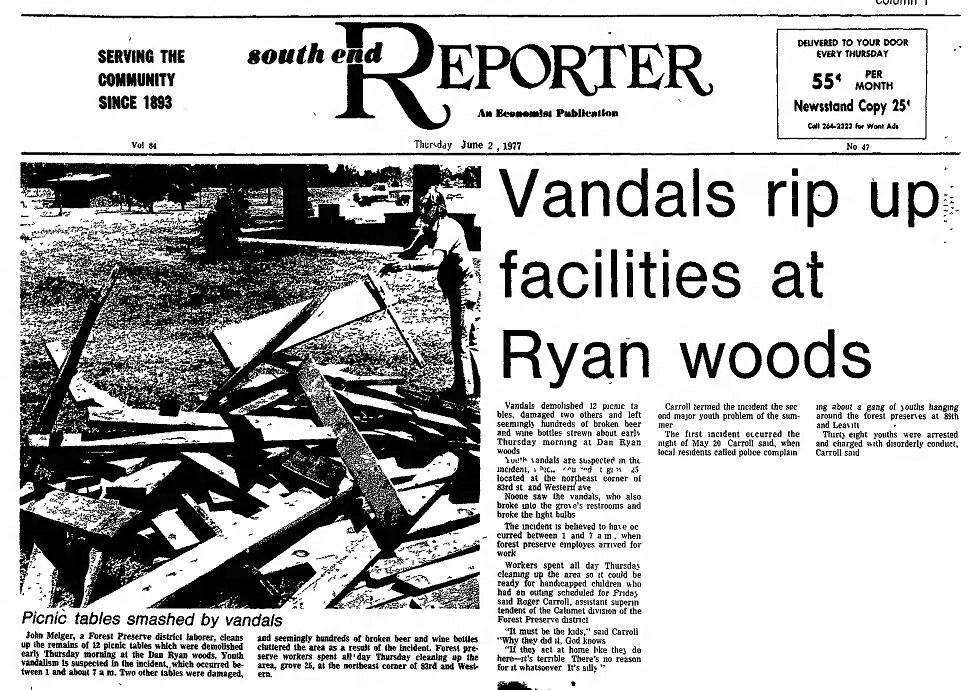
Illegal drugs and drinking were issues in DRW for many years; it was a popular place for underage drinking. Other crimes included vandalism and theft of DRW property; as one example, people stole picnic tables. Fights, assaults, and shootings happened; many of these were racially motivated attacks instigated by local teen-agers. Suicides have occurred in DRW as recently as a few years ago.
Among the murder victims found in DRW through the years was a young woman strangled by a serial killer. An earlier post shared that murder victims have been dumped at these woods since at least the 1890s when the land was still the Sherman Farm.
An abandoned newborn baby girl was found in DRW by a woman walking her dog. The baby was taken to Little Company of Mary Hospital where she was found in good health.
More heinous crimes included the attack and rape of a woman walking a path through the woods to the train station in the early morning to go downtown to work; DNA evidence was used for the first time in Cook County history to convict the rapist. In another case, a man was shot to death in a parking lot dispute in DRW, the only FPCC homicide that year.
According to the 1993 Tribune article, in 1992, the Cook County Board added several million dollars to the FPCC police budget for ongoing efforts to take a more aggressive and professional stance against crime. Increasing staff, better training, and new equipment and uniforms were part of the plan. Civil service exams became part of the hiring process and most of the patronage employees were replaced.
Although the department had a long way to go, some changes were quickly noticed. In the 1993 article, two men in their mid-20s, hanging out at another preserve, not DRW, lamented the changes: “We used to do whatever we wanted to do, man,” said one. He remembered when they had kegger parties right in the pavilion. “Those days are gone,” he said.
“It’s like being in a communist country. You can’t even go in the woods and have a beer without getting hassled,” said the second.
Today, the FPCC website states its police officers are state certified and receive additional training in conservation and ecology. The department operates 24 hours a day, seven days a week. They patrol in marked police vehicles, on foot, and by bicycle, ATV and boat. FPCC mentions on its website a program which uses volunteers as additional eyes and ears to report any suspicious or unusual activity to the forest preserve police.
Periodically, the idea of combining the forest preserve police with the Cook County Sheriff’s Office has been proposed but not acted upon. At the December 2019 meeting of the forest preserve board, it was reported that the employees receiving the highest customer satisfaction ratings for last year included the law enforcement staff. It was approved at that meeting to begin using body cameras and taser weapons for the forest preserve police.
Next up: Odds and ends – some interesting DRW stories