
The history of Dan Ryan Woods – Part 15: Events reflected the times
By Carol Flynn
Picnics, celebrations, entertainment, and sports events were the mainstay of Dan Ryan Woods (DRW) activities. However, other events of a more serious nature were also held there, reflective of the decades in which they occurred.
After World War II, the period known as the “Cold War” started, when political tensions ran high between the U.S. and the Soviet Union. The threat of nuclear warfare hung over the globe, tempered by the knowledge that a strike by either side would lead to mutually assured destruction.
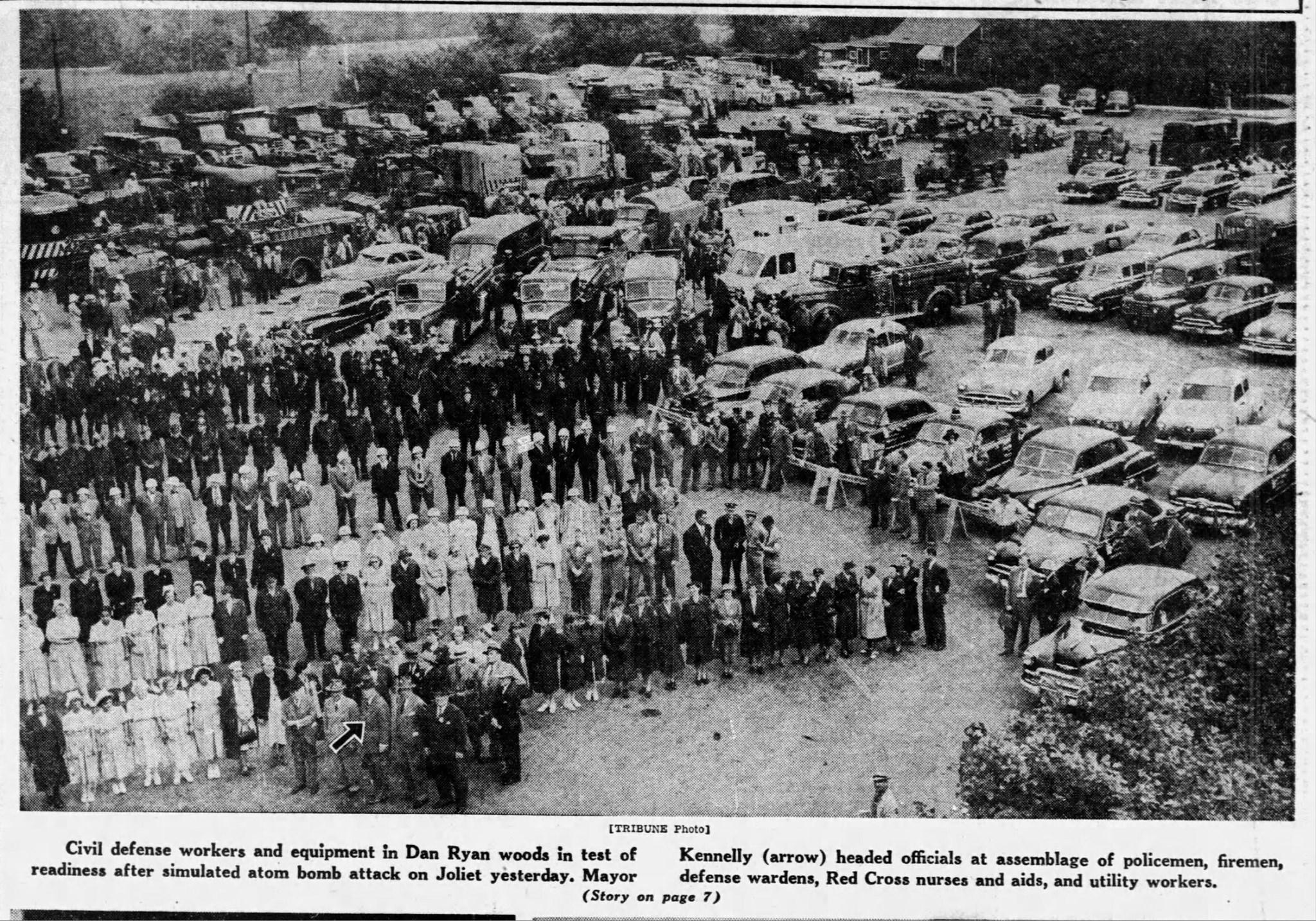
On September 25, 1951, DRW was used as the site to stage a mock response to an A-bomb attack. The scenario was that the city of Joliet was bombed and heavily damaged, and the Chicago Civil Defense Corps was mobilizing its forces to send aid. The exercise was to test the preparedness of the Chicago forces to respond to such a crisis.
The alert was sounded at 9:30 a.m., and within an hour, 200 vehicles and 600 workers had assembled in DRW. Included were fire trucks, ambulances, police cars, utility repair trucks, bulldozers, heavy cranes and other street clearing machinery, and the crews that staffed them. Red Cross nurses and aides were also part of the mix.
Premiering at the event was a mobile hospital trailer that had its own power unit and included operating facilities, and oxygen, blood plasma and other medical supplies. It was developed specifically for such a disaster.
Four amateur radio operators communicated between DRW, Joliet, and the radio control center at the Burnham Park administration offices. Mobile radios, walkie-talkies, and temporary telephones and telegraph lines were set up to coordinate efforts within the DRW assembly area, and link them to Burnham Park.
Although the vehicles did not make the actual trip to Joliet, overhead a helicopter hovered that would have monitored and reported on traffic conditions around DRW. A Civil Air Patrol plane patrolled Route 66 from Chicago to Joliet, the major highway between the cities then, and would have been ready to report on traffic and the locations of the units.
The test lasted about two hours and was reviewed by Mayor Martin H. Kennelly, other city officials, and civil defense authorities. It was pronounced a success. Fortunately, the plan never had to be implemented in reality.
The 1960s and 1970s saw activities for social causes.
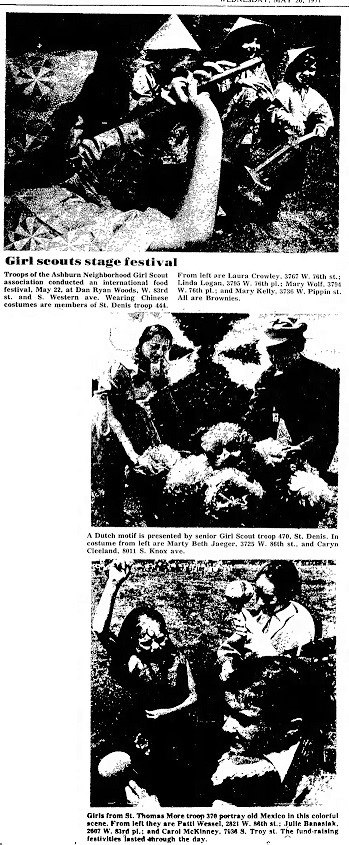
In 1971, local Girl Scout troops staged an international food festival in DRW as a fund-raiser. The girls dressed in native costumes from various countries to illustrate and educate about the diverse groups and cultures that came to the U.S.
In 1977, 150 anti-Nazi protesters held peaceful demonstrations at DRW against the National Socialist Party and its plans to march in the northern suburb of Skokie. The demonstrators marched from DRW to the Nazi Party headquarters near 71st Street and Western Avenue, where police kept the two groups separated, and there were no incidents. The Nazi Party obeyed a court order to cancel the Skokie march.
During the 1970s, DRW was one of the starting and ending points for an annual anti-hunger march conducted by the American Freedom from Hunger Foundation. As many as 40,000 high school and college students gathered pledges, met at DRW, and marched up to 30 miles to raise funds for projects ranging from schools in developing countries to local food cooperatives. At least 45 high schools from the southwest Chicagoland area were represented. The march route wound through local neighborhoods to Midway Airport and back, with checkpoints at intervals. Residents along the route offered encouragement, refreshments and restroom facilities.
Wrote one columnist about the event in 1971: “You should have been there to see the happening, and then maybe you’d understand what this age is all about. In this column, I’ve hammered a lot about today’s young folks being softies. I’ve bemoaned the hippies who protested and rioted and scorned physical fitness.
“But now, at near 10 p.m. Sunday, in the increasing darkness in the Dan Ryan Woods, I felt more thrilled than I’ve ever before been thrilled in the newspaper game. I was with thousands of fine young Americans who had walked 30 miles each to raise funds for the hungry in Cook County, Illinois, Africa, you name it. Young Americans with a purpose.”
Next: Skis and toboggans