
The history of Dan Ryan Woods – Part 7: Dan Ryan and his contributions
By Carol Flynn
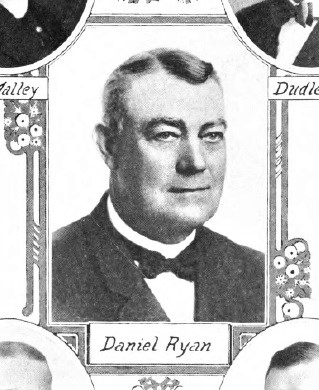
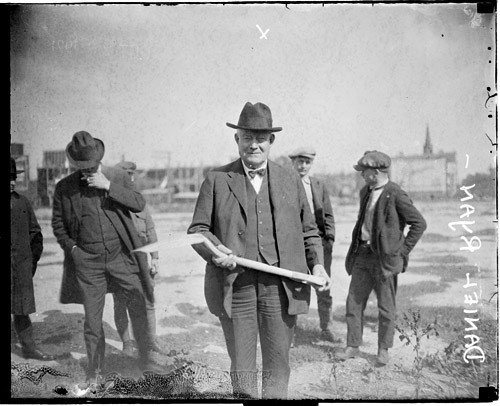
According to user-submitted information on Ancestry.com, and U.S. and Irish census records, Daniel Ryan was born at Carhue House, Dundrum, County Tipperary, Ireland, in 1860. He immigrated to the U.S. in 1880 and became a naturalized citizen.
A man named John C. Ryan of Carhue House, Dundrum, born in 1892, active in the Irish independence movement of the early 1920s, submitted his history in 1956 to the Irish Bureau of Military History. He stated that his uncle, Dan Ryan, was a member of the “Fenian Movement” and subsequently emigrated to the U. S.
“Fenians” was the common name for members of the Irish Republican Brotherhood (IRB), a secret organization dedicated to establishing an independent Irish republic, started in 1858. The name came from the Fianna, a band of warriors in Irish folklore. The IRB engaged in campaigns to end British rule in Ireland. John Ryan reported that a cache of old Fenian rifles was kept in a dump by their home, and he took these into his possession and was able to use them in 1920-21. The IRB staged the Easter Rising in 1916, which led to the Irish war for independence, and ultimately the 1921 treaty that brought about the Irish free state.
Involvement with the Fenians was illegal in British-controlled Ireland. In the U.S., the brother organization to the IRB was called the Fenian Brotherhood and later, Clan na Gael. It was not unusual for a young Irishman to have to hightail it out of his native country due to his nationalist activities, and then continue to support the cause from his adopted land.
Now, the surname “Ryan” was very common around that area of Ireland, and there is no verification that this is our Dan Ryan. In Chicago, Dan Ryan’s attendance at events supporting Irish independence was noted in the papers. He was an honorary pallbearer at the funeral of Richard Burke, a well-known Fenian. Even if he had not been a revolutionary in Ireland, like many Irish Catholic immigrants in America, he continued to support the causes of his old country at the same time he fully embraced American citizenship and loyalty.
When Ryan came to the U. S., his first job was at the Union stockyards, under John B. Sherman, whose farm would become the Dan Ryan Woods. Ryan soon became a successful livestock buyer. He then moved into the building trades.
He married Alice Carroll, also from Tipperary, and they became the parents of seven children. By 1910, they were well settled in Englewood, the owners of a concrete contracting company.
Ryan became involved in local politics, where, according to the Chicago Tribune, his “political genius” became evident. He was a Democratic leader in the 32nd ward, which included Morgan Park when it annexed to the city in 1914. Ryan was elected to the Cook County Board of Commissioners that year, and within a year, he was Chairman of the Finance Committee.
In early 1921, Peter Reinberg, Cook County Board President, died while in office. Ryan was unanimously elected by the Board to fill Reinberg’s unexpired term, which lasted until December 1922. The Cook County Board oversaw a wide variety of facilities and services, including hospitals, roads, jails, courts, schools, tax collections, records, and the forest preserves.
Ryan championed a number of causes. Although he barred “busy-body women” from budget meetings so they would not “bother” the committee, he did support women’s issues. One example is that he called for revising the state code to make wife and child abandonment a criminal offense.
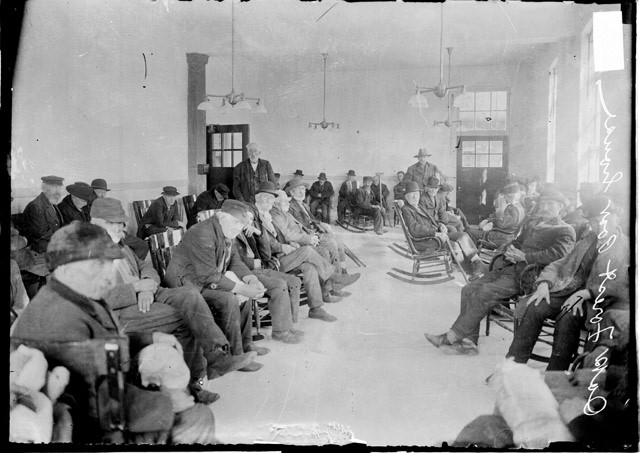
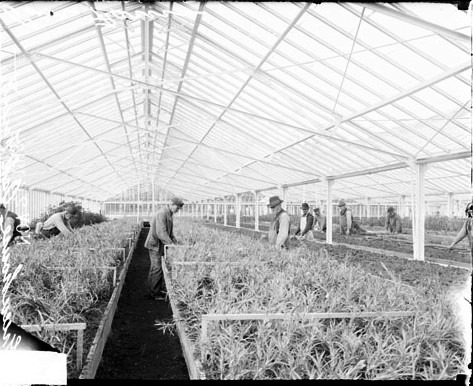
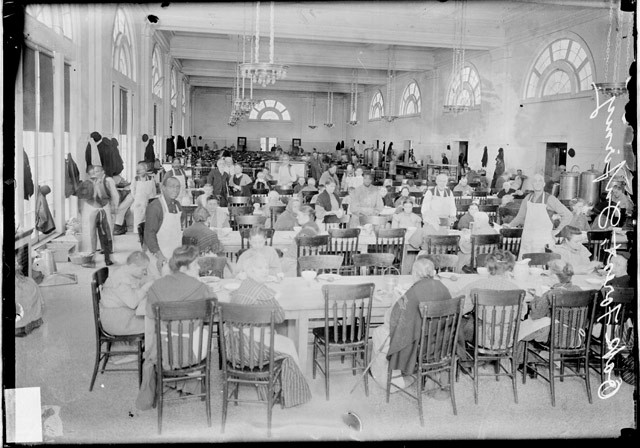
He was also concerned about the Oak Forest facilities run by the county, which included a poor farm, infirmary, and tuberculosis hospital. He had first-hand experience with poor farms in Ireland. In August 1921, a writer from the Englewood Economist observed Ryan inspecting the facilities. Wrote the reporter, “Mr. Ryan’s interest and attention toward the inmates and their kindly feelings toward him indicate that the welfare of this institution occupies no small place in the president’s thoughts.”
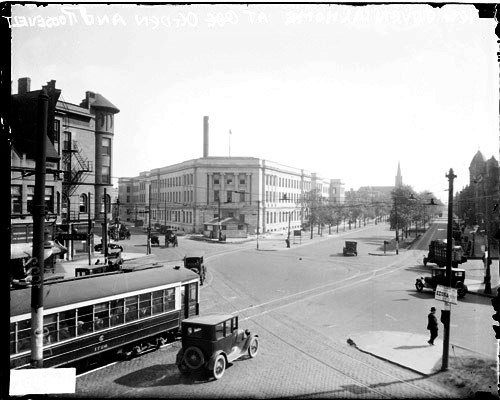
During Ryan’s term as President, work began on the Cook County Juvenile Home and Court, at Roosevelt Road and Ogden Avenue. Although the city tried to block it, the county built the first-ever facility for dependent and delinquent children that included living quarters, classrooms, playgrounds, and courtrooms. The building was renamed the Arthur J. Audy Home in 1950 for a former superintendent and now it is called the Juvenile Temporary Detention Center. Although it came to be plagued with problems, the juvenile home was established with good intentions.
Another cause important to Ryan was improving roads. In 1922 he wrote in a Chicago Tribune newspaper article, “Cook county is fast becoming a paradise for the automobilist. The forest preserve is a natural adjunct to our system of good roads. More than 4,000,000 persons there found rest and relaxation in 1921. So the forest preserve district is a promoter of the automobile, and the motor car, in turn, is a populizer of the preserves. Cook county intends to continue extension of its paved highways, as well as its forest preserves,” wrote Ryan.
Many sources consider the forest preserves and improved roads to be Ryan’s most lasting legacy.
The next installment will look at his role with the forest preserves.