
Ridge Historical Society
Carol Flynn
National Geographic has an article out right now titled “How polar explorers survived months of isolation without cracking” which relates of course to the current pandemic protocol we are experiencing.
The article tells us that “few people have experienced isolation like the early Antarctic explorers…. They could expect to be cut off entirely from family, friends, and the whole of human society for at least a year, left to their own devices in a sterile void of ice, darkness, and bitter cold.” They would at best have occasional radio contact with the outside world.
According to survivors of the experience, the key was “to learn to be content in yourself." And what worked best was to keep to a routine, keep busy, entertain yourself (music, games, novels) and believe in the future.
Admiral Richard Byrd is mentioned in the article. He said, "The ones who survive with a measure of happiness are those who can live profoundly off their intellectual resources, as hibernating animals live off their fat." He was described as the “ultimate self-isolator.”
You can find the article here: https://www.nationalgeographic.com/history/2020/05/how-polar-explorers-survived-months-isolation-without-cracking
Which brings us to the story of Admiral Byrd and his visit to the Ridge.
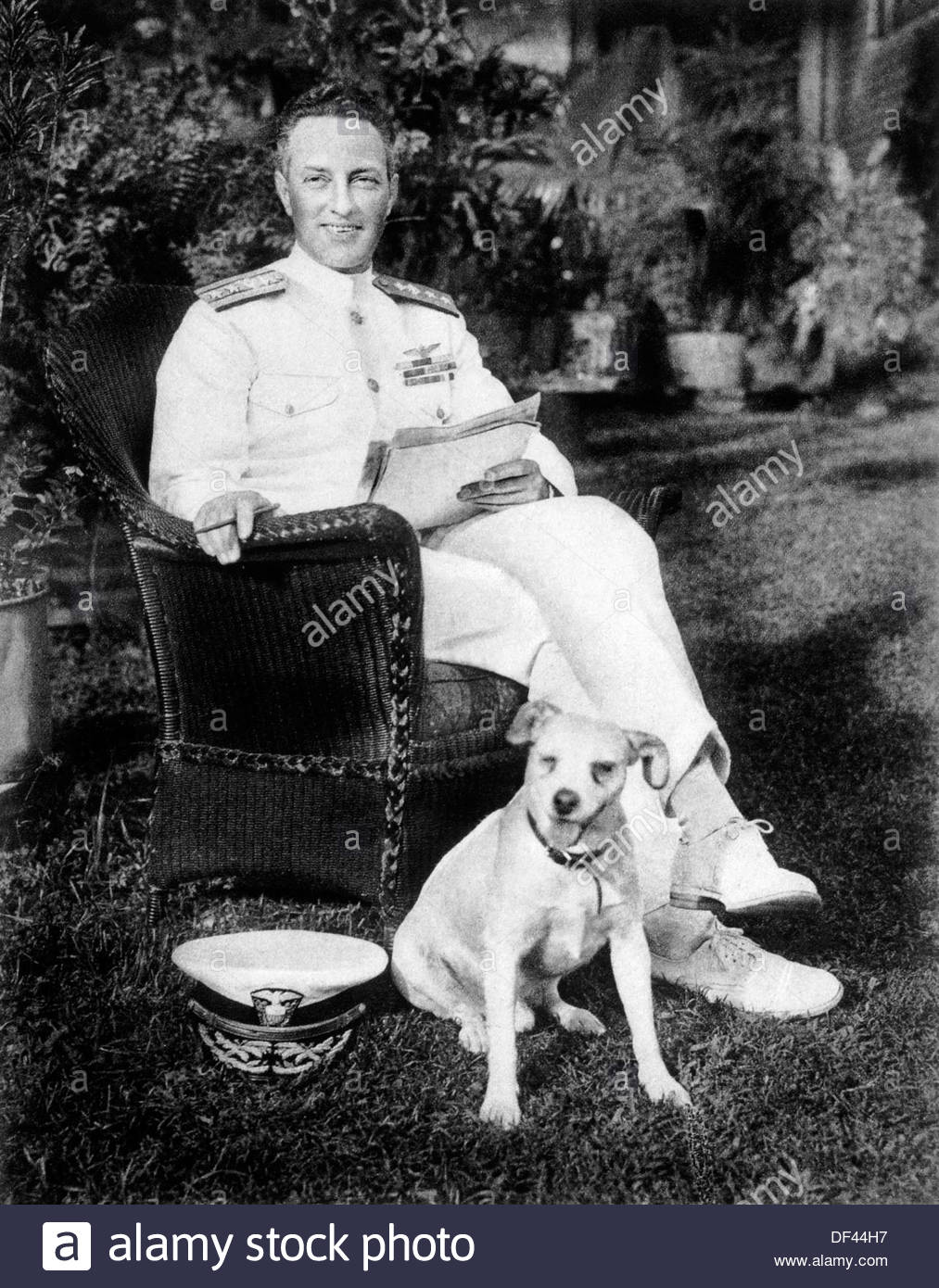
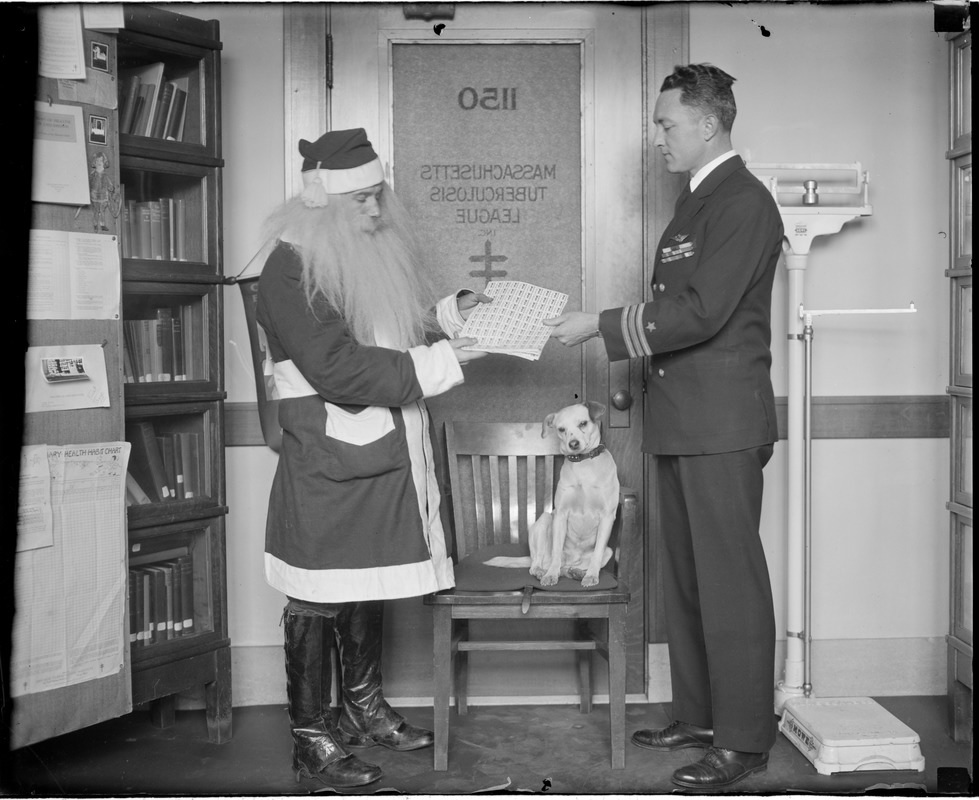
Rear Admiral Richard E. Byrd, famous for his visit to the South Pole (Antarctica) in 1928-30, visited Morgan Park High School on December 4, 1930. He was accompanied by his Smooth Fox Terrier, Igloo. Igloo was a huge media star in his own right.
The dog was a stray found by a friend of Byrd’s who talked dog-lover Byrd into adopting him. The terrier became Byrd’s constant companion, accompanying Byrd to Antarctica in 1928 where the dog received the name Igloo, or Iggy for short. Igloo shared Byrd’s solitude during the harsh winter and had to be dressed in polar clothing to withstand the blizzards.
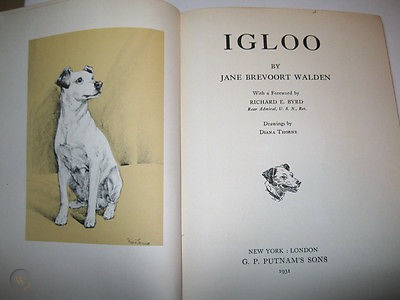
Upon returning to New York, Igloo shared the glory of a Broadway ticker-tape parade and was presented to President Hoover at the White House. The dog became the subject of news dispatches and even a book "Igloo" in 1931. He was also the first dog to fly over ‘Santa Claus’s home’ at the North Pole. People around the world became enamored with the Fox Terrier breed, thanks to Igloo.
Sadly, Igloo died prematurely at the age of 6 from food poisoning. Byrd was away at the time, and chartered an airplane to rush home, while a group of veterinarians worked to save the dog, but it was too late. Buried in a pet cemetery in Massachusetts, Igloo has a marker shaped like an iceberg and his plaque reads “Igloo-He Was More Than A Friend.”
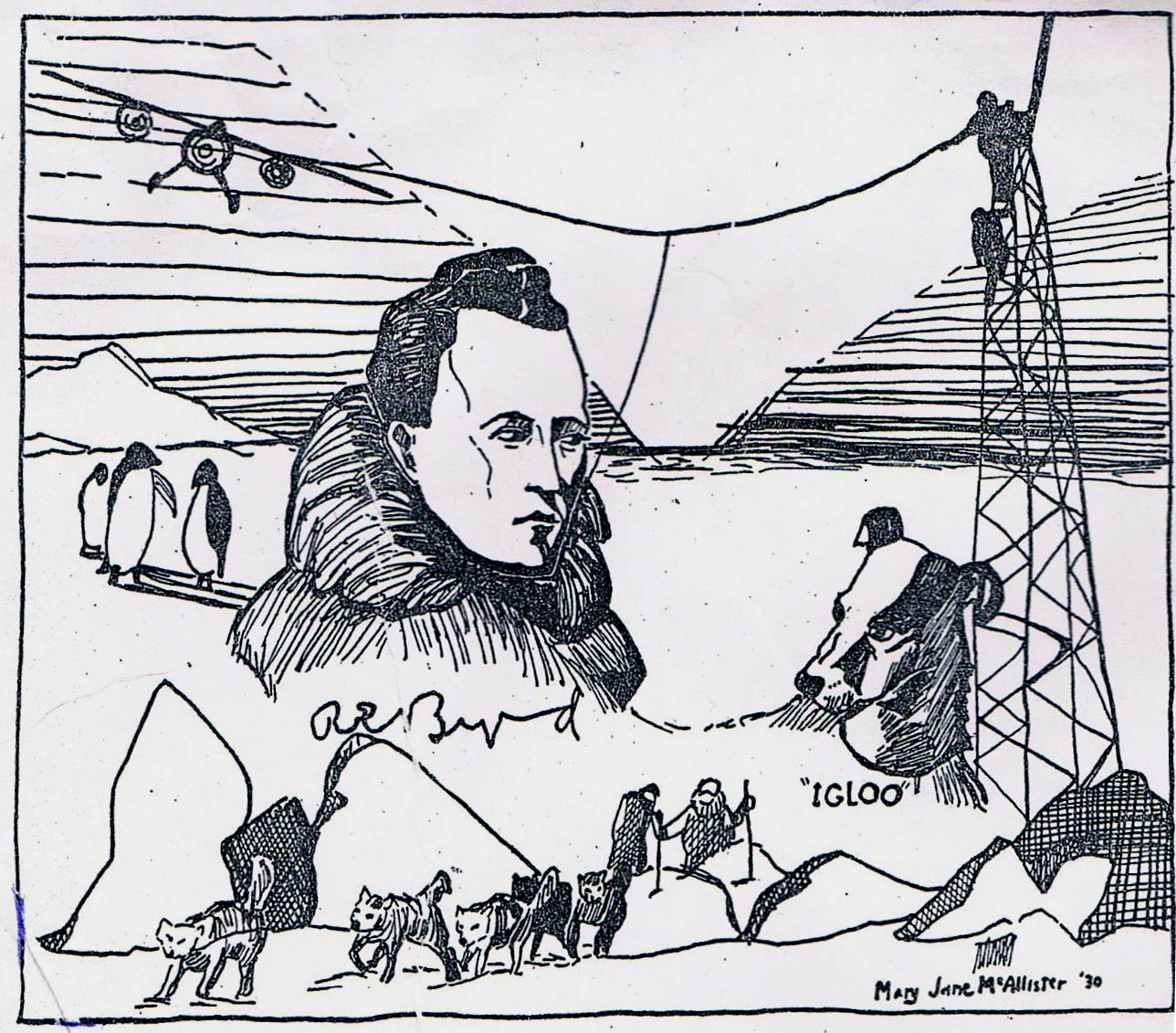
On December 12, 1930, the school newspaper, The Empehi News, ran two articles about Byrd’s and Igloo’s visit, along with a cartoon drawn by a student. The articles are reprinted here, complete with errors. The illustration is attached.
First article: Admiral Byrd Tells of Desire to “Visit New Places” All His Life
By Muriel McClure
“I am an explorer,” said Rear Admiral Richard E. Byrd, “because it was born in me. I have always felt the urge to see new places. You know I traveled around the world alone when I was twelve.”
Admiral Byrd spoke at the high school both in the afternoon and evening of December 4. During this interview he was seated in Mr. Schoch’s office waiting his curtain call. Admiral Byrd is a thin, robust man. He has an easy, charming way of talking.
“I think my last trp, to the South Pole, has contributed the most to science, for the reason that we had the funds and a greater chance to combat the dangers than we had on our other trips.”
When he was asked what he thought was the most important quality of character young people should develop, he replied, “Loyalty I hold before all else, even before honor. I would a hundred times rather have a dishonest man who is loyal than an honest man who is disloyal. Yes, I think one should develop loyalty to church, morals, country and home above all things. Now take dogs for instance, the dogs we had in the Antarctic were the loyalest of animals. Give a dog a chance to serve you and that will be his reaction.”
Commander Byrd’s own fox terrier, igloo, is a loyal pal. He has gone to the North Pole and the South Pole with his master. Igloo, during the interview, lay at the admiral’s feet.
“Our Antarctic stay was something new to all of us, said Mr. Byrd. “The Antarctic is so different from the Arctic because it is just in the process of evolution which the Arctic underwent thousands of years ago. The Antarctic is perennially frozen over, of course. While the Arctic is mostly land, the antarctic is ice floating above 10,000 feet of water. There is very little life in the Antarctic and in the Arctic there is abundant animal and human life.”
In his lecture Admiral Byrd showed movies taken of the two-year exploration trip, as well as giving a short talk as an introduction to the polar regions. He told of days 72 degrees below zero, when the men’s eyelashes froze together, and other hardships.
As Admiral Byrd left the school je said, “I have enjoyed my visit very much, in spite of the fact that I had to speak!”
Second article: Byrd-dog Grants Reporter of Empehi an Interview
Igloo, the famous Byrd-dog, for probably the first time in his illustrious career as a polar explorer, granted an interview to a newspaper reporter last Thursday, December 4.
Igloo was very calm, cool and indifferent to everything, possibly due to training at the South pole. As he had very little to say, we could get nothing but a description of him.
Igloo possesses two brown ears, big brown eyes, brown spots on his back, all the rest of him being white. The famous “pooch” wore a plain black collar with no name on the name plate. He was dark under the eyes, from staying up all night at the South Pole probably!
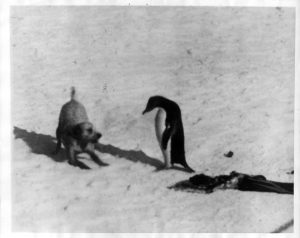
While at the South Pole he obtained a scar during a fight with his enemies, the penguins. It makes us wonder how the penguins looked.
During his stay under the desk in Mr. Schoch’s office, he posed for Mary Jane McAllister. He took his posing very seriously, holding himself quite steady for a dog. When he did move, the artist tried to make him turn back by making a noise like a cat, but cats were of no interest to the pup. Due to the lack of cats at the South Pole?
The dog was nearly, if not, as popular as his master, Rear Admiral Byrd. Igloo had quite an aydience, but to that mob he paid not the slightest heed.
If all dogs were only like Igloo, quiet, reserved and peaceful (?) but alack! They are not!
Igloo, here’s your chance to open an etiquette class! for dogs.
The moral of this story? The companionship of a friend like Igloo surely eases the loneliness of isolation.