Ridge Historical Society
Part II – Memorial Day – More on the Civil War and the Ridge.
Carol Flynn, RHS Communications
Decoration Day, which became Memorial Day, evolved because of the Civil War. This is a continuation of the post started yesterday about the Civil War and the Ridge.
Almost all the soldiers from the Chicago area who fought for the Union in the Civil War were volunteers. Some of these men likely heard Abraham Lincoln speak while he was running for president, at one of the hotels Lincoln frequented, like the Tremont House.
Families started settling around today’s Beverly/Morgan Park area in the 1830s. The entire area was called Blue Island back then. This post will look at four of these families – Rexford, Wilcox, Morgan and Barnard – and their experiences in the Civil War.
The Rexford family came in 1834 and built a large log cabin as a rest stop for travelers around what is now 91st Street, along the Vincennes Road, which they called the Blue Island House. A few years later they moved to the south end of the Ridge, which would become the city of Blue Island. The Wilcox family came in 1844 and took over the Gardner Tavern, another wayside stop which had been built in 1836 at 99th and Beverly Ave. The Morgan family came in 1844 and owned most of the land on top of the Ridge, establishing their estate around 92nd and Pleasant. The Barnard family came about 1846 to join the Morgans; William Barnard was tutor to the Morgan children. They settled around 101st and Longwood Drive. In addition to their other undertakings, the families established farms to grow crops and raise livestock.
The early families of course knew each other well. Two Barnard brothers married two Wilcox sisters. A Morgan and a Rexford married Robinson sisters, from another early family. When the Civil War started, brothers, friends, and neighbors enlisted and went off to war together. They wrote letters home to their families, some of which have been saved. Some of the men from the Ridge did not return.
Alice S. Barnard, whose mother was a Wilcox, wrote in 1924: “The ‘60’s – the decade of the Civil War!
…I was a very little girl. When Lincoln was candidate for president there was held in the North Blue Island school house [likely around 103rd and Vincennes] what was probably the first political meeting of the neighborhood…. Feeling at the meeting ran high….
“The call came for three month enlistments. In the Wilcox family were five sons. The two youngest enlisted. Returning at the end of this term they told the story of the reenlistment. Their company stood in line! The sign of reenlistment was a step forward – one after the other took the step – many hesitated. But finally all but one had taken the decisive step and when he finally came forward, wild cheering rent the air.
“The war went on, the two oldest sons enlisted, leaving the [fifth] brother incapacitated for military service to care for the farm and the aging mother. Of the seven Morgan boys several enlisted and all returned. Erastus A. Barnard marched with Sherman to the sea.”
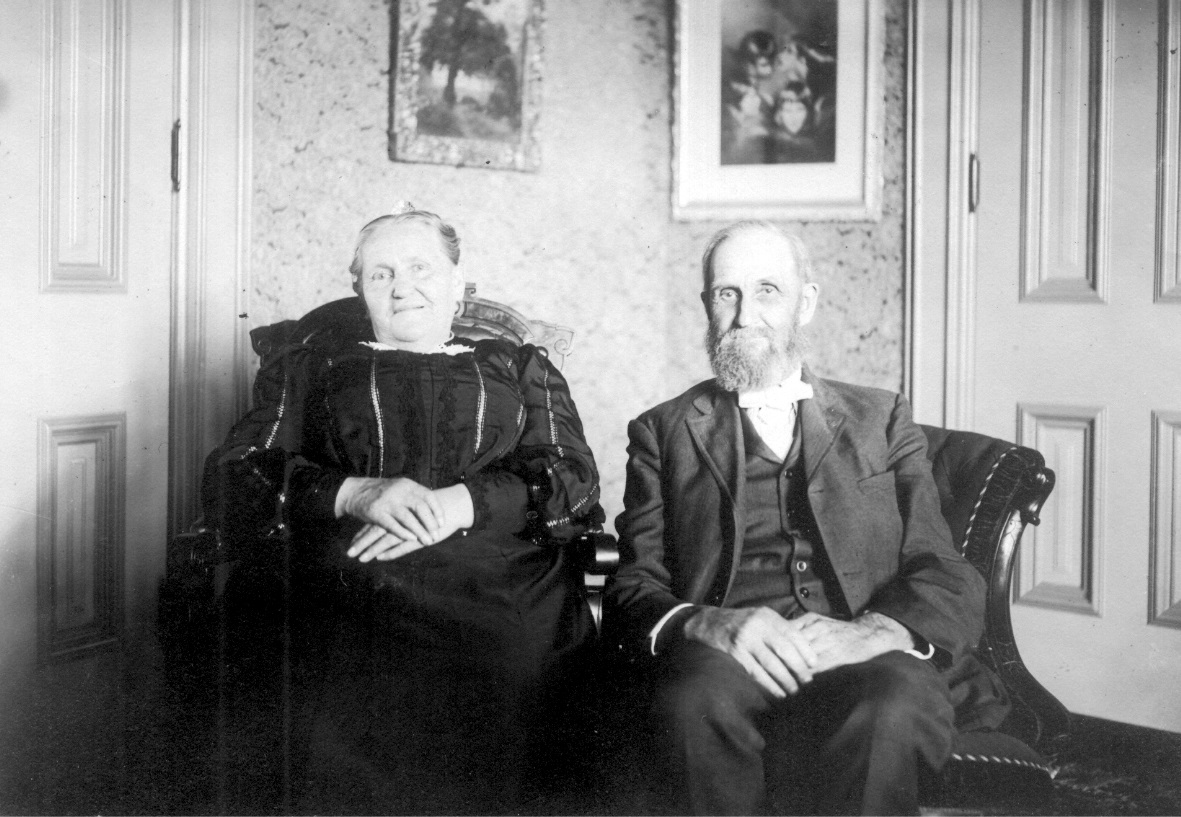
Brothers Erastus, William and Daniel Barnard all fought in the Civil War, all survived, and are all buried at Mt. Greenwood Cemetery. William had married Miranda Wilcox and was the father of William Wilcox Barnard and Alice Sarah Barnard, the authors of the histories we have been sharing. Erastus had married Mary Lavinia Wilcox. Daniel Barnard, who never married, formed his own company in which he served as Captain. Family lore says he fought in many battles and was never sick or wounded.
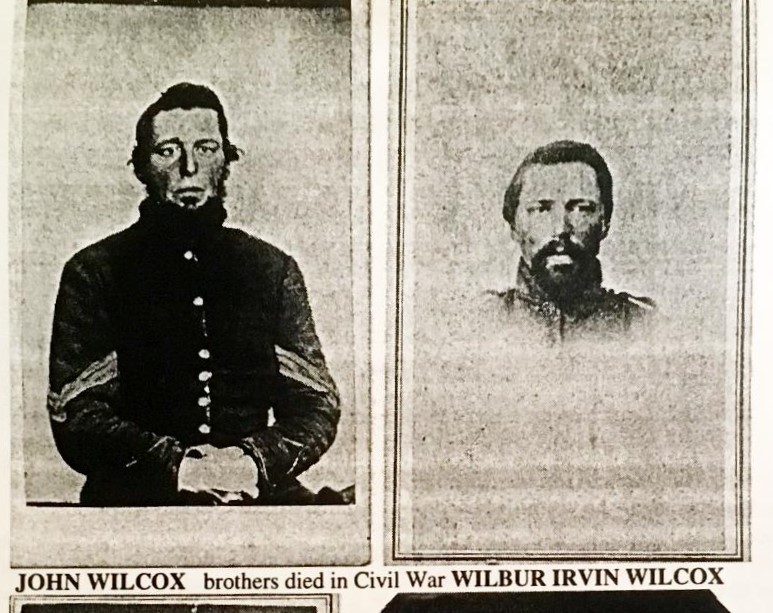
Four Wilcox brothers fought in the war, and the family was not as fortunate as the Barnards. John joined his friend Daniel Barnard’s company as a sergeant, and was killed in 1863 and buried at Chattanooga, Tennessee. He was 37 years old and left a wife and two sons.
Wilbur, Thomas, and Willard Wilcox joined Company A First Illinois Artillery Volunteers, which the group itself called “Battery A.” Most of the men were from the Chicago area. Friends from the Morgan and Rexford families also enlisted with Battery A.
Thomas wrote home to his sister from Vicksburg, Mississippi, in 1863: “Have to stay at the guns [cannon] most of the time…. [We] opened on them one morning about three o’clock; for hours it seemed like a stream of fire from one end of the line to the other…. They cannot stand it much longer…. I would like to come home when we take Vicksburg. It seems a long time since I came away. Willard is as strong as ever…. I do not like soldiering, no way you can fix it.”
Unfortunately, Thomas was captured and held prisoner in Andersonville, Georgia, for eight months. His health deteriorated and he reportedly never fully recovered. He did return home, and in 1872 he moved his farm to Indiana, where he died in 1895. Willard also returned home and moved away from the Ridge.
Their brother Wilbur was not so fortunate. He was killed in Mississippi in 1863. He was 26 and single.
The fifth brother, William, stayed home to keep the family farm running during the war years. It was a common, and necessary, practice, to designate a family member to remain behind to continue the family business. He is the only Wilcox brother buried in a Ridge cemetery, Mt. Greenwood.
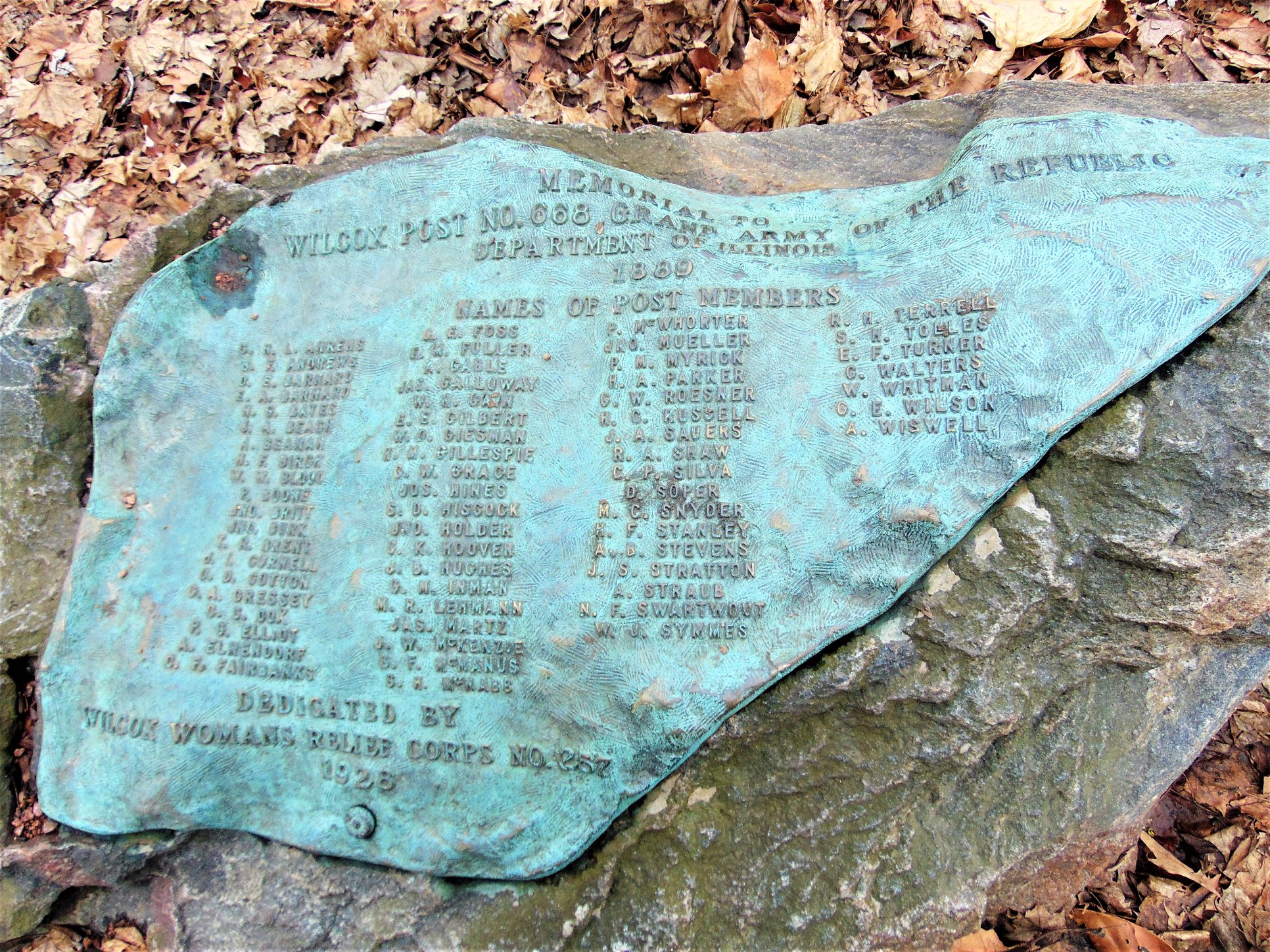
After the Civil War, the Grand Army of the Republic (GAR) was founded in 1866 as a fraternal organization for veterans of the Union military. A local branch, the Wilcox Post, No. 668, was founded in 1889. It was named in honor of the Wilcox brothers who served in the war.
A stone and bronze marker listing the charter members, created in 1928, is installed at Ridge Park at 96th Street and Longwood Drive. Charter members included Daniel and Erastus Barnard. Austin Wiswall, the young officer written about in yesterday’s post, who settled in Morgan Park after the war and is buried in Mt. Hope Cemetery, was also a charter member.
The GAR dissolved in 1956 at the death of its last member. The legal successor of GAR is the Sons of Union Veterans of the Civil War (SUVCW), open to male descendants of Union military veterans.
Next installment: The Rexfords and Morgans in the Civil War.