
From the Ridge Historical Society:
Part II – On the “natural history” of the area around the Ridge.
Yesterday we talked about the prairie wetlands to the east of the Ridge. Here are a few more descriptive comments from the Barnard family, who settled here in the 1840s:
“On the place just west of our present school house [likely just northeast of 103rd and Vincennes] jointed blue grass and pea vine grew together and were so dense and thickly interlaced that snakes ran along the top of them.
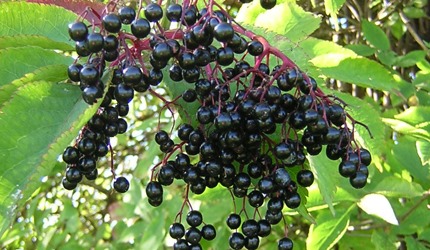
“Where the fires had swept the ground clean of the course growths the more delicate varieties of prairie flowers, phlox, shooting stars, violets, etc., literally covered the earth with varied and beautiful flowers as the grass covers with green, a profusion of bloom of which we have no adequate conception. The orchid family was represented by several varieties of lady slippers, of which great masses showed their pink and white or yellow heads under the trees at the edge of the groves. Wild fruits were abundant. West Pullman was then a huckleberry patch [similar to blueberries, see picture]. Wild strawberries grew thickest on the prairie east of Prospect…. Blackberries were thick on almost all of the ridges. Plums were plenty. Hazelnuts were found, but the hickory trees were too small to bear the abundant supply which we enjoyed in our childhood.”
These descriptions conjure up images of a Garden of Eden, from abundant fruits to snakes.
But there was a dark and dangerous side to paradise, also. Another quote from the same paper:
“Stagnant water and the breaking up of the new soil made prevalent the fever and ague. Many families still talk of all being sick at one time and of retiring to bed with a pitcher of water to quench the thirst which was sure to come and to which no one would be able to administer. Chills every day for a whole year were not infrequent experiences.”
The “ague” was another name for malaria. Stagnant water led to mosquitoes breeding, and mosquitoes can carry plasmodium parasites, which cause malaria. Symptoms are bouts of chills, fever, and sweating. The parasite can live and reproduce in the host body, leading to the cycle repeating for some time. There was no understanding back then that the illness was borne by mosquitoes, no understanding of parasites, and no treatment. It was a common cause of death.
As far as drinking water, the area was noted for Artesian wells – deposits of groundwater from which water flows under natural pressure without pumping. Artesian wells were all around the Chicago area, and the topic is too complex to get into in detail here, but well worth exploring. (Everything about the history of the Chicago region is worth exploring.)
One more entry from the Barnard paper, which mentions one of these wells, describes settlers from Indiana and downstate Illinois travelling the Vincennes Road in their “prairie schooners” or covered wagons, bringing their produce to market in Chicago. Long trains of the wagons passed by the Ridge from morning to evening.
Wrote Barnard: “When night time came, their camp fires glowed in the darkness. Near grandmother’s house where they could enjoy the water from her excellent well was a favorite camping ground, and one of the diversions of the family was to visit the campers in the evening.”
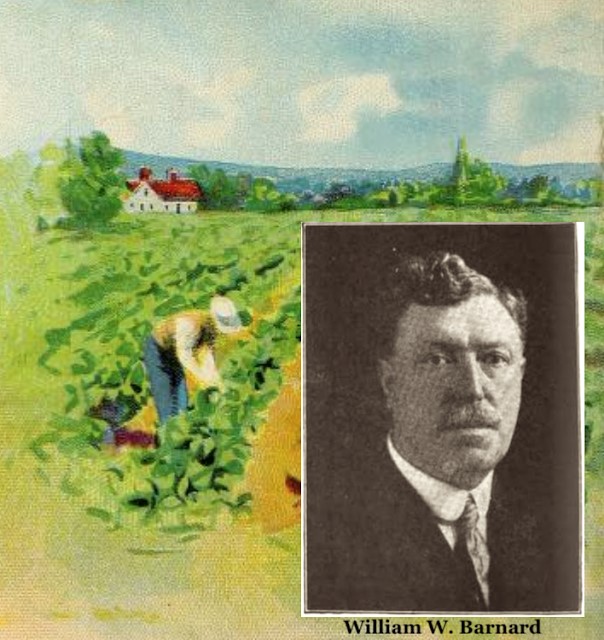
The author of this paper was William Wilcox Barnard (1856-1921). He was third generation on the Ridge.
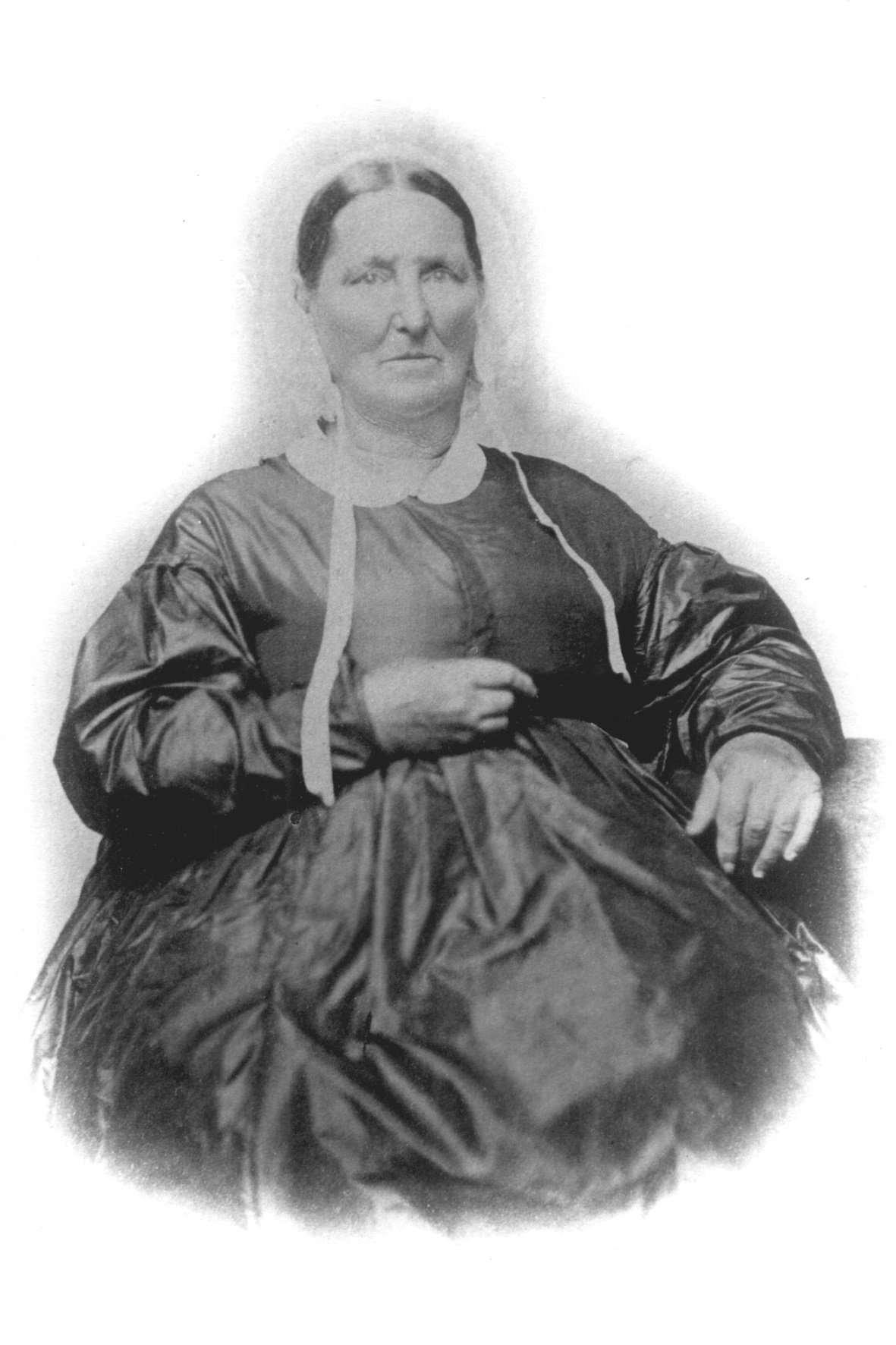
His grandmother was Sarah Lord Wilcox. The Wilcoxes came from New York and took over the Gardner Inn on the Vincennes Road in 1844. It was located about where 100th St. and Beverly Ave. are now. Her daughter Miranda Wilcox married William Barnard, who had come to the Ridge to be the tutor for Thomas Morgan’s children. William and Miranda’s children included William Wilcox, or W.W., as he was known. W.W. started the Barnard Seed Co., which farmed the area around at 103rd and Longwood Drive.
Here are pictures of W.W. and his grandmother, from the RHS collection. By the way, smiling in pictures did not become standard until the 1920s-30s. For us now, the natural response is to say "cheese" as soon as a camera points our way, but that was not an instinctive reaction back then. Some people theorize that it was due to poor teeth or having to hold still for too long for the picture to take, but that was probably not the case. It just wasn't the norm back then.
In Part III, we’ll discuss a few more topics, like prairie fires and wildlife, and then answer some of the questions that have come in from these posts.
– Carol Flynn, RHS Communications