
Part 5a – Every cloud has a silver lining
Our final installments about the 1918 influenza pandemic in Chicago is a story about how the lives of real people were affected.
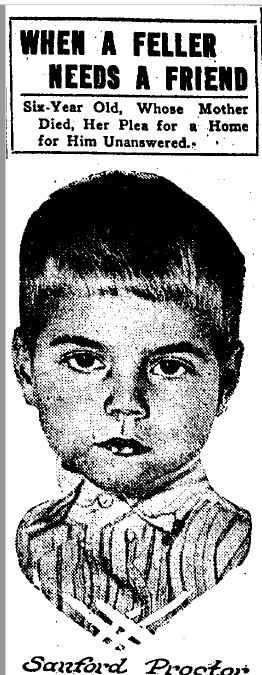
It was October 16, 1918. Mrs. Alice Proctor, 34, was a patient at Mercy Hospital, suffering from influenza. She had moved to the United States from England two years before with her husband and son. Her husband had died, leaving her alone with her son Sanford, now 6. The week before, Alice had been hired as a maid by the George A. Rees family in Hyde Park. The second day on the job, both she and Sanford were put to bed sick at the employer’s house. Alice’s symptoms worsened and she was hospitalized.
Sanford, still at the Rees home, was being treated for double pneumonia following influenza. He had previously suffered from “infantile paralysis,” the term for polio, which had left one leg crippled. He was described as “the most patient and pleasant little fellow in the world.”
Alice knew she was dying. She had no family, and she was worried about what would happen to her little boy. She asked the hospital staff to help her contact the Chicago Daily Tribune. She then asked the newspaper if they could help her find a home for her little boy.
A reporter, never named in the newspaper, consulted a lawyer acquaintance, Charles L. Phillips, who agreed to help. They visited Alice at the hospital and worked out the details whereby she would leave her child and her precious few personal belongings to the family who would adopt Sanford.
“I am glad,” she whispered faintly, “and I can die happy.”
In the next few days, Alice rallied. and it was thought she might survive. But she died on October 19th.
In the meantime, Sanford had been admitted to St. Luke’s Hospital. He asked for his mother. He didn’t understand where she was and why she was not coming to see him. The hospital staff did not tell him she would never return.
The Tribune put out a call for families who might adopt Sanford Proctor. Perhaps a family who had lost a son in the war, suggested the paper, or a couple who had not been blessed with children of their own.
Alice’s employers, Mr. and Mrs. Rees, were fond of Sanford, but they already had three children of their own. They did want the child to convalesce at their home and were concerned that a good family be found for him.
Sanford brightened the ward at St. Luke’s, but he wanted his mother.
“I hope my mamma gets well soon and comes to see me,” Sanford told the reporter. “I like the nurses but I like my mamma better. Will you tell her I am getting well quick so I can see her?’
Offers to adopt the boy poured into the Tribune. People were instructed to put in writing their ability to care for the child.
Responses came from the wealthy who promised very fine homes and from poorer families who promised love. Country folk and city folk and suburban folk responded. Attorneys and farmers responded. The mayor of a city in Michigan responded. People who had lost children and people who had children for Sanford to be a brother to responded. Special pleas came from childless couples and from Gold Star mothers who lost sons in the war. People promised Sanford would receive everything from fresh air, sunshine and fun to church attendance to medical care to a good education.
The Tribune narrowed the possibilities to twenty-four potential families that were being investigated. Sanford improved and was expected to be released from the hospital to the care of the Rees family, where he would meet with prospective new parents.
On November 5th, the reporter wrote that Sanford would be released from the hospital within days, and that he would soon learn that his “mommers,” for whom he asked constantly, was dead and he was an orphan. The choice of new parents had been narrowed down to a select few. And Sanford would receive a bill for $100 for his mother’s funeral and burial.
Next installment: Little Sanford Proctor gets a new home.