
Part 3 – The influenza pandemic continued into 1919.
Restrictions from the influenza pandemic pretty much came to an end in Chicago by January 1919 except for the ban on smoking in public transportation cars. Night classes, plays, meetings, church activities, etc., all resumed. New influenza cases and deaths continued but not at the rate of the previous Fall.
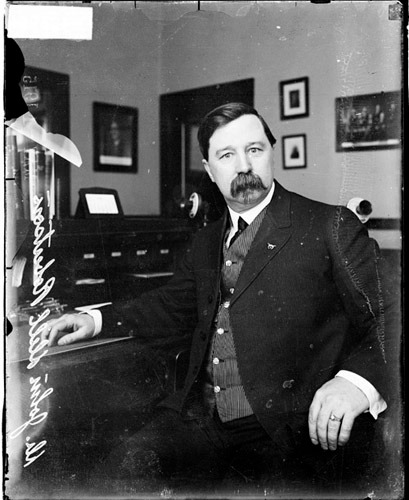
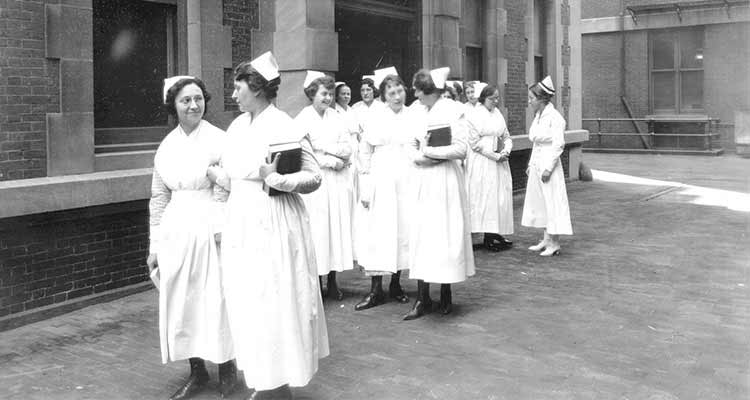
On January 12, the health commissioner, Dr. John Dill Robertson, authored an article in the Chicago Daily Tribune calling for an overhaul of the nursing profession. He stated that many of the influenza deaths could have been avoided with proper home nursing care, but there was a shortage of nurses. He maintained that the three years of training to become a Registered Nurse (R.N.) was too long, and that the $35 per week that R.N.s charged for home nursing care was more than could be afforded by middle class families.
Robertson wrote of nurses: “It has been well said that women are natural nurses. This is true. As a matter of fact, the principal business of a nurse is to follow the doctor’s instructions…. Of course she should have training; but it is difficult to see why a three year course of training is necessary before a nurse can be trusted in the sick room of the home…. In the final analysis nursing is nothing more or less than housekeeping for the sick.”
He called for establishing a two-tier nursing structure: R.N.s, and “practical” nurses, with less training, who could do home care at half the salary of R.N.s.
Physician and hospital groups immediately supported this new nursing plan.
Most R.N.s and their organizations were against this, fearing it would lessen the profession.
Wrote Edna L. Foley, the head of the Visiting Nurses Association: “…There are no over trained nurses, but there are too many poor training schools…. The education of a nurse has become more complex and involved because the advancement of medical and surgical science made better trained and more skilled nurses necessary…. Private duty nursing in the home is the hardest, least attractive type of nursing work…. The household nurse, the neighborhood nurse, the practical nurse, or the attendant, as she has been variously called, is a combination devoutly to be wished for, a kindly, capable, practical person, useful in the sick room, equally useful in a kitchenette or in the nursery: a woman able to be on duty from twelve to eighteen hours a day, and on call at night; a woman who is a good housekeeper as well as a sick room caretaker.”
For three months debates about this went on. The nurses came to support a one-year training program for practical nurses and a two-year program to become an entry-level R. N., with testing and licensure for both. It was recognized on all sides that a nurse specializing in certain areas, such as surgery or obstetrics, or acting in a supervisory role, needed advanced training. In April 1919, the Illinois legislature passed a bill establishing the two levels of nursing.
The health department discovered physicians had written over 100,000 prescriptions for narcotics to treat influenza in the month of October 1918. Pharmacists routinely carried and dispensed opium, morphine, codeine, heroin and cocaine. The danger was that the drugs suppressed the symptoms of the disease, especially coughing, and led to an increase in pneumonia, as well as dependency. Physicians were advised not to prescribe narcotics. The Chicago Retail Druggists’ Association was outraged and passed a resolution condemning what they considered to be an attack on retail pharmacy.
People were warned not to kiss babies to avoid giving them germs, and public school students were advised to avoid soda fountains unlss they used paper cups.
In his February 23 Tribune article, Dr. Evans wrote of the influenza pandemic: “Efforts made by health departments to control the disease have not been satisfying to them nor the public. The efforts of the research men to find the bacterial cause of the disease and the method by which it is spread likewise have proven disappointing. These failures and disappointments in the control of so severe an epidemic have caused much speculation.”
The insurance companies reported they paid out over $2.5 million in the U.S. due to the pandemic, which led to an increase in premiums.
Next installment: Summer finally arrives in Chicago.