One of the duties of a legitimate history organization like the Ridge Historical Society is to investigate and either verify or "debunk" local myths and legends to maintain historical accuracy. It's not always easy to get to the truth, and it can be dismaying and downright upsetting to the public to find out something they have believed for years is just not accurate.
Case in point for Morgan Park: The widespread belief that the Hopkinson-Platt House at 108th and Drew Streets was a stop on the Underground Railroad. As we finish up Black History Month, let's take a look at this local urban myth, which someone referred to on an RHS post today.
The Underground Railroad (UGRR) was a network of safe stops where escaping slaves could find refuge and help as they made their way north to freedom. The locations were passed along by word of mouth and secret symbols.
The Blue Island Land and Building Co. began platting and selling the land bordered by today's Western Ave., Ashland Ave., 107th St., and 119th St., in 1869, after the U.S. Civil War ended. William Hopkinson purchased that land at 108th and Drew and built that house in 1871, too late for the Underground Railroad.
The Platts owned the house in later years. What appears to have happened is that a man investigating an ancestor's escape to freedom using the Underground Railroad told Mrs. Platt that the ancestor's journal described a house with windows like the ones on the Hopkinson-Platt House. From this, Ms. Platt drew the conclusion this was the house. But the dates just do not confirm this.
Some people will say there might have been a building there before the Hopkinson-Platt House that runaway slaves used. That is not relevant to this discussion. Mrs. Platt made this claim about the current house, and it just does not work out date-wise.
There are oral histories that confirm that escaping slaves passed through Beverly/Morgan Park and hid in barns. And there are several verified Underground Railroad stops on the South Side. But, unfortunately, the Platt House was not one of them.
So what about the "hidden room?" Well, it could have been a storage area, or changes could have been made to the house at any time along the way.
Does this lessen the historical significance of the house? Not at all. It is one of the earliest structures in Morgan Park, and has a fascinating history. Its nearly three acres of never-developed land make it a prime spot to study for potential significance to the Native Americans who lived in the area. And the Platts were fascinating people. A post about them is in order – but not connected to the UGRR.
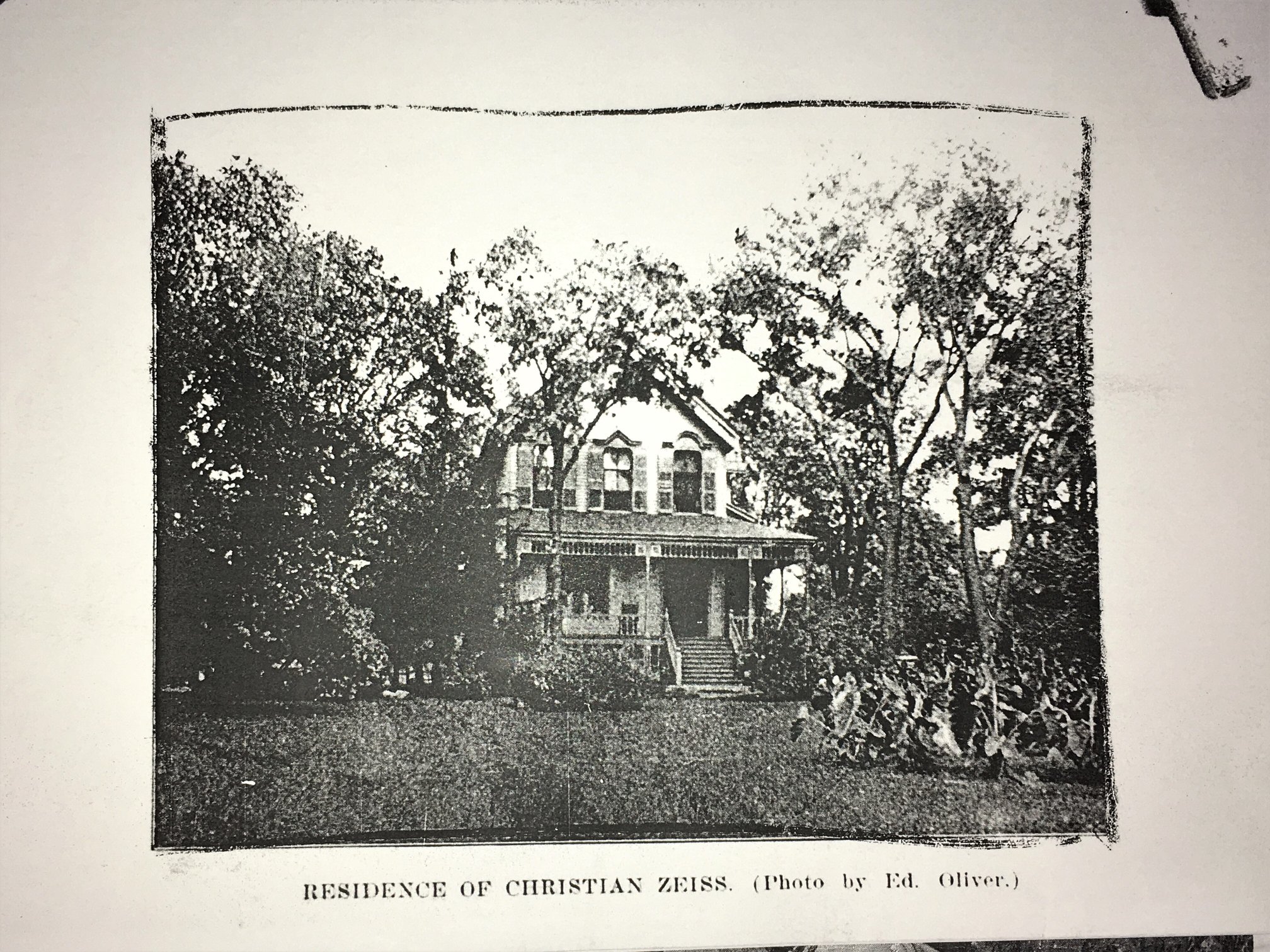
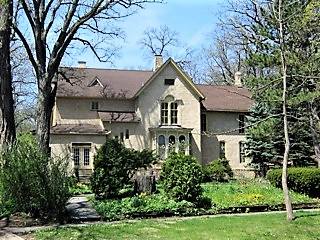
Two pictures here show, first, the house in its early years, then owned by Christian Zeiss, when the front entrance faced Prospect Ave. As land around the house was sold off, the house was remodeled to create the entrance on the Drew St. side, which is shown in the second photo, the way the house looks now.
– Adapted from a post from February 2019