
On Valentine’s Day, February 14, we celebrate romance and love. It is one of the oldest holidays we recognize.
The origins of the day go back to the folklore about several saints named Valentine. One was St. Valentine of Rome, believed to have been martyred in AD 269 for ministering to early Christians and performing marriages for Roman soldiers forbidden to marry.
Another is Valentine of Terni, again, an early Christian who was martyred. The Catholic Encyclopedia includes a third Valentine, of whom little in known except he was martyred in Africa.
The feast day of St. Valentine was set as February 14 in AD 496 because it is believed to be the date St. Valentine of Rome was martyred and buried. Because of the unknown history, however, the Roman Catholic Church actually removed this feast day from the official calendar in 1969, relegating it to local recognition. It does remain an established feast day in some other Christian churches. It is not a public holiday in any country.
The idea of associating the day with courtly love became popular in England in the 14th century thanks to poet Geoffrey Chaucer and his circle. By the 1800s, presenting flowers, candy and greetings of affection, particularly poetry, were common practice. Mass-produced valentines have been around since about 1850 in the U.S.
The U.S. greeting card industry estimates about 190 million valentines are sent each year, about half from children. If you add in homemade valentines, the number one recipient is teachers. No surprise, Valentine’s Day is a major day for gift buying – the flower, candy and jewelry businesses do particularly well.
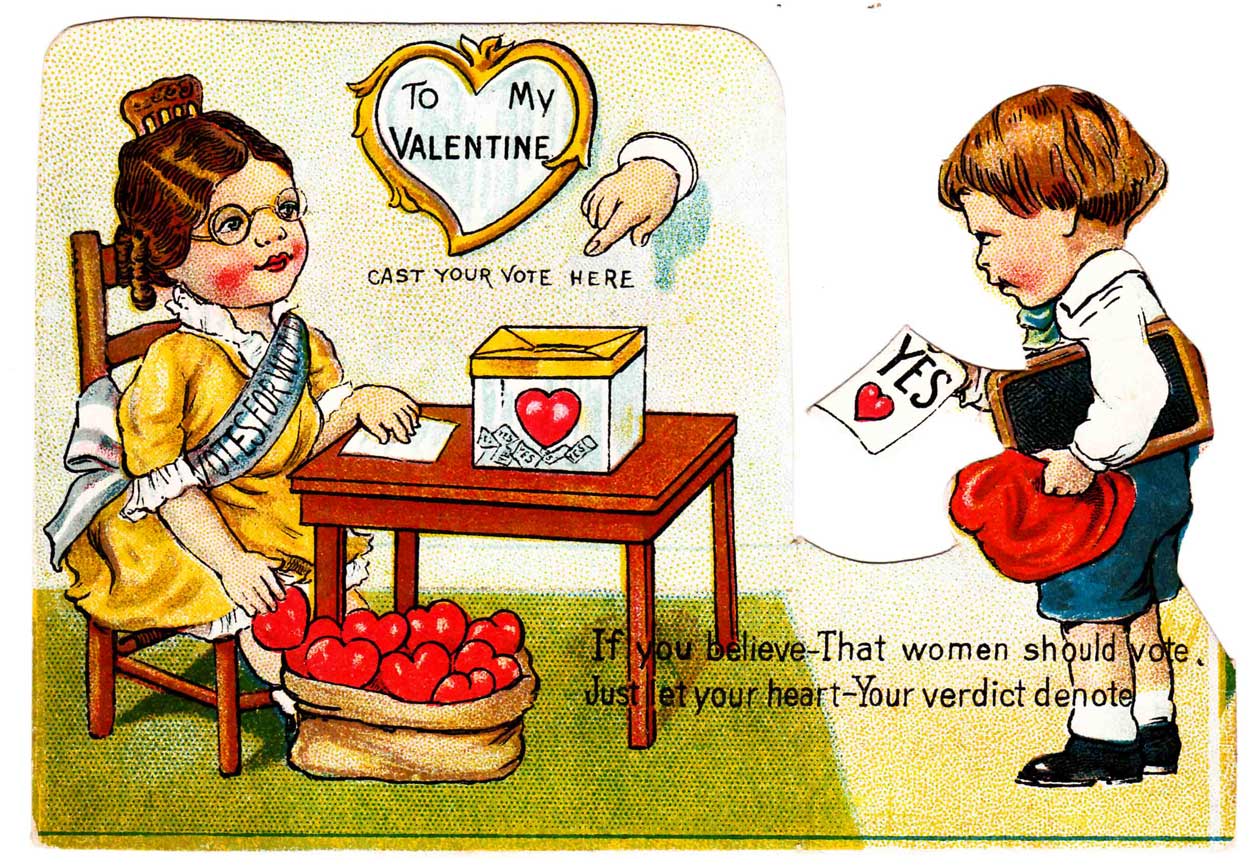
Also as no surprise, valentines have incorporated political and other messages depending on the times. This little gem from about 100 years ago incorporates a pro-woman suffrage message in it. In 1920, the 19th Amendment to the U.S. Constitution was ratified, granting women the right to vote.