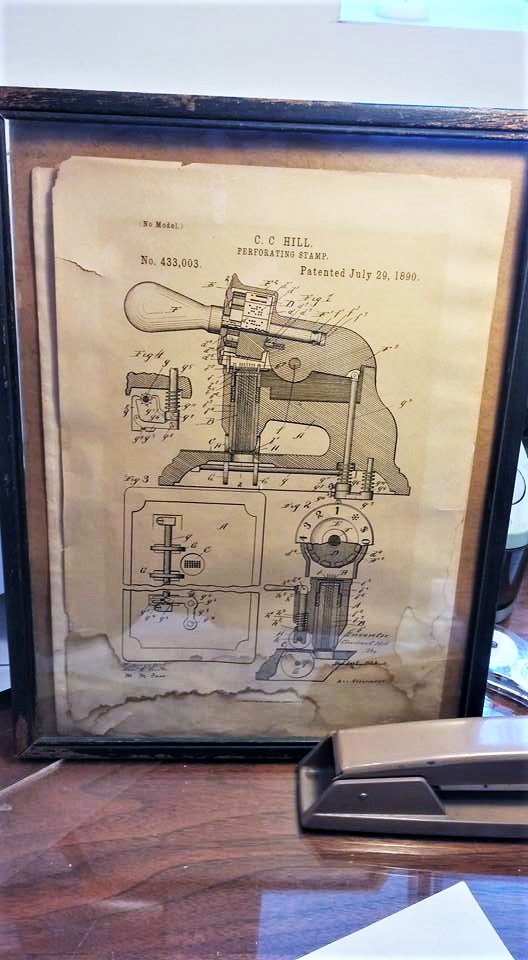
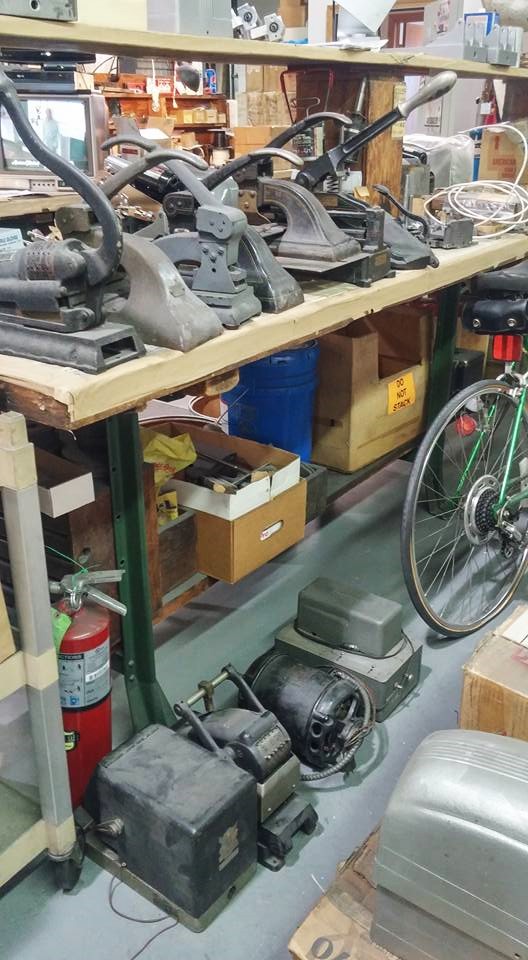
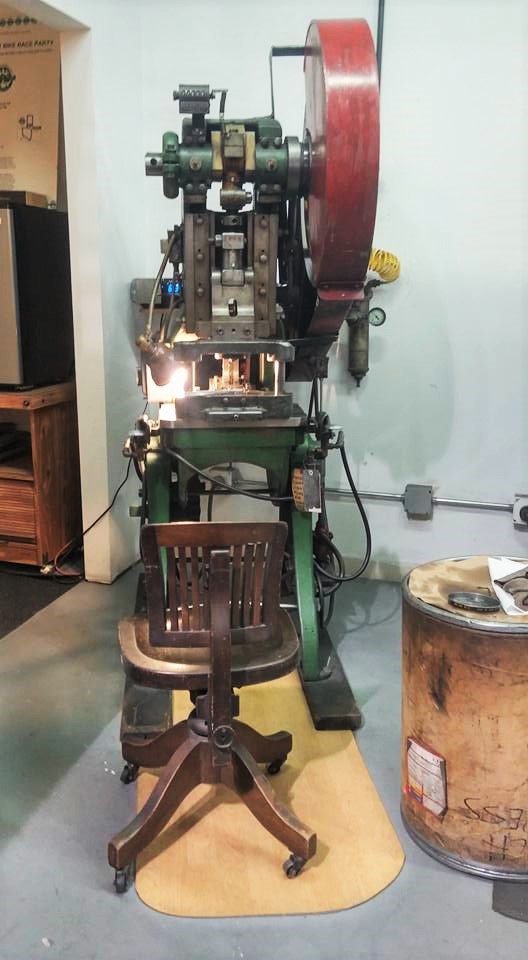
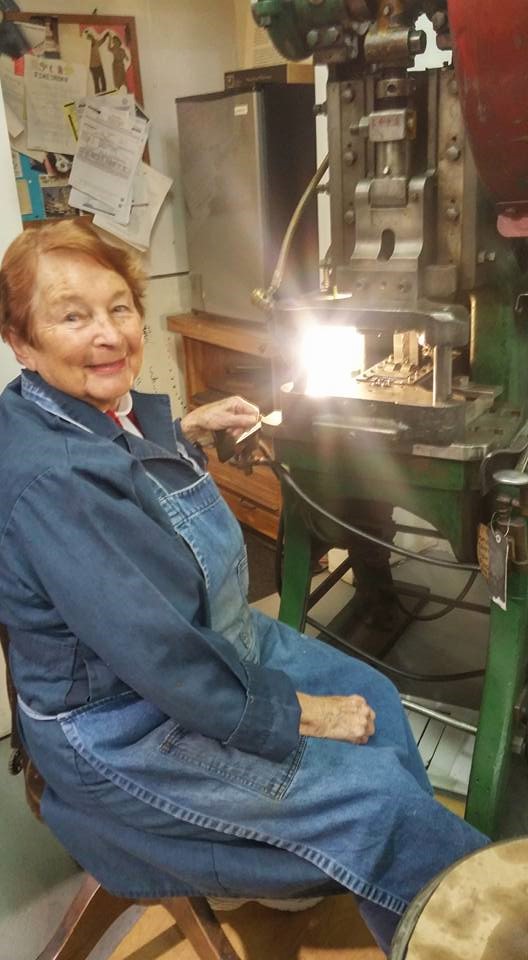
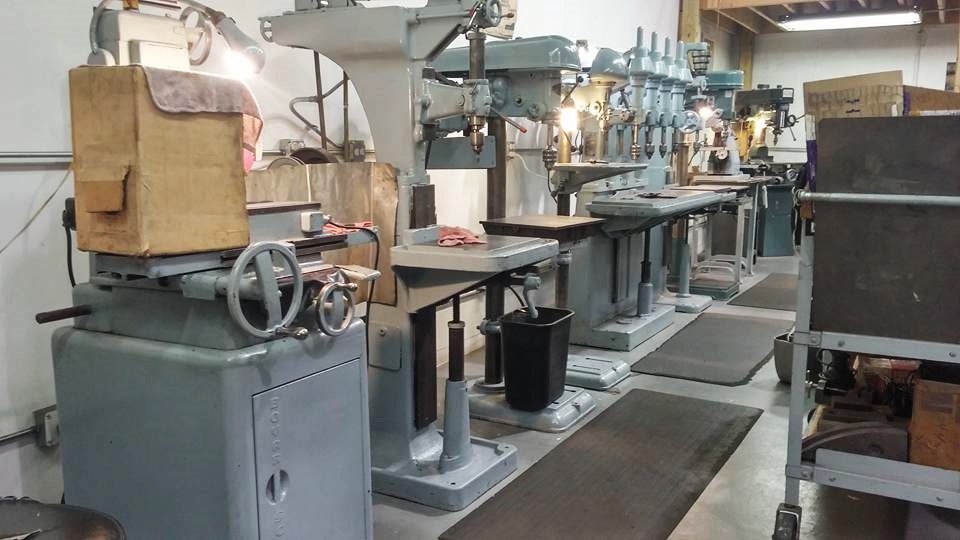
An original patent drawing from 1890. This one has an interesting story – one of the machines is included in the collection of the Buffalo Bill Cody museum out west.A collection of some of the early machines made by the company. Originally they were all run by hand but part of the "revolution" included electrifying machinery.The company has the original blueprints for all the machines.One of the first machines used in the production process – the press that prepares the metal pins that will make the perforations. It is matched with an antique wooden office chair that has been part of the operation for decades because it is just the right height for working on this machine.Elaine Spencer demonstrates the use of the press. She has been working this machine and the others for sixty years.One row of machines for creating and/or finishing the various metal parts that go into a perforation machine. Each machine has a different job and they are all used in the production process. Many of these are one-of-a-kind, making it impossible to create an unauthorized copy of the machines.
American Perforator has interesting stories about this. They were contacted by a government agency that uses the machines to mark certain documents as approved. They were told someone had copied the machine and was using it to stamp unauthorized approvals. American Perforator replied, nope, not possible. They looked up the machines they had made for this agency and told them they should have four machines with these serial numbers. The agency called back – sure enough, one of the machines was missing. They quickly recovered the machine and that ended the problem. (It was an "inside job.")
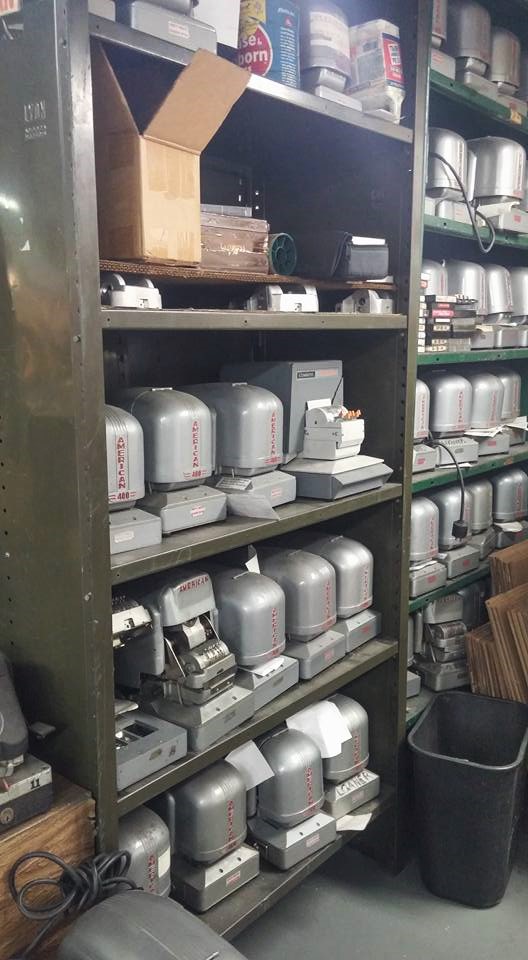
It would be almost impossible to copy one of these machines or to fake the perforations it makes.Shelves with perforators nearing completion. Right now the company is finishing up machines to ship to Surinam. Perforator machines run from about $4,000 to $7,000.
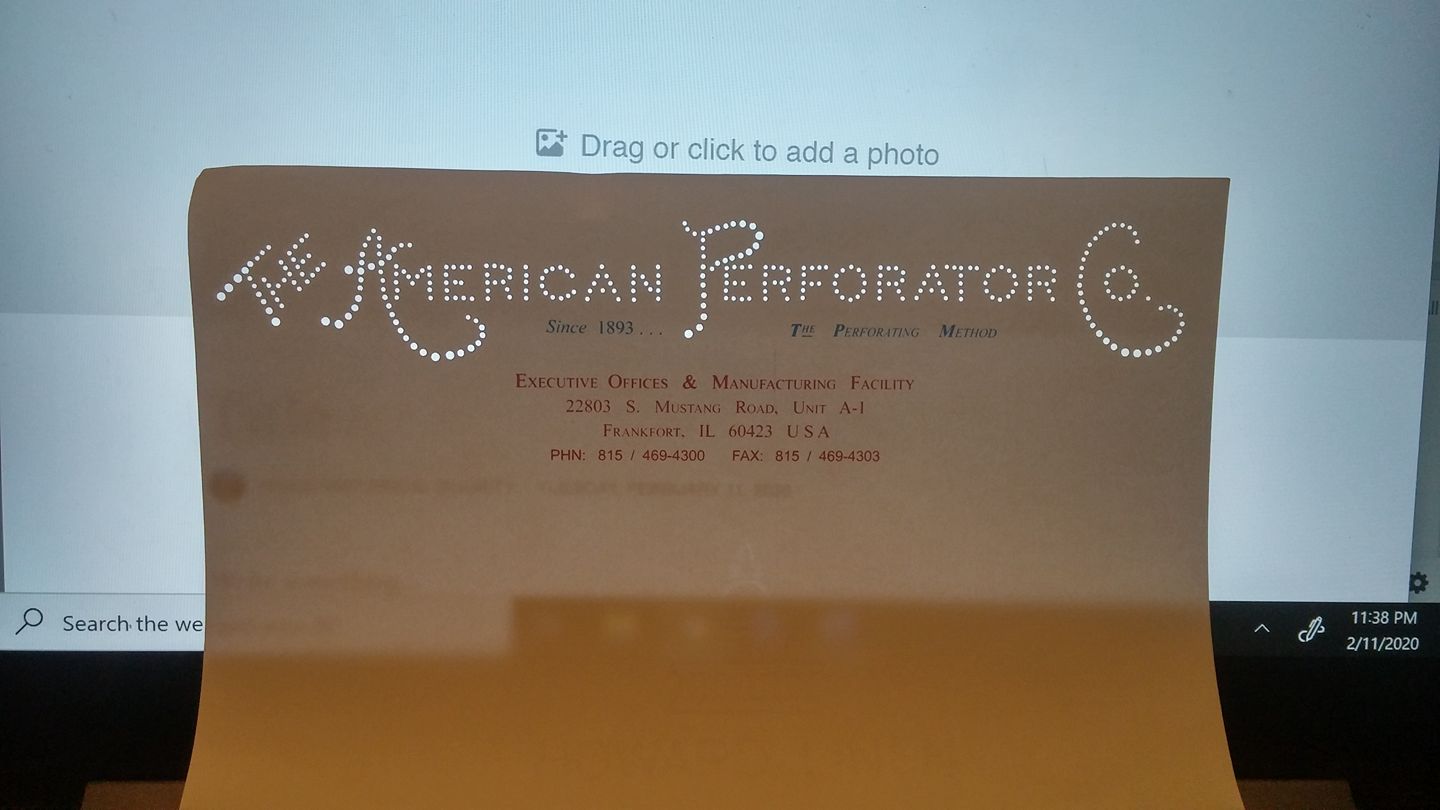
American Perforator really has no competitors. One machine on these shelves – right in the middle of the photo, third shelf just left of the partition – was made by a previous rival who used plastic parts and took other shortcuts. The machines did not hold up and the company went out of business.The company's stationery demonstrates its product – the letterhead is perforated and light shines through the name of the company.
Today was the kind of field trip historians love. Ridge Historical Society folks visited The American Perforator Company in Frankfort, IL. This company started with patents in the 1890s and was incorporated in 1910. The late Carl Spencer joined the company as a salesman, and in 1960, Carl and his wife Elaine Spencer, now RHS president, bought the company. Ownership has passed to Bryan Spencer, their son.
The company makes machines that perforate, or stamp holes into, documents, checks, ID cards, X-rays, even leather and other items. The perforated message becomes a permanent, non-removable, secure identifying mark on the document. Typical messages include date stamps and status of the document – paid, voided, approved, etc. The perforations might be used to cancel a document, for example, to invalidate an ID or cancel a credit card. These machines have been purchased through the years by many businesses, government agencies, universities, hospitals, etc., from all around the world.
Visiting this company that has been in continuous business for about 130 years is like walking into a little working museum for the Second Industrial Revolution. This is the term used for the "technological revolution" of the late 1800s – early 1900s, marked by innovations in manufacturing. An important part of this revolution was the increased use of machine tools to produce standardized, precise parts. Numerous inventions were patented during these years – such as machines that could perforate.
This visit came about because Elaine Spencer's life story will be used as part of the upcoming "Real American Girls of the Ridge" exhibit. RHS received a donation of five original American Girl dolls from the historical series. This exhibit will pair the dolls with real people connected to the Ridge from the same time periods. Elaine was a youngster during World War II and her story will be paired with that of the Molly doll.