The First Thanksgiving Feast
Thanksgiving Day is a uniquely American holiday, and more so than any other holiday, is associated with a “traditional” menu – turkey, bread stuffing, mashed potatoes and gravy, sweet potatoes, cranberry jelly and pumpkin pie are the normal fare. But some of these items were certainly NOT on the menu for the first celebration of the settlers who gave us the original reason to be thankful.
The first “Thanksgiving” celebration recorded in American history occurred in 1621 in Plymouth, Massachusetts, as a harvest feast. Note that there was already a colony of settlers in Virginia, those who came to Jamestown in 1607 and after. They certainly also had harvest celebrations, but they were not well recorded.
The celebrants of the 1621 feast were the English Protestants, called Puritans, and forever after known affectionately in American history as the Pilgrims, who had split from the Church of England and come to the New World on the Mayflower the year before; other Englishmen who also came on the boat; and the Wampanoag people, the Native American tribe that had lived in the area for over 12,000 years.
The Pilgrims got off to a bad start in the New World. Delayed in leaving England, they arrived just in time for winter and spent the first year on the ship in Plymouth harbor. About half of the original 150+ settlers and crew died that first winter.
But the second year, in March, they finally left the ship and built some huts. Early relations between Native Americans and the European settlers were very cordial. The Wampanoag showed the Pilgrims how to fish and hunt in the area, and how to cultivate the native food plants and gather fruit.
Some items we take for granted now were not around 400 years ago. For starters, there were no sweet or white potatoes. Potatoes did not come up to North America from South America for another 100 years. Also, the Pilgrims had not yet planted wheat fields so there were no pies and no bread. The sugar rations and almost all the food they brought with them had quickly been depleted on the journey over, so there were no jellies or sweet desserts to be made. The Pilgrims had brought no large livestock with them on the Mayflower, only chickens, and a few pigs and goats, so there were no dairy products except maybe goats’ milk. Dairy cows would come later. Plus, no ovens had been constructed yet for baking, so all cooking was done over open fires.
An early journal has the colonists going fowl hunting for this harvest feast. Duck, geese, swans and turkeys were all plentiful. The Wampanoag guests brought an offering of five deer to the celebration, so venison, probably some roasted and some served in a hearty stew, was without doubt on the menu. Historians also believe that seafood was a major component of the feast, this being New England by the coast. Mussels, lobster, bass, clams and oysters were readily available. The first Thanksgiving was very heavy on animal protein. And actually, completely gluten-free.
The vegetables cultivated at the time included corn, pumpkins, squash, turnips, garlic, onions, beans, carrots, lettuce, spinach and cabbage. The pumpkins would have been roasted. Fruits available for gathering included blueberries, plums, grapes and gooseberries. Cranberries were there but it was another 50 years before there were reports of boiling them with sugar to make a jelly.
Flint corn, the multi-colored Indian corn, was plentiful at the first harvest. Most likely, the corn was turned into cornmeal, which was boiled and pounded into a thick corn mush or porridge that was occasionally sweetened with molasses, which was made from sugar cane, which came from the Caribbean. This was called Indian pudding, a take on the English fondness for “hasty pudding.”
Herbs, and nuts like chestnuts, walnuts and beechnuts, were plentiful from the forests. Along with onion, these would have been used for stuffing the fowl and flavoring dishes.
The celebration itself was a three-day event, with feasting, ball games, singing and dancing. Assumedly, grace was said before meals, but it was several years later that an official prayer service was added to the annual harvest celebration to give thanks for rain after a two-month drought.
Within years, other settlers came, with cows and then there was milk. They planted wheat and other crops, and eventually their diet expanded.
Fast forward to 1827, and Sarah Josepha Hale, editor of the popular Godey’s Lady’s Book, began advocating for a national Thanksgiving Day. She petitioned 13 presidents until finally Abraham Lincoln made the declaration in 1863 as a way to help unite the country in the midst of the Civil War.
For decades, Hale published Thanksgiving recipes and menus in her magazine. She also published a number of cookbooks. She championed mashed potato dishes, which were still considered exotic in the mid-1800s.
A typical cookbook of 1870 recommends the following for Thanksgiving dinner: Oyster soup; cod with egg sauce; lobster salad; roast turkey with cranberry sauce; mixed pickles; mangoes; pickled peaches; cold slaw and celery; boiled ham; chicken pie ornamented; jelly; mashed potatoes browned; tomatoes; boiled onions; canned corn; sweet potatoes; roasted broccoli. Mince and pumpkin pie; apple tarts; Indian pudding. Apples, nuts, and raisins.
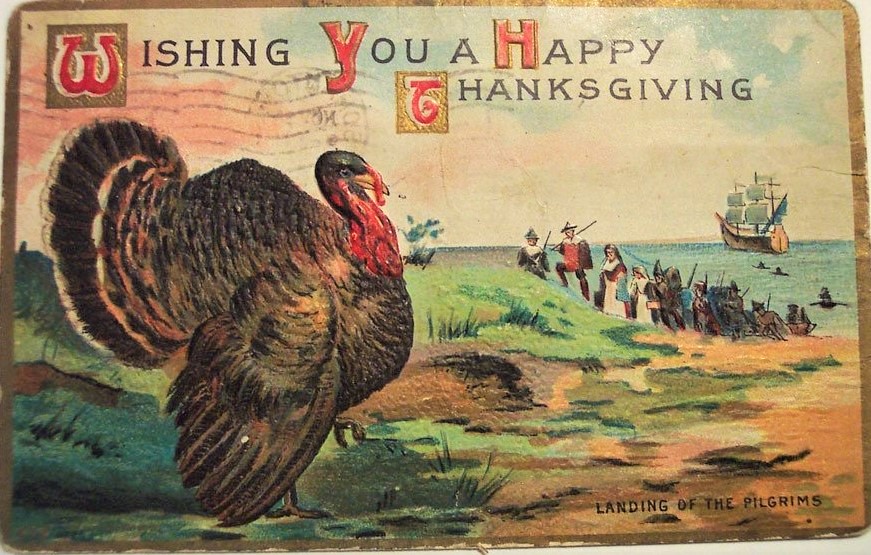
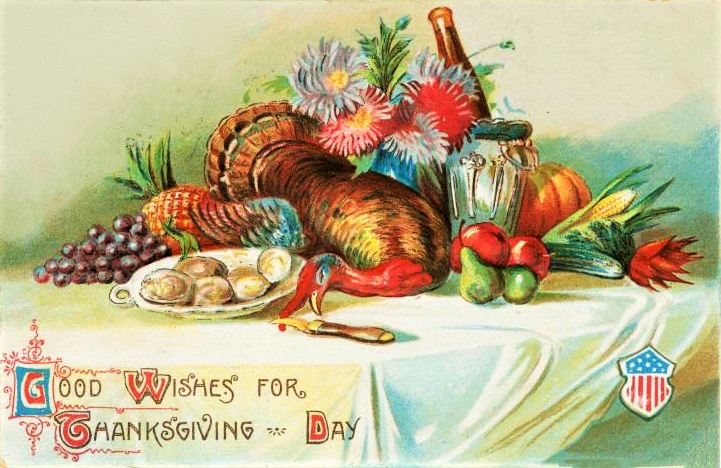
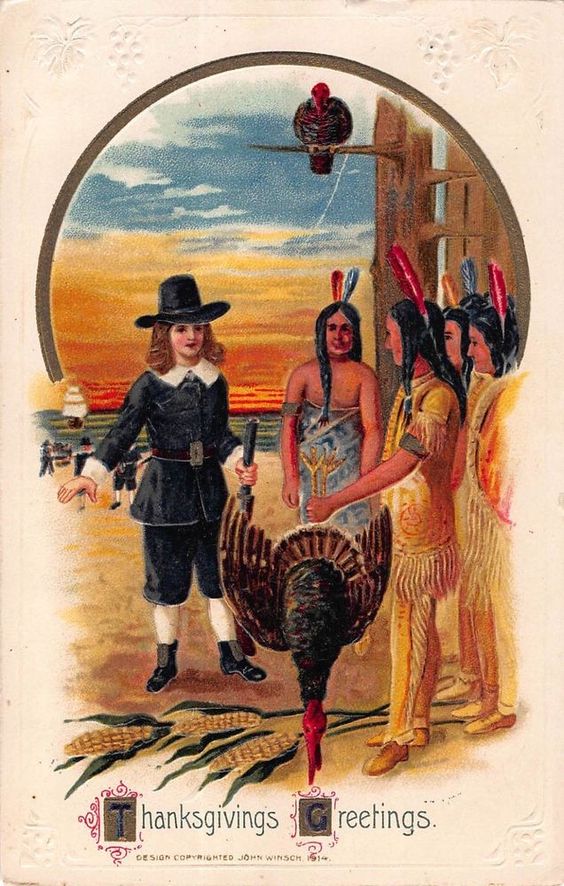
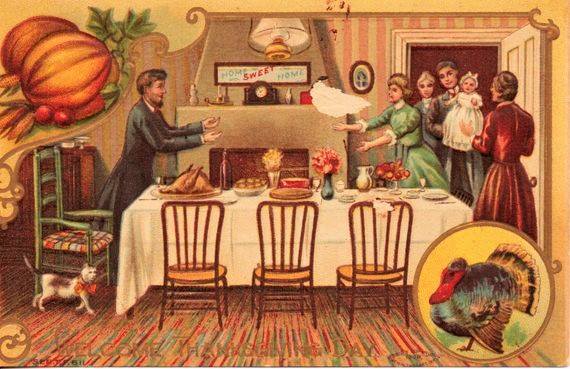
Some vintage Thanksgiving postcards ….