
Just today, UNESCO, the United Nations Educational, Scientific and Cultural Organization, announced that it added eight of architect Frank Lloyd Wright's buildings to the UNESCO World Heritage List, elevating them to the same status as the Pyramids and the Statue of Liberty. Two of the buildings are right here in the Chicago area – the Robie House in Hyde Park, Chicago, and the Unity Temple in Oak Park.
The UNESCO inscription included: “These buildings reflect the ‘organic architecture’ developed by Wright, which includes an open plan, a blurring of the boundaries between exterior and interior and the unprecedented use of materials such as steel and concrete. Each of these buildings offers innovative solutions to the needs for housing, worship, work or leisure.”
Although his personal life and business behavior were controversial, Wright (1867 – 1959) was called the greatest American architect of all time by the American Institute of Architects in 1991.
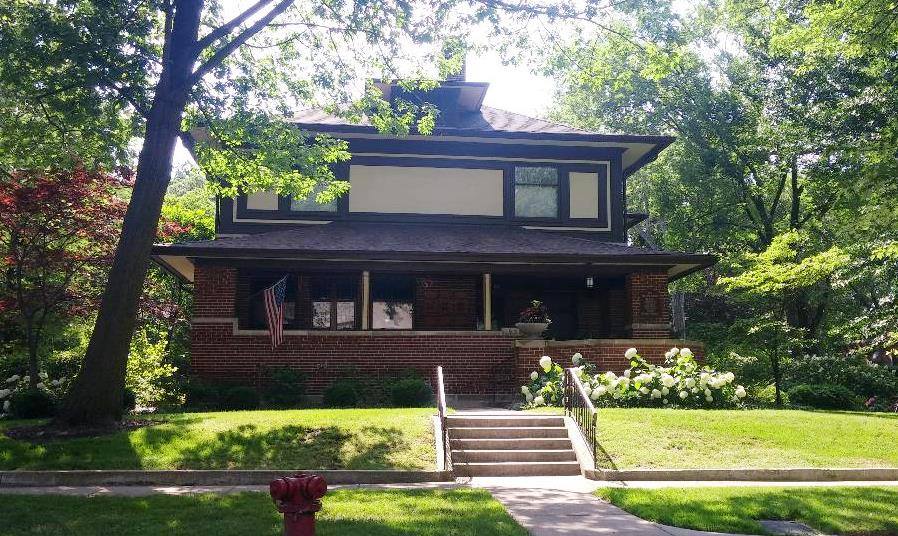
The Ridge boasts four Frank Lloyd Wright residences. First is the William and Jesse Adams House at 9326 S. Pleasant Ave. Built in 1900, the style was not consistent with other houses Wright was designing at the time, leading some scholars to speculate that William Adams, who served as the contractor for some of Wright’s other houses, may have designed the house himself. Wright’s name is printed on one of the original drawings and at the very least, the house’s widely overhanging roofs suggest Wright’s influence.
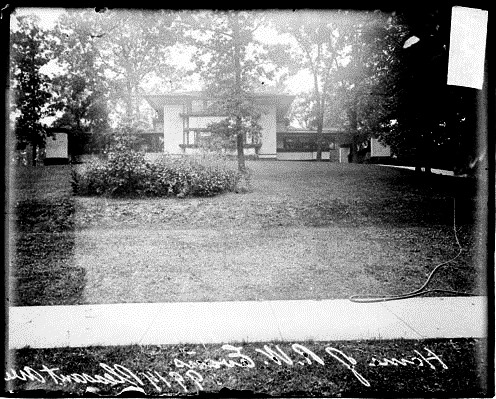
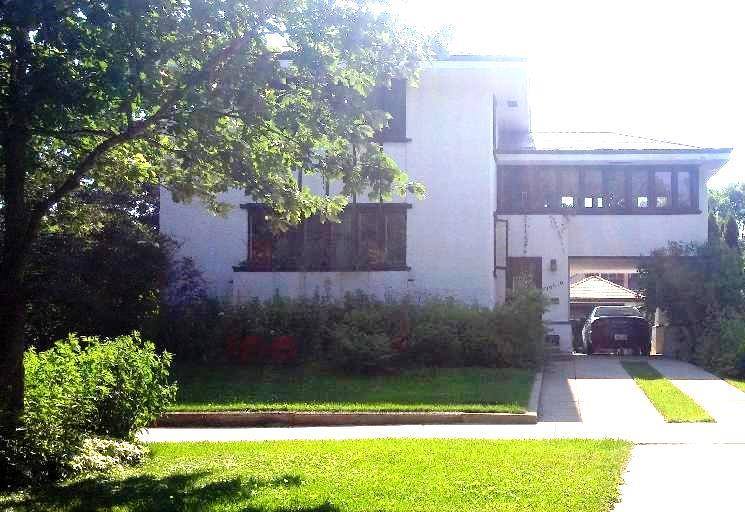
In 1908, the Raymond W. Evans House was built at 9914 S. Longwood Drive. Wright designed this house in his “Prairie Style,” that is, to complement the native Midwestern landscape. The style is characterized by horizontal lines, low-pitched roofs, overhanging eaves, and rows of windows. The long, low lines of the Evans house blend in well with its setting on the hill. The house is based on plans that Wright called “Fireproof Houses for $5000” that used concrete and steel. The plans for the Evans House were expanded to include an extra wing for servants, an enclosed porch and a covered driveway. The house was originally covered with stucco; a later owner added the stone veneer.
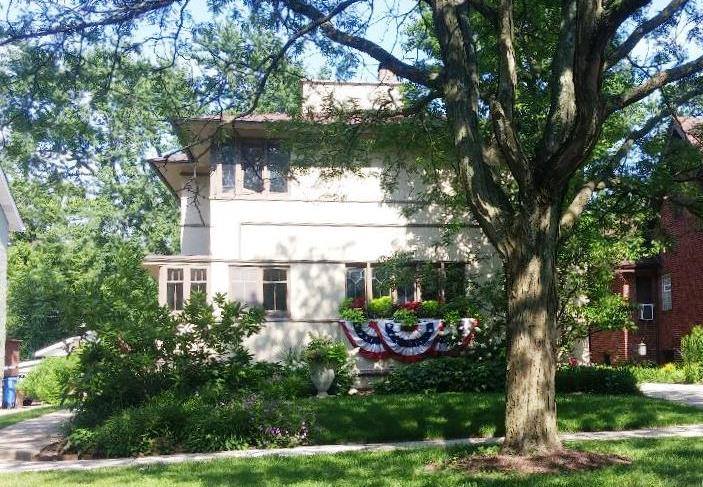
Then there are the two American System-Built Houses, the H. Howard Hyde House at 10541 S. Hoyne, and the Guy C. Smith House at 10410 S. Hoyne. These were built from plans developed by Wright in 1916 for affordable middle-class housing using pre-cut lumber but built on-site by certified contractors. Originally, an entire sub-division of these homes was planned – it was to be called “Ridge Homes” – but World War I intervened, bringing a shortage of building materials.
Although listed in many sources, all of these houses are private residences and should be respected as such.