
"The right of citizens of the United States to vote shall not be denied or abridged by the United States or by any state on account of sex. Congress shall have power to enforce this article by appropriate legislation."
These two sentences brought to an end decades of demands and campaigning for the right for women to vote in all elections – including Presidential.
This is the Nineteenth Amendment to the U. S. Constitution, passed on June 4, 1919, one hundred years ago.
Illinois was the first state to ratify this amendment, on June 10, 1919. Ratification was declared on August 26, 1920, with 36 of the 48 states affirming by that time. (The last state to ratify the amendment was Mississippi – in 1984!)
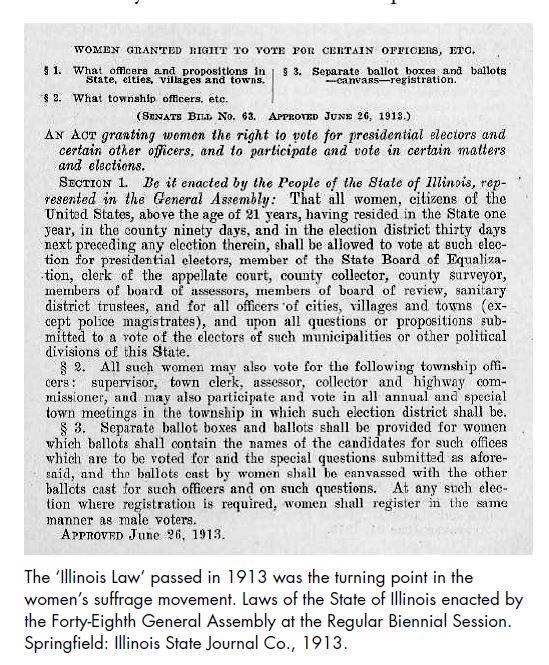
It is no surprise that Illinois was the first state to ratify the amendment – it was largely due to an Illinois law passed in 1913 that the final push at the federal level occurred. In fact, the federal outcome was so anticlimactic, it did not even receive much notice in the press. Illinois women had been voting for President for years.
In 1913, the Progressive Party held the balance of power in the Illinois State legislature. Women lawyers came up with a way to significantly increase the voting power of women.
The Electoral College was established by the Founding Fathers as a compromise on how to elect the President – by popular vote or by vote of Congress. Individuals known as Electors are chosen by each state, and it is actually these Electors who choose the President. The U. S, Constitution gives the authority to each state to decide how to choose the Electors.
A bill allowing women to vote for the Electors was introduced into the Illinois legislature. The opposition tried every conceivable parliamentary maneuver to keep the bill from going forward. But after receiving an overwhelming flood of letters, telegrams, visits, and telephone calls in support, the Speaker allowed the bill to go to vote.
Women "captains" went to the legislators' houses to round them up for the vote, and stood guard at the chamber doors to prevent them from leaving before the vote was cast.
The bill passed. Women in Illinois became the first women in the country to vote for President, through electing the state Electors. The new law also expanded voting rights at the municipal level.
Women on the Ridge were very active in the suffrage movement. Gertrude Blackwelder of Morgan Park served as the president of the Chicago Political Equality League for three years. Mrs. Blackwelder made history on Saturday, July 26, 1913, when she cast her ballot in Morgan Park’s special election on building a new high school. She was the first woman to vote in Cook County after the 1913 Illinois law passed.
Pic 1: The 1913 Illinois law.
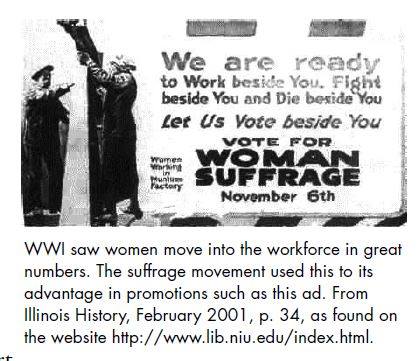
Pic 2: A WWI-era pro-suffrage ad.
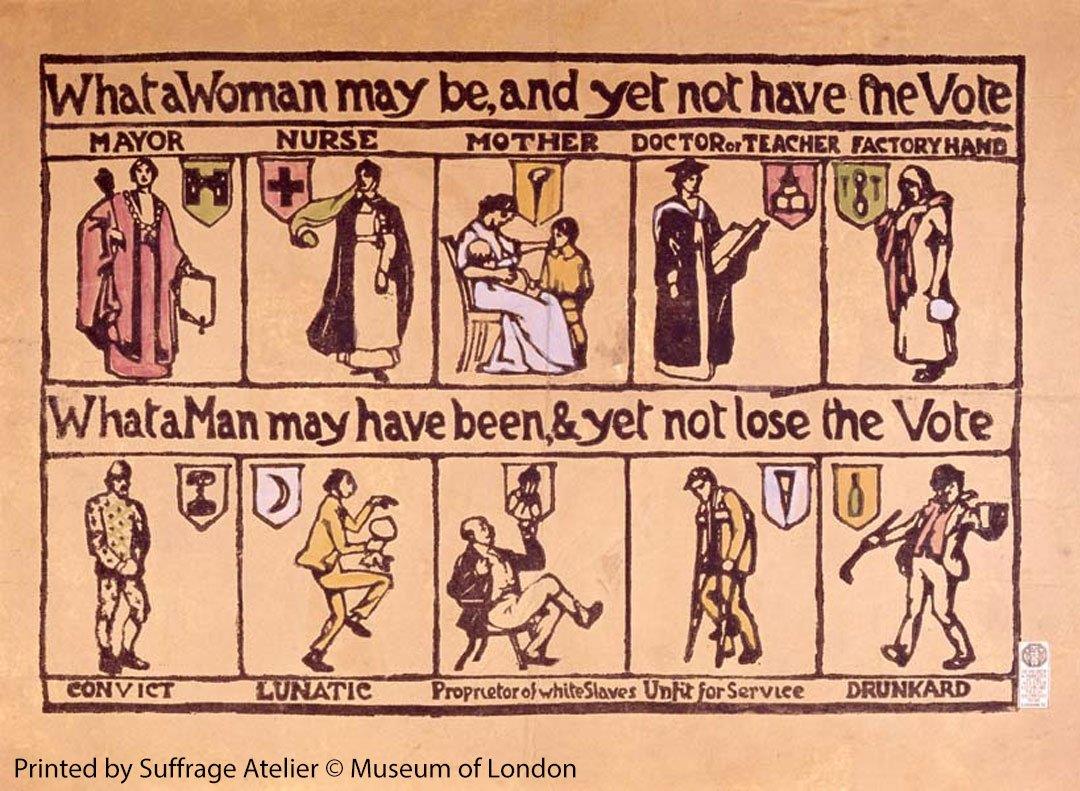
Pic 3: Pro-suffrage propaganda.
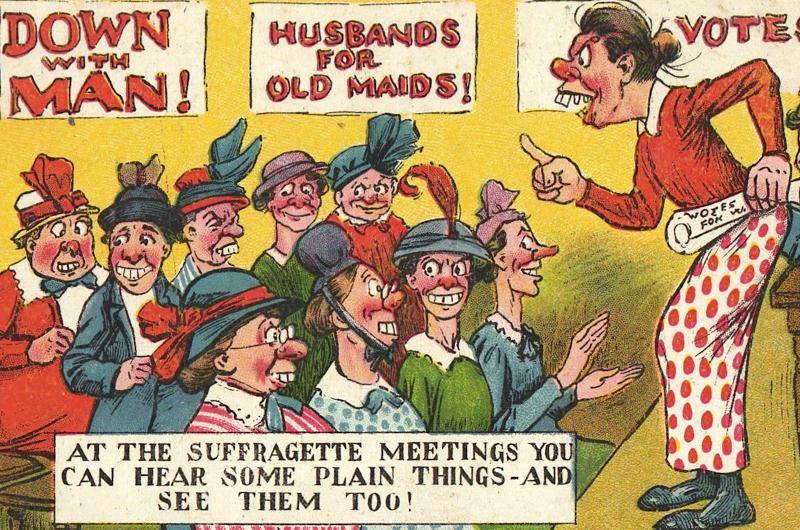
Pic 4: Anti-suffrage propaganda. Both sides could be brutal. .