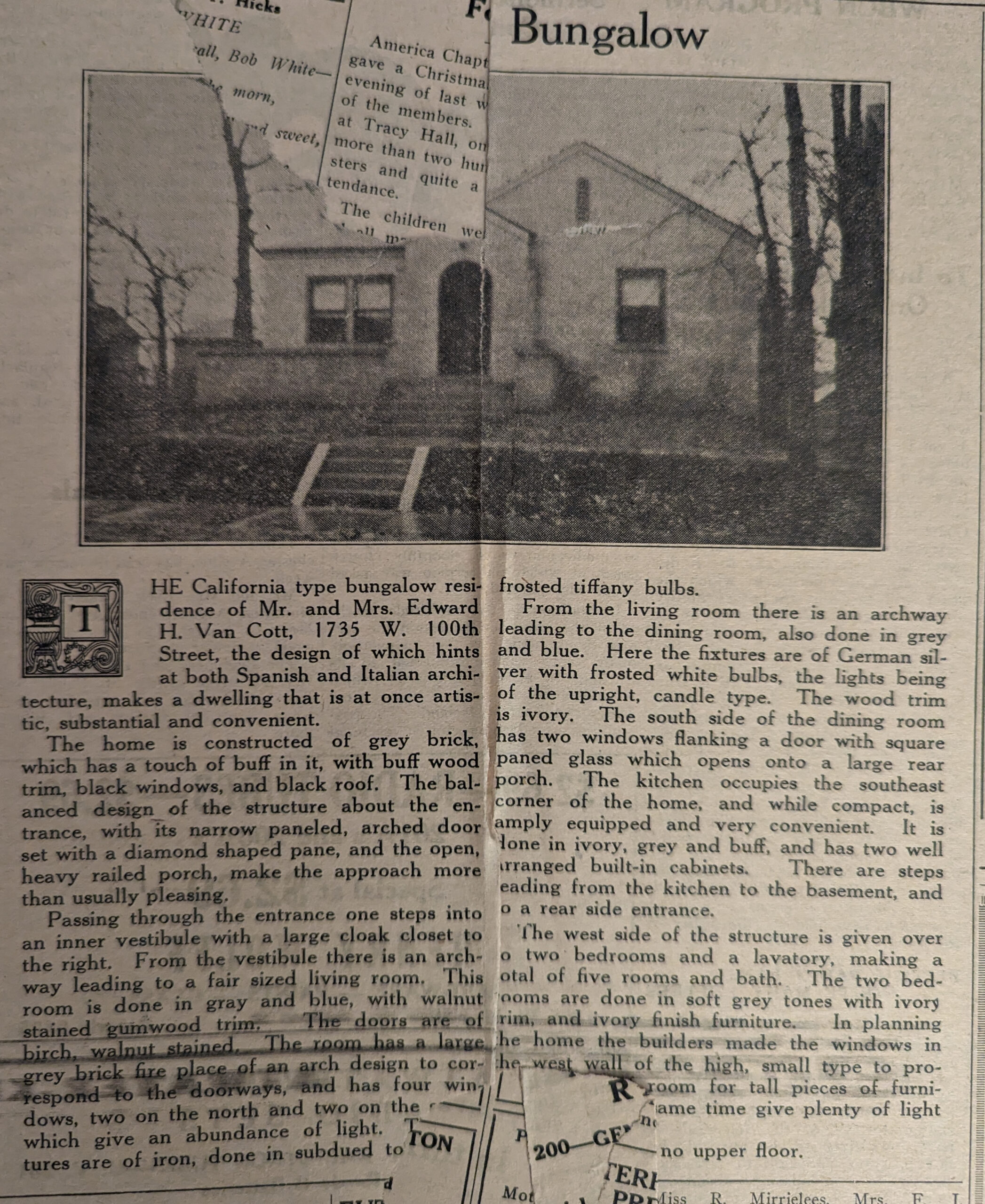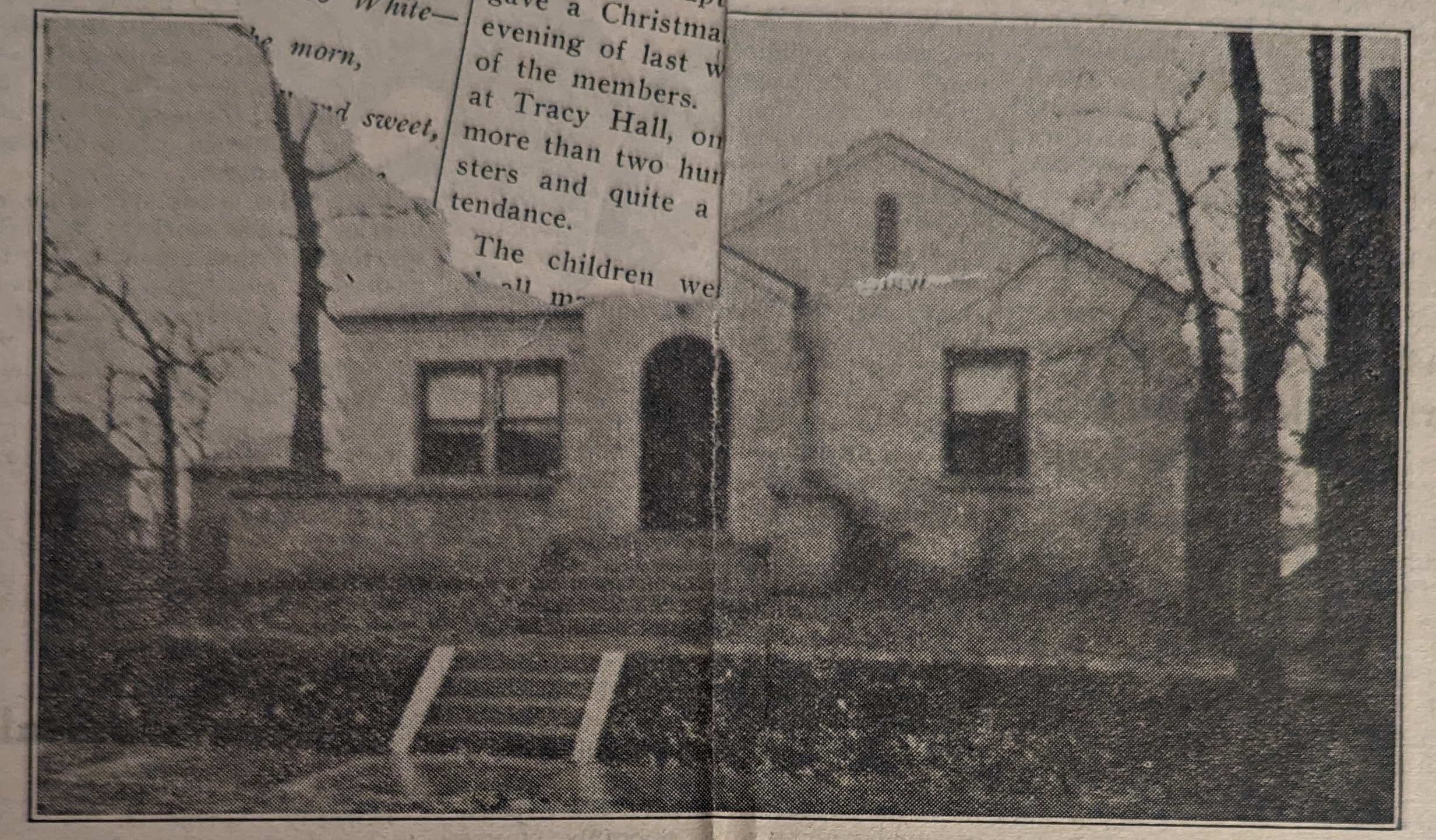
THE California type bungalow residence of Mr. and Mrs. Edward H. Van Cott, 1735 W. 100th Street, the design of which hints at both Spanish and Italian architecture, makes a dwelling that is at once artistic, substantial and convenient.
The home is constructed of grey brick, which has a touch of buff in it, with buff wood trim, black windows, and black roof. The balanced design of the structure about the entrance, with its narrow paneled, arched door set with a diamond shaped pane, and the open, heavy railed porch, make the approach more than usually pleasing.
Passing through the entrance one steps into an inner vestibule with a large cloak closet to the right. From the vestibule there is an archway leading to a fair sized living room. This room is done in gray and blue, with walnut stained gumwood trim. The doors are of birch, walnut stained. The room has a large grey brick fire place of an arch design to correspond to the doorways, and has four windows, two on the north and two on the south which give an abundance of light. The fixtures are of iron, done in subdued tones with frosted tiffany bulbs.
From the living room there is an archway leading to the dining room, also done in grey and blue. Here the fixtures are of German silver with frosted white bulbs, the lights being of the upright, candle type. The wood trim is ivory. The south side of the dining room has two windows flanking a door with square paned glass which opens onto a large rear porch. The kitchen occupies the southeast corner of the home, and while compact, is amply equipped and very convenient. It is done in ivory, grey and buff, and has two well arranged built-in cabinets. There are steps leading from the kitchen to the basement, and to a rear side entrance.
The west side of the structure is given over to two bedrooms and a lavatory, making a total of five rooms and bath. The two bedrooms are done in soft grey tones with ivory trim, and ivory finish furniture. In planning the home the builders made the windows in the west wall of the high, small type to provide room for tall pieces of furniture and at the same time give plenty of light.
There is no upper floor.
Original Article