The Ridge Historical Society
Beverly/Morgan Park’s “Forgotten House” – Part 3: More on the Barnard Family
By Carol Flynn
This post brings us back to the “forgotten house” that was rediscovered and identified as the Erastus A. Barnard I House at 1602 West 108th Place in Morgan Park. It was built around 1865, originally stood at the southeast corner of 103rd Street and Longwood Drive, and was moved to its current location in 1924.
In the post for Juneteenth, we covered the early history of the Barnard Family, their relationship to the Wilcox and Morgan Families, and their experiences during the U.S. Civil War.
Now we’ll look more at the Barnard Family.
As the newly formed United States gained additional territory and spread out from the eastern states, many people started moving to what is now the Midwest for the fertile farmland. Chicago became the “western frontier” offering many business opportunities.
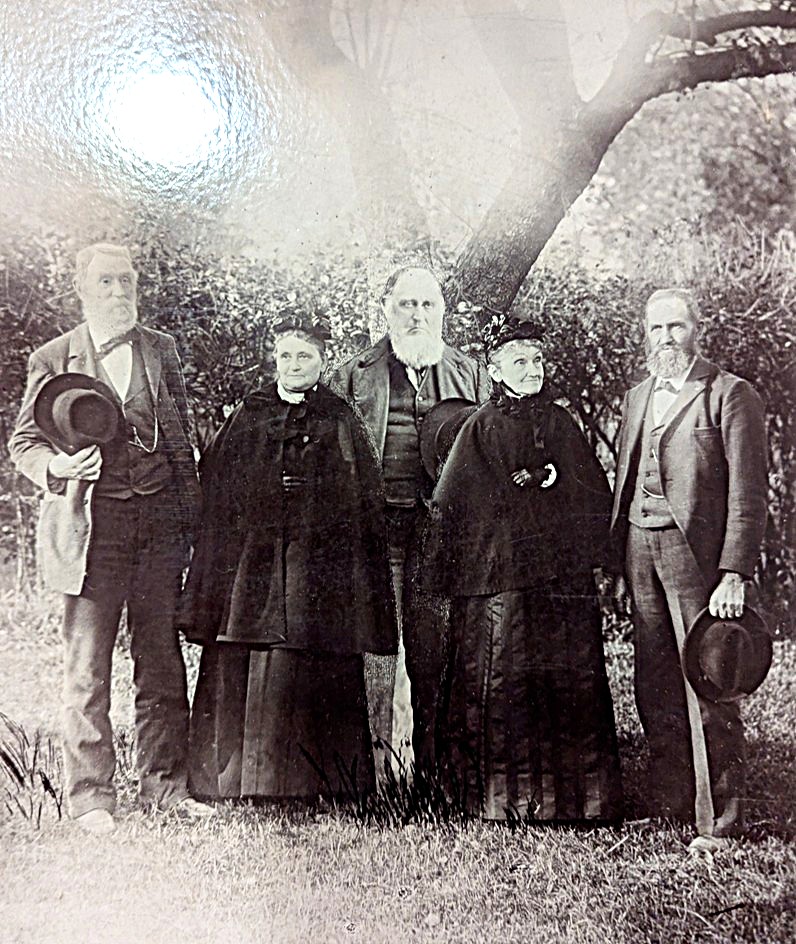
The Barnard Family moved from Massachusetts to Illinois and were in Chicago by 1846. The family included patriarch Dr. William Barnard (1793-1855) and matriarch Alice Emerson Barnard (1787-1880). Alice’s family went back generations; her father, Ralph Emerson, and his brother Daniel Emerson served in the Continental Army during the U.S. Revolutionary War.
The family settled at what today is 47th Street and Vincennes Avenue in Kenwood, just north of Hyde Park.
On the 1850 U.S. Census, the five Barnard children are listed as William, age 29, who was the first to come to Chicago a year or so before the rest of his family; Elizabeth, 27; Daniel, 24; Alice L. (for Lucretia), 21; and Erastus, 17.
The Barnard Family was very well educated. The sons William and Daniel were graduates of Amherst College in Massachusetts.
William moved to the Ridge when he took a job as tutor for the Morgan Family, then opted to take up farming, buying property at 103rd Street and Longwood Drive. The entire area was then known as Washington Heights, and their neighborhood as Tracy; 103rd Street was called Tracy Avenue. William married Miranda Wilcox, and they had four children.
The sisters Elizabeth and Alice L. both became teachers in Chicago. Neither married. Back then, a female teacher would have to give up her career if she married.
Alice L. became one of the first female principals in the Chicago Public School system, and her life and career were covered in an RHS Facebook story a few years ago. The school at 104th Street and S. Charles St., formerly the Washington Heights School, was renamed for Alice in 1892.
Their brother Daniel practiced as a lawyer in Chicago for many years. As Captain Barnard of the U.S. Union Army from the Civil War, he was active in veteran activities. He never married.
Patriarch William died in 1855. After the Great Chicago Fire of 1871, his widow Alice E., son Daniel and daughters Elizabeth and Alice L. moved to the Ridge.
The youngest son Erastus, a teenager when the family came to Chicago, also took up farming. It doesn’t appear he had further formal education in Chicago, but more than likely his education continued at home.
Erastus purchased land from his brother William at the southeast corner of 103rd Street and Longwood Drive. He married Mary Lavinia Wilcox, and some time after Erastus returned from the Civil War in 1865, they built the “forgotten house” to replace their log cabin.
Mary and Erastus had one daughter, Amy. Unfortunately, Amy died at the age of 20 in 1888. Her bereaved parents donated the land at 104th Street and Longwood Drive to the city in 1902 to establish Barnard Park in her honor.
This left William’s children as the only descendants of the Barnard family. William’s children included son William W. (for Wilcox) and daughter Alice S., a teacher, who both recorded family history. Their writings contribute to our knowledge of early life on the Ridge.
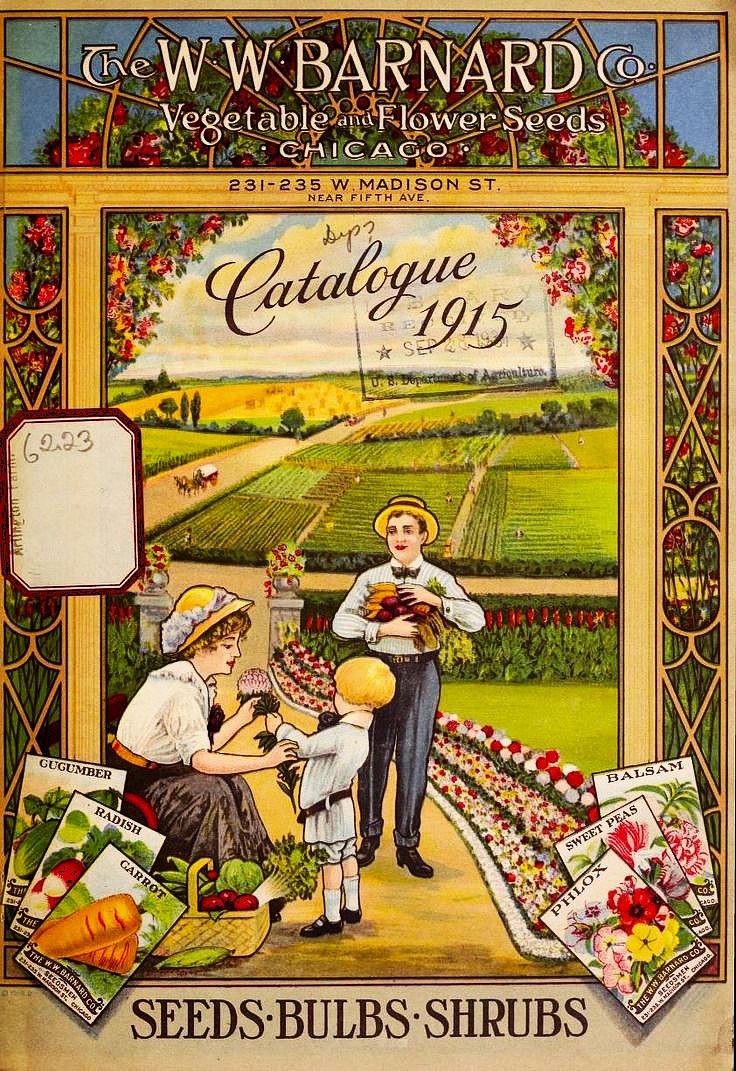
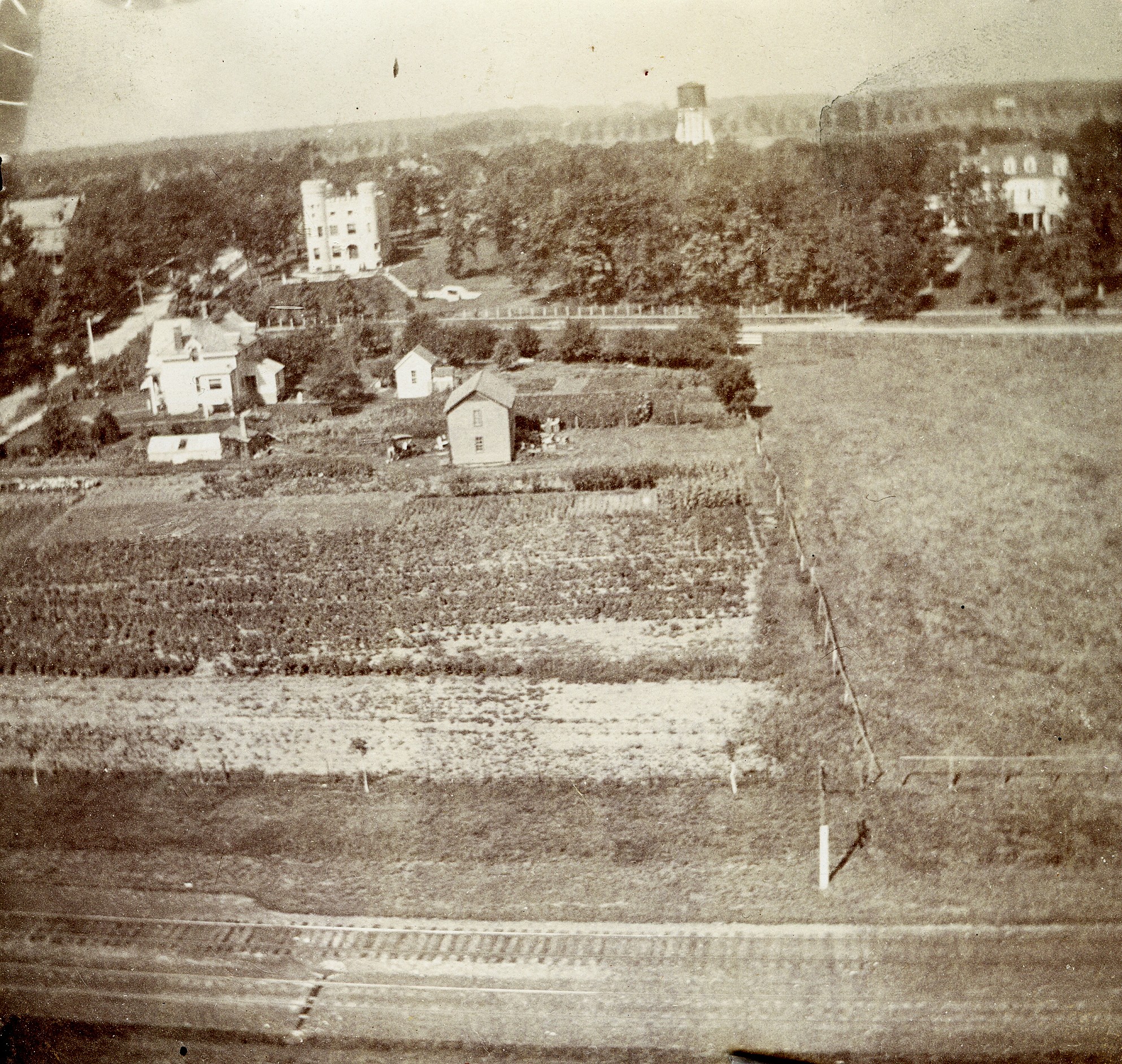
William W. bought the seed company he was working at in 1888 and created his own company, the W.W. Barnard Co., and called himself a “seedman.” He used the family farm at 103rd Street and Longwood Drive to grow mainly flowers for their seeds. The business was considered “one of Chicago’s largest and most progressive seed concerns.”
In addition to vegetable, flower and plant seeds, the company also dealt in poultry supplies, and put on poultry shows at their location at 231-5 W. Madison Street. Along with chickens, geese, ducks, and turkeys, the show featured pigeons, rabbits, and cavies (guinea pigs), with prize birds on display in the front windows. Thousands of people attended the shows.
The Barnard family were very active in civic and social affairs in Washington Heights. They were founders of Bethany Union Church. Their neighbor across the street was Robert Givins, the real estate developer who built the most iconic landmark in the area, the “Castle,” in 1886-7, forty years after the Barnards had already established a presence.
The next post will look at the purchase of the “forgotten house” by the Gorton Family.