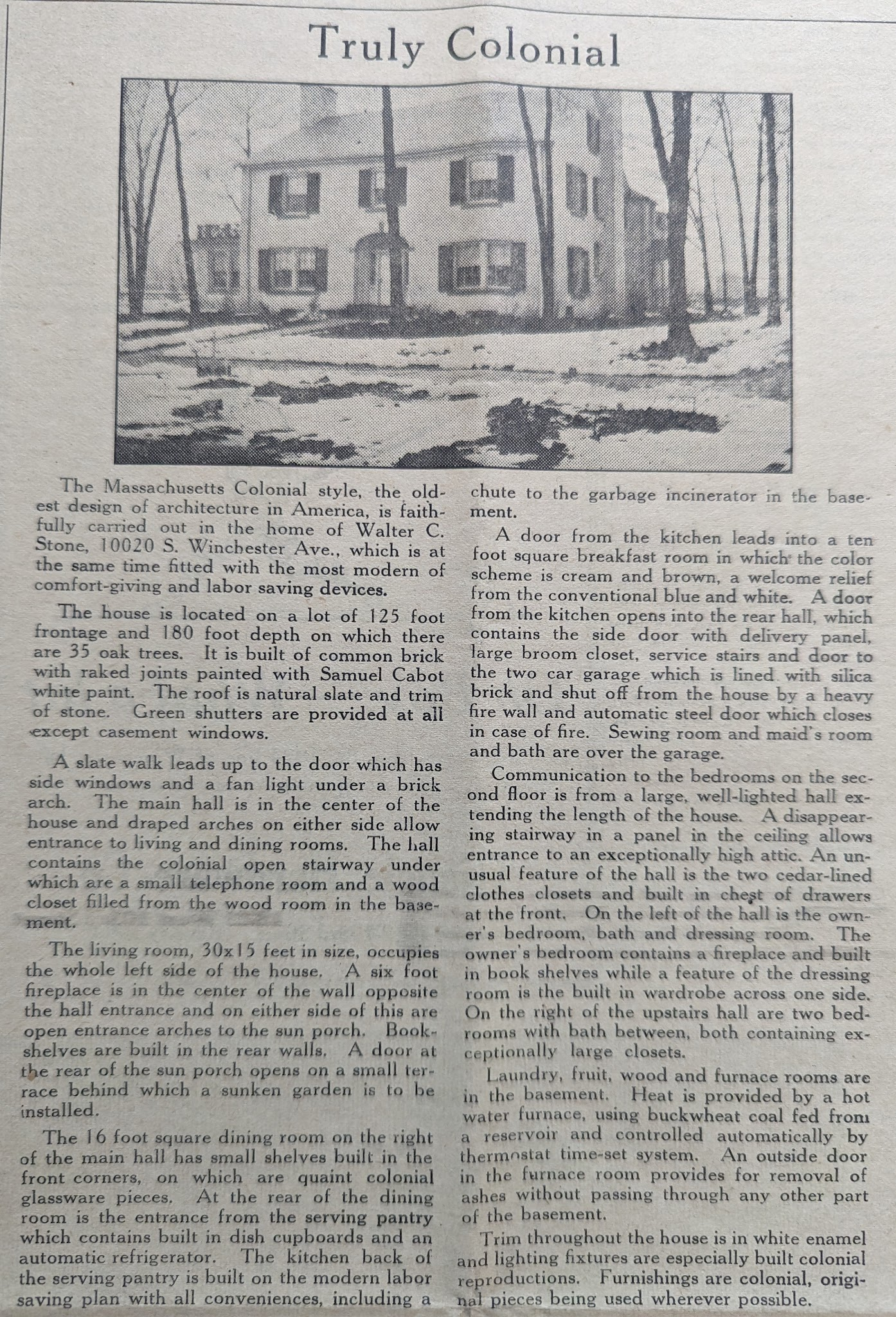
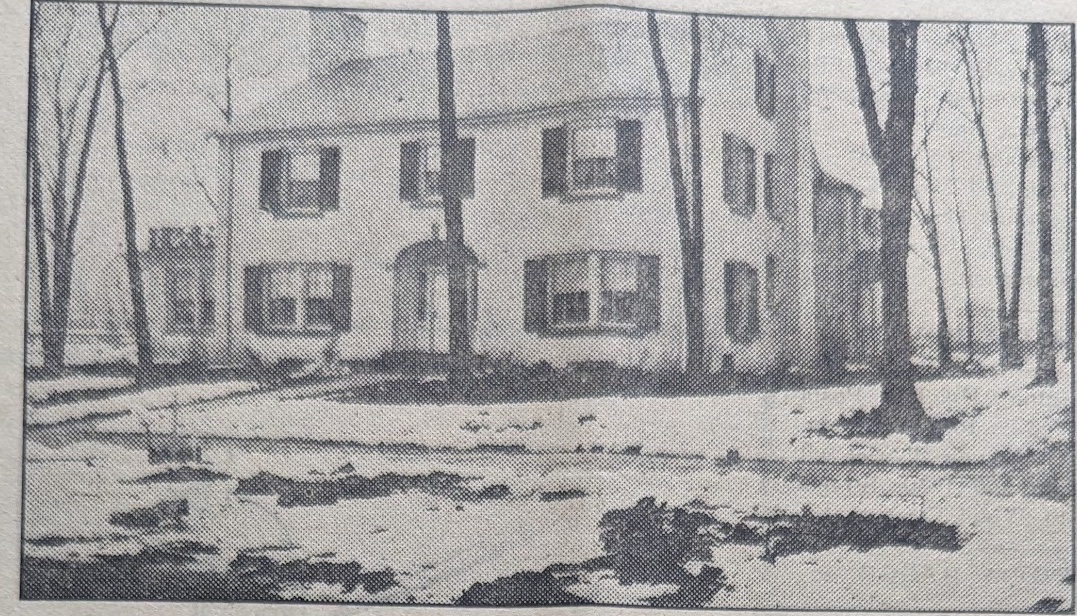
The Massachusetts Colonial style, the oldest design of architecture in America, is faithfully carried out in the home of Walter C. Stone, 10020 S. Winchester Ave., which is at the same time fitted with the most modern of comfort-giving and labor saving devices.
The house is located on a lot of 125 foot frontage and 180 foot depth on which there are 35 oak trees. It is built of common brick with raked joints painted with Samuel Cabot white paint. The roof is natural slate and trim of stone. Green shutters are provided at all except casement windows.
A slate walk leads up to the door which has side windows and a fan light under a brick arch. The main hall is in the center of the house and draped arches on either side allow entrance to living and dining rooms. The hall contains the colonial open stairway under which are a small telephone room and a wood closet filled from the wood room in the basement.
The living room, 30×15 feet in size, occupies the whole left side of the house. A six foot fireplace is in the center of the wall opposite the hall entrance and on either side of this are open entrance arches to the sun porch. Bookshelves are built in the rear walls. A door at the rear of the sun porch opens on a small terrace behind which a sunken garden is to be installed.
The 16 foot square dining room on the right of the main hall has small shelves built in the front corners, on which are quaint colonial glassware pieces. At the rear of the dining room is the entrance from the serving pantry which contains built in dish cupboards and an automatic refrigerator. The kitchen back of the serving pantry is built on the modern labor saving plan with all conveniences, including a chute to the garbage incinerator in the basement.
A door from the kitchen leads into a ten foot square breakfast room in which the color scheme is cream and brown, a welcome relief from the conventional blue and white. A door from the kitchen opens into the rear hall, which contains the side door with delivery panel, large broom closet, service stairs and door to the two car garage which is lined with silica brick and shut off from the house by a heavy fire wall and automatic steel door which closes in case of fire. Sewing room and maid’s room and bath are over the garage.
Communication to the bedrooms on the second floor is from a large, well-lighted hall extending the length of the house. A disappearing stairway in a panel in the ceiling allows entrance to an exceptionally high attic. An unusual feature of the hall is the two cedar-lined clothes closets and built in chest of drawers at the front. On the left of the hall is the owner’s bedroom, bath and dressing room. The owner’s bedroom contains a fireplace and built in book shelves while a feature of the dressing room is the built in wardrobe across one side. On the right of the upstairs hall are two bedrooms with bath between, both containing exceptionally large closets.
Laundry, fruit, wood and furnace rooms are in the basement. Heat is provided by a hot water furnace, using buckwheat coal fed from a reservoir and controlled automatically by thermostat time-set system. An outside door in the furnace room provides for removal of ashes without passing through any other part of the basement.
Trim throughout the house is in white enamel and lighting fixtures are especially built colonial reproductions. Furnishings are colonial, original pieces being used wherever possible.
Original Article