
Ridge Historical Society
By Carol Flynn
School Series – Part 2 of Profile 5: Johnnie Colemon
This is fifth in our series on people who have schools named for them on the Ridge.
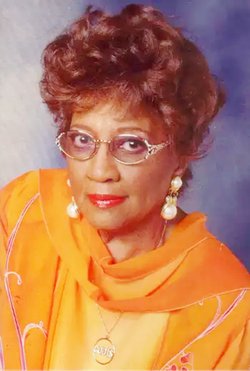
Johnnie Colemon (1920 – 2014) was a religious leader who inspired tens of thousands of people. This is a continuation of her story started on Juneteenth.
Any discussion of the African Americans on our list must include their experiences with racism and discrimination. This was part of the very fabric of their lives. The fact that they succeeded despite these barriers illustrates just what extraordinary, inspirational people they were.
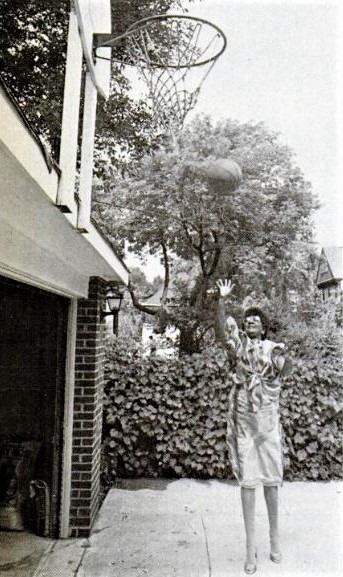
Despite her numerous titles, she always insisted people just call her Johnnie. She was born Johnnie Mae Haley in Alabama and raised in Mississippi. Like many people, her childhood dream was to be in show business – she wanted to play the saxophone or be a dancer on Broadway. And apparently, like for most of us, practicality won out. In 1943, she received a bachelor’s degree from Wylie College in Texas, an historically black college, where she excelled in her studies and in sports, and was voted the “most versatile” student in her class.
She taught school in Mississippi, and then moved to Chicago and taught in the Chicago public schools. In 1952, her teaching career was cut short by illness, and that is when she turned to religion.
Her journey took her to the Unity Church, which was founded in 1889 as a spiritual healing ministry. Today it is part of the “New Thought” movement. As it is beyond the scope of this post to go into the details of a religious movement, readers who want more information can research this on-line.
Johnnie often talked about her insecurities from her early years. She was an only child. She was named for her father, John, who had wanted a son. She spent much of her youth trying to win his approval. At Wylie, she called herself an “ugly duckling.” She was not considered attractive; she was too tall and thin and her skin too black. She was rejected by the top sorority. She would credit her embracement of the New Thought teachings with greatly increasing her self-esteem.
Johnnie visited Unity headquarters near Kansas City, Missouri, and immediately felt at home with the teachings. But even though the church taught that each person was a unique expression of God, sacred and worthy, Johnnie encountered what she described as blatant racism. She was accepted into the Unity School of Christianity, but black students were not allowed to live in the school’s cottages or eat in the school restaurant, and had to sit in a segregated, roped off section in church. Johnnie voiced her objections to these arrangements, and not surprisingly, many of the whites considered her “arrogant.” But an unused cottage was made ready for her, although it was set apart from those of the white residents. She was the first black person to live on campus.
In 1953, Johnnie married Richard Colemon, a delicatessen operator in Chicago. She kept this name throughout her career.
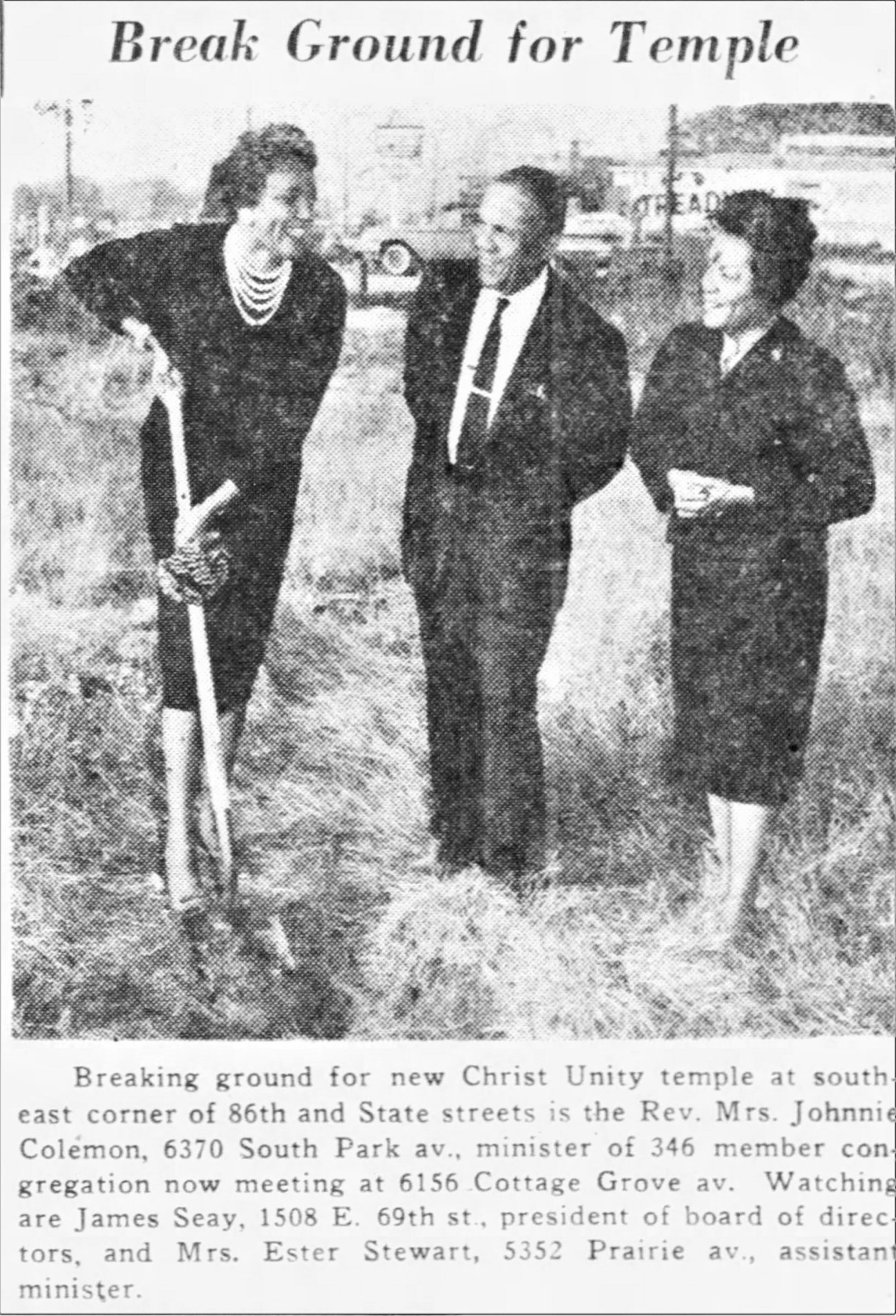
She became an ordained Unity minister in 1956, the first African American woman to do so. Returning to Chicago, she started her own church. In 1968, she was elected the first black president of the Association of Unity Churches. This prompted some churches to quit. In 1974, Johnnie withdrew her church from the Unity organization, in part due to the systemic racism and also because her philosophies were developing in other directions.
At that time, she renamed her church Christ Universal Temple (CUT). She also formed her own organization of churches, the Universal Foundation for Better Living, that grew to twenty member churches internationally.
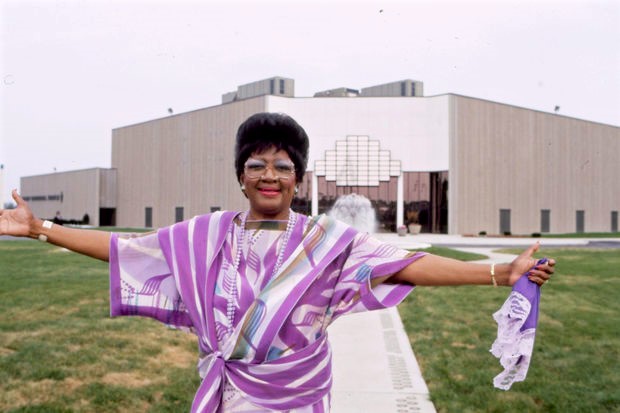
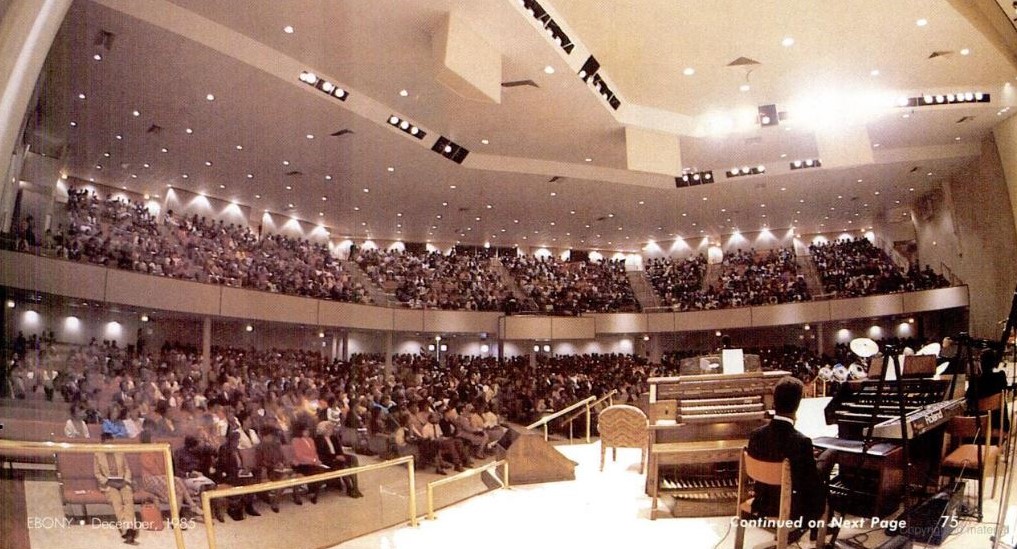
Her influence spread. Her sermons with positive, practical, understandable messages were well-received and her congregation kept growing. By 1985, CTU had grown into a megachurch and needed a building to accommodate its size. With loans and donations, Johnnie had a new facility built at 119th Street and Ashland Avenue. This facility included a 3500-seat auditorium, a chapel, a bookstore, banquet facility, and a prayer center.
In 1999, she built a private elementary school as part of the complex, which was named the Johnnie Colemon Academy. The school did not attract the number of students needed to stay open, and beginning in 2001, the Chicago Board of Education (CBOE) rented the building for a public school.
In keeping with the separation of church and state, the current regulations for Chicago public schools forbid naming a school for a religious leader. However, this school came with a name in place as part of a campus. The rental agreement kept the name of the school, and also agreed to hire all existing teachers and staff who met Board guidelines.
In addition to her ministry, Johnnie also held civic positions. She was a director of the Chicago Port Authority and a commissioner on the Chicago Transit Authority Oversight Committee. She received too many honors and awards to list, including honorary doctorates. Mayor Harold Washington declared August 18, 1985 as Rev. Dr. Johnnie Colemon Day in Chicago and she was given the key to the city. Washington’s funeral was held at CTU in 1987. Johnnie ordained actress/singer/author Della Reese a minister in the 1980s; they became close friends. Barack Obama, then U.S. Senator, gave a Father’s Day address at CTU in 2005. For over 30 years, Johnnie owned and resided in the house at 5008 S. Greenwood Ave. in Hyde Park/Kenmore, on the same block as the Obamas.
Johnnie was widowed twice when Colemon and later her second husband died. She had no children, but people who grew up in her congregation became known as “Johnnie Colemon babies.” One famous person on this list is superstar and entrepreneur Kanye West, who lived in South Shore and attended Vanderpoel Magnet School in Beverly.
Johnnie was not without controversy. Some of her doctrines differed from traditional Christian teachings. For example, Johnnie taught that heaven and hell were not places, people created their own heaven or hell. She also was criticized because her “Better Living” philosophy encouraged material wealth, and some considered her lifestyle too lavish for a minister. Her response was that “It is God’s will that every individual on the face of this earth should live a healthy, happy, and prosperous life. God is my source of supply ….” She lived to age 94, and really, when compared to some of today’s ministers of megachurches and television ministries, her lifestyle was not that lavish. She had a car and driver, nice clothes, and a fine house in Hyde Park.
As a religious leader, a school today likely would not be named for her. But when she is considered as a person, she had the same traits that made other people, white and black, for whom schools were named, inspirational: a passion for and belief in what she was doing, determination, intelligence, and a willingness to help others. In addition, she had to combat racism and prejudice to succeed. She was a trailblazer in carving paths for other African American women to enter the ministry.