
Ridge Historical Society
Carol Flynn
School Series – Profile 2: Percy Julian
This is the second in our series on people who have schools in a Ridge community named for them.
“In a nuclear world where time is of the essence in reaching a solution to the problems of conflicts between groups, peoples, and nations, we either rededicate ourselves to the principles that, though oft unheeded, have urged us on to the “everlasting right way,” or we shall hasten the destruction of civilization.” – Dr. Percy Julian, at a conference on human relations, Highland Park, IL
Percy Lavon Julian (1899-1975) made the above statement in 1962, over 50 years ago. He might have been speaking of today.
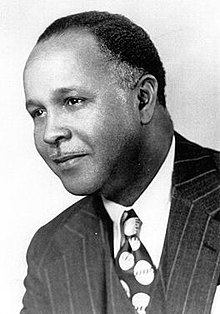
Percy Julian was a brilliant research scientist. During his lifetime, he received over 130 chemical patents. He was inducted into the National Academy of Sciences in 1973. This was a break-through – he was the first African American chemist to receive this honor.
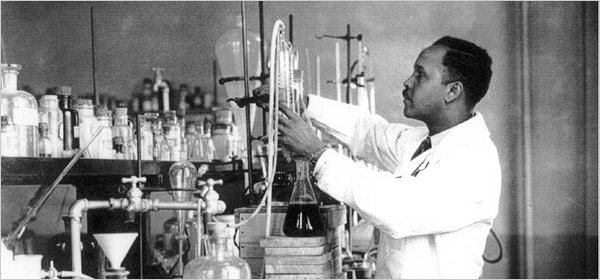
Dr. Julian was a pioneer in the chemical synthesis of medicinal drugs from plants. He worked with the Calabar bean, a poisonous legume from Africa, that offered up a treatment for glaucoma. He isolated soy protein which could be used to replace more expensive milk protein in many applications. He synthesized human hormones, progesterone, estrogen, and testosterone, from soy sterols, leading to fertility and other therapies. In 1949, researchers at Mayo Clinic showed the effectiveness of cortisone in treating rheumatoid arthritis. Julian improved the process for producing cortisone, greatly reducing costs.
Through all of this, he dealt with racism and discrimination because he was African American.
Julian was born in Montgomery, Alabama, at the turn of the last century. His grandparents were emancipated slaves; the Civil War had ended just 34 years before.
Obtaining an education was difficult. There were few opportunities for black students. He was accepted at DePauw University in Indiana, but he was not allowed to live in the dorm. The boarding house he found refused to feed him at the table with the other boarders. He went for days without food before he found a place that would serve him. He was years behind the white students academically and he took high school classes at night to catch up while attending college classes during the day. Despite all of this, he graduated first in his class and was valedictorian.
Julian yearned for a doctorate in chemistry. He received a scholarship that allowed him to earn his master’s degree at Harvard University. However, because white students objected to being taught by a black instructor, he was refused a teaching assistantship that would have allowed him to go on for a Ph.D.
He was later awarded a fellowship to the University of Vienna, Austria, and earned his Ph.D. in 1931. In Europe, he was welcomed into a social and intellectual life he was denied in the U.S. He studied classical music and poets. He attended the opera and drank wine at outdoor cafes. His status as a prized student allowed him to develop self-confidence. He made life-long friends in the European community. He helped Jewish friends escape the Holocaust and move to the U.S.
Back home in the States, employment proved difficult. He took a position teaching at Howard University, the historically black university in Washington, D.C. There he met his future wife, Anna Roselle Thompson. Anna was a scholar in her own right and would have many accomplishments in her life.
He accepted a research fellowship at DePauw, and his career as a research scientist began. However, he was denied a teaching professorship there and had to find new employment. The university told him "the time wasn't right" for a black professor. DuPont offered a job to his research partner at DePauw, who was white, but declined to hire Julian, apologizing that the company was “unaware he was a Negro.”
In 1936, he was offered a job at the Glidden Company as director of research of their soy products division in Chicago. He had contacted them previously to obtain soybean oil to use for experiments. An important factor in the job offer was that he could speak German fluently and the company had just purchased a soybean-processing plant in Germany.
Glidden was founded in 1875 as the maker of varnishes and expanded into other chemicals and pigments. The company was eventually taken over by conglomerate PPG Industries and Glidden is now the brand name of the paint division.
Julian took the job with Glidden and moved to Chicago. He stayed with Glidden until 1953. During this time, he did much of his remarkable research work.
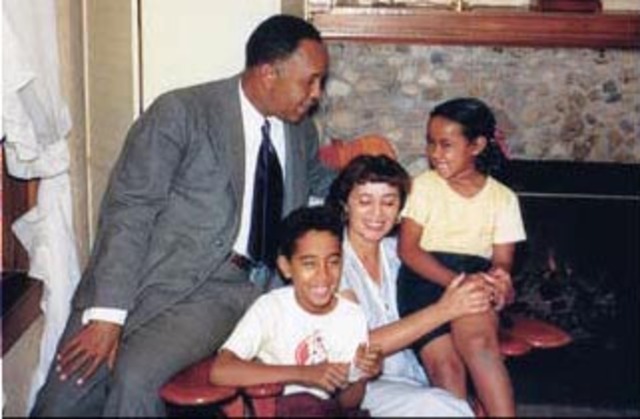
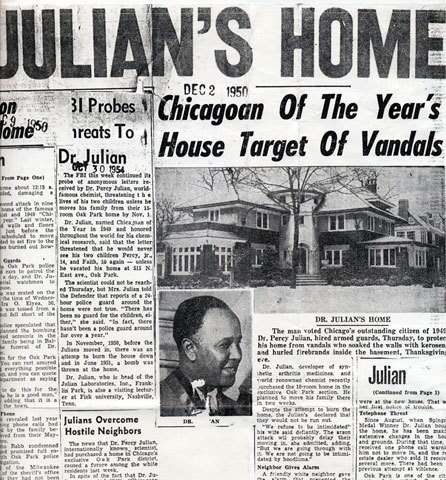
Percy Julian was named Chicagoan of the Year by the Chicago Sun-Times in 1950. That same year, Percy, Anna, and their two children were living in Maywood when they decided to move to Oak Park. There were no black residents in that suburb. They purchased a 15-room home that they were remodeling and landscaping when attempts were made to burn the house down. Someone broke in and poured gasoline all over, but the fuse did not light. The following summer, a dynamite bomb was thrown from a passing car, exploding in the flower beds in the front of the house. At the time, their children, ages 11 and 7, were at home with a caregiver and a security guard.
The police reported they could not identify any suspects for the crimes. Many white members of the community were appalled at the treatment the Julians were receiving and formed a group to support and help them. Even so, threats continued for many more years.
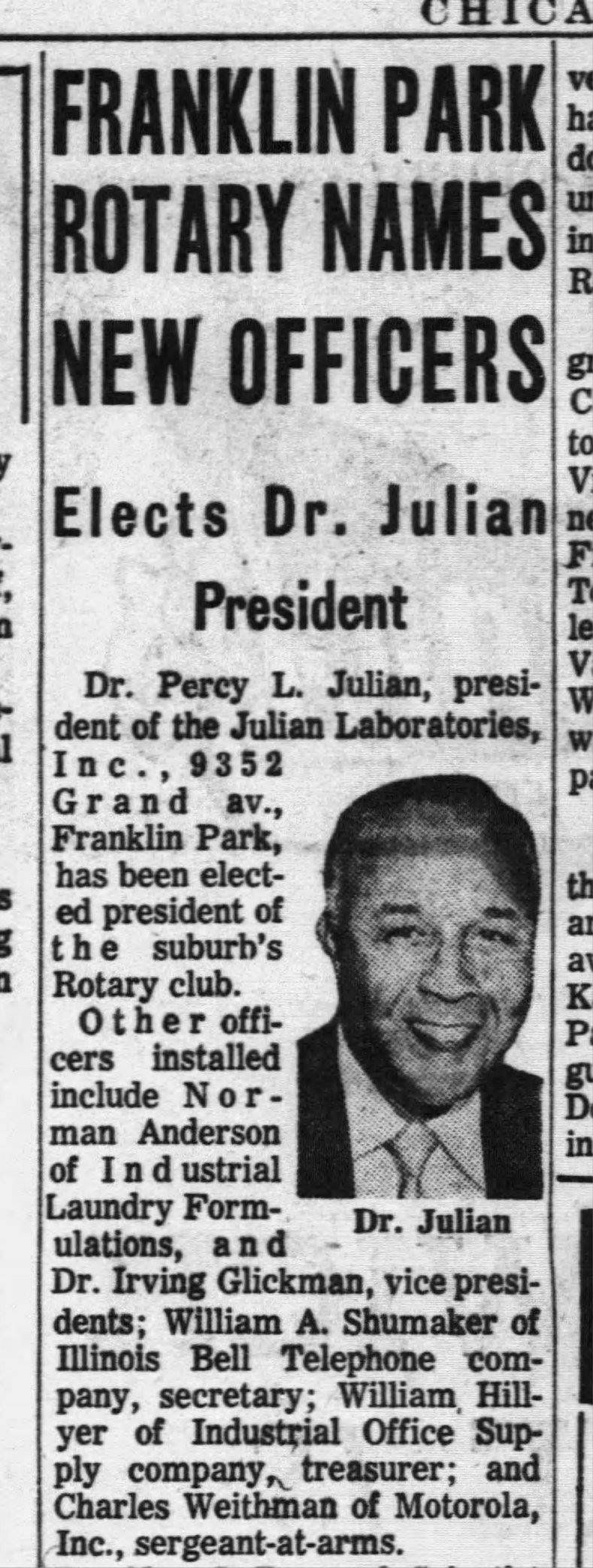
In 1953, Glidden got out of the steroid business, which, despite Julian’s innovations, was never profitable. Julian founded his own research firm, Julian Laboratories, Inc., in Franklin Park, Illinois. He continued to work on synthesizing hormones using Mexican and Guatemalan yams. Julian sold his company in 1961 to Smith Kline and Upjohn for $2.3 million.
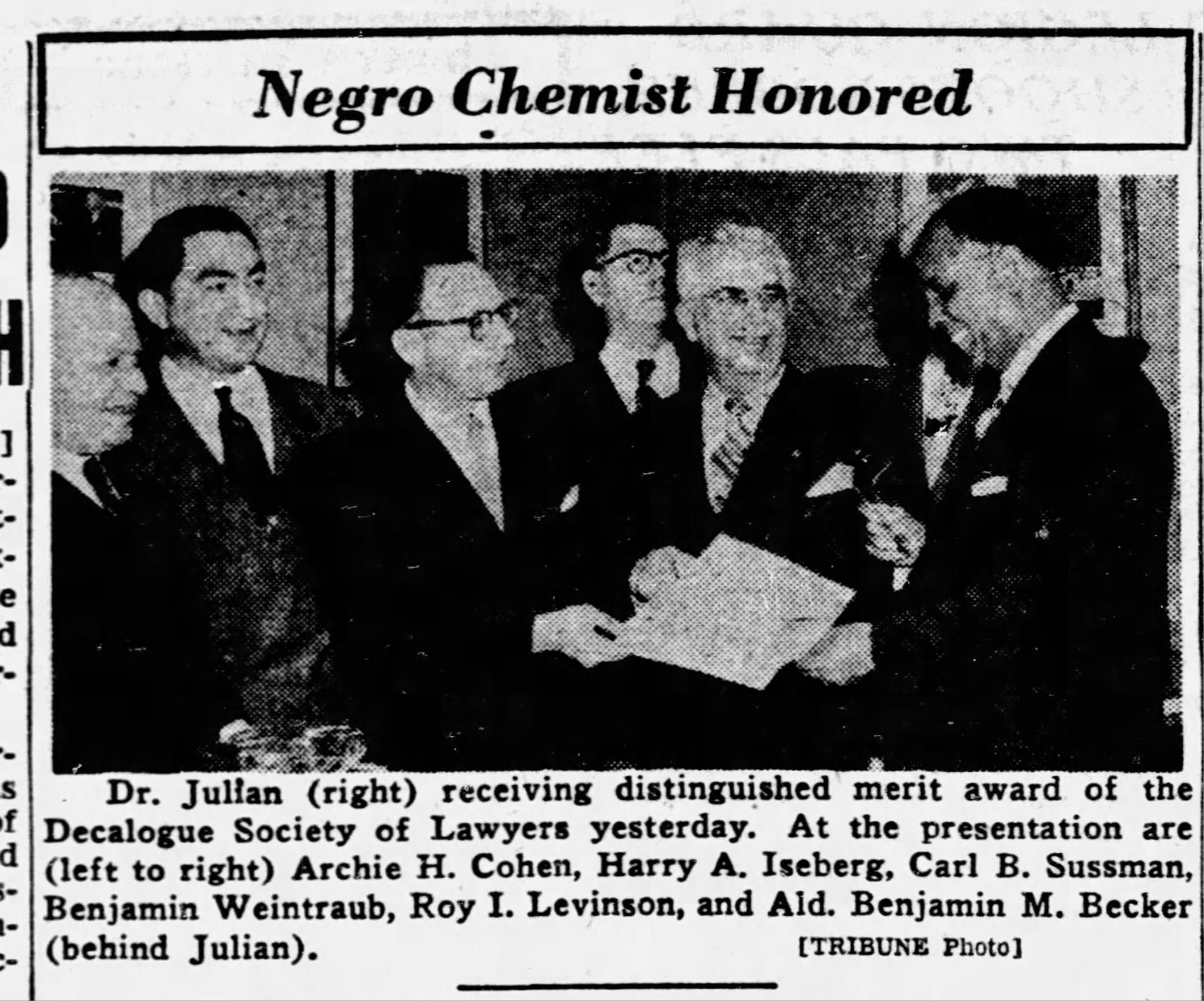
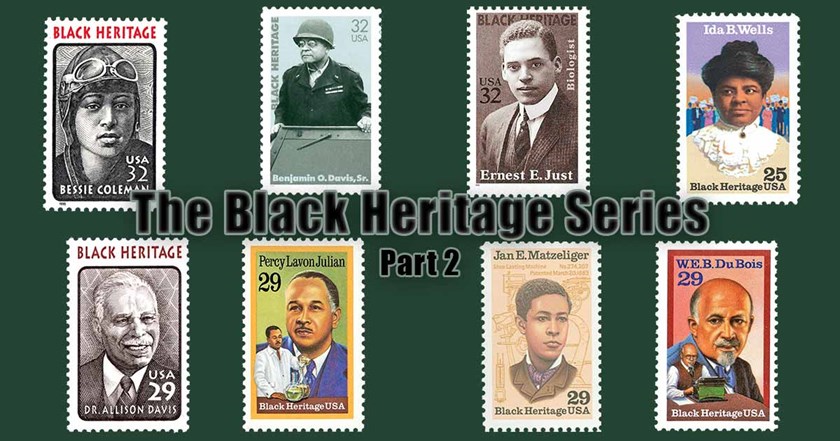
During his lifetime, Julian received awards and recognition. Some examples are included in the accompanying images. He died in April of 1975, and that fall, the Percy L. Julian High School opened at 10330 S. Elizabeth Street. Since his death, recognition has continued. In 1993, he was featured on the Black Heritage stamp, a series initiated by the U.S. Postal Service in 1978.
There is so much more information available on the life of Percy Julian. Readers are encouraged to Google his name to access the numerous websites that share his story.
After he retired, he said of his life and career, “I feel that my own good country robbed me of the chance for some of the great experiences that I would have liked to live through. Instead, I took a job where I could get one and tried to make the best of it. I have been, perhaps, a good chemist, but not the chemist that I dreamed of being.”
Despite the burden of racial discrimination, Percy Julian achieved great things – by any standards, he was much more than just a “good” chemist. Chemistry was the break-through “technology” of the early and mid-1900s. How much more might he have contributed if he had been given the chance?