The Ridge Historical Society
Black History Month: The Underground Railroad (UGRR) and the Ridge – Part 1
By Carol Flynn
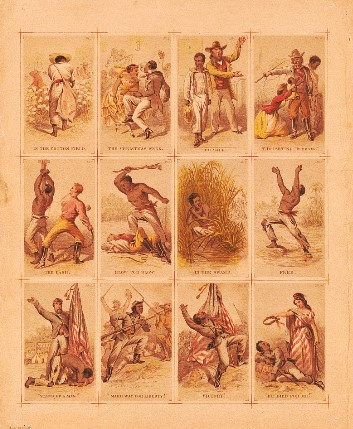
The “Underground Railroad” is the name given to the escape and flight strategies and systems that slaves used to resist bondage and gain freedom in the years leading up to the U.S. Civil War.
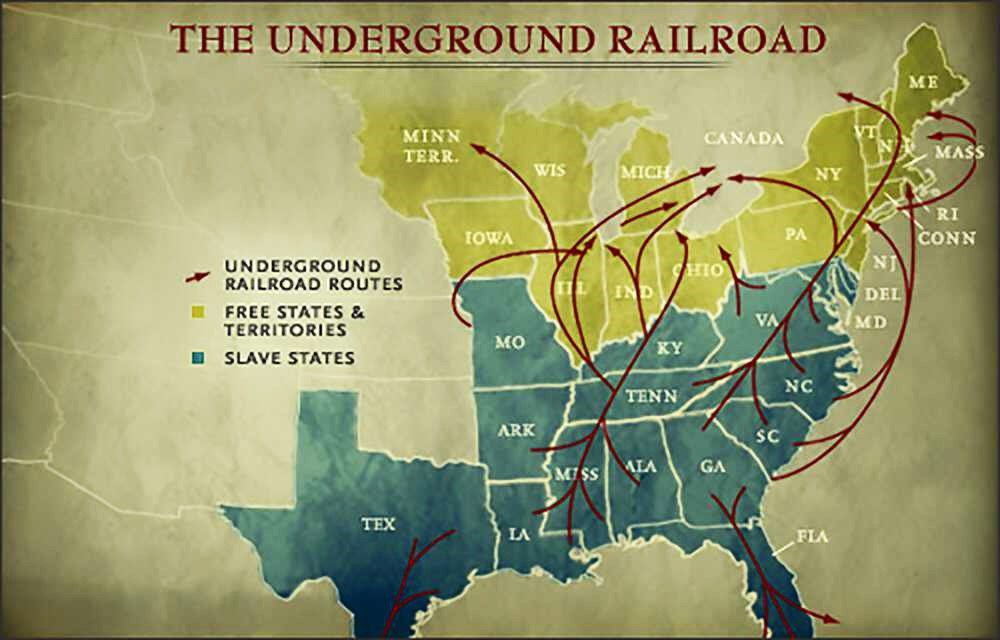
Although the name “Underground Railroad” sounds like a subway system, it was actually a complex network of routes, hiding places, safe houses, and warning techniques that slaves used in their escape to freedom to the northern states, Canada, the western territories, and south to Mexico and the Caribbean islands that were slavery-free.
There was no official leader or organization for the UGRR, and very rarely anything in writing that could be confiscated. Escape routes, places of refuge, and warnings were all passed along by word of mouth.
Most of the traveling was done at night over land and waterways. As more actual trains and tracks came into being, escaped slaves did occasionally travel secretly by train also. For example, out east, the Baltimore and Ohio Railroad, founded in 1827, was used by slaves escaping to freedom in Pennsylvania.
Terminology from the railroads was used in the UGRR, not only for the name of the movement itself, but the abolitionists (those who opposed slavery and wanted to see it abolished) who helped the escaped slaves were called “conductors,” the escaped slaves were called “passengers,” and the safe houses were called “stations” or “depots.” The owners of the safe houses were “station masters” and other people who gave money and supplies were “stockholders.”
The escaped slaves were labeled as fugitives and runaways, but today, the preferred term is “freedom seekers,” considered in retrospect as a more accurate description.
Many freedom seekers made their own way to safety, but many were aided along their way by both white and Black abolitionists. It is estimated that tens of thousands of freedom seekers used the UGRR.
The abolitionists who helped freedom seekers did so at great peril to themselves. The Fugitive Slave Act of 1850, passed by the U.S. Congress, permitted for the seizure and return of runaway slaves who escaped from one state and fled into another. Federal marshals who refused to enforce the law and individuals who helped slaves to escape were heavily penalized, with a fine of $1,000, about $40,000 in today’s value. This could cause property owners to lose their land.
UGRR stations were located in basements, barns, churches, and caves. Groups of freedom seekers established independent locations called “maroon communities” in wetlands and marshes that aided freedom seekers. “Free people of color” would disguise themselves as slaves to access plantations and guide the slaves in seeking freedom. There are documented case studies of Native Americans helping freedom seekers.
In 1998, the U.S. Congress passed the National Underground Railroad Network to Freedom Act, which President Bill Clinton signed into law. This authorizes the U. S. National Park Service to identify, preserve, and educate about UGRR sites as part of a National Underground Railroad Network to Freedom program.
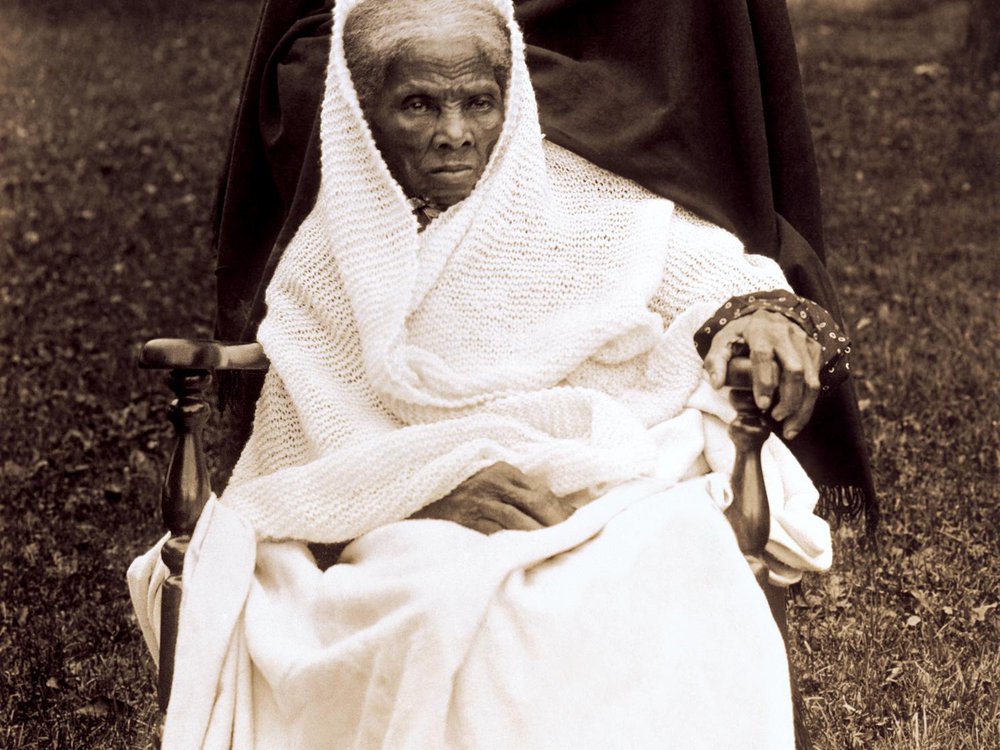
Among many historic names associated with the UGRR is Harriet Tubman (1822-1913). A freedom seeker herself, she made numerous trips back to the south through the UGRR network to rescue enslaved family members and friends. During the U.S. Civil War, she was an armed scout and spy for the Union Army. After the war, she became an ardent women’s suffragist.
Northern Illinois, the Chicago and Calumet areas, and the Blue Island Ridge all saw UGRR action in the decades leading up to the U.S. Civil War.
Professor Larry McClellan, a leading expert and author on the UGRR in Northern Illinois, and Tom Shepherd, a preservation and environmental activist, will present “Freedom Seekers and the Underground Railroad in Chicago and Northeastern Illinois” at RHS this Friday. McClellan and Shepherd are, respectively, the President and the Secretary/Project Director for the Little Calumet River Underground Railroad Project. The program is sold out.
In the next few posts, RHS will present information on UGRR sites in the south Chicago area, including informal sites connected to the Blue Island Ridge.