
The Ridge Historical Society
The Great Chicago Fire and the Ridge
By Carol Flynn
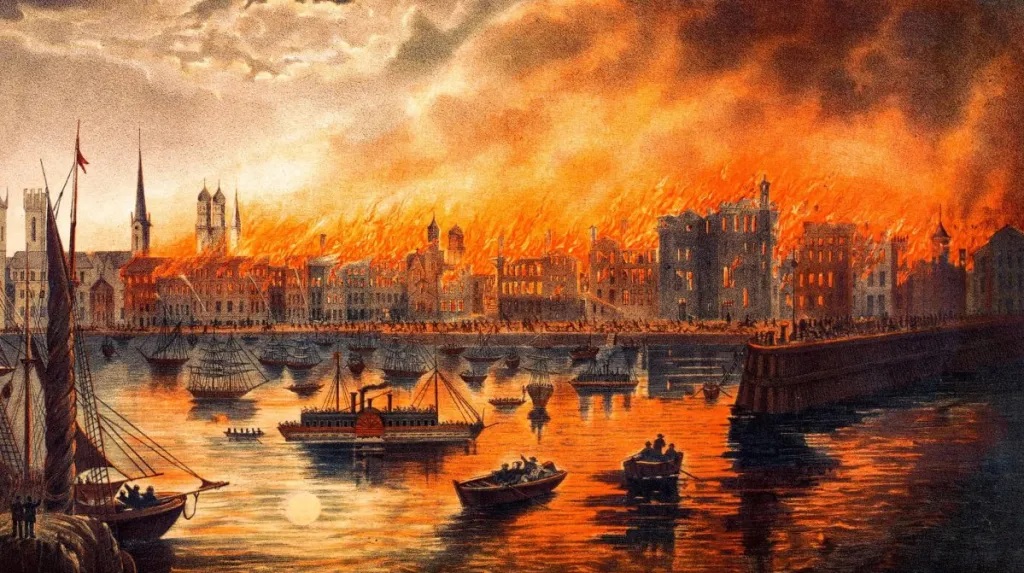
Today, October 8, is the anniversary of the beginning of the Great Chicago Fire in 1871. The fire burned until October 10 when rain finally squelched the flames.
The Great Chicago Fire had a profound effect on all the areas around the city, and the Blue Island Ridge was no exception.
In 1871, the Blue Island was still a distant suburb from the City of Chicago, and development was in the early stages.
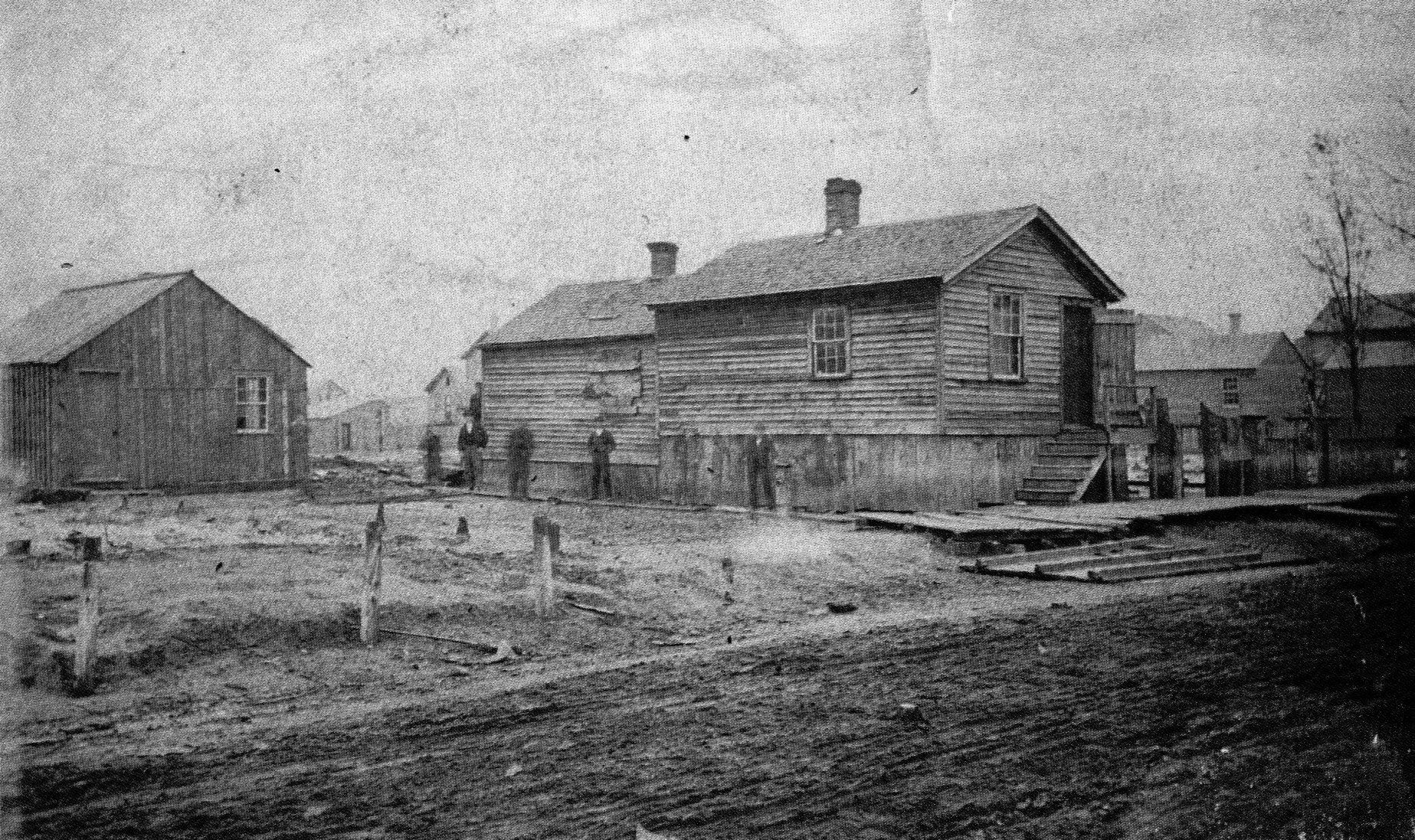
A large part of the Morgan estate had been bought by a group of investors known as the Blue Island Land and Building Co. (BILBCo) in 1868 – 69. These men were also owners and investors in the railroads, and in 1870 had expanded the commuter railroad line west along today’s 99th Street, creating the Rock Island line, today’s Metra. This made the area much more accessible.
North of 107th Street was known as Washington Heights and plots of land were being sold. BILBCO was planning a new village south of that to be called Morgan Park.
On that October 8th night, the tip of the Ridge in today’s Dan Ryan Woods at 87th Street and Western Avenue offered a one-of-a-kind vantage point for the local residents to watch the vivid colors of the fire lighting up the northeast sky.
Jack Simmerling, the late artist who grew up on the Ridge, remembered his grandmother telling him how she watched the fire while sitting on the stoop of their family’s house on Vincennes Avenue.
Another story related to a man named Michael Smith, who came to Chicago after the U.S. Civil War and entered the hotel business, owning the National Hotel at Wells and Randolph. In 1869, he divested himself of those interests, purchased 40 acres of land just northwest of today’s 111th Street and Western Avenue, moved to the Ridge and started an orchard of apple and pear trees.
In 1871, Mr. Smith watched the sky over Chicago as all his former holdings went up in flames.
The biggest effect of the fire occurred after the fire, as people left their old neighborhoods and started to move to the suburbs. This led to a major building boom for idyllic places like the Blue Island Ridge.
The Barnard family first came to the Ridge in 1844. At the time of the fire, some of the family was living on Ontario Street, and were forced to flee, throwing their possessions out of windows and grabbing what they could as they ran down the street.
They escaped to the Ridge, and built a new home at the northeast corner of 103rd and Longwood, where the CVS is now, and the flower seed farm they started joined their other holdings in the area.
One unfortunate outcome of the fire was the destruction of loads of records and archives. The Morgan family lost all of their belongings stored in the city.
Right after the fire, pioneer families formed the Old Settlers’ Society, which started to recreate records of the past. People connected to the Ridge participated in this effort.
Out of the ashes of the Great Chicago Fire grew a new Chicago, one of “skyscrapers” and exciting new architecture. Many of the influential men from this period became connected to the Ridge.
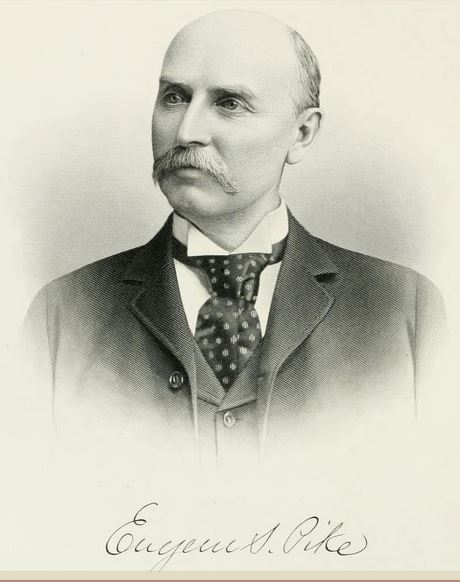
Just one example was Eugene S. Pike, the real estate developer who built major new buildings downtown. His primary residence was on Prairie Avenue, and he bought land in North Beverly for development. Some of the land he kept for himself, where he grew nursery plants for landscaping, and that land became part of the Forest Preserve District of Cook County.
The gardener’s cottage Pike had built there, designed by architect Harry Hale Waterman, is today’s Eugene S. Pike House, undergoing restoration into a community cultural center.
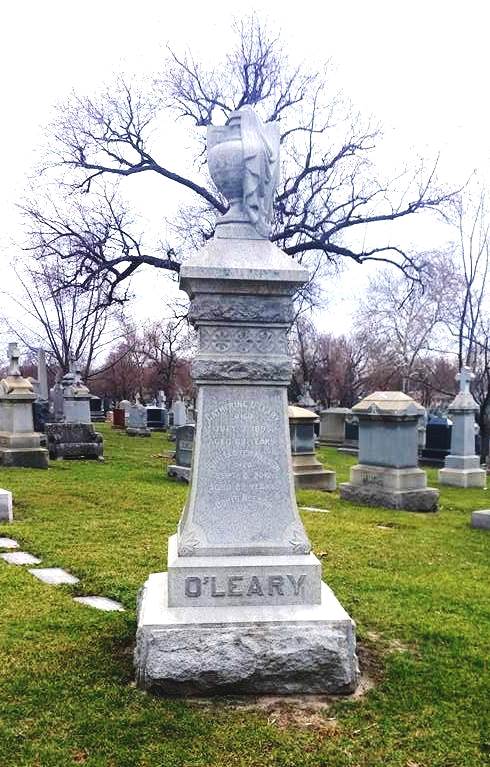
Of course, today, the most famous connection of the Ridge to the Great Chicago Fire is the gravesite of Mrs. Catherine O’Leary in Mount Olivet Cemetery on 111th Street.
Chicago folklore for years claimed that the fire originated from Mrs. O’Leary’s cow kicking over a lantern. Years later, newspaper reporters admitted they made that up.
Although the fire did start in the O’Leary barn, the cows were settled for the night and Mrs. O'Leary was in bed nursing an injured ankle at the time.
The exact cause of the fire was never determined. Theories included a stray spark from men smoking in the alley; the neighbors going into the barn with a lantern to get milk for “oyster stew,” an alcoholic punch they were making for a party; and even arson from a milk business competitor. Other theories included spontaneous combustion and a comet flying through the cosmos.
Big Jim O'Leary, the son, became a famous Chicago gambler. The people loved him – he was honest; he always paid off the bets people made at his (illegal) establishments. He was involved in gambling operations along 111th Street in the early days of Mt. Greenwood.
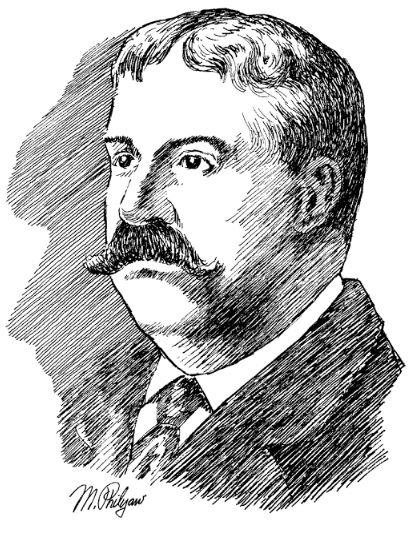
Big Jim was the nemesis of the famous Irish police chief, Francis O’Neill. Big Jim bought the grave sites in Mt Olivet and is buried there with his parents, right down the way from the mausoleum of Chief O’Neill.
Thanks to Linda Lamberty, past RHS Historian, for some of this information.