
The history of Dan Ryan Woods – Part 10: More on the 1920s
By Carol Flynn
Throughout the 1920s, the newspapers carried hundreds of stories about the Dan Ryan Woods (DRW). Community groups did their part to make the woods an interesting place to visit.
The Beverly Hills Woman’s Club (formerly the Ridge Woman’s Club) adopted the train stations along the Rock Island line (now the Metra line) and the 91st Street entrance to the DRW and spent four years landscaping and beautifying the sites. The Club raised the funds for the materials and the labor was furnished by the railroad company.
The Club worked with the Cook County Board to establish a bird sanctuary at the edge of the forest preserve around 91st Street and Winchester Avenue. The sanctuary included fifty bird houses of all sizes and types built by local Boy Scouts and their fathers. The Club planned a banquet for the Scouts at which awards would be given for best and most unique houses.
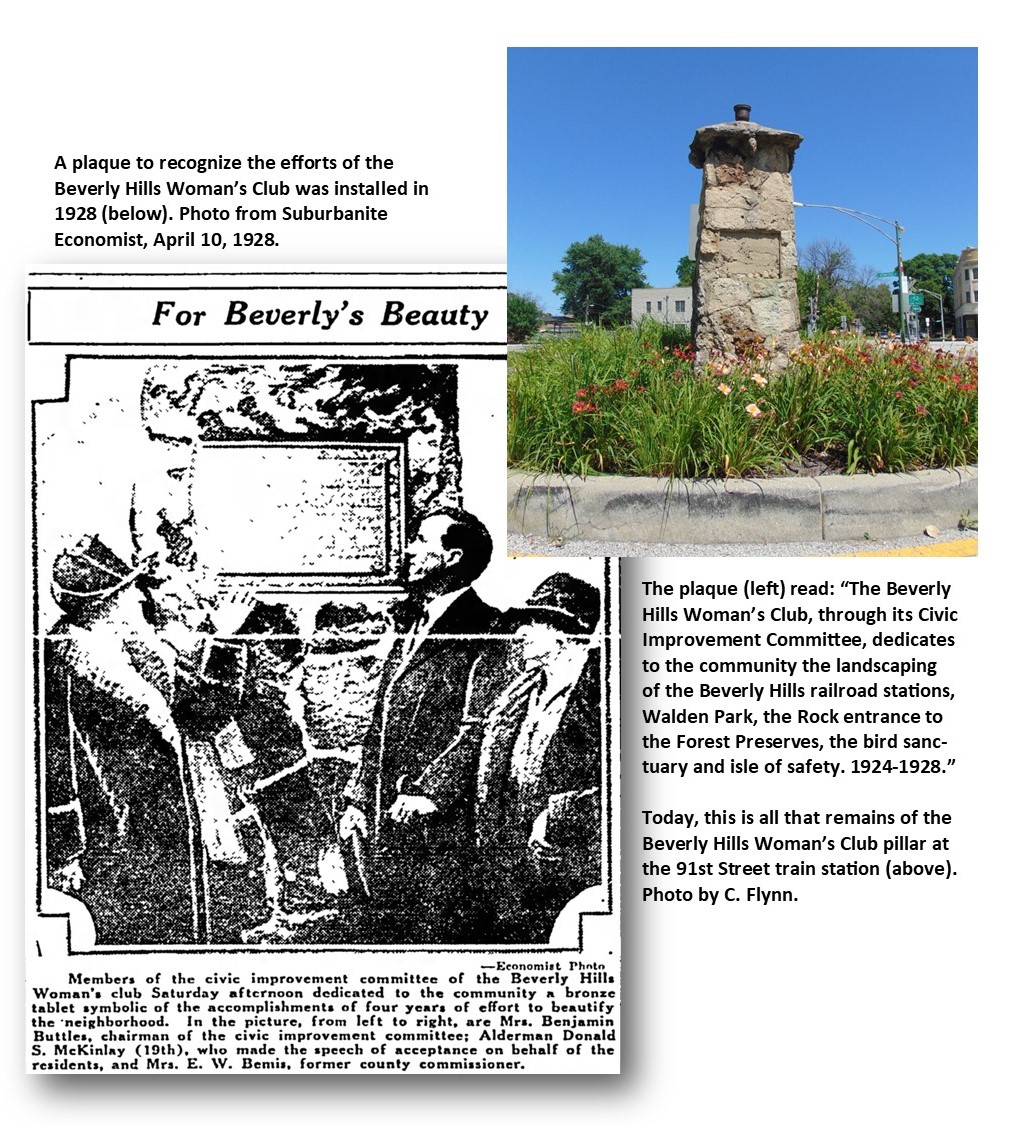
On a snowy day in April of 1928, a dedication ceremony for a bronze plaque in a stone pillar installed in a “safety isle” near the 91st Street train station took place, attended by members of the Club and county and city officials. The plaque read: “The Beverly Hills Woman’s Club, through its Civic Improvement Committee, dedicates to the community the landscaping of the Beverly Hills railroad stations, Walden Park, the Rock entrance to the Forest Preserves, the bird sanctuary and isle of safety. 1924-1928.”
The plaque is long gone and all that remains is the decaying stone pillar.
Among the first employees to be hired for the preserve system were rangers, and a set of ordinances for the preserves was established in 1918.
In August of 1927, the Suburban Economist newspaper reported that “picnickers and lovers of the forest preserves will find a welcome protection from tramps and other undesirables in the establishment of the forest preserve police stations” at several locations, including DRW.
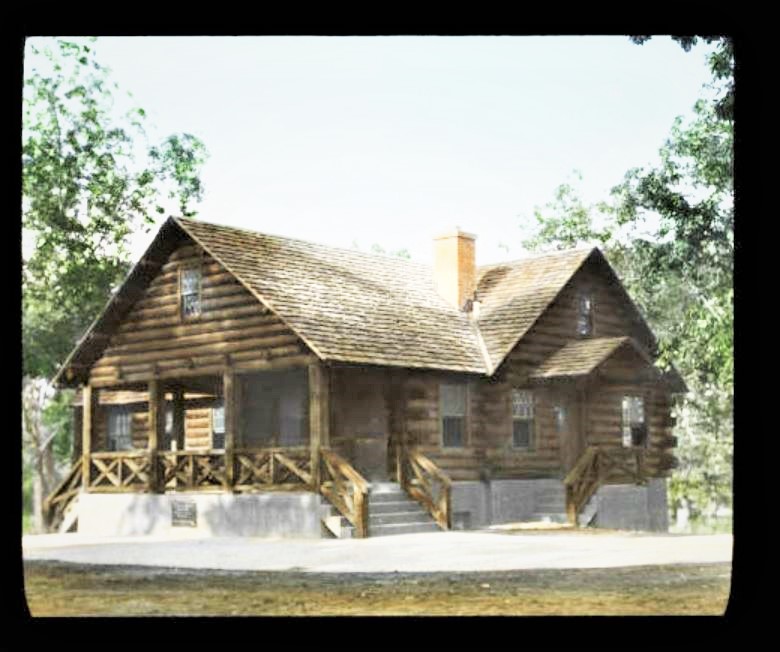
Under the supervision of Sergeant Arthur Woeks, six officers, including mounted and motorcycle policemen and one plainclothes man, made up the command at DRW. Their headquarters, which also doubled as a Red Cross station when large gatherings were scheduled, was set up in the reconditioned log cabin, the former shelter for campers, and telephone service was installed. There was no holding cell; anyone arrested would be taken to the Gresham station. The article reported that “the forest preserve cops” would combine “ranger duties” with their police beat.
Ranger duties included enforcement of the Forest Preserves of Cook County (FPCC) ordinances, as well as conservation and education. Directing campers, protecting wildlife and vegetation, preventing fires, and controlling crowds, traffic and parking were routine duties.
A few incidents of violent crime were reported in the forest preserves in the 1920s. A man was robbed of his car and money at gunpoint. Couples parked for “necking” were occasionally robbed.
Major concerns for safety and health were mentioned more often – providing clean water for drinking and swimming; preventing the spread of brush fires from untended camp and cooking sites.
One issue was preventing the illegal use of fireworks and firearms at Fourth of July outings in the preserves. A double danger was present here – injuries and fires. Every year, dozens of people were hurt on preserve land at private parties using fireworks. Even when the fireworks display was legal and supervised, there were accidents. In 1927, at an American Legion event inside a preserve, a defective skyrocket plunged into a pile of fireworks, setting them on fire and panicking 1000 spectators. Twenty-five people were burned or trampled. The FPCC often “banned” fireworks but people still did what they wanted to do. Finally, in 1935, FPCC officially banned fireworks and spent more effort enforcing the ban.
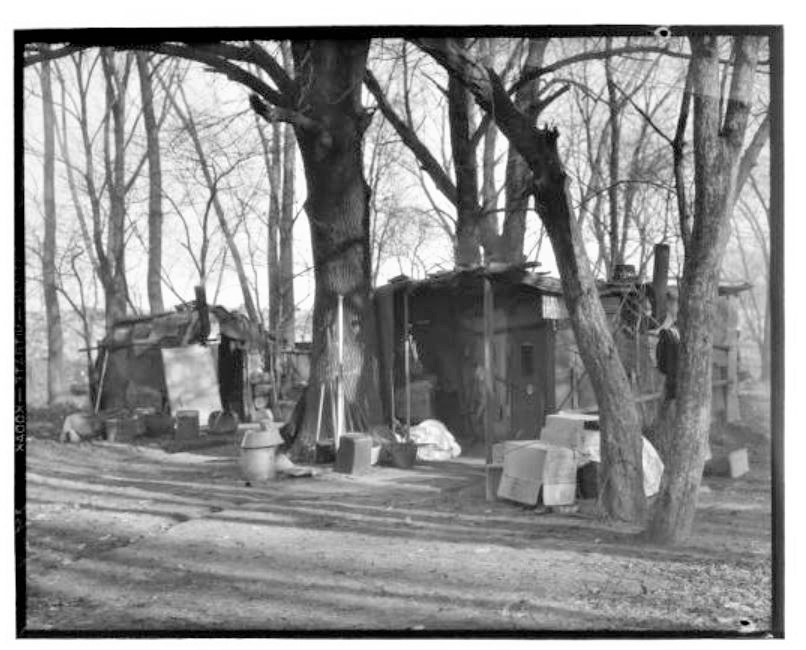
There was an occasional issue with “hobo shelters.” Homelessness was always an issue in a big city and the forest preserves offered a secluded spot for building lean-tos and setting up camps. Periodically, the FPCC would crack down and evict the squatters.
Hunting was not allowed in the preserves; they were considered refuges for wildlife, the property of the people. In the larger preserves, there were problems with poachers encroaching upon preserve territory during pheasant hunting season to take hundreds of birds illegally. In 1929, the FPCC rangers and highway police joined efforts to reduce poaching by patrolling the roads around the preserves.
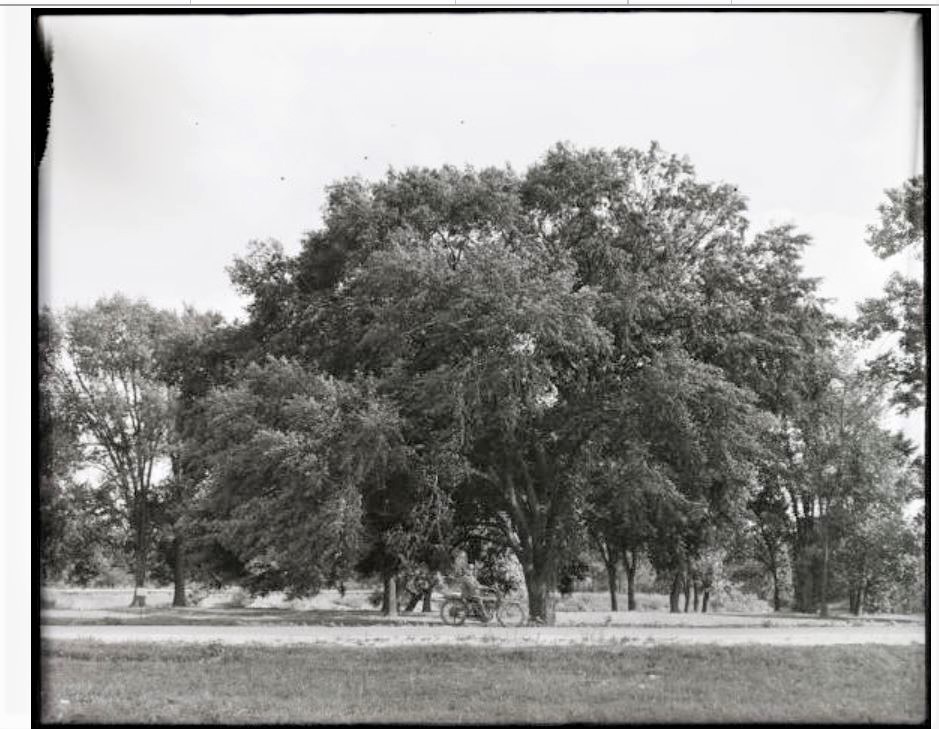
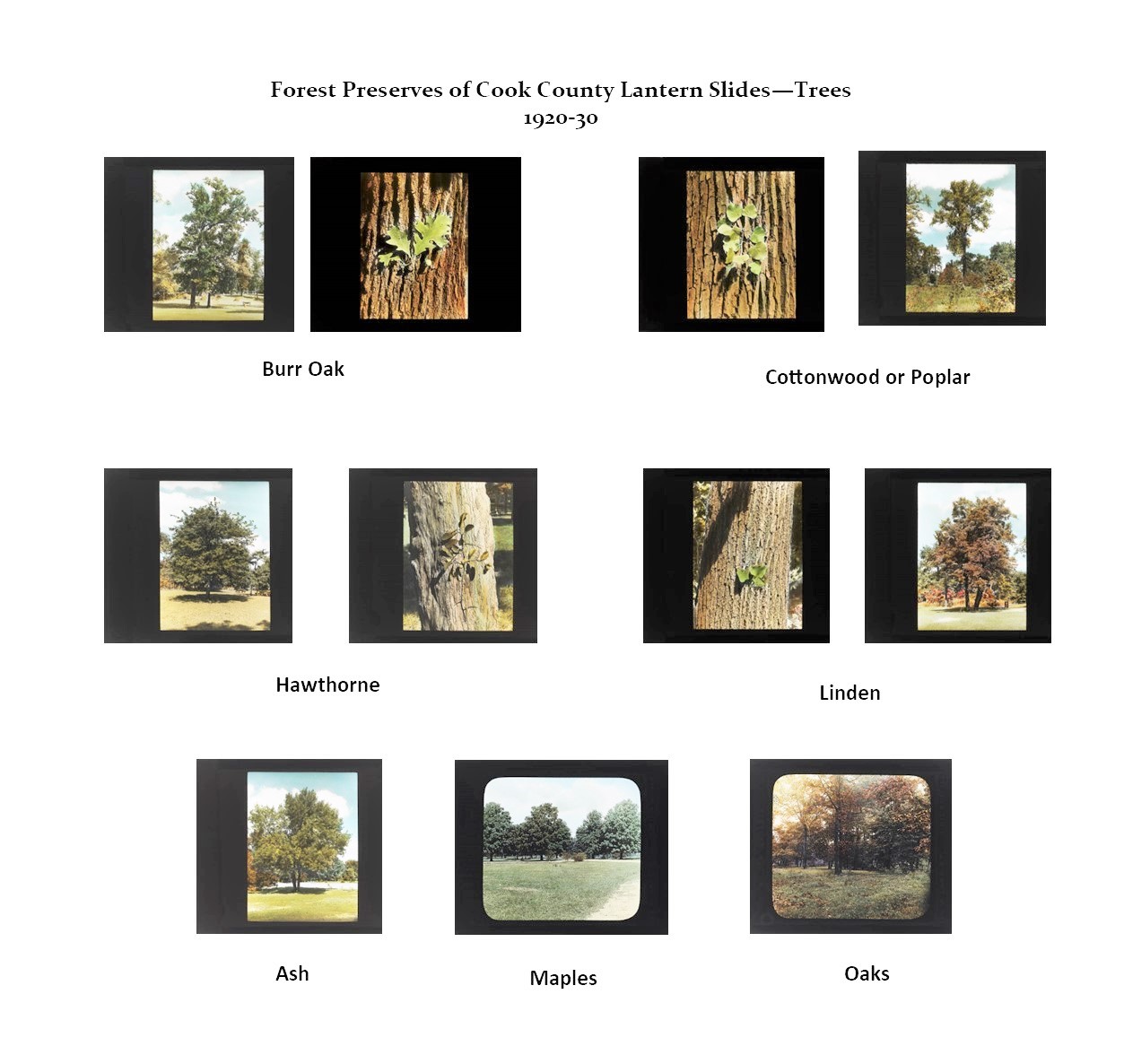
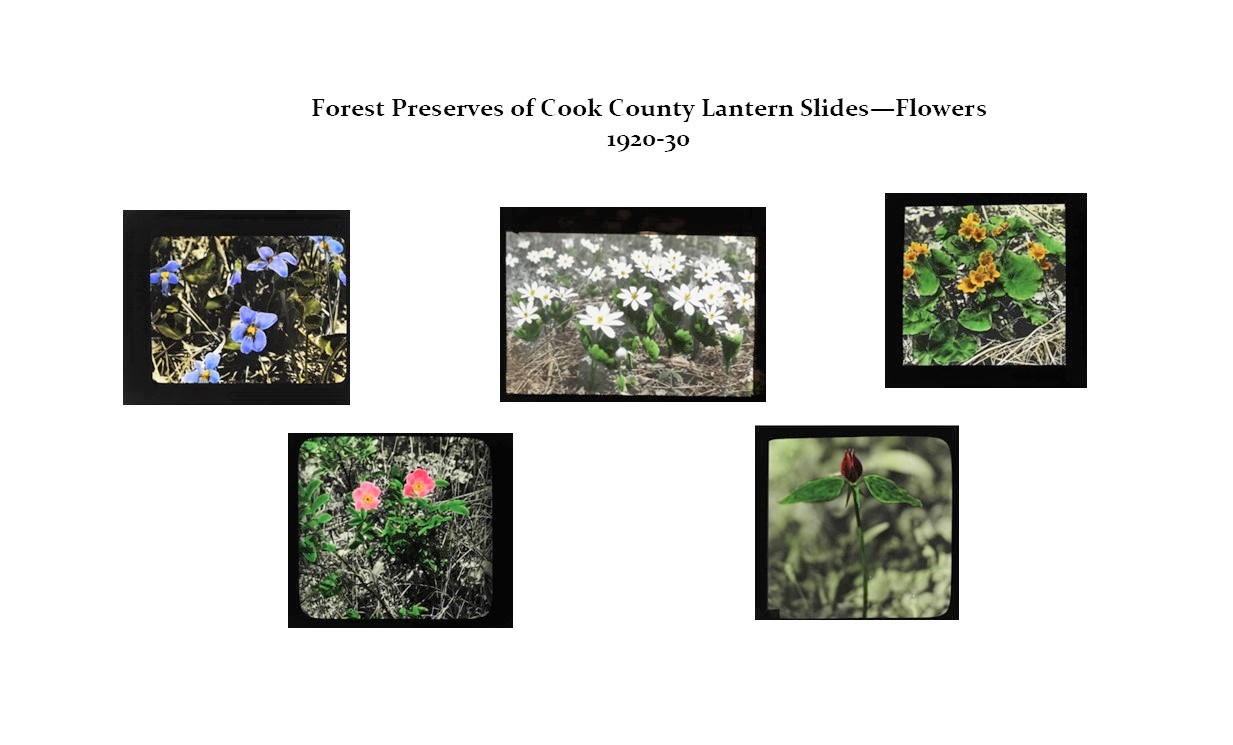
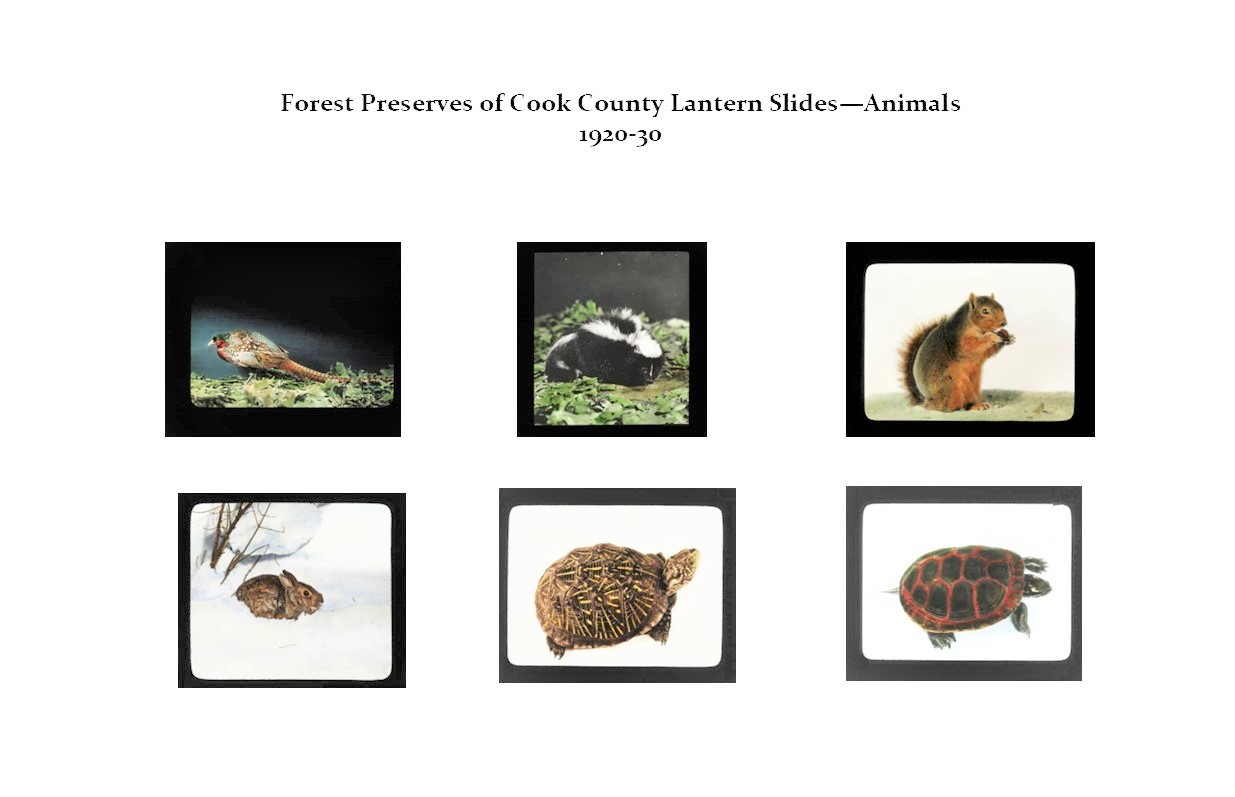
Ranger duties included education programs. During the 1920s the FPCC produced a series of hand-colored lantern slides depicting images and scenes from the preserves. “Magic lanterns” were early image projectors that used hand-painted pictures on transparent glass plates, lenses, and a light source. Many of the slides showed the flora and fauna that could be encountered in the woods – trees, flowers, and animals – and were likely used for nature programs. Some of these slides are shared here.
Next installment: A park or a preserve?