
The history of Dan Ryan Woods – Part 2: The forest preserves and Sherman Farm
By Carol Flynn
Picture Chicago as sitting in the bottom of a big shallow bowl, an ancient lake bed. The east side is cut away allowing water to flow out into Lake Michigan. The other sides of the bowl slope upward around the city. Along the sides and on the wide rim of the bowl are forested areas. These forests to the north, west and south became known as the “outer belt.”
As early as the 1860s, Chicagoans were concerned about adequate space for recreation and outdoor activities. By the 1890s, there was a growing commitment to preserve this outer belt of forested lands for recreation and aesthetic purposes. In an 1899 outer belt report, the Blue Island Ridge and its woods were mentioned as one of the areas that should be preserved “for the benefit of the public … and for their own sake and scientific value.” The uniqueness of the geology of the area was fully recognized.
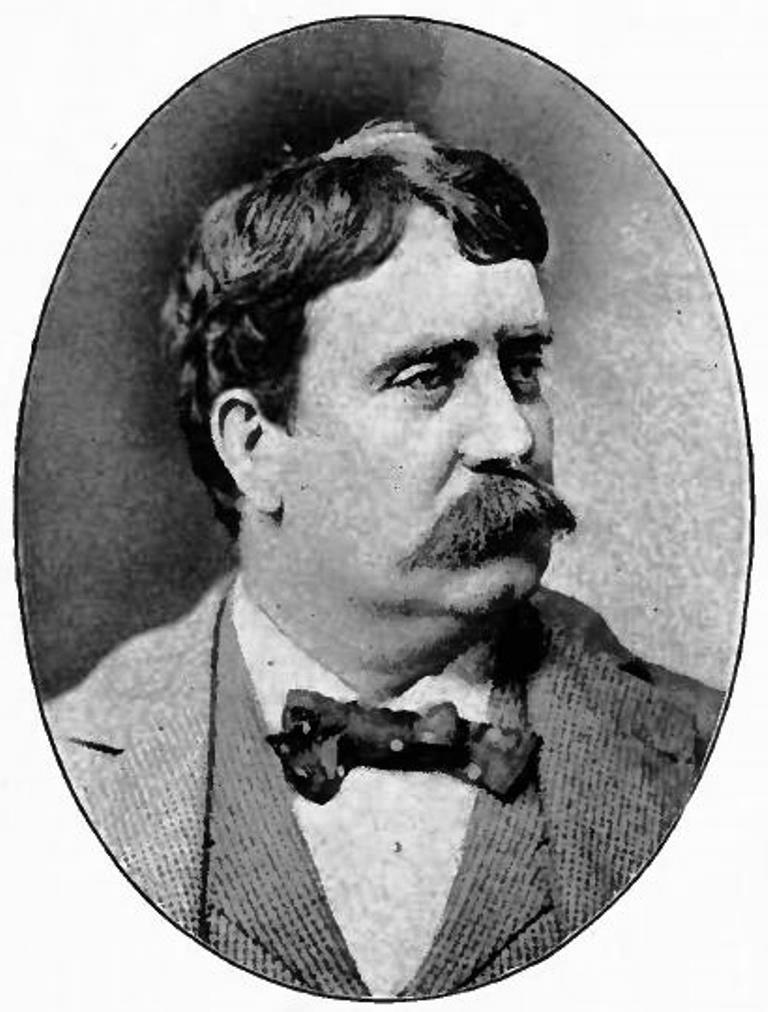
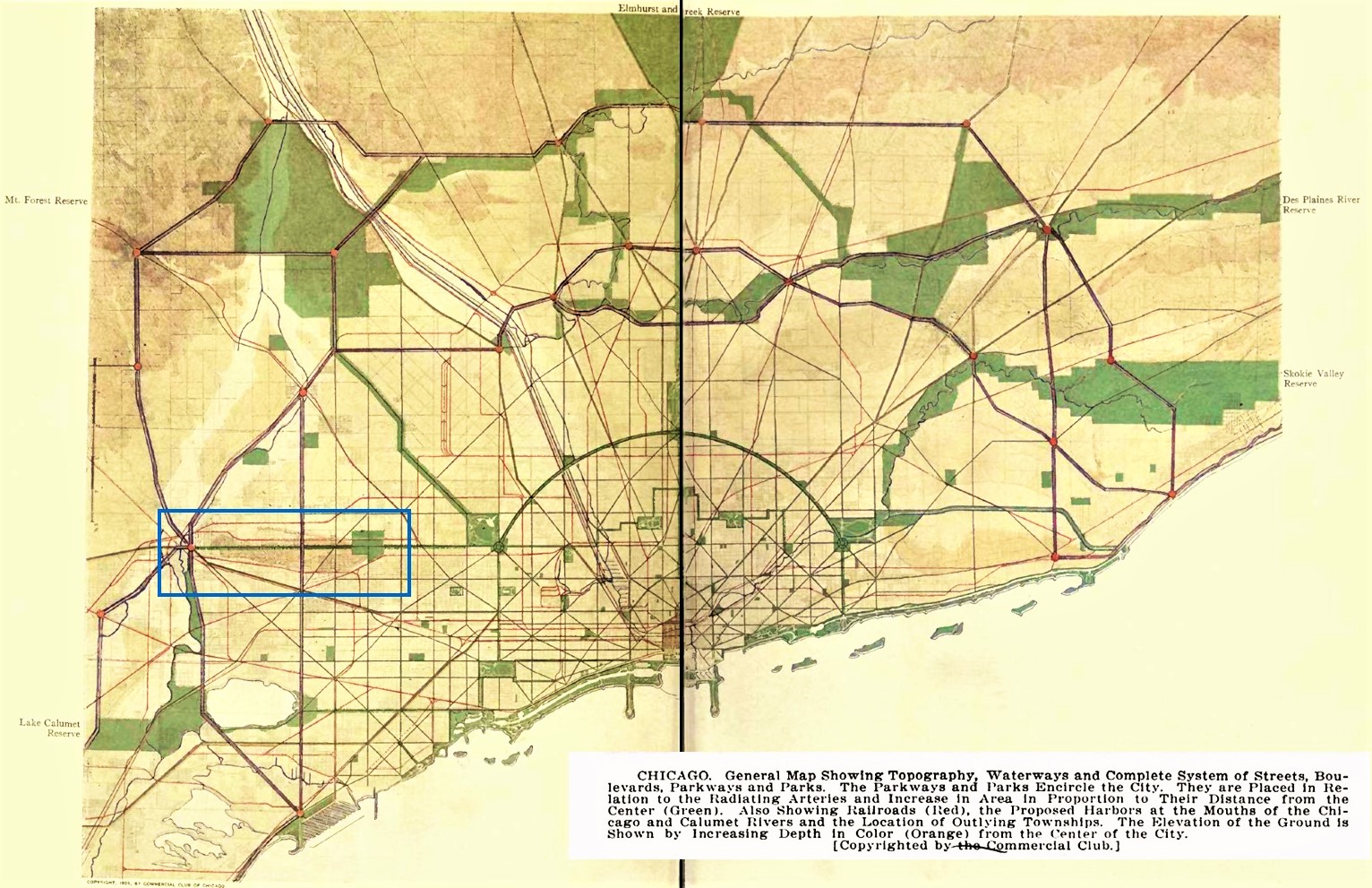
Daniel Burnham, the architect and urban planner who gave Chicago the White City at the 1893 World’s Fair, the Columbian Exposition, worked with city business, civic and government leaders to develop the 1909 Plan for Chicago. This plan called for developing the outer belt into natural preserves as next in importance to developing the lakefront into a system of parks. The plan called for connecting all the parks and preserves with a boulevard system.
Other notable leaders in the forest preserve movement included landscape architect Jens Jensen and architect Dwight D. Perkins, who is called the “father of the forest preserves.” Perkins led Saturday afternoon hiking trips that introduced thousands of Chicagoans to the outer belt. Jensen led tours of prominent politicians to win over votes in the Illinois General Assembly. Because they were accessible by public transportation, the Beverly woods were a popular destination for hikers and for artists, who set up their easels to capture the natural beauty.
The implementation of the plan was overseen by businessman Charles Wacker, who was profiled a few weeks ago because a school in a Ridge community is named for him. He was Chair of the Chicago Plan Commission from 1909 to 1926. Wacker Drive is also named for him.
In 1913, Cook County passed the Forest Preserve District Act that set the mission of the district “to acquire, restore and manage for the purpose of protecting and preserving public open space with its natural wonders, significant prairies, forests, wetlands, rivers, streams, and other landscapes with all of its associated wildlife, in a natural state for the education, pleasure and recreation of the public now and in the future.”
In 1915, the Board of Commissioners of Cook County assumed the role of Board of Forest Preserve Commissioners, an arrangement that continues today. Dan Ryan was the Finance Chair for the county, so he became the same for the preserves. Bonds were issued to raise money to purchase land, and the first tract purchased was the 500-acre Deer Grove in Palatine in 1916.
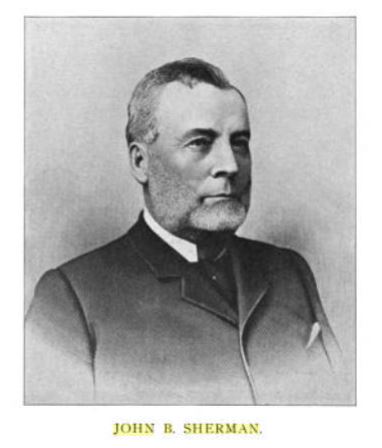
Private land, some of it already turned into farms, was reclaimed for the forest preserves. At the time Cook County purchased the Beverly Hills woods in 1917, it was owned by the estate of John B. Sherman, the founder of the Union Stock Yard and Transit Company. Sherman had purchased the land in 1872 and used it as a vast working farm that was known for decades as the “Sherman Farm at Forest Hill.” Forest Hill was the name for the area around today’s 87th Street and Western Avenue.
John Brill Sherman (1825-1902) was born in New York and grew up on a farm. In 1849, the Gold Rush led him to California where he made several thousand dollars. On his way back east, he stopped in Illinois and bought farmland. He moved to Chicago and bought up several small stockyards. He convinced the owners of other small operations to consolidate with him, and in 1965, the Union Stock Yard and Transit Company of Chicago was formed.
He was considered a friend of the common working man, establishing a minimum wage of $2 per day, roughly $55-60 today, for laborers in Lake Township where he lived and where the stockyards were located. The average daily wage at the time was about $1.30. Lake Township was not part of the city of Chicago at that time, it was a section of Cook County.
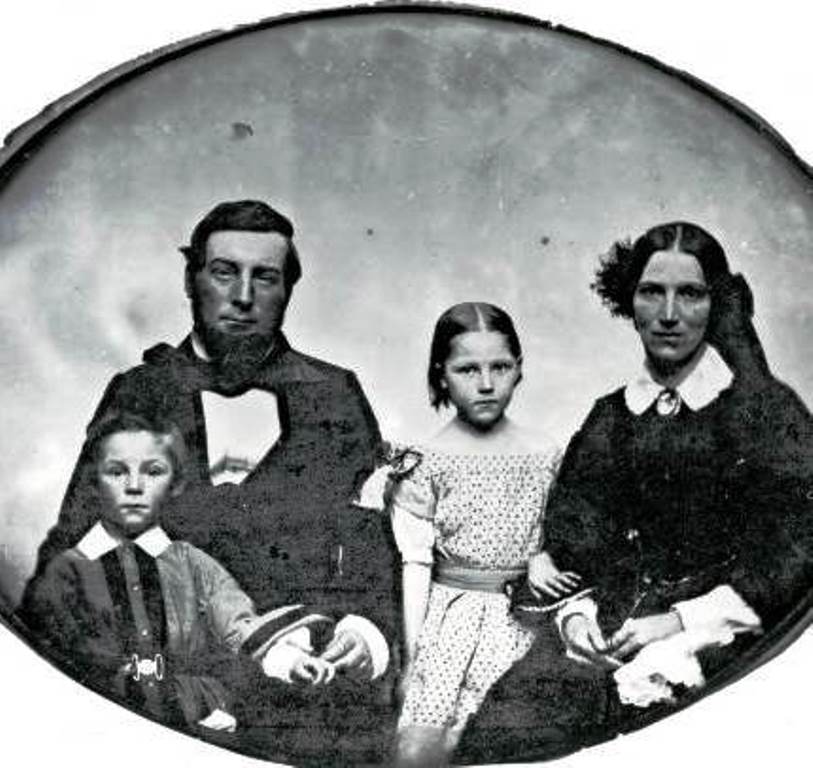
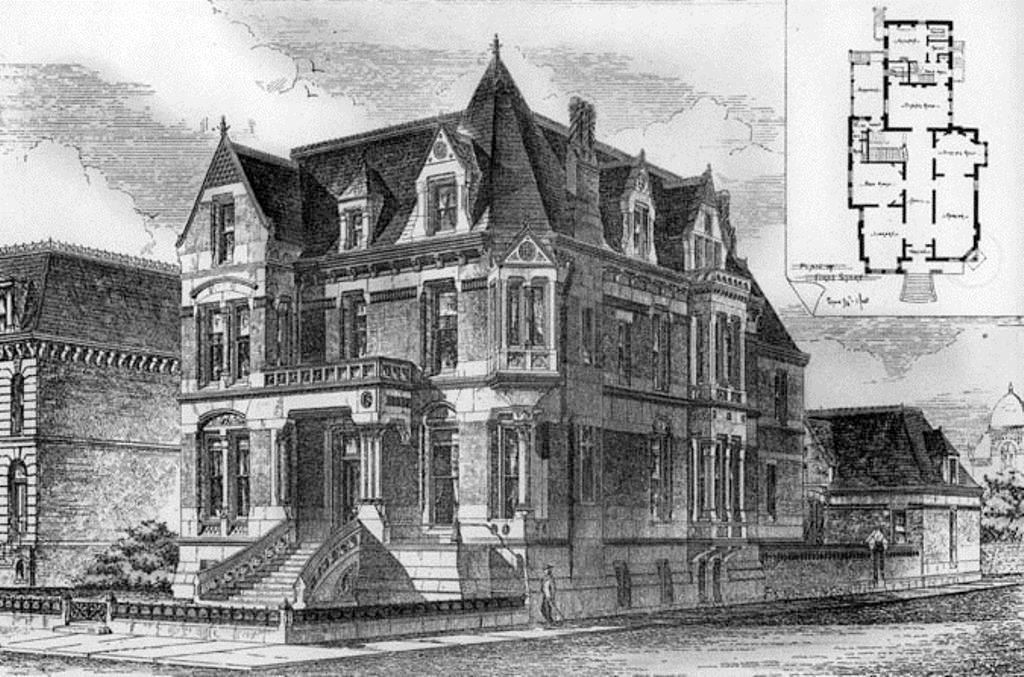
The Sherman family was living on Michigan Avenue when they decided to build a home on fashionable Prairie Avenue. In 1874, Sherman took a chance on a young architect, Daniel Burnham, and his partner, John Root. Burnham and Root designed a house for the Shermans at 2100 S. Prairie Avenue. Neighbors included Marshall Field and George Pullman.
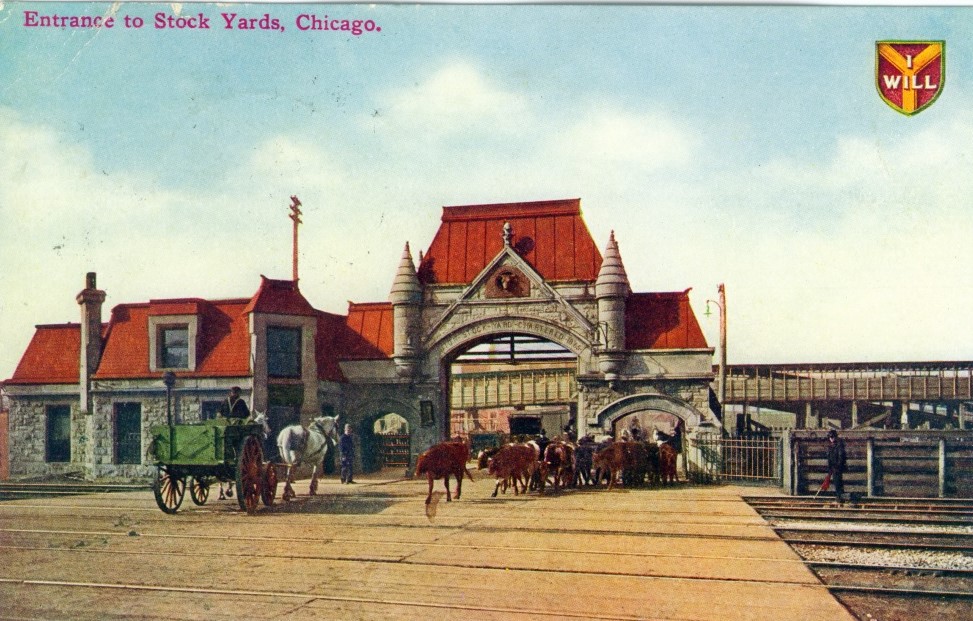
Around this time, the original gate of the Union Stock Yard, which still stands at Exchange Avenue and Peoria Street, was built. The gate is believed to have been designed by John Root and was named a National Historic Landmark in 1981.
When meeting with Burnham about the plans for the house, Sherman often called in his daughter Margaret for her opinion. Margaret and Burnham fell in love and married in 1876. Burnham moved in with his in-laws on Prairie Avenue. Later, Burnham and Margaret moved to Evanston. They had five children.
Sherman was very much opposed to the annexation of Lake Township, which also included most of Beverly, to the city of Chicago. But the residents of the township voted in favor of annexation in 1889, so the Union stockyards became part of Chicago.
Described as a “public-spirited man,” Sherman took particular interest in designing and developing the public park system. For 25 years he was a member of the South Park Commission Board and, although he declined election to other public offices, he agreed to serve as president of that board. The South Park Commission oversaw Jackson Park, Washington Park, and the Midway Plaisance. These sites were selected for the 1893 World’s Fair, and his son-in-law Burnham was selected to oversee the design and construction of the fairgrounds. (Root died from pneumonia in 1891 at the age of 41, during the planning of the Fair.)
Sherman guided the growth of the Chicago stockyards. He was recognized as the ablest manager in this industry in the world. During his lifetime, the Chicago livestock market came to be called one of the greatest wonders of the age and the greatest institution of Chicago.
He became known and respected for his efforts to improve stock. Central to this work was the 640-acre Forest Hill Farm. Sherman owned big stretches of land from 75th and Ashland Avenue west to Western Avenue and south to 95th Street. Around 87th Street, his holdings also included the land west to around California Ave. The Chicago Livestock World, a newspaper he helped found, called this the largest farm within the city of Chicago if not in Cook County.
Next installment: The particulars of the Sherman Farm at Forest Hill.