
The history of Dan Ryan Woods – Part 4: Murder comes to the Sherman Farm at Forest Hill
By Carol Flynn
John B. Sherman’s Farm, which became Dan Ryan Woods, was involved in two murder investigations in the late 1890s. Both murders occurred elsewhere in the city, but the remains of the victims were hidden on the Ridge. Apparently, the seclusion of the area made it appear a perfect spot to do this, but in both cases, the victims were recovered and the murderers brought to justice.
In February 1895, local children found the remains of murder victim Fritz Holzhueter partially buried by brushwood under a tree near 95th Street and Western Avenue. This was outside of Sherman’s property, on the Evergreen Park side of the road. An oil can used in an attempt to burn the body was found a few blocks away on Sherman’s property.
The newspapers reported that the foreman of Sherman’s Farm had seen the man accused of the murder, Nicolas Marzen, in the area the night the body was left, but the foreman was not called to testify at the trial. Marzen was found guilty of the crime and sentenced to 30 years in prison.
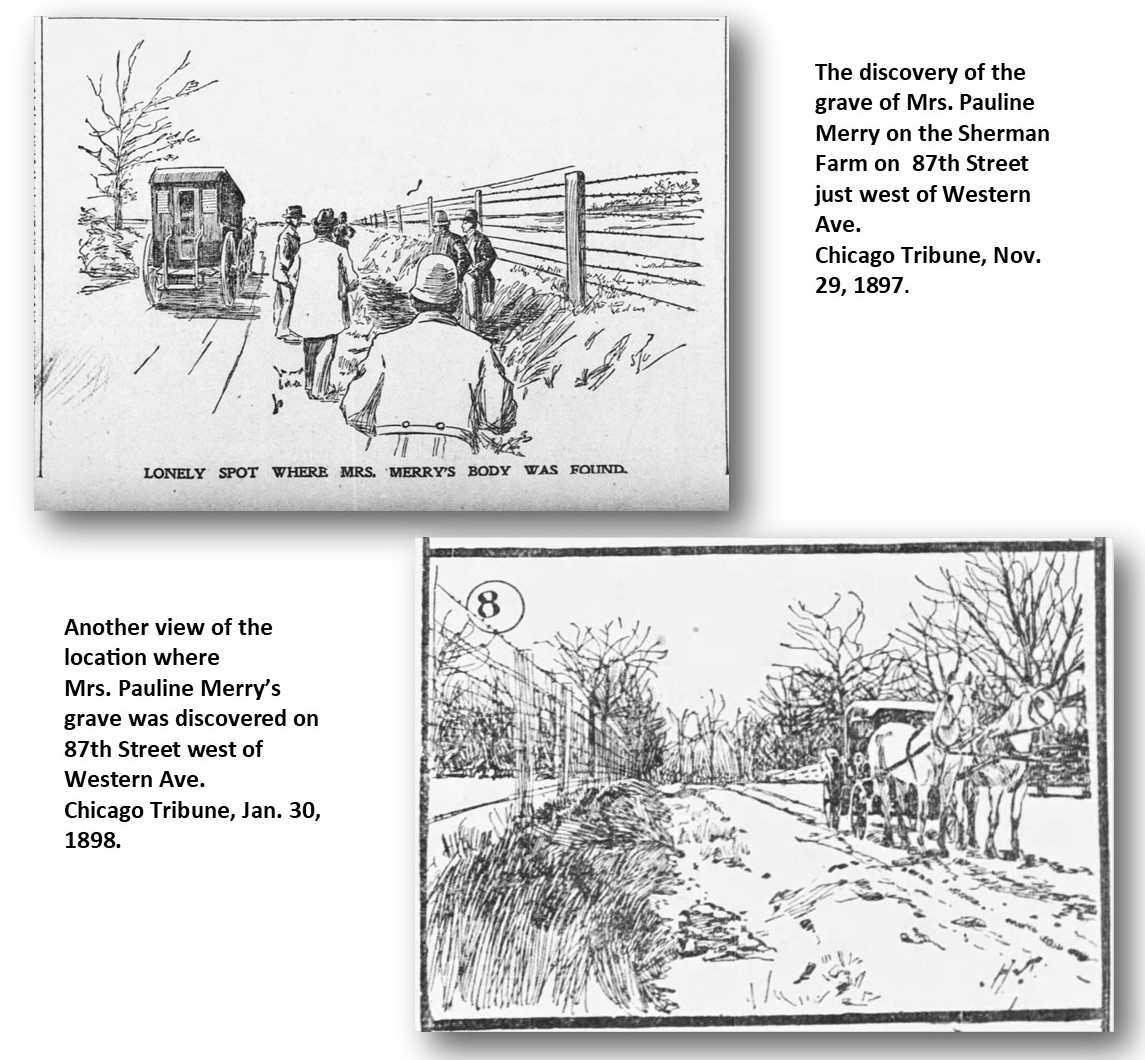
The second murder, of Mrs. Pauline Merry, took place in November 1897. An accomplice who had helped her husband, Christopher Merry, bury her body broke down under questioning and took the police to the site, a shallow grave in a ditch on the north side of 87th Street just west of Western Avenue, next to the Sherman Farm apple orchard. While the police were recovering the body, an employee of the farm came over to the site to inquire as to what was going on. He was told “to take a walk” while the police combed the area for evidence.
Christopher Merry was convicted of the crime and was hanged in April 1898.
The newspapers covered the investigations and trials of both murders in great detail. As with most stories of this nature, this was sensational news. Although the crimes were committed in other parts of the city, attention was given to the places on the Ridge where the victims were found. The Chicago Tribune gave several descriptions of the sites at the time of these incidents.
The area along Western Avenue was isolated, still mostly farmland with few houses. Ninety-fifth Street and Western Avenue was described as a “desolate” area with dirt roads bordered by broad ditches with “trees and brushwood everywhere.” There were only two houses close by. One was the summer residence of Dr. John Kellogg and his family, which included Kate Starr Kellogg, the educator for whom the school in North Beverly is named, and her sister, artist Alice Kellogg.
The other residence, at 93rd Street, housed Mrs. Marie Zeder, a widow who kept a roadhouse, and her family. It was two of the Zeder children who discovered Holzhueter’s body hidden behind a hillock covered with a dense cluster of trees.
Likewise with the 87th Street location, there were only two houses near the site. Both were on the Sherman Farm, used as residences for the foreman and his assistants.
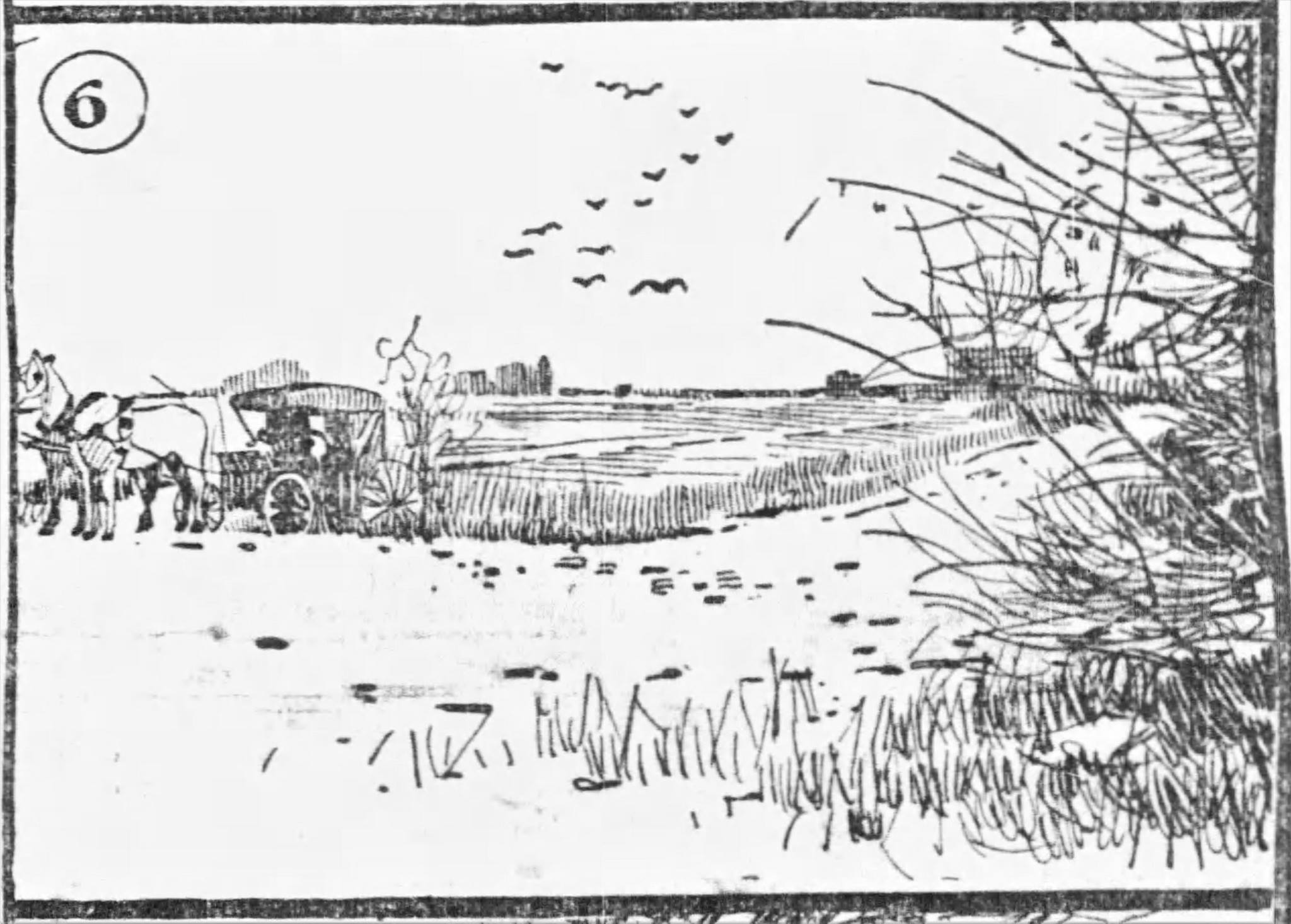
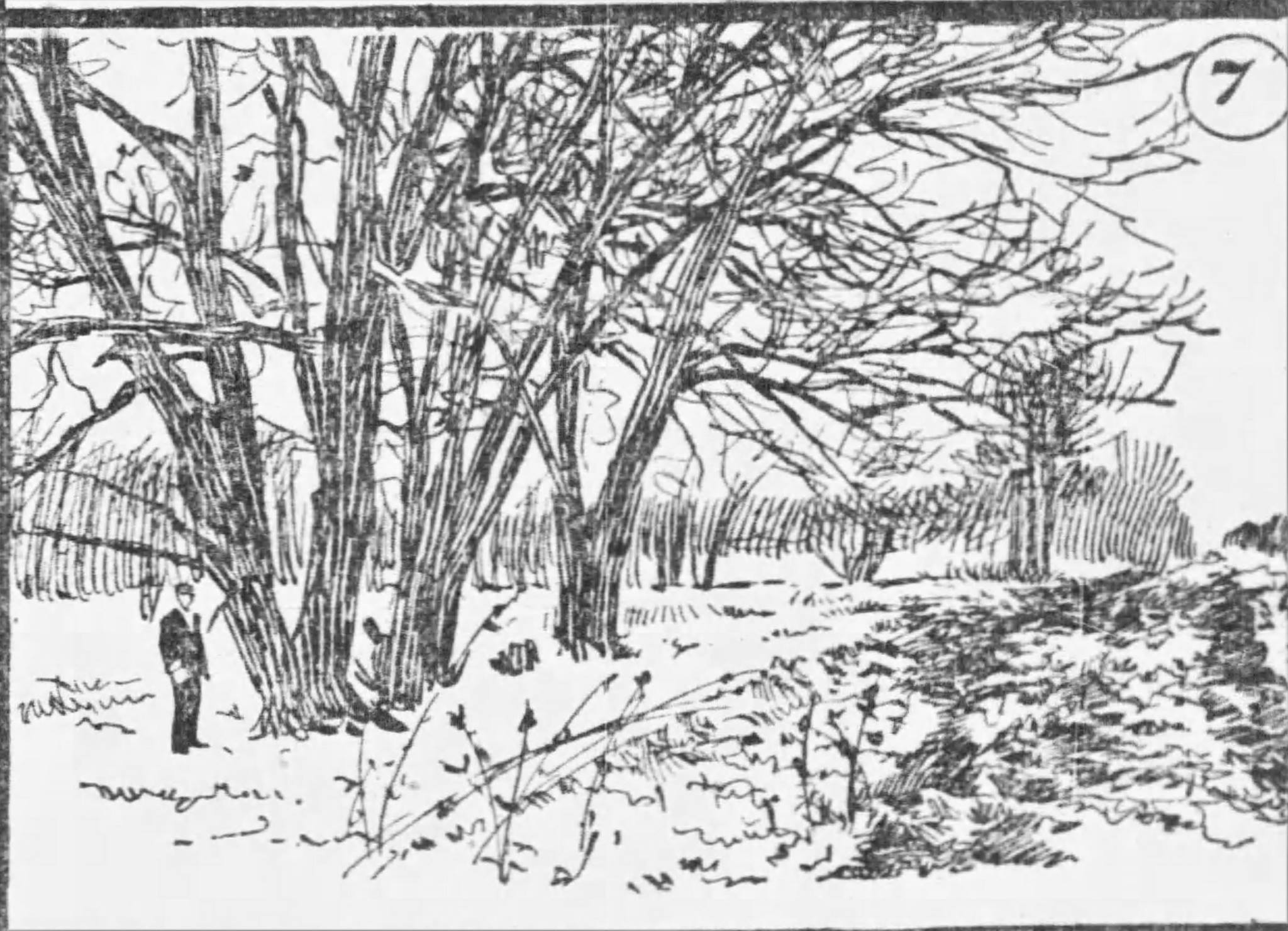
The Chicago Tribune gave several descriptions of that area in November, 1897: “As the [Western Ave] roadway ascends the sharp incline to the top of Forest Hill [at 87th Street], it passes under the broad boughs of the giant trees of that point, reaching the top of Forest Hill with its great spreading trees, and in this season of the year, presenting a weird and desolate appearance.”
The Tribune also reported that the trees, “relics of the primeval forest,” cast a heavy shade on Western Avenue and 87th Street. Deep trenches ran along the sides of 87th Street, which was a rural dirt road, scarred with furrows from wagon wheels.
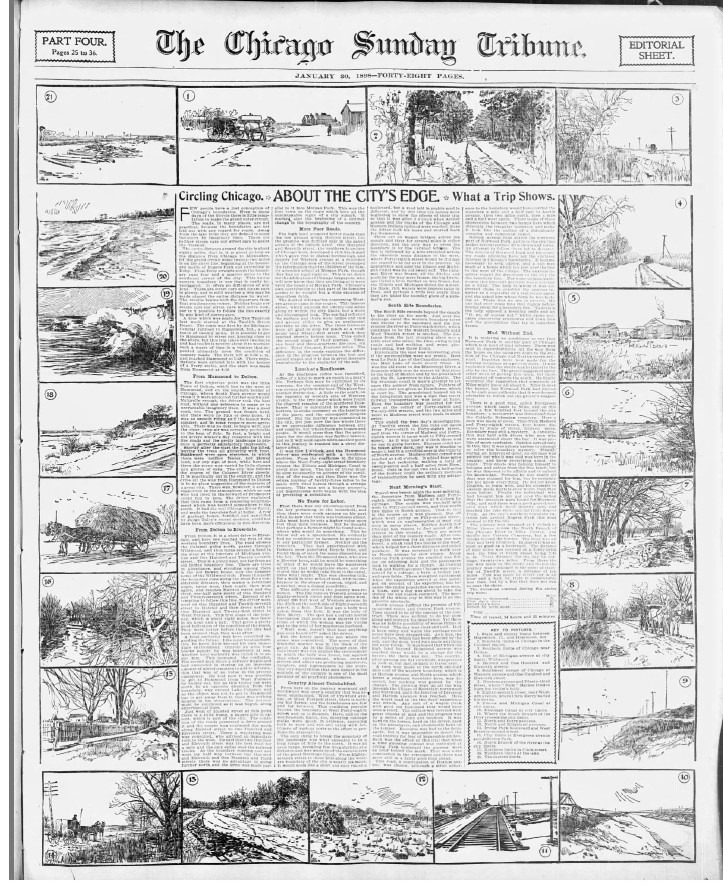
In an article in the Tribune on January 30, 1898, the unnamed author reported on a road trip he and two companions took around the city’s edge, starting from the southeast. They came west along 111th Street, and at Western Avenue, they turned north. The article described Western Avenue as having “a worn and discouraged look. The sun had softened the surface and there were lumps and ruts and greasy slides to give an unpleasant diversity to the drive.”
They were glad to stop for lunch at a roadhouse near 91st Street where they were served coffee “of a kind to mark an epoch in a man’s life.” They noted that most of the places on Western Avenue usually pushed beer. Although not identified in the paper, this could have been the roadhouse owned by Mrs. Zeder.
The author then focused on the locations where the two murder victims had been found. Several drawings depicting the scenes were included with the article. A more positive, wholesome image of the Ridge likely might have been preferred by the local residents, but the murders and the trials were of major interest to the public at the time of the article.
The author did point out that while it was evocative to “comment on the loneliness of the place and the consequent dangers thereof,” the murders had occurred in other places in the city, “where there are houses and people.” Although there was “a certain horrid fascination” with the Western Avenue locations, “the indictment was not against the environment in which the body was found, but against that other environment – the thick of the great city, whose crowded streets and alleys are producing murderers, burglars, and highwaymen by the score.”
The article noted that “the city superstition that sees danger in the solitude of the country is one of the most peculiar of all psychical phenomena.”
The next installment on “the Mystic Forest Preserve” will present a much more favorable image of the area.