The history of Dan Ryan Woods – Part 9: A very popular place
By Carol Flynn
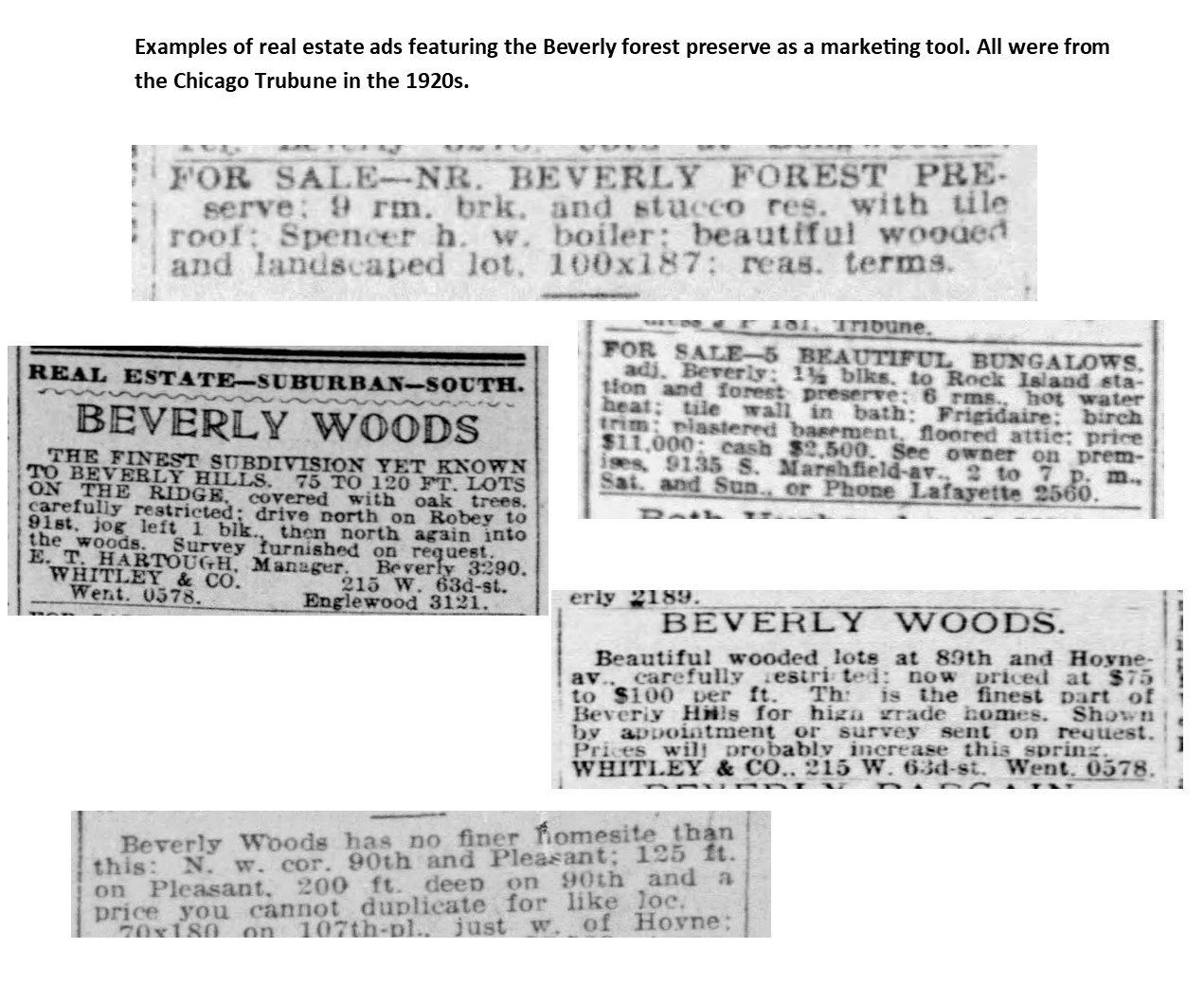
The Beverly Hills Preserve, renamed the Dan Ryan Woods (DRW) in 1924, was a popular place from the beginning. It influenced growth and development in the area. Real estate agents used the preserve advantageously in advertisements, even giving the name “Beverly Woods” to the neighborhood around the preserve.
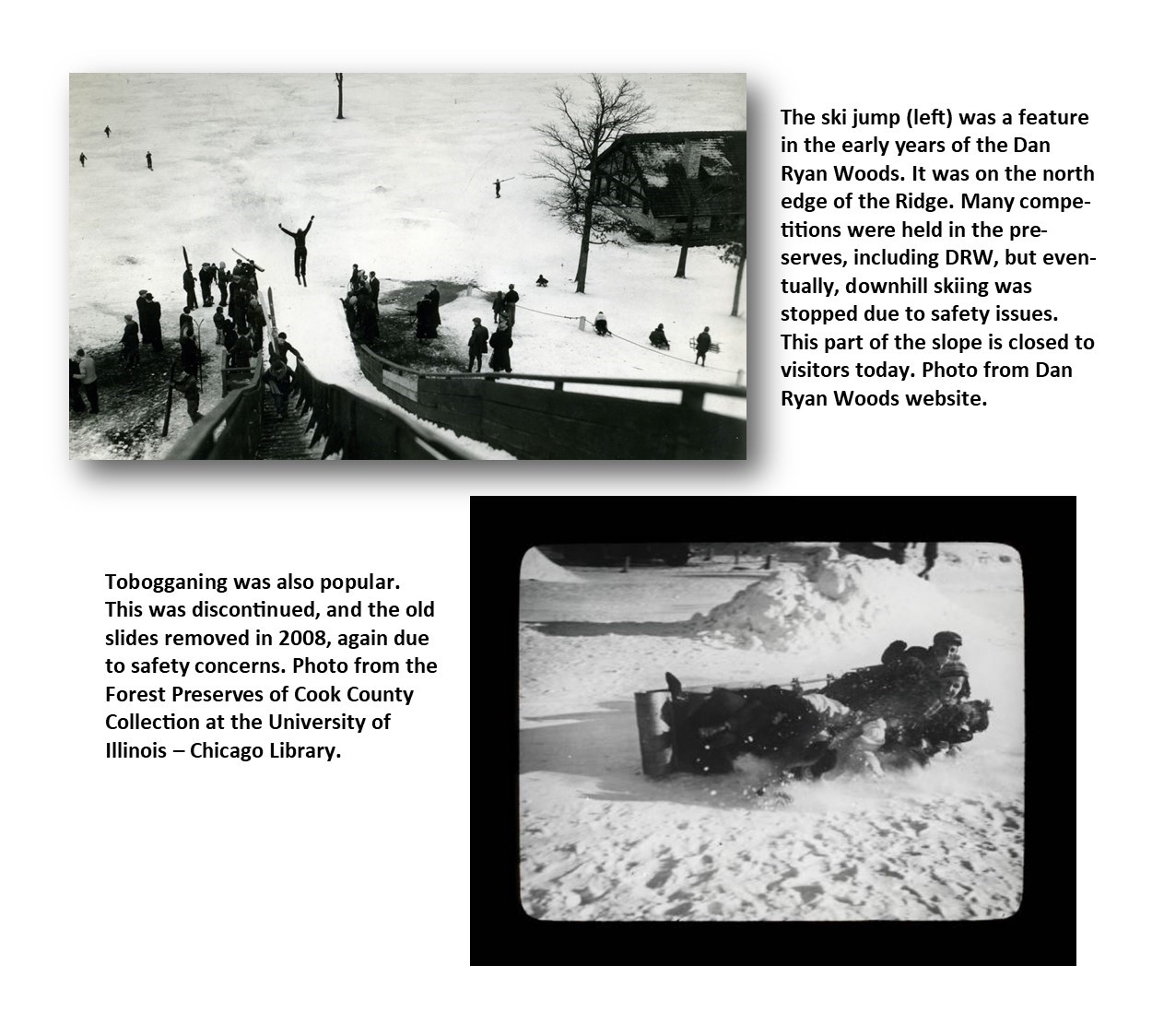
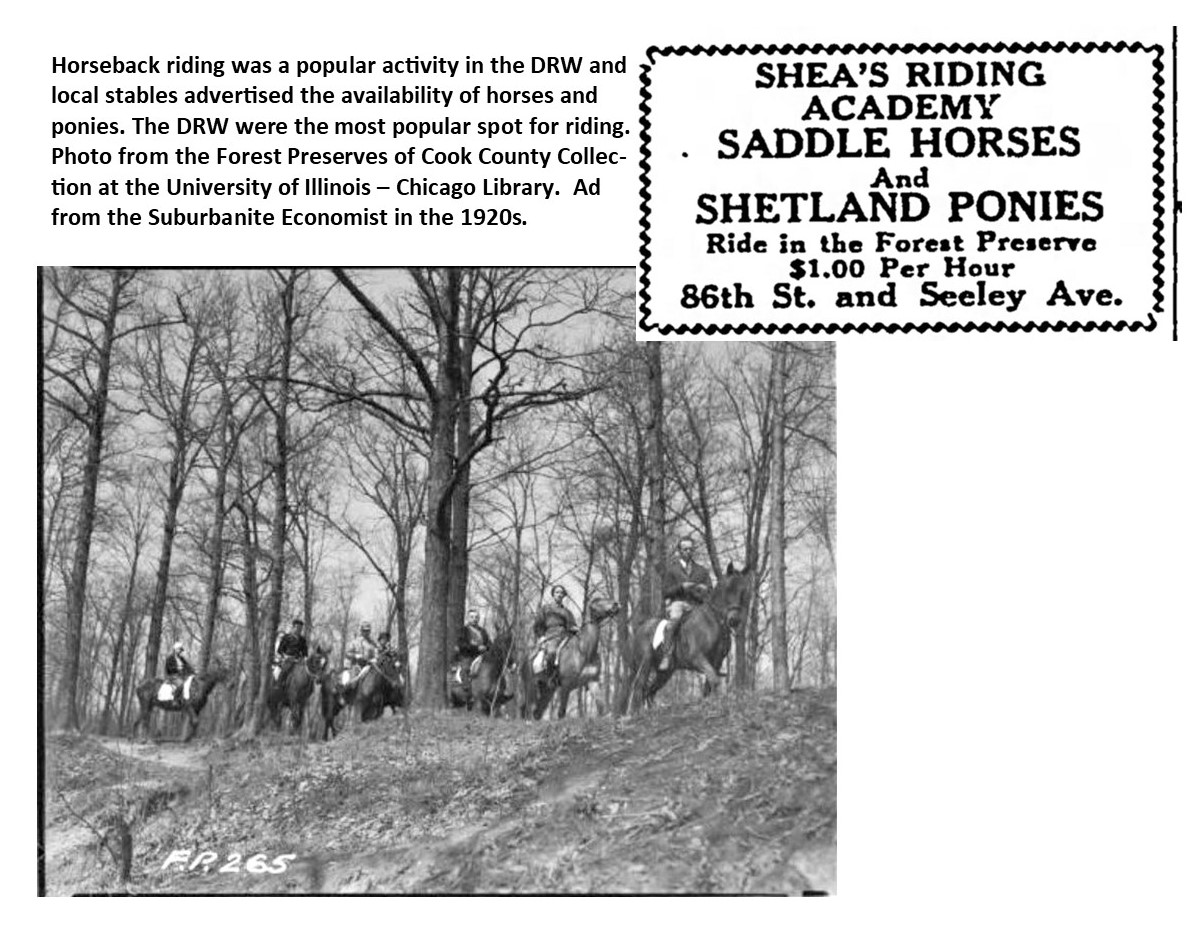
Early sports facilities included baseball diamonds, tennis courts and a cinder track. Horseback riding was very popular and there were stables in the area where visitors could rent horses and ponies. For winter sports, there was a 30-foot ski jump, toboggan slides, and flooded baseball diamonds for ice skating.
At one point, there was talk of establishing a public golf course. The small patch of land north of 83rd Street bordered by the train tracks and Western Avenue was purchased in the early 1920s with this in mind, but no golf course was built.
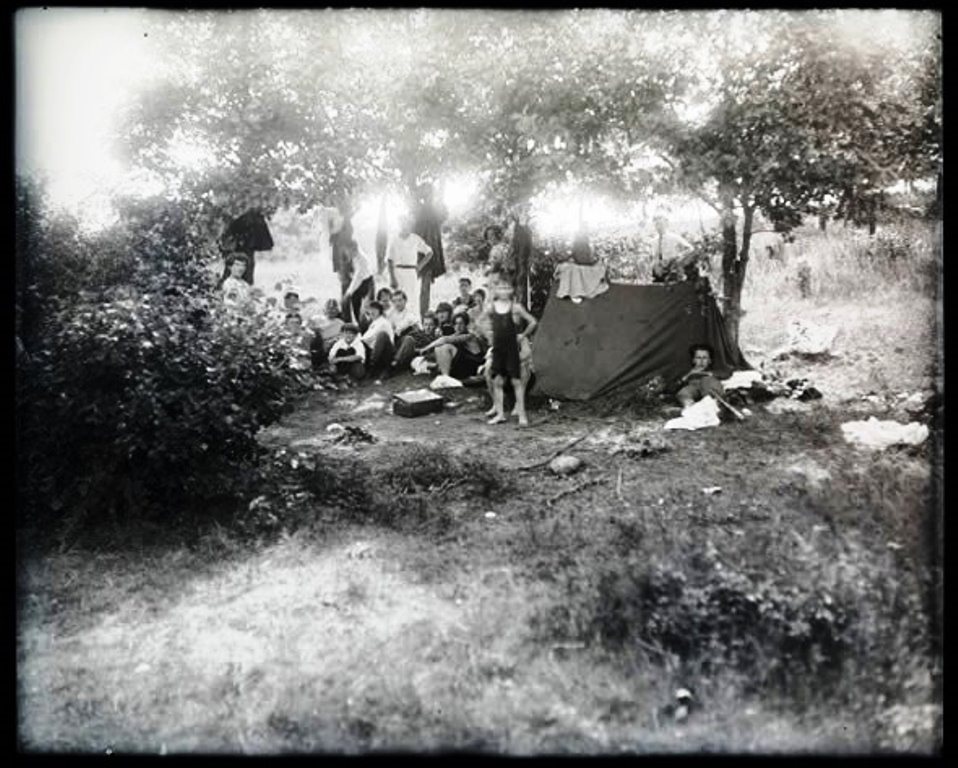
Instead, the DRW were made one of the twelve free tourist camps for automobile travelers in Cook County.
By the early 1920s, there were over nine million automobiles and trucks in the U.S. This new means of transportation offered people more freedom to travel and road trips became very popular. New roads were built and old ones like Western Avenue were improved. Tourist camps popped up all over the country to provide camping sites.
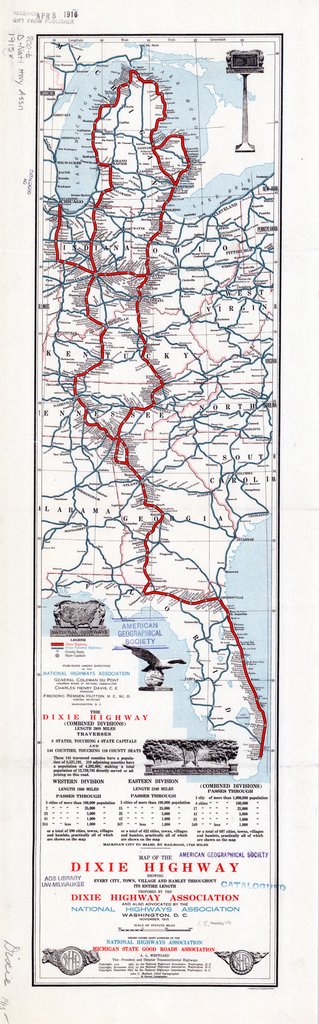
Western Avenue was part of the Dixie Highway, a system of roads started in 1915 that connected the northern states with the South, ending in Miami, Florida. The DRW were strategically located along the Dixie Highway.
In 1923-25, Chicago Tribune articles noted the extensive use of the DRW by motoists. “Deluxe” facilities included a log cabin shelter house with lounge areas and fire places; showers, toilets and laundry tubs; and gas cook stoves. Throughout the preserve, tables and benches, water and firewood supplies, and “sanitary equipment” could be found. The DRW could accommodate 600 cars.
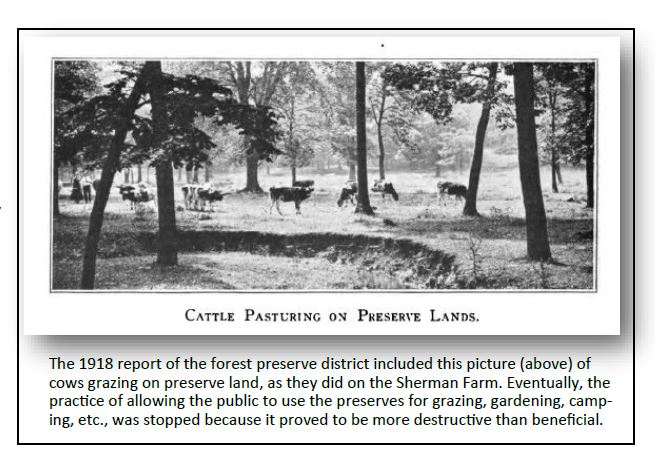
In addition to camping, the FPCC allowed local farmers to graze their cows on forest preserve land, and allowed people to have gardens in the preserves. Eventually, camping, grazing and gardening were all discontinued because they proved to be more destructive than beneficial to the preserves.
From spring through fall, hundreds of events were held in the DRW, including picnics, weddings, sports competitions, graduations, retirement parties, church socials, school outings, nature classes, Scouting activities, dances, concerts and political rallies. Associations holding conventions in Chicago often included an outing to DWR. The newspapers covered everything from very small events, like a birthday party for a six year old boy, to very large ones with thousands of attendees.
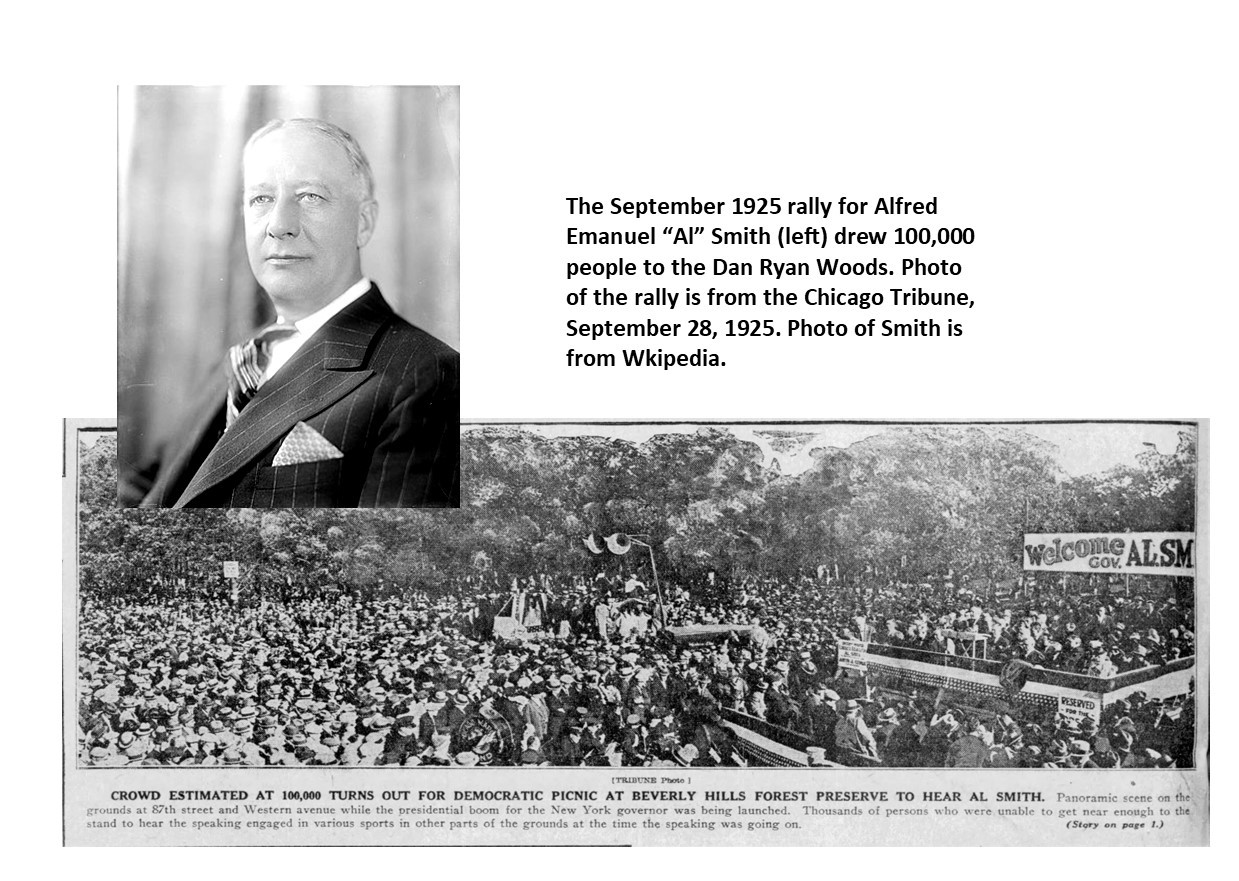
Possibly the largest event in DRW history, and certainly one of the most prestigious, was the 1925 Democratic rally that featured Alfred Emanuel “Al” Smith (1873-1944), attended by over 100,000 people. Smith, elected Governor of New York four times, was an influential leader in the Progressive Era, achieving a wide range of reforms. He improved the conditions for factory workers and for women and children in the workforce, and he condemned social injustices like lynchings and other racial violence. He was an opponent of Prohibition, recognizing that a nationwide ban on alcohol could never be enforced.
The rally in DRW was the kick-off for Smith’s campaign to run for U.S. President in 1928. On Sept 27th, he traveled from the Blackstone Hotel downtown on Michigan Avenue to the DRW in a motorcade of hundreds of autos filled with his supporters, accompanied by a detail of motorcycle police.
At DRW, Smith spoke from a make-shift wooden platform about inefficiencies in Washington and his proposals to cut spending. He stopped just short of announcing his presidential bid at the rally but it was understood that was the real purpose of the event.
Smith had made an unsuccessful bid for the Democratic nomination in 1924. He did win the nomination in 1928 but lost the presidential election to Herbert Hoover. He again sought the nomination in 1932 but lost to Franklin D. Roosevelt. Smith was the first Catholic to run for President. He mobilized Catholic women to vote for the first time after the 19th Amendment was enacted. It would take until 1960 for John F. Kennedy to be elected the first (and to date, only) Catholic President.
Next up: More on the early days of DRW.