Ridge Historical Society
Carol Flynn
Real picture postcards (RPPCs) were the rage around 1910.
Thanks to George Eastman of Eastman Kodak Company, camera technology had advanced to the point that hand-held box cameras preloaded with film were now available. Once the pictures were taken, the entire camera was sent to the company for processing. The consumer could choose prints or postcards. The camera was reloaded with film and returned to the customer.
These early cameras allowed people to begin capturing everyday images – children at play, social gatherings, local scenery, natural and man-made disasters. Itinerant photographers roamed the country snapping pictures of everything from parades to floods. The postcards started to be sold as local souvenirs.
RPPCs have become valuable with time as visual documentation of local history. They are often referred to as “folk photography.” Needless to say, RHS is a collection point for RPPCs of the Ridge communities.
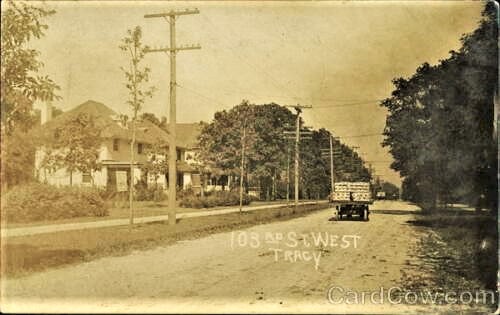
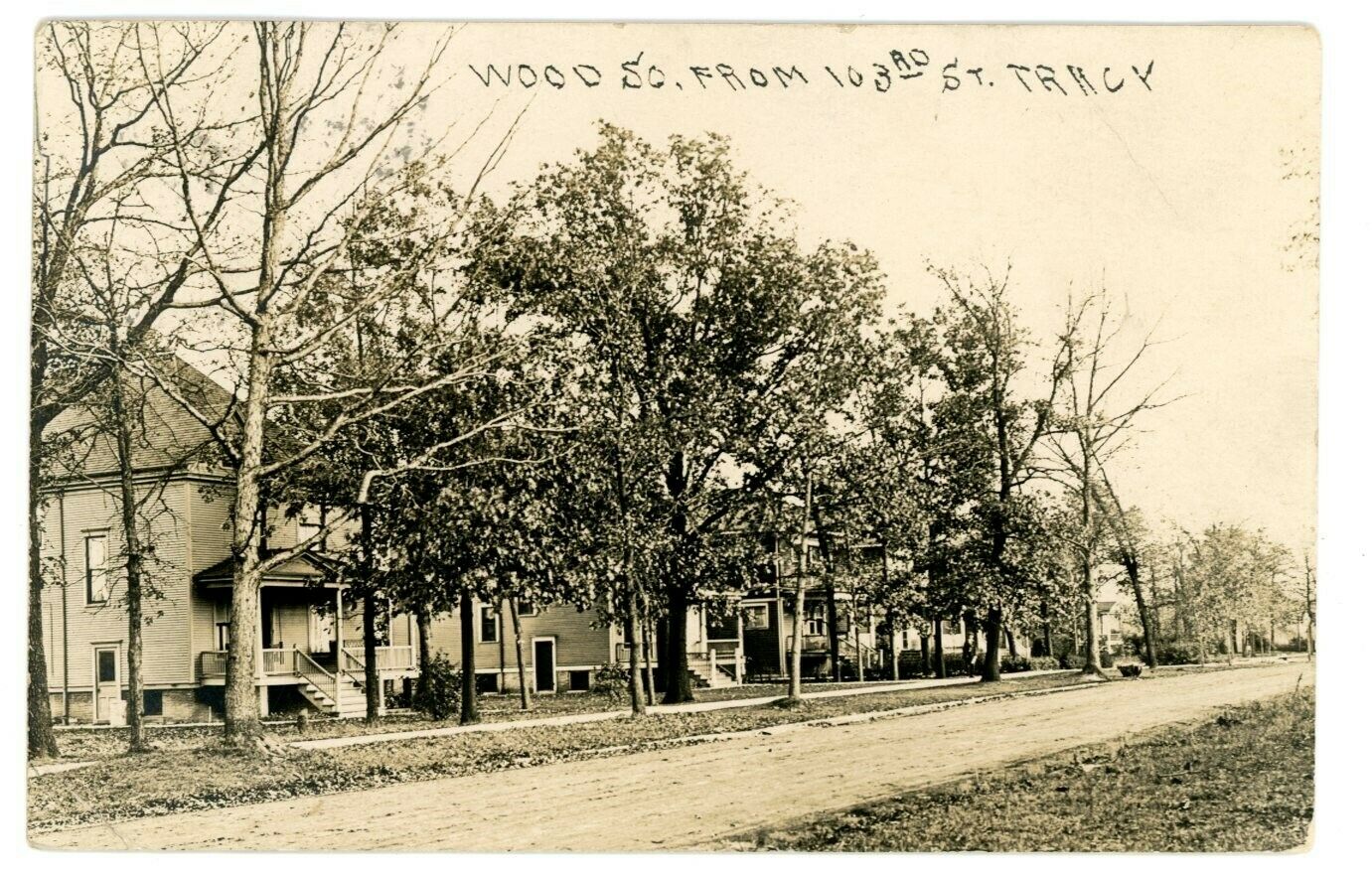
These two RPPCs popped up on eBay recently and have now been purchased for donation to RHS. They are of the “Tracy” area, which was centered around 103rd Street (which was called Tracy until Beverly annexed to the City of Chicago in 1890) between Longwood Drive and Wood Streets. The postcards are labeled from their viewpoints.
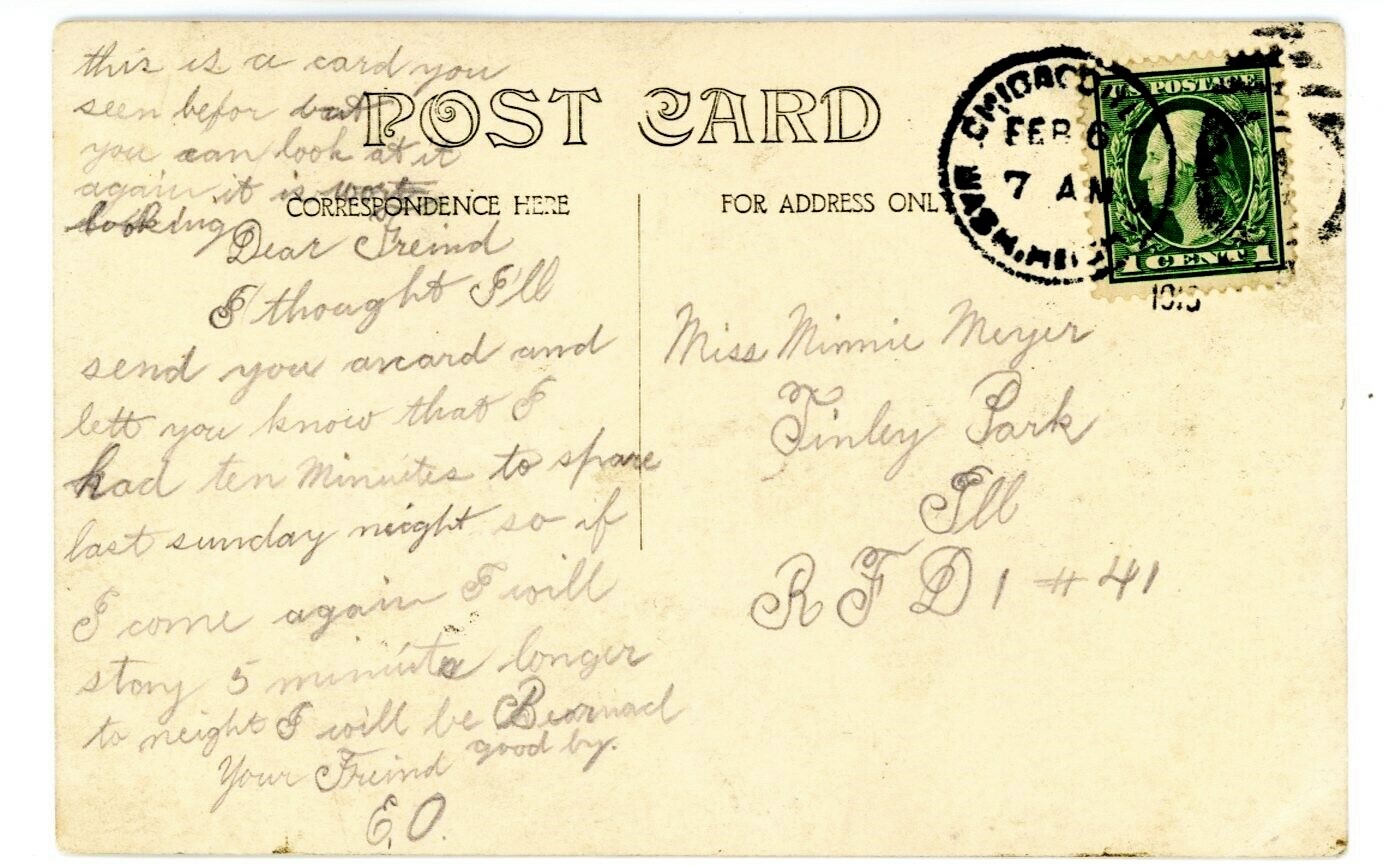
Any messages on the backs of the cards are usually also intriguing. Who was “E. O.?” RHS is looking into the exact locations from which these pictures were taken, in order to record then-and-now. And maybe we’ll find E. O.‘s identity.
By the way, the study and collection of postcards is known as “deltiology.”